Sacituzumab govitecan: Mechanism, Clinical Safety and Pharmacovigilance
Sacituzumab govitecan is an antibody–drug conjugate (ADC) for selected adults with unresectable or metastatic breast cancer. Its antibody directs a cytotoxic payload toward Trop-2-expressing tumour cells, while released SN-38 contributes to systemic toxicity. Pharmacovigilance must retain both targeted delivery and payload exposure.
The label covers distinct populations. Hormone-receptor status, HER2 status, prior endocrine and systemic therapies, treatment line, concomitant medicines and the day-1/day-8 schedule shape the event differential.
1. Identity and authorised clinical role
1.1 Classification and design
Sacituzumab govitecan is a humanised IgG1 antibody conjugated through a hydrolysable linker to SN-38, the active metabolite of irinotecan and a topoisomerase-I inhibitor. It is an ADC rather than a naked antibody. Case assessment should consider antibody binding, linker processing and payload exposure.
1.2 EU-labeled populations
The current EU indication has four distinct treatment conditions: (1) with pembrolizumab as first-line treatment for unresectable locally advanced or metastatic triple-negative disease with PD-L1 combined positive score (CPS) ≥10 and no prior systemic treatment for metastatic disease; (2) as first-line monotherapy for triple-negative disease when the patient is not a candidate for PD-1/PD-L1 inhibitor therapy; (3) as monotherapy after at least two prior systemic therapies for triple-negative disease, including one for advanced disease; and (4) as monotherapy for hormone-receptor-positive, HER2-negative disease after endocrine-based therapy and at least two additional systemic therapies in the advanced setting. For the pembrolizumab combination, verify PD-L1 using an appropriate CE-marked in-vitro diagnostic or validated alternative as specified in the current label.[1,2]
The label does not require Trop-2 testing as a companion diagnostic. Do not infer a result from treatment choice. Record the actual indication, receptor results, disease status, prior regimens and reason earlier treatment stopped.
1.3 Exposure and schedule
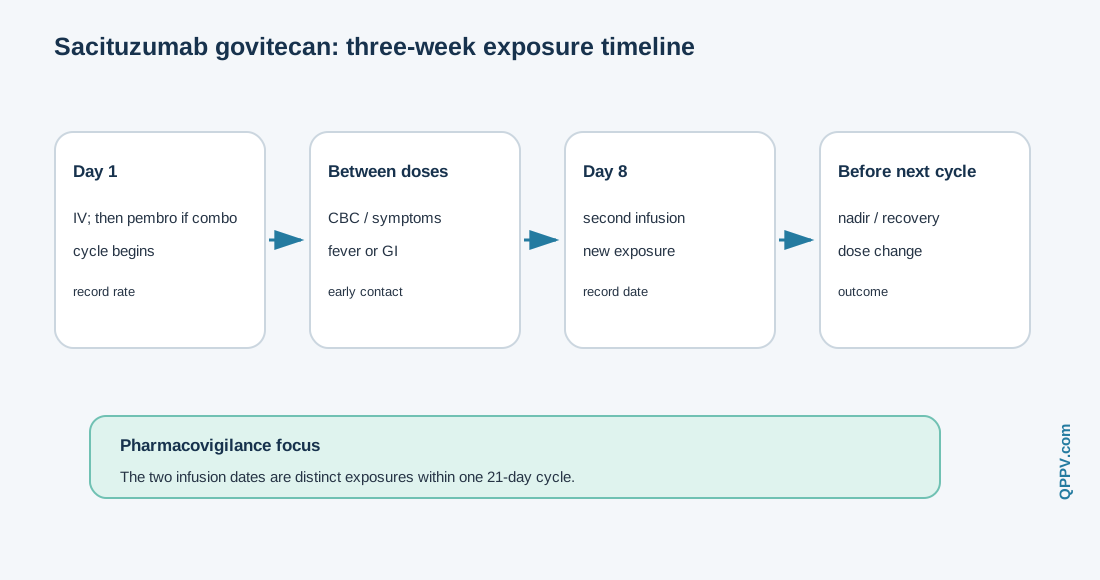
Treatment is given intravenously on days 1 and 8 of each 21-day cycle until progression or unacceptable toxicity. Record both administration dates, dose, infusion duration, premedication, delays and dose modifications. Cytopenias may deepen after either infusion; diarrhoea can begin between visits or worsen after the day-8 dose.[2]
2. Mechanism and risk pathway
2.1 Trop-2 and SN-38
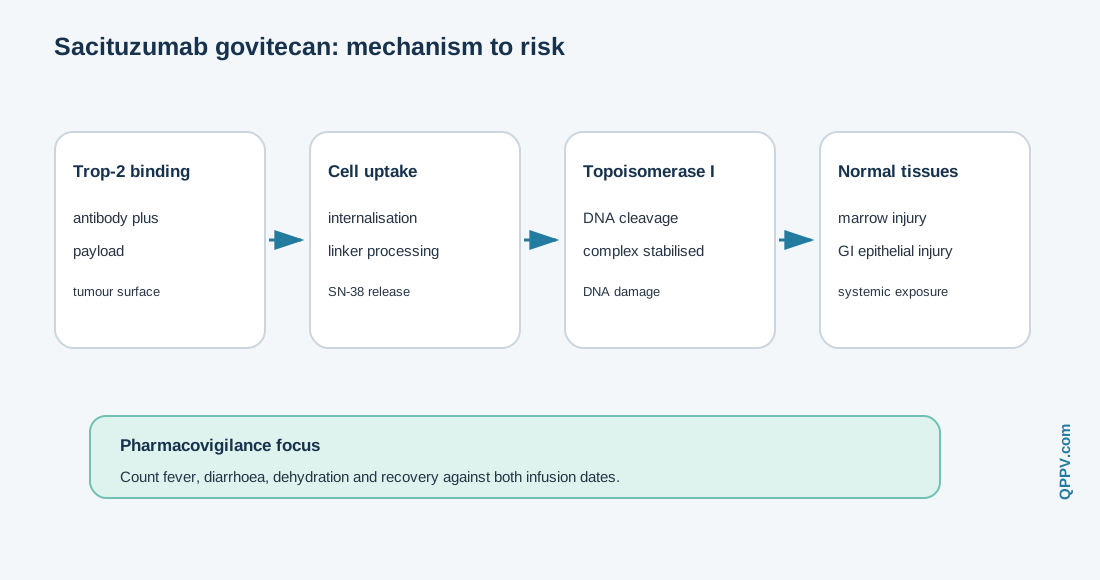
After binding Trop-2, the ADC is internalised and SN-38 is released. The payload stabilises the topoisomerase-I–DNA cleavage complex. Replication-associated DNA damage can lead to tumour-cell death. SN-38 can also injure rapidly dividing normal tissues, creating biologically plausible marrow suppression and gastrointestinal epithelial injury.
Mechanistic plausibility supports investigation but does not prove causality. The event may also reflect infection, disease, prior therapy or concomitant medicines.
2.2 Patient-specific modifiers
The EU product information notes increased haematologic toxicity in patients homozygous for UGT1A1*28, a reduced-function genotype associated with slower SN-38 glucuronidation. Treat this as a vulnerability factor, not a substitute for clinical assessment. Capture baseline counts, prior marrow-toxic therapy, hepatic status, infection, nutritional reserve, bowel disease and genotype if known.[2]
3. Labelled safety and clinical interpretation
3.1 Marrow toxicity
Neutropenia is a central labelled risk; severe neutropenia and febrile neutropenia may require interruption, dose reduction, growth-factor support or discontinuation under the product information. Anaemia and leukopenia also occur. Record absolute neutrophil count by date, cycle, nadir and recovery, together with fever, cultures, antimicrobial treatment, admission and growth-factor use.
In a heavily pretreated patient, baseline marrow involvement, previous chemotherapy and infection can contribute. Timing alone does not establish causality.
3.2 Diarrhoea and dehydration
Severe diarrhoea can lead to dehydration, electrolyte disturbance, renal injury and hospitalisation. Document stool frequency above baseline, onset, duration, fever, blood, oral intake, hydration, laboratory changes, treatment and infection work-up.[2]
In a patient with neutropenia, fever, abdominal pain or haemodynamic change, evaluate for infection and neutropenic enterocolitis rather than closing the case as routine gastrointestinal toxicity.
3.3 Infusion and other reactions
Infusion-related reactions, nausea, vomiting, alopecia and fatigue are reported. Reconstruct infusion start and stop times, rate, premedication, onset, vital signs, interruption, rescue treatment and subsequent tolerance.
4. Case reconstruction
4.1 Minimum useful context
Capture indication and tumour phenotype; dose, cycle and exact infusion dates; body weight used for dosing; prior and concomitant anticancer therapy; baseline and serial counts; UGT1A1 genotype if known; event onset, seriousness, management, dechallenge or rechallenge and outcome. For a suspected product-quality issue, include presentation, lot, preparation and infusion set-up.
4.2 Worked example
A patient with hormone-receptor-positive, HER2-negative metastatic disease develops grade 4 neutropenia and fever two days after the day-8 infusion. Preserve exact dose dates, baseline and nadir counts, infection source, cultures, admission, antibiotics, growth factor and later dose changes. If hospitalised for febrile neutropenia, record its components and seriousness rather than collapsing them into “chemotherapy intolerance.”
A second patient develops severe diarrhoea, dehydration and acute kidney injury after cycle 2. Record stool frequency, renal and electrolyte changes, microbiology, fluid treatment and outcome. These diagnoses may form one clinical sequence; retain each when clinically diagnosed.
5. Monitoring and signal evaluation
5.1 Follow-up through each cycle
Review counts before dosing and more closely after severe neutropenia, febrile neutropenia, dose delays or known reduced UGT1A1 activity. Consider primary G-CSF prophylaxis from cycle 1 in patients at increased risk of febrile neutropenia, as stated in the label. Follow its Day-1 and Day-8 ANC thresholds and dose-modification rules rather than generic ADC conventions. Give clear instructions for early reporting of diarrhoea, fever, inability to maintain intake, severe abdominal pain or reduced urine output.[2]
Record whether growth factor was primary prophylaxis, secondary prophylaxis or treatment of an event. Record anti-diarrhoeal therapy and infection testing as separate clinical facts.
5.2 Seriousness and expectedness
Seriousness and expectedness are separate assessments. A labelled event can be serious because of admission, life-threatening course or other regulatory criterion. Expectedness must be assessed against the applicable product reference safety information at the report date; mechanistic knowledge does not establish that a specific term or complication is listed.
Aggregate review should separate first-line PD-L1-positive pembrolizumab combination, first-line monotherapy for patients not eligible for PD-1/PD-L1 therapy, later-line triple-negative disease and hormone-receptor-positive/HER2-negative disease. Stratify by cycle, dose intensity, infection, genotype where available, pembrolizumab exposure and outcome. Spontaneous-report counts are not incidence estimates.
Key points: keep day-1 and day-8 exposures distinct; link GI and marrow findings without assuming one cause; capture genotype only when known; follow clinical recovery.
References
[1] EMA, EPAR: sacituzumab govitecan.
[2] EMA, EU product information for sacituzumab govitecan.
[3] EMA, Good pharmacovigilance practices.
[4] EMA, ICH E2D(R1): Post-approval safety data management.
[5] ICH, E2C(R2): Periodic benefit-risk evaluation report.
Regulatory Note
Educational summary of EU regulatory information accessed 20 September 2026. It does not replace the current product information, clinical judgement, applicable national reporting requirements or local procedures. Confirm the label version in force for the exposure being assessed.