Satralizumab: Classification, History, Mechanism of Action, Safety and Pharmacovigilance
- Satralizumab: Classification, History, Mechanism of Action, Safety and Pharmacovigilance
- Multidimensional classification
- NMOSD and the AQP4-IgG disease mechanism
- Recycling-antibody engineering
- Development and regulatory evolution
- Clinical use and treatment-context map
- Safety profile through mechanism and context
- NMOSD relapse versus adverse event
- Pharmacokinetic and pharmacodynamic considerations
- Product and device traceability
- Pharmacovigilance case assessment
- Signal detection and aggregate review
- Periodic benefit-risk evaluation
- Risk management and operational controls
- Potential failure modes
- Inspection and governance perspective
- Practical checklist
- Key Takeaways
- References
- Regulatory Note
Satralizumab is a humanised monoclonal antibody directed against the interleukin-6 receptor (IL-6R) and used in aquaporin-4 immunoglobulin G (AQP4-IgG)-seropositive neuromyelitis optica spectrum disorder (NMOSD). It shares the broad target class of IL-6R blockade with tocilizumab, but it is not simply the same pharmacology placed into another disease. Satralizumab was engineered as a recycling antibody: its affinity for IL-6R changes with pH, allowing the antibody to release receptor in the acidic endosome and return to the circulation through FcRn-mediated recycling rather than being degraded together with its target.
That engineering choice matters because it links molecular design directly to dosing persistence. It also makes satralizumab a useful example of how modern monoclonal antibodies can be engineered not only to recognise a target, but also to control what happens to the antibody after target internalisation.
For pharmacovigilance, the clinical setting is equally important. NMOSD is a relapsing autoimmune disease in which attacks can cause major irreversible visual, motor or brainstem disability. A new neurological symptom may therefore represent disease relapse, infection, treatment failure, another neurological disorder or an adverse effect of therapy. Case assessment must preserve AQP4-IgG status, relapse phenotype, concomitant immunosuppression and objective neurological evidence.
Multidimensional classification
| Classification axis | Satralizumab classification | Scientific or PV significance |
|---|---|---|
| Molecular class | Humanised IgG2 monoclonal antibody | IgG2 is associated with lower Fc-effector activity than a conventional IgG1 design |
| Target | Membrane and soluble IL-6 receptor | Interrupts IL-6-mediated signalling rather than neutralising IL-6 itself |
| Engineering class | Recycling antibody | pH-dependent target binding enables receptor release in acidic endosomes and antibody reuse |
| Fc engineering | Enhanced FcRn interaction and reduced nonspecific clearance characteristics | Extends persistence and supports monthly maintenance dosing |
| Functional class | Cytokine-receptor antagonist | Modulates inflammatory, acute-phase and immune-cell biology |
| Disease class | NMOSD relapse-prevention therapy | Benefit depends on preventing attacks that can cause irreversible disability |
| Biomarker-defined use | AQP4-IgG seropositive NMOSD in current EU authorisation | Serostatus is part of the authorised disease definition and must be preserved in efficacy/PV interpretation |
| Route | Subcutaneous | Creates injection-site, self-administration and product-handling considerations distinct from IV biologics |
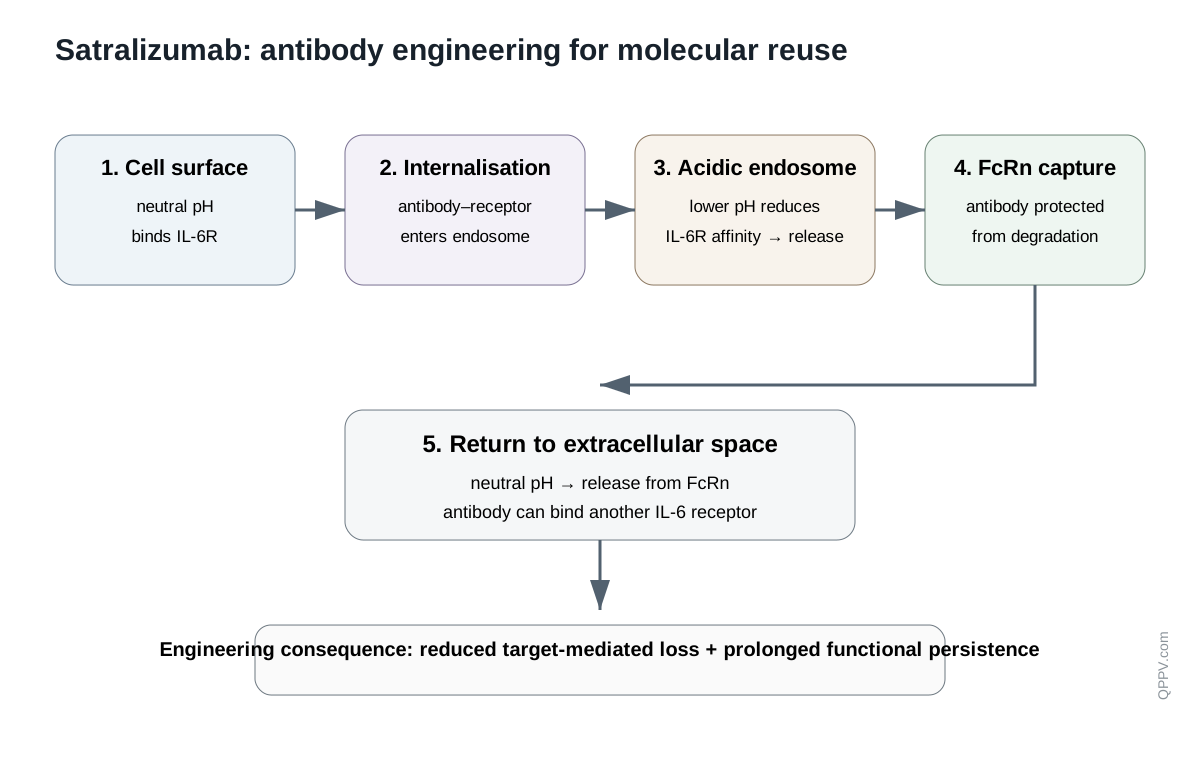
Figure 1. Satralizumab combines IL-6 receptor blockade with pH-dependent target release. Receptor-bound antibody is internalised, releases IL-6R in the acidic endosome, binds FcRn and can recycle back to the cell surface for reuse.
NMOSD and the AQP4-IgG disease mechanism
NMOSD is an autoimmune inflammatory disorder of the central nervous system characterised by severe attacks that commonly involve the optic nerves, spinal cord and area postrema. In AQP4-IgG-positive disease, pathogenic IgG targets aquaporin-4, a water-channel protein highly expressed on astrocytic end-feet.
The disease is therefore not primarily a conventional demyelinating disorder. AQP4-IgG binding initiates astrocyte-directed immune injury involving complement, granulocytes, cytokines and secondary damage to oligodendrocytes, myelin and neurons. This distinction from multiple sclerosis is clinically important because diagnostic assumptions and treatment strategies differ.
AQP4-IgG-positive NMOSD is usually attack-driven. Disability can accumulate because individual relapses cause incomplete recovery. Prevention of attacks is therefore the central therapeutic objective. A treatment that reduces relapse probability can have large clinical value even if it does not reverse disability already caused by prior attacks.
Why IL-6 is relevant
Interleukin-6 has several roles that connect it to AQP4-IgG-positive NMOSD. IL-6 can promote survival and differentiation of plasmablasts, including antibody-secreting populations; influence T-cell differentiation; increase inflammatory trafficking; and alter blood-brain-barrier properties. AQP4-IgG-producing plasmablasts have shown particular biological relevance to IL-6 signalling in mechanistic work.
Blocking IL-6R therefore acts upstream of several pathological processes rather than directly neutralising AQP4-IgG or complement. The antibody modifies the inflammatory environment that supports pathogenic humoral immunity and CNS entry.
Recycling-antibody engineering
Conventional target-mediated disposal
When an antibody binds a cell-surface receptor, the complex may be internalised. If antibody remains tightly bound to receptor within the endosome, both can be routed toward lysosomal degradation. This creates target-mediated clearance: target binding contributes not only to pharmacological action but also to loss of drug from circulation.
pH-dependent target release
Satralizumab was engineered so that its affinity for IL-6R is lower in the acidic environment of the endosome than at physiological extracellular pH. After receptor-mediated internalisation, the antibody can therefore release IL-6R rather than remaining attached through the entire intracellular trafficking pathway.
FcRn-mediated recycling
The free antibody can bind the neonatal Fc receptor (FcRn) in the acidic endosome. FcRn protects IgG from lysosomal degradation and returns it toward the plasma membrane. At extracellular pH the antibody dissociates from FcRn and re-enters the circulation.
The result is a molecular reuse cycle: bind receptor at the cell surface, enter the endosome, release receptor, bind FcRn, return to the circulation and potentially bind another receptor.
Satralizumab also incorporates modifications intended to strengthen FcRn-related persistence and reduce nonspecific elimination. EMA's assessment report describes its IgG2 isotype as another deliberate feature, reducing Fc-receptor effector function compared with an IgG1 anti-IL-6R antibody.
This engineering is not merely pharmacokinetic optimisation. It is a useful teaching example of how antibody structure can be designed so that target binding and intracellular trafficking work together.
Development and regulatory evolution
Satralizumab was developed specifically around IL-6R biology in NMOSD. Phase 3 development included two complementary strategies: addition to stable background immunosuppressive therapy and monotherapy. The SAkuraSky trial studied satralizumab added to baseline immunosuppression, while SAkuraStar evaluated monotherapy.
Current EU product information authorises satralizumab for AQP4-IgG-seropositive NMOSD in adults and adolescents from 12 years of age, either as monotherapy or in combination with immunosuppressive therapy. This creates two clinically different safety contexts. Infection or cytopenia in monotherapy does not have the same confounding structure as an event occurring during combined corticosteroid, azathioprine or mycophenolate exposure.
The authorised biomarker requirement also matters. Trial populations included seropositive and seronegative patients, but regulatory benefit is defined around AQP4-IgG-positive disease. A PV report of apparent lack of efficacy should therefore preserve the patient's antibody status rather than assuming that all historical NMOSD diagnoses represent the same biological population.
Clinical use and treatment-context map
Satralizumab is administered subcutaneously with loading doses followed by maintenance dosing. The maintenance interval is enabled by the molecule's prolonged pharmacological persistence, but the patient context remains decisive for safety interpretation. A patient receiving satralizumab alone has a different baseline immune burden from a patient also taking corticosteroids or another immunosuppressant.
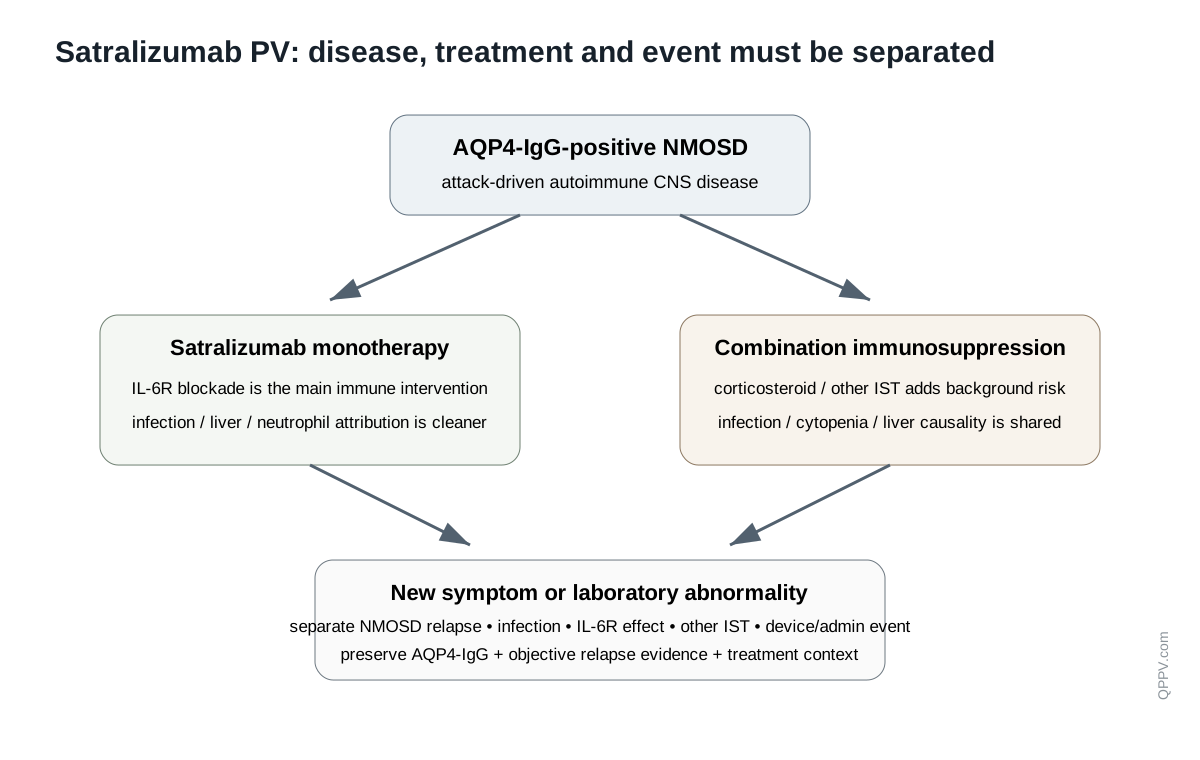
Figure 2. Satralizumab safety assessment begins with disease context, AQP4-IgG status and background immunosuppression, then separates treatment-related laboratory or infection effects from NMOSD relapse and other neurological causes.
Safety profile through mechanism and context
Infection
IL-6 participates in host defence and inflammatory signalling. Blocking IL-6R can therefore increase susceptibility to infection or alter the inflammatory phenotype of infection. Concomitant immunosuppressive therapy can amplify that risk.
Case assessment should capture infection site, organism, microbiology, fever, hospitalisation, background immunosuppressants, neutrophil count and outcome. A key practical point is that IL-6 blockade can attenuate acute-phase responses. A modest C-reactive protein result should therefore not be used as strong negative evidence against infection when the clinical picture is concerning.
Liver-enzyme elevations
Transaminase elevations are a recognised safety domain. PV assessment should distinguish asymptomatic ALT or AST elevation from clinically significant hepatic injury. Relevant information includes baseline liver tests, peak values, bilirubin, alkaline phosphatase, viral hepatitis testing, alcohol or metabolic liver disease, concomitant hepatotoxic medicines, treatment interruption and recovery.
The presence of background immunosuppressants is especially relevant because several commonly used NMOSD therapies can also affect liver tests. A single abnormal value does not establish satralizumab causality.
Neutropenia
Decreased neutrophil counts can occur during treatment. The clinical interpretation depends on nadir, duration, infection status and other marrow- or immune-modifying medicines. Aggregate analysis should therefore connect laboratory events to infectious outcomes rather than treating all neutropenia as equivalent.
For serious cases, capture baseline and serial absolute neutrophil counts, concomitant immunosuppression, infection, dose interruption and recovery. A low count without clinical consequence and prolonged febrile neutropenia represent different safety phenotypes.
Hypersensitivity and injection-related events
Satralizumab is given subcutaneously, so injection-site reactions should be separated from systemic hypersensitivity. A local erythematous reaction has a different mechanism and risk implication from urticaria, bronchospasm, hypotension or anaphylaxis.
Useful case details include dose number, self- versus caregiver/healthcare-provider administration, injection site, onset, local versus systemic symptoms, treatment, recurrence and product handling. Device or technique information becomes important when the event suggests administration error rather than pharmacological hypersensitivity.
Vaccination
Because IL-6R blockade modifies immune function, vaccination timing is a treatment-planning issue. Current regional product information should be checked for exact instructions on live and non-live vaccines. PV cases involving vaccine failure, inadvertent live vaccination or post-vaccination infection should preserve vaccine type, timing, background immunosuppression and outcome.
Pregnancy and lactation
As an IgG antibody, satralizumab has potential for placental transfer, particularly later in pregnancy. Pregnancy case assessment should capture exact exposure dates, gestational timing, concomitant immunosuppressants, disease activity, pregnancy outcome and neonatal infection or immune findings where available.
The maternal-disease context matters because NMOSD relapse itself can threaten function and pregnancy management. Benefit-risk interpretation therefore cannot be reduced to fetal exposure alone.
NMOSD relapse versus adverse event
One of the most important PV distinctions is whether new neurological symptoms represent an NMOSD attack. Optic neuritis, transverse myelitis and area-postrema syndromes can cause visual loss, weakness, sensory change, bladder dysfunction, persistent hiccups, nausea or vomiting. Similar symptoms may also arise from infection, metabolic disturbance, another neurological disease or treatment-related complications.
A report of “worsening weakness” should therefore include neurological examination, MRI, relapse adjudication where available, corticosteroid or plasma-exchange treatment, recovery and whether the event met the treating clinician's criteria for NMOSD relapse.
Area-postrema symptoms
Persistent nausea, vomiting or hiccups are particularly instructive because they can be manifestations of an NMOSD brainstem attack rather than a gastrointestinal adverse drug reaction. Case processing that codes these symptoms without preserving neurological context can distort both safety and efficacy analyses.
Apparent lack of efficacy
Because NMOSD is attack-driven, apparent lack of efficacy is usually evaluated through breakthrough relapse rather than gradual daily symptom fluctuation. A high-quality report should capture AQP4-IgG status, treatment adherence, dose timing, prior relapse history, objective attack features, MRI where available and whether background immunosuppressive therapy was changed.
Pharmacokinetic and pharmacodynamic considerations
Satralizumab's recycling design reduces target-mediated loss and supports sustained IL-6R blockade with monthly maintenance dosing. However, pharmacodynamic effects on laboratory inflammatory markers and immune signalling may not map perfectly to serum concentration.
IL-6 and soluble IL-6R measurements can be difficult to interpret during receptor blockade because drug-target binding alters clearance and measured concentrations. Routine PV should therefore avoid treating a change in circulating IL-6-related biomarkers as a simple surrogate for clinical efficacy or toxicity unless the assay and biological meaning are understood.
Product and device traceability
Satralizumab is supplied for subcutaneous administration. Reports involving injection failure, leakage, incomplete dose, device malfunction, storage excursion, unexpected local reactions or product-quality concerns should capture exact presentation, batch, storage conditions, preparation and administration technique. The active-substance name alone is not sufficient for a device- or quality-focused investigation.
Pharmacovigilance case assessment
Satralizumab case assessment should begin by separating four questions: Was the event an NMOSD relapse? Was there a plausible consequence of IL-6R blockade? Was background immunosuppression contributory? Was the event related to subcutaneous administration or product handling rather than systemic pharmacology?
Event-specific follow-up priorities
| Event | High-value follow-up information |
|---|---|
| Serious infection | Site/pathogen, cultures/PCR, fever, CRP context, neutrophils, background IST, hospital course and outcome |
| Liver abnormality | Baseline/serial ALT, AST, ALP, bilirubin, viral studies, co-medications, alcohol/metabolic risk, dechallenge |
| Neutropenia | Baseline and nadir ANC, duration, infection, background immunosuppression, interruption and recovery |
| Hypersensitivity | Dose number, onset, local/systemic phenotype, vital signs, treatment and rechallenge |
| NMOSD relapse | AQP4-IgG status, neurological phenotype, MRI, attack treatment, adherence, prior relapse history, recovery |
| Nausea/vomiting/hiccups | Duration, neurological signs, MRI/area-postrema assessment, infection/GI work-up and relapse treatment |
| Pregnancy exposure | Dose dates, gestational timing, disease activity, co-immunosuppression, maternal/fetal outcome |
| Product/device complaint | Presentation, batch, storage, injection technique, device function and incomplete-dose evidence |
Signal detection and aggregate review
Aggregate review should stratify monotherapy from combination immunosuppression. Infection, liver-enzyme abnormalities and neutropenia have different causal structures when satralizumab is the only immune-modifying therapy versus when corticosteroids, azathioprine or mycophenolate are also present.
Relapse reporting requires similar discipline. An increase in coded neurological symptoms does not necessarily mean declining efficacy. Signal review should distinguish protocol- or clinician-defined attacks from chronic sequelae, pseudo-relapse during infection, nonspecific symptoms and true breakthrough disease.
AQP4-IgG status should remain visible in aggregate efficacy and lack-of-efficacy analyses. The current authorised population is seropositive; mixing historical seronegative exposure into the same denominator can obscure interpretation.
Periodic benefit-risk evaluation
Periodic evaluation should connect exposure with relapse prevention, monotherapy versus combination therapy, age group and cumulative treatment duration. Important safety domains include serious infection, liver-enzyme elevations and hepatic injury, neutropenia, hypersensitivity, injection-site reactions, vaccination-related events, pregnancy outcomes, medication errors and product/device complaints.
The benefit side should focus on prevention of clinically meaningful NMOSD attacks and preservation of neurological function. Because disability can accumulate after a single severe relapse, benefit-risk evaluation should not treat all relapses as equivalent events; severity and recovery matter.
Risk management and operational controls
Current regional product information governs pretreatment screening, laboratory monitoring, infection-related treatment interruption, vaccination and administration. Pharmacovigilance systems should support those requirements while preserving the distinction between regulatory instructions and recommended operational practice.
Useful controls include NMOSD-specific relapse follow-up, explicit AQP4-IgG fields, background-immunosuppression capture, longitudinal liver-test and neutrophil data, and injection/device fields. Medical review guidance should remind reviewers that IL-6R blockade can reduce CRP responses and that area-postrema symptoms can represent neurological relapse rather than gastrointestinal toxicity.
Potential failure modes
The following are illustrative scenarios, not published inspection findings:
- Persistent vomiting is coded as a gastrointestinal adverse reaction without considering area-postrema relapse.
- A serious infection is dismissed because CRP is only modestly elevated despite IL-6R blockade.
- A liver signal is attributed to satralizumab without capturing concomitant immunosuppressants.
- Breakthrough neurological symptoms are counted as treatment failure despite absent objective evidence of NMOSD attack.
- Aggregate infection rates combine monotherapy and combination immunosuppression without stratification.
- An injection failure cannot be investigated because device, batch and administration details were not collected.
- Seronegative historical cases are pooled with the currently authorised AQP4-IgG-positive population in efficacy analyses.
Inspection and governance perspective
An inspector assessing satralizumab pharmacovigilance would be interested in whether the system reflects the specific biology of NMOSD and recycling IL-6R blockade. Evidence may include targeted infection/liver/neutropenia follow-up, relapse adjudication conventions, AQP4-IgG capture, background-IST fields, device complaint handling and signal stratification.
Effectiveness is demonstrated when cases contain the information needed to distinguish drug toxicity from relapse. A procedure that states “collect disease history” is weak if area-postrema symptoms, MRI evidence and AQP4-IgG status remain routinely absent.
Practical checklist
For a satralizumab case or aggregate review, confirm:
- AQP4-IgG status and NMOSD phenotype;
- monotherapy versus combination immunosuppression;
- exact dose timing and subcutaneous administration details;
- infection evidence interpreted in the context of IL-6R blockade;
- serial liver enzymes and neutrophils for relevant cases;
- objective relapse assessment rather than symptom coding alone;
- area-postrema disease as a differential for persistent nausea, vomiting or hiccups;
- pregnancy timing and maternal disease activity where applicable;
- exact product, batch and device details for administration/quality events.
Key Takeaways
Satralizumab is a humanised IgG2 anti-IL-6R recycling antibody. Its pH-dependent receptor binding allows target release in acidic endosomes, while FcRn-mediated recycling returns antibody to the circulation and prolongs functional persistence. This distinguishes it structurally and pharmacologically from a conventional anti-IL-6R antibody even though the proximal target is shared.
Its pharmacovigilance profile is inseparable from AQP4-IgG-positive NMOSD. Infection, liver-enzyme changes, neutropenia and hypersensitivity must be assessed alongside background immunosuppression, while neurological symptoms require careful separation of breakthrough relapse from adverse effects and unrelated disease. The subcutaneous presentation adds device, technique and product-traceability questions.
References
- European Medicines Agency. Satralizumab: EPAR and current product information. Product information last updated 21 August 2026. https://www.ema.europa.eu/en/medicines/human/EPAR/enspryng
- European Medicines Agency. Satralizumab EPAR public assessment report. https://www.ema.europa.eu/en/documents/assessment-report/enspryng-epar-public-assessment-report_en.pdf
- U.S. Food and Drug Administration. Satralizumab prescribing information. Current product labelling should be consulted through Drugs@FDA; published label materials describe infection, liver-enzyme and neutrophil precautions. https://www.accessdata.fda.gov/drugsatfda_docs/label/2021/761149s002lbl.pdf
- Yamamura T, Kleiter I, Fujihara K, et al. Trial of satralizumab in neuromyelitis optica spectrum disorder. N Engl J Med. 2019;381:2114-2124. doi:10.1056/NEJMoa1901747.
- Traboulsee A, Greenberg BM, Bennett JL, et al. Safety and efficacy of satralizumab monotherapy in neuromyelitis optica spectrum disorder. Lancet Neurol. 2020;19:402-412. doi:10.1016/S1474-4422(20)30078-8.
- Kleiter I, Traboulsee A, Palace J, et al. Long-term efficacy of satralizumab in AQP4-IgG-seropositive NMOSD from SAkuraSky and SAkuraStar. Neurol Neuroimmunol Neuroinflamm. 2023;10:e200071. doi:10.1212/NXI.0000000000200071.
Regulatory Note
Authorised age groups, biomarker requirements, combination use, screening, laboratory monitoring, vaccination and pregnancy recommendations vary by jurisdiction and may change. This article does not replace current regional product information. Regulatory statements were checked against current EMA information available in September 2026 and official FDA labelling resources. Operational recommendations are pharmacovigilance practice unless explicitly identified as regulatory requirements.