Secukinumab: Classification, History, Mechanism of Action, Safety and Pharmacovigilance
Secukinumab is a fully human monoclonal antibody that selectively neutralises interleukin-17A (IL-17A). It belongs to the ligand-neutralising group of therapeutic antibodies: rather than binding a receptor on a cell, it binds a soluble inflammatory cytokine and prevents that cytokine from activating its receptor complex.
That apparently simple mechanism sits at an important intersection of inflammatory biology and host defence. IL-17A contributes to psoriasis, psoriatic arthritis, axial spondyloarthritis and hidradenitis suppurativa, but it also participates in mucosal immunity, neutrophil recruitment and defence against extracellular organisms, particularly at epithelial surfaces. The pharmacovigilance profile therefore cannot be understood from the word “immunosuppressant” alone. The relevant question is which part of immunity is being altered, in which disease population, and with what consequences for infection and inflammatory balance.
- Secukinumab: Classification, History, Mechanism of Action, Safety and Pharmacovigilance
- Multidimensional classification
- IL-17A biology and why the target matters
- Mechanism of action
- Development and regulatory history
- Clinical use and treatment context
- Major safety domains
- Immunogenicity and loss of response
- Product administration and self-injection
- Biological traceability
- Pharmacovigilance case assessment
- Signal detection and aggregate review
- Periodic benefit-risk evaluation
- Risk management and operational controls
- Potential failure modes
- Inspection and governance perspective
- Practical checklist
- Key Takeaways
- References
- Regulatory Note
Multidimensional classification
| Classification axis | Secukinumab classification | Scientific or PV significance |
|---|---|---|
| Molecular class | Fully human monoclonal antibody | Reduces non-human protein content but does not eliminate immunogenicity risk |
| Target | IL-17A | Neutralises a soluble pro-inflammatory cytokine rather than depleting a cell population |
| Functional class | Ligand-neutralising immunomodulator | Therapeutic effect depends on reducing IL-17A signalling |
| Therapeutic domains | Dermatology, rheumatology and inflammatory musculoskeletal disease | Background disease and concomitant therapy differ materially across indications |
| Current EU indications | Plaque psoriasis, hidradenitis suppurativa, psoriatic arthritis, axial spondyloarthritis, enthesitis-related arthritis and juvenile psoriatic arthritis | Age, disease phenotype and treatment goals vary across the exposure population |
| Principal mechanistic safety themes | Infection, mucocutaneous candidiasis, inflammatory bowel disease, hypersensitivity, hepatitis B reactivation | Risks arise from both pathway biology and patient context |
| Route | Subcutaneous administration in the EU product framework | Self-administration and device/presentation issues may become part of PV case reconstruction |
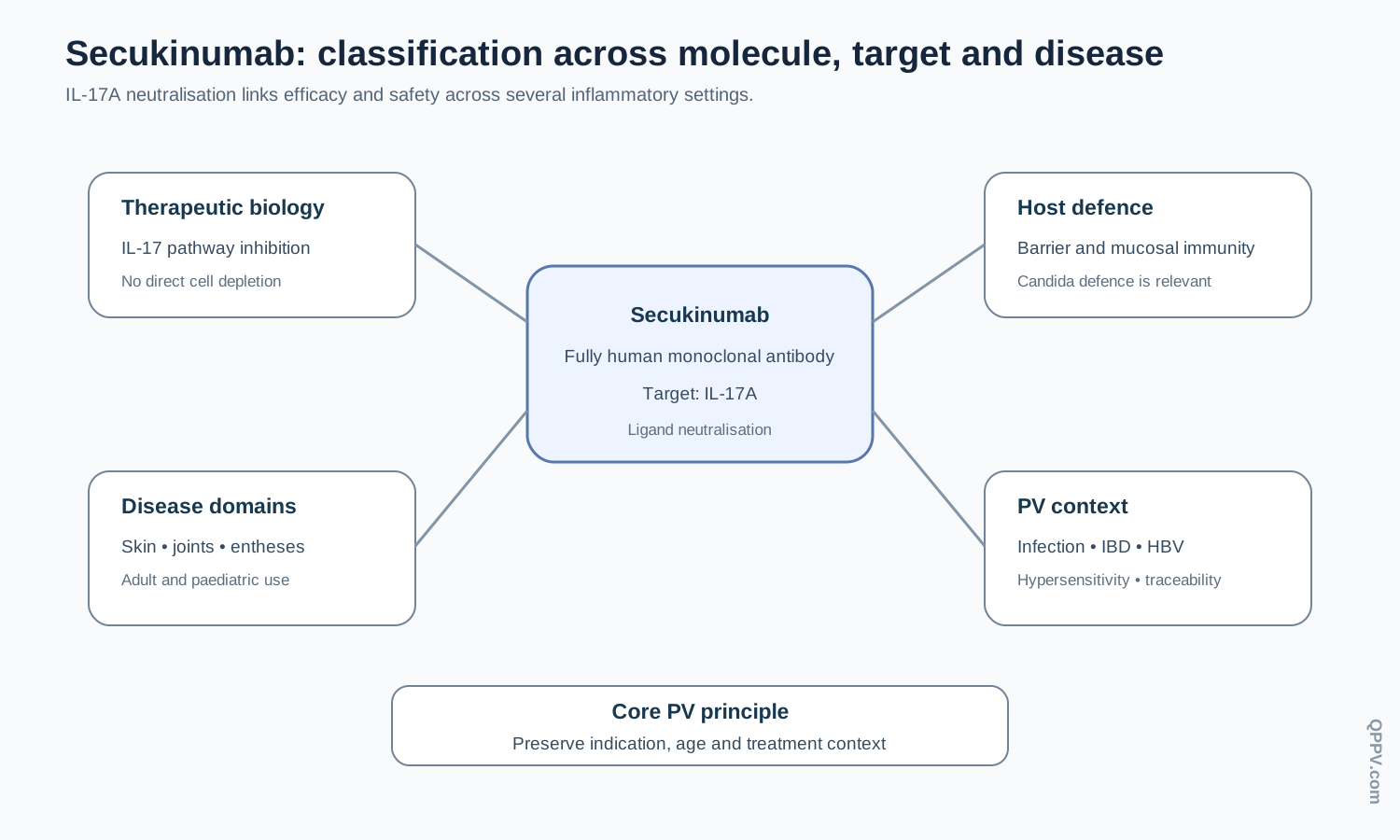
Figure 1. Secukinumab is best understood as a selective IL-17A-neutralising antibody whose pharmacovigilance varies across dermatologic, rheumatologic and paediatric inflammatory settings.
IL-17A biology and why the target matters
IL-17A is produced principally by activated T-helper-17 cells and other immune-cell populations. It stimulates epithelial, stromal and myeloid cells to produce chemokines, antimicrobial mediators and inflammatory signals. In chronic inflammatory disease, excessive or dysregulated IL-17A signalling contributes to sustained tissue inflammation.
In plaque psoriasis, the IL-23/IL-17 axis is central to epidermal hyperproliferation and inflammatory-cell recruitment. In psoriatic arthritis and axial spondyloarthritis, IL-17 signalling contributes to enthesitis, synovial inflammation and structural inflammatory pathways. Hidradenitis suppurativa is biologically more heterogeneous, but IL-17-associated inflammation contributes to the chronic inflammatory environment around follicular occlusion and suppurative lesions.
The same pathway also supports protective immunity at epithelial barriers. This is why IL-17A inhibition can increase susceptibility to selected infections and why mucosal candidiasis is a particularly coherent mechanistic observation. The effect is not equivalent to broad lymphocyte depletion; it is a selective shift in cytokine-mediated host defence.
Why IL-17A blockade differs from IL-23 blockade
Secukinumab binds IL-17A directly. Antibodies against IL-23 act further upstream and alter the maintenance and activity of IL-23-responsive inflammatory pathways. The distinction matters because pathway position influences both therapeutic effects and safety patterns. Two biologicals may both improve psoriasis while having different implications for inflammatory bowel disease, candidiasis and indication breadth.
Mechanism of action
Secukinumab binds IL-17A with high affinity and prevents IL-17A from interacting with its receptor complex. The immediate pharmacological consequence is reduced downstream inflammatory signalling. This decreases chemokine production, inflammatory-cell recruitment and tissue-specific inflammatory activity.
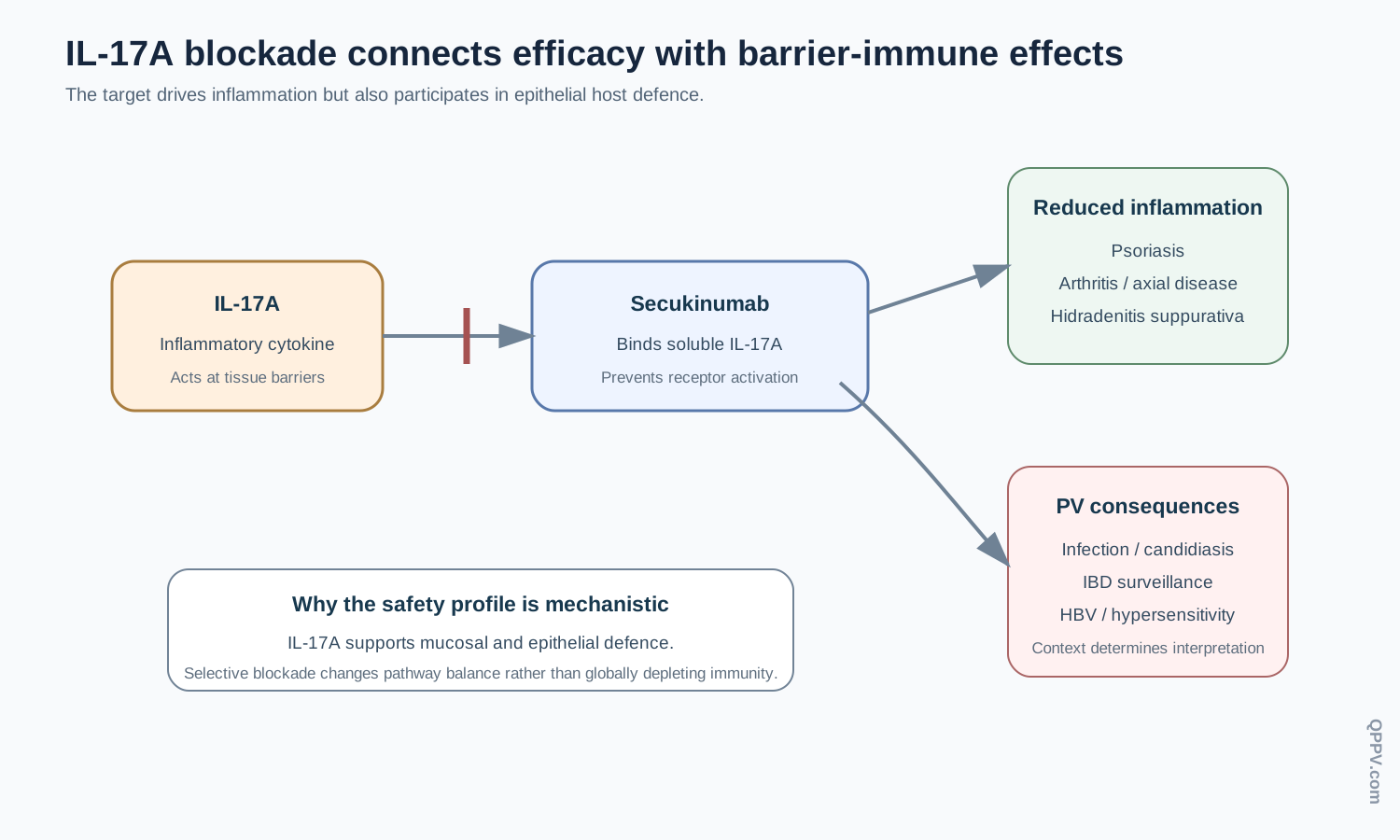
Figure 2. IL-17A neutralisation suppresses inflammatory signalling in skin, joints and entheses while also modifying epithelial host-defence pathways. The same target therefore connects efficacy with selected infection and mucosal safety questions.
The mechanism is neutralisation, not T-cell depletion. A patient treated with secukinumab does not lose the entire Th17-cell population simply because one of its major effector cytokines is blocked. That distinction is important when comparing secukinumab with cell-directed antibodies such as anti-CD20 therapies.
Development and regulatory history
Secukinumab entered clinical development after genetic, translational and therapeutic evidence had established the importance of the IL-23/IL-17 pathway in psoriasis and related inflammatory diseases. The European Union authorised the medicine in January 2015, initially establishing IL-17A neutralisation as a major therapeutic approach in plaque psoriasis.
The authorised disease spectrum subsequently widened. Current EU product information includes plaque psoriasis in adults and children from 6 years of age, psoriatic arthritis, radiographic and non-radiographic axial spondyloarthritis, enthesitis-related arthritis and juvenile psoriatic arthritis from 6 years of age, and moderate-to-severe hidradenitis suppurativa in adults.
This expansion matters for pharmacovigilance. A safety database that began largely as adult dermatology exposure now includes paediatric patients, rheumatologic populations, axial disease and hidradenitis suppurativa. Aggregate analyses should therefore preserve indication, age and concomitant treatment rather than assuming one homogeneous secukinumab population.
Clinical use and treatment context
The authorised indication changes the meaning of many adverse events. A respiratory infection in an otherwise healthy adult with plaque psoriasis is not clinically equivalent to infection in a patient with severe hidradenitis suppurativa receiving repeated antibiotics or in a patient with inflammatory arthritis receiving methotrexate or corticosteroids. The molecule is the same, but background risk and competing explanations differ.
Paediatric exposure introduces additional questions. Age, body weight, vaccination history, caregiver administration and transition between paediatric and adult dosing frameworks can all affect case interpretation. In juvenile psoriatic arthritis or enthesitis-related arthritis, the disease itself and concomitant immunomodulation may contribute to infection or laboratory abnormalities.
Major safety domains
Infection and mucosal host defence
Current product information identifies infection as a central safety consideration. IL-17A contributes to epithelial and mucosal defence, so upper respiratory infections and mucocutaneous fungal infections are biologically plausible consequences of pathway inhibition. Serious infection requires assessment of organism, site, disease severity, concomitant immunosuppression and temporal relationship to treatment.
Candida infection deserves separate attention rather than being pooled indiscriminately with all infections. Oral, oesophageal, genital and cutaneous candidiasis have different clinical implications and may provide useful mechanistic evidence because IL-17 signalling contributes directly to antifungal mucosal immunity.
Patients with clinically important active infection should not be treated until the infection is controlled. Reports of tuberculosis, opportunistic infection or recurrent serious infection require confirmation of diagnosis and review of baseline screening, exposure history and concomitant immunosuppression.
Inflammatory bowel disease
A particularly important distinction for secukinumab is the relationship between IL-17A inhibition and inflammatory bowel disease (IBD). Current EU product information states that new-onset or exacerbations of Crohn’s disease and ulcerative colitis have been reported and recommends discontinuation if IBD develops or worsens.
This safety issue is conceptually important because it demonstrates that blocking an inflammatory cytokine can have opposite consequences in different tissues. IL-17A contributes to inflammatory pathology in psoriasis and spondyloarthritis, yet it also participates in intestinal barrier integrity and mucosal immune homeostasis. A treatment that is beneficial in skin and joints is therefore not automatically beneficial in the intestine.
A suspected IBD case should include pre-treatment gastrointestinal history, family history where relevant, diarrhoea characteristics, abdominal pain, weight change, inflammatory markers, endoscopy or imaging, histology, infection testing and outcome after treatment interruption. Coding a case simply as “diarrhoea” loses the information needed for signal assessment.
Hypersensitivity
Anaphylaxis, angioedema and other serious hypersensitivity reactions have been reported. High-value follow-up includes time from injection to onset, organ systems involved, treatment, prior doses, recurrence, product presentation and potential alternative triggers.
Injection-site reactions should be separated from systemic hypersensitivity. Local erythema or pain after self-injection has a different mechanism and clinical significance from immediate multisystem anaphylaxis.
Hepatitis B reactivation
Current EU product information recognises hepatitis B virus reactivation as a possible event during secukinumab treatment. The pharmacovigilance value of an HBV report depends on baseline serology, viral load where available, prior infection status, antiviral prophylaxis, concomitant immunosuppression and the timing of reactivation relative to exposure.
A positive hepatitis B core antibody is not itself reactivation. Aggregate analyses should distinguish prior exposure, chronic infection and virologically confirmed reactivation.
Vaccination and immune context
Live vaccines should not be given concurrently with secukinumab. Inactivated or non-live vaccines may be used. In paediatric patients, age-appropriate immunisation status should be considered before treatment.
For pharmacovigilance, a post-vaccination event requires enough information to identify the vaccine type, timing and whether the vaccine was live or non-live. A report that merely states “vaccination reaction while on secukinumab” is insufficient for meaningful assessment.
Neutrophils and laboratory findings
Reductions in neutrophil counts have been observed in clinical development and post-authorisation experience, although severe clinically consequential neutropenia has not defined the overall safety profile. Laboratory reports should preserve absolute neutrophil count, infection status, concomitant medicines and temporal evolution.
Immunogenicity and loss of response
As with other therapeutic proteins, anti-drug antibodies may develop. Immunogenicity should not be assumed to explain every case of secondary loss of efficacy. Disease progression, non-adherence, under-dosing, increased body weight, interrupted treatment, incorrect self-administration and competing diagnoses may all produce apparent treatment failure.
Where anti-drug antibody or drug-level information is available, it becomes one component of the causal assessment rather than a standalone explanation.
Product administration and self-injection
Secukinumab is supplied in presentations intended for subcutaneous use. Self-administration changes the safety-information pathway because device handling, incomplete dosing, storage excursions and injection technique may all affect actual exposure.
Medication-error cases should therefore capture the presentation, strength, device, intended dose, actual dose delivered, whether leakage occurred, whether the full injection was completed, storage history and any clinical consequence. These details distinguish a product-use problem from intrinsic pharmacological failure.
Biological traceability
As with all biological medicinal products, reports should preserve the exact product and batch whenever available. This is particularly important where multiple presentations, devices or biological products in the same therapeutic class coexist. Traceability supports investigation of product-quality clusters and avoids falsely aggregating events across non-identical biological products.
Pharmacovigilance case assessment
Secukinumab cases are most interpretable when reconstructed around four variables: indication, age, treatment chronology and concomitant immune-modifying therapy. Those variables define background risk and help distinguish pathway-mediated events from disease-related or treatment-combination effects.
Event-specific follow-up priorities
| Event or issue | High-value follow-up information |
|---|---|
| Serious infection | Site, organism, microbiology, imaging, severity, hospitalisation, concomitant immunosuppression, outcome |
| Candidiasis | Anatomical site, culture if available, recurrence, treatment, immune status and other predisposing factors |
| Suspected IBD | Baseline GI history, symptoms, CRP/calprotectin, endoscopy/imaging, histology, infection testing, dechallenge and outcome |
| Hypersensitivity | Latency, phenotype, dose number, treatment, recurrence, device/presentation and competing triggers |
| HBV reactivation | Baseline HBsAg/HBcAb, HBV DNA, antiviral prophylaxis, liver tests, concomitant immunosuppression and clinical outcome |
| Neutropenia | Baseline and nadir ANC, infection status, concomitant medicines, recovery and rechallenge information |
| Loss of efficacy | Indication, objective disease measures, adherence, injection technique, dose interval, interruptions and immunogenicity data if available |
| Paediatric exposure | Age, weight, indication, dosing chronology, vaccination history and caregiver administration |
Signal detection and aggregate review
Aggregate review should stratify cases by indication rather than treating all secukinumab exposure as one population. Hidradenitis suppurativa, psoriasis, axial spondyloarthritis and paediatric arthritis differ in infection burden, concomitant treatment, baseline inflammatory activity and clinical endpoints.
IBD should be retrieved as a medically coherent case series that distinguishes new-onset Crohn’s disease, new-onset ulcerative colitis and exacerbation of established disease. Generic gastrointestinal terms may be useful for broad screening, but signal assessment requires diagnostic refinement.
Candidiasis likewise benefits from site-specific review. Pooling oral thrush, oesophageal candidiasis and genital candidiasis into a single undifferentiated term can obscure severity and host-factor differences.
Periodic benefit-risk evaluation
Periodic evaluation should integrate sustained disease control with serious infection, candidiasis, IBD, hypersensitivity, hepatitis B reactivation, immunogenicity, laboratory findings and medication-error patterns. Expanding use across age groups and disease areas requires exposure stratification; a mature safety profile should not erase clinically meaningful subpopulations.
The benefit-risk question is also tissue-specific. The efficacy of IL-17A neutralisation in skin, joints and axial disease should be considered alongside the possibility that the same pathway has protective functions in intestinal and mucosal biology.
Risk management and operational controls
Current regional product information governs contraindications, infection precautions, vaccination advice and management of inflammatory bowel disease or serious hypersensitivity. Recommended operational practice can add structured case follow-up, indication capture, age stratification, targeted IBD review, HBV chronology and biological-product traceability.
These operational controls are not themselves legal requirements unless incorporated into an applicable regulatory obligation. Their purpose is to make the pharmacovigilance system capable of detecting clinically coherent patterns.
Potential failure modes
The following are illustrative scenarios, not published inspection findings:
- Diarrhoea is coded without investigating whether it represents infection, medication intolerance or new inflammatory bowel disease.
- All infections are pooled, so recurrent mucosal candidiasis disappears within a large respiratory-infection dataset.
- A paediatric case is analysed without age, weight or vaccination history.
- HBV core-antibody positivity is misclassified as hepatitis B reactivation without virological evidence.
- Apparent lack of efficacy is assessed without confirming dose delivery or self-injection technique.
- Events from hidradenitis suppurativa and psoriasis are compared without accounting for different baseline infection and antibiotic exposure.
Inspection and governance perspective
An inspector assessing secukinumab pharmacovigilance could examine whether cases remain stratifiable by indication and age, whether potential IBD cases receive medically targeted follow-up, whether serious infection and hepatitis B reports preserve objective evidence, and whether biological-product and batch information can be retrieved.
The effectiveness question is whether the system can translate IL-17A biology into useful surveillance. A database that captures only adverse-event terms but loses intestinal phenotype, infection site or treatment context would be less capable of detecting meaningful changes in the safety profile.
Practical checklist
For a secukinumab case or aggregate review, confirm:
- authorised indication and disease activity;
- age and relevant paediatric context;
- treatment start date, dose interval and interruptions;
- concomitant corticosteroids, methotrexate or other immunomodulators;
- organism and anatomical site for infection;
- candidiasis site and recurrence history;
- gastrointestinal history and diagnostic evidence for suspected IBD;
- hepatitis B baseline status for reactivation reports;
- objective blood counts for neutropenia;
- exact product, presentation, batch and administration details;
- adherence and self-injection technique for lack-of-efficacy reports.
Key Takeaways
Secukinumab is a fully human monoclonal antibody that neutralises IL-17A. Its mechanism explains both its broad efficacy across psoriasis, spondyloarthritis and related inflammatory diseases and its characteristic pharmacovigilance questions involving infection, mucosal candidiasis and inflammatory bowel disease.
The central PV principle is context preservation. Indication, age, concomitant therapy, gastrointestinal phenotype, infection site and actual dose delivery determine whether a report can be interpreted mechanistically rather than merely counted.
References
- European Medicines Agency. Secukinumab: EPAR and current product information. EU marketing authorisation issued January 2015; product information current at the time of review. https://www.ema.europa.eu/en/medicines/human/EPAR/cosentyx
- European Medicines Agency. Secukinumab product information. Warnings and precautions include infection, inflammatory bowel disease, hypersensitivity, hepatitis B reactivation and vaccination considerations. https://www.ema.europa.eu/en/documents/product-information/cosentyx-epar-product-information_en.pdf
- European Medicines Agency. Secukinumab risk-management plan. https://www.ema.europa.eu/en/documents/rmp/cosentyx-epar-risk-management-plan_en.pdf
- Langley RG, Elewski BE, Lebwohl M, et al. Secukinumab in plaque psoriasis—results of two phase 3 trials. N Engl J Med. 2014;371:326-338. doi:10.1056/NEJMoa1314258.
- Baeten D, Sieper J, Braun J, et al. Secukinumab, an interleukin-17A inhibitor, in ankylosing spondylitis. N Engl J Med. 2015;373:2534-2548. doi:10.1056/NEJMoa1505066.
Regulatory Note
Authorised indications, paediatric age ranges, presentations, dosing regimens and safety wording can change and differ between regions. This article explains the scientific and pharmacovigilance framework and does not replace current regional product information or specialist clinical guidance. Regulatory information was checked against EMA material current in September 2026.