Semaglutide: Classification, History, Mechanism of Action, Safety and Pharmacovigilance
- Semaglutide: Classification, History, Mechanism of Action, Safety and Pharmacovigilance
- Multidimensional classification
- Discovery and development history
- Product and regulatory landscape
- Manufacturing, formulation and quality
- Detailed mechanism of action
- Efficacy evidence and product-specific interpretation
- Gastrointestinal effects, hydration and renal consequences
- Pancreatitis and gallbladder disease
- Diabetic retinopathy and eye safety
- Hypoglycaemia, hypersensitivity and other important risks
- Pregnancy, lactation and special populations
- Product-specific pharmacovigilance framework
- Signal detection and governance
- Practical checklist
- Key takeaways
- References
- Regulatory Note
Semaglutide is a long-acting glucagon-like peptide-1 (GLP-1) receptor agonist used through distinct authorised products for type 2 diabetes and weight management. It illustrates why one active substance is not one therapeutic context. Ozempic, Rybelsus and Wegovy contain semaglutide but differ in route, strength, administration, indication and product information. A report that says only “semaglutide” may therefore be inadequate for clinical interpretation or pharmacovigilance.
The medicine’s pharmacology links efficacy and tolerability. GLP-1 receptor activation improves glucose-dependent insulin secretion, reduces inappropriate glucagon secretion during hyperglycaemia, slows gastric emptying and reduces energy intake. The same effects explain why nausea, vomiting, diarrhoea and constipation are common, why initiation and dose escalation matter, and why dehydration can become clinically important.
Ozempic was Novo Nordisk’s highest-selling product in 2025, with reported sales of DKK 127.089 billion. That commercial scale creates an unusually large and heterogeneous exposed population: people with diabetes, people with obesity, users of different products and doses, and people exposed through authorised and unauthorised routes. Safety interpretation must retain that context.
Multidimensional classification
| Axis | Semaglutide classification | Practical significance |
|---|---|---|
| Biological class | Recombinant DNA-derived peptide analogue | A modified analogue of the endogenous incretin GLP-1 |
| Molecular format | 31-amino-acid GLP-1 analogue with fatty-acid side chain | Albumin binding and enzymatic stability enable prolonged exposure |
| Target | GLP-1 receptor | A class-B G-protein-coupled receptor expressed in pancreatic and extra-pancreatic tissues |
| Mechanistic class | GLP-1 receptor agonist | Enhances glucose-dependent insulin secretion and regulates appetite-related pathways |
| Pharmacokinetic class | Long-acting; once-weekly injection for injectable products | Titration and adverse effects have a prolonged temporal relationship to exposure |
| Product presentations | Weekly subcutaneous injection and oral tablet products | Route, absorption, dose and instructions are product-specific |
| Therapeutic class | Antidiabetic and anti-obesity medicine, depending on product | Indication determines benefit–risk framework and treatment goals |
| Safety architecture | Exposure, dose escalation, co-medication and baseline disease dependent | GI effects, retinopathy context, gallbladder disease and hypoglycaemia require structured assessment |
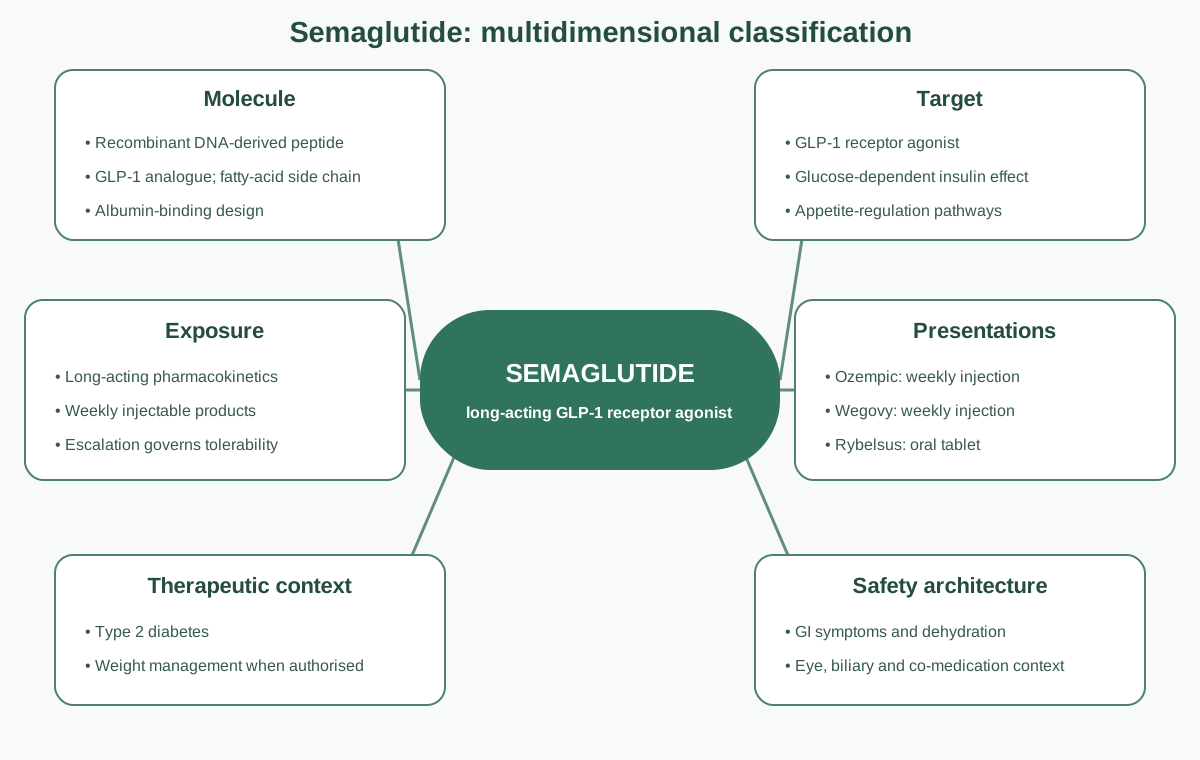
Figure 1. Semaglutide is simultaneously a recombinant peptide analogue, a long-acting GLP-1 receptor agonist and the active substance in several non-interchangeable products. The linked dimensions determine how efficacy and safety should be interpreted.
Discovery and development history
Native GLP-1 is an incretin hormone with a short circulating half-life because it is rapidly degraded and cleared. Development of therapeutic GLP-1 receptor agonists therefore required prolonged activity without losing receptor agonism. Earlier agents established the class; semaglutide was designed for stronger albumin association and protection from enzymatic degradation.
Semaglutide is a GLP-1 analogue with approximately 94% sequence homology to native human GLP-1. Substitution at position 8 improves resistance to dipeptidyl peptidase-4 degradation; modification at lysine 26 with a linker and C18 fatty diacid promotes albumin binding; and a modification at position 34 supports site-specific acylation. These features extend its half-life sufficiently for once-weekly subcutaneous use.
The injectable diabetes product Ozempic received EU marketing authorisation in 2018. Oral semaglutide, Rybelsus, followed in 2020, using an absorption enhancer to permit tablet administration. Wegovy received EU authorisation in 2022 for chronic weight management in defined populations. The lifecycle then broadened further: cardiovascular and kidney-outcome evidence supported additional US indications, the FDA granted accelerated approval in 2025 for Wegovy in adults with non-cirrhotic metabolic dysfunction-associated steatohepatitis (MASH) with F2–F3 fibrosis subject to confirmatory evidence, oral Wegovy became authorised in the US and EU, and a 7.2 mg weekly Wegovy injection was authorised in 2026. These developments are related semaglutide programmes, not alternative labels for one identical regimen.
Product and regulatory landscape
| Product | Route/presentation | Core EU therapeutic context | Key distinction |
|---|---|---|---|
| Ozempic | Once-weekly subcutaneous injection | Type 2 diabetes | Diabetes-focused dosing and monitoring context |
| Rybelsus | Once-daily oral tablet | Type 2 diabetes | Oral absorption is formulation- and administration-dependent |
| Wegovy | Once-weekly subcutaneous injection, including authorised 7.2 mg presentation | Weight management, alongside diet and physical activity, in defined populations | Injectable dose escalation and age/population provisions are product-specific |
| Wegovy | Once-daily oral tablet | Weight management in adults | EU oral presentations now include 1.5, 4, 9 and 25 mg tablets; the oral formulation has not been studied in adolescents |
The 2026 oral Wegovy lifecycle illustrates why regulatory status must be checked at the date of assessment. CHMP first recommended the oral formulation in May 2026; EMA's subsequently updated EPAR and authorised-presentations record show tablets as authorised EU presentations. Likewise, the US product landscape now includes oral Wegovy and a 7.2 mg weekly injection, while US diabetes labelling and indications do not map exactly onto EU product information. Pharmacovigilance must therefore preserve jurisdiction, product, route, strength and date rather than treating “semaglutide” as a static label.
Manufacturing, formulation and quality
Semaglutide is produced by recombinant DNA technology using Saccharomyces cerevisiae. The active substance’s peptide sequence and post-production modification, formulation, device and stability controls contribute to the final product. Apparent loss of effect may arise from inappropriate titration, missed doses, incorrect pen use, poor storage or counterfeit/unapproved supply; it must not automatically be attributed to a biological quality defect.
The injectable products are supplied in pre-filled pens, whereas Rybelsus is an oral formulation whose absorption depends on its tablet technology and administration instructions. A safety case should capture the exact brand, strength, device or tablet, batch if available, route, dose-escalation stage, storage and source of supply.
Detailed mechanism of action
GLP-1 receptors couple predominantly to Gs signalling. Receptor activation raises intracellular cyclic AMP and activates protein kinase A and EPAC-related pathways. In pancreatic beta cells, these signals amplify insulin secretion when ambient glucose is elevated. This glucose dependence is clinically important: semaglutide alone has a relatively low intrinsic hypoglycaemia risk, but hypoglycaemia risk increases when it is combined with insulin or a sulfonylurea.
In pancreatic alpha cells, semaglutide reduces glucagon secretion when glucose is elevated, contributing to reduced hepatic glucose output. The effect is not a simple permanent suppression of glucagon; counter-regulatory physiology and glucose state matter. Semaglutide also delays gastric emptying, especially early in treatment, and acts through central and peripheral pathways that reduce appetite and energy intake.
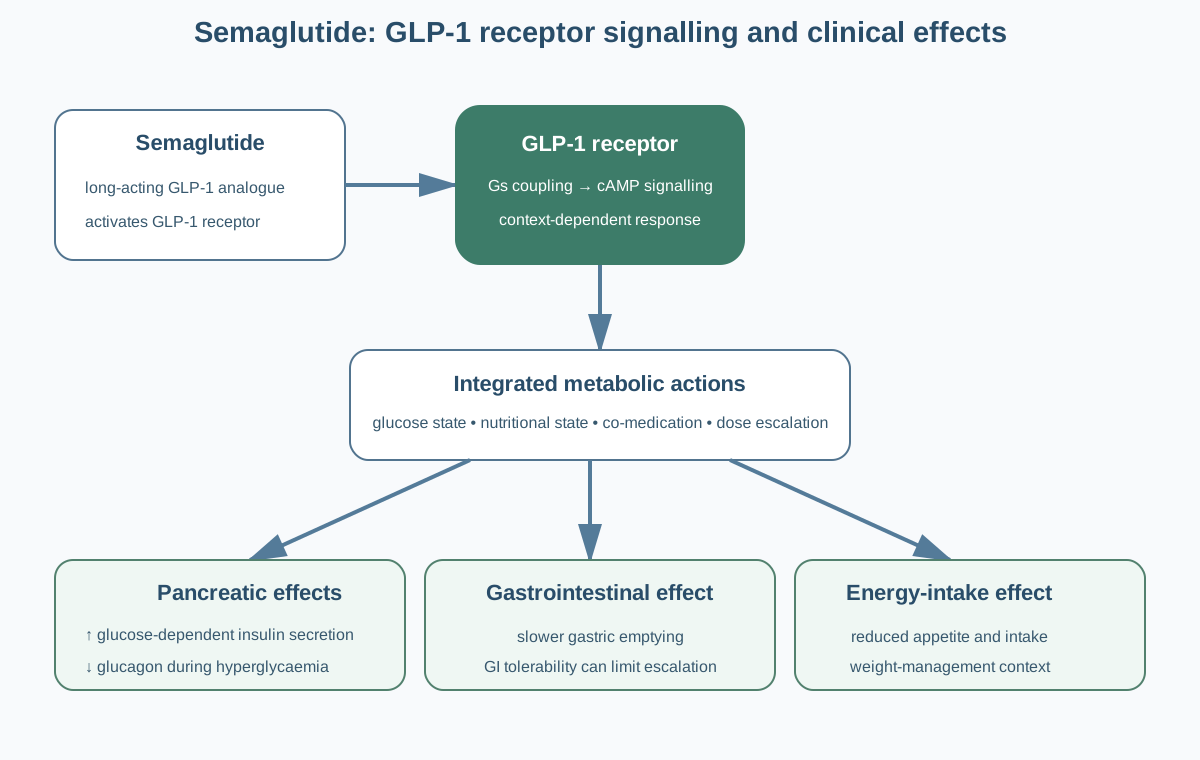
Figure 2. Semaglutide activates the GLP-1 receptor and increases cAMP-dependent signalling. The main established clinical effects are glucose-dependent insulin release, reduced glucagon during hyperglycaemia, slower gastric emptying and reduced energy intake. The figure does not imply that every observed clinical outcome is mediated by one pathway alone.
Pharmacokinetics and dose escalation
Albumin binding reduces renal filtration and protects semaglutide from rapid clearance; its prolonged half-life supports weekly administration of injectable products. The long exposure also means that dose increases, adverse effects and discontinuation cannot be interpreted as if the medicine had disappeared after one day.
Dose escalation is a tolerability control, not simply a route to the maximum dose. Nausea, vomiting and diarrhoea are often most prominent during escalation. The dose, date of each step, missed or repeated doses, concurrent dietary change and hydration status are therefore essential safety data.
Efficacy evidence and product-specific interpretation
In type 2 diabetes, semaglutide improves glycaemic control and commonly reduces body weight. Cardiovascular-outcome evidence differs by formulation and population. In SUSTAIN-6, injectable semaglutide reduced the composite cardiovascular outcome in a high-risk type 2 diabetes population, while also identifying a diabetic-retinopathy complication signal requiring careful interpretation.
In SELECT, once-weekly 2.4 mg semaglutide reduced the composite of cardiovascular death, nonfatal myocardial infarction and nonfatal stroke in people with established cardiovascular disease and overweight or obesity without diabetes. Trial eligibility, dose, route and background care define that finding; it must not be extrapolated to every semaglutide product, every dose or primary prevention.
Gastrointestinal effects, hydration and renal consequences
Nausea, diarrhoea, vomiting, constipation and abdominal pain are common adverse reactions. Most are manageable, but persistent vomiting or diarrhoea can cause volume depletion, electrolyte disturbance and deterioration of renal function. The causal pathway may be indirect: the medicine produces GI symptoms, fluid intake falls or losses rise, and renal function deteriorates in a susceptible person.
For a serious renal case, record baseline kidney function, symptoms, oral intake, fluid losses, diuretics, renin–angiotensin system medicines, intercurrent infection, laboratory values and response to interruption. “Acute kidney injury after semaglutide” is an event description, not an established direct nephrotoxic mechanism.
Semaglutide should be used cautiously in people with gastroparesis, and current EU product information does not recommend it in severe gastroparesis. Delayed gastric emptying is also relevant around general anaesthesia or deep sedation, where the clinical team must consider residual gastric contents and aspiration risk in accordance with current peri-procedural practice and product information.
Pancreatitis and gallbladder disease
Acute pancreatitis has been observed with GLP-1 receptor agonists. A suspected case requires symptom chronology, lipase/amylase, imaging, alcohol use, triglycerides, gallstones, previous pancreatitis and dechallenge outcome. If pancreatitis is confirmed, current Ozempic product information states that semaglutide should not be restarted.
Cholelithiasis and cholecystitis have been reported. Weight loss itself, baseline metabolic risk and the treatment context can contribute to gallstone disease; causality assessment should retain the rate and extent of weight loss, biliary imaging and other risk factors.
Diabetic retinopathy and eye safety
In SUSTAIN-6, diabetic-retinopathy complications occurred more often with semaglutide than placebo. Subsequent analyses suggest that much of the imbalance was concentrated in people with pre-existing retinopathy, poor baseline glycaemic control, insulin use and a large, rapid early HbA1c reduction. This supports a plausible early-worsening phenomenon but does not prove that every eye event is caused by semaglutide or that retinal surveillance can be reduced once glycaemia stabilises.
Current EU Ozempic information advises close monitoring in people with diabetic retinopathy treated with insulin. It also describes epidemiological data indicating increased risk of non-arteritic anterior ischaemic optic neuropathy (NAION) during semaglutide treatment, with discontinuation if NAION is confirmed. Sudden vision loss is an urgent ophthalmological presentation, not an event to defer until routine metabolic review.
Hypoglycaemia, hypersensitivity and other important risks
Semaglutide alone does not usually cause hypoglycaemia because its insulinotropic action is glucose dependent. Co-administration with insulin or a sulfonylurea changes that risk. A report should document the glucose value, symptoms, severity, rescue treatment, insulin/sulfonylurea dose, food intake, renal function, alcohol exposure and temporal relation to semaglutide titration.
Serious hypersensitivity reactions are uncommon but clinically important. Capture the precise phenotype, latency, product/device or tablet exposure, co-administered medicines, treatment, dechallenge and re-exposure. The active substance, excipients, device materials and an unrelated exposure should not be presumed interchangeable explanations.
Rodent thyroid C-cell tumours have occurred with some GLP-1 receptor agonists. Their relevance to humans remains uncertain and labelling differs between jurisdictions. This preclinical observation must not be reported as evidence that semaglutide causes human thyroid cancer. Conversely, a spontaneous thyroid event needs clinical diagnosis, pathology, latency and relevant background risk before it can inform signal evaluation.
Pregnancy, lactation and special populations
Product-specific information should be consulted before pregnancy exposure or breastfeeding counselling. For pharmacovigilance, capture timing relative to conception, last dose, diabetes/obesity indication, glycaemic control, concomitant medicines, maternal outcome and fetal/neonatal outcome. Dose escalation shortly before pregnancy recognition is a particularly relevant exposure detail.
Older adults, people with kidney impairment, people with diabetic eye disease, and people using insulin or sulfonylureas may require distinct risk assessment. The indication and co-medication frequently matter more than age alone.
Product-specific pharmacovigilance framework
The core analytical unit is the product–dose-escalation–symptom–metabolic-response trajectory:
indication and baseline disease → exact product and route → dose escalation and co-medication → symptoms and hydration → glycaemic/weight response → interruption or re-exposure → outcome
Minimum useful case information includes:
- exact product name, strength, formulation, pen or tablet, batch, route and source of supply;
- indication, baseline weight, HbA1c, kidney function, retinopathy status and relevant comorbidities;
- start date, every dose escalation, missed/repeated doses, administration technique and storage history;
- insulin, sulfonylurea and other glucose-lowering therapy with changes over time;
- GI symptoms, oral intake, fluid loss, weight trajectory and laboratory evidence of dehydration or kidney injury;
- imaging and alternative causes for pancreatitis, cholelithiasis, cholecystitis or abdominal pain;
- eye history, visual symptoms, retinal examination, NAION assessment and glycaemic change;
- action taken, dechallenge, rechallenge and outcome.
Counterfeit, compounded and unapproved supply
High demand can increase exposure through counterfeit, falsified, compounded or unapproved products. Such cases are not equivalent to an adverse reaction from an authorised medicine. They need separate recording of source, packaging, product identity, analytical testing when available and regulatory notification. A legitimate semaglutide adverse event should also not be dismissed merely because an online purchase is reported; product verification determines which safety system must investigate.
Lack of effect
Apparent lack of glycaemic or weight effect can reflect insufficient dose or duration, inaccurate administration, missed doses, concomitant medicines, behavioural factors, diagnostic error, individual biological variability or a non-authentic product. Do not designate a case as “quality defect” without evidence. For a cluster, compare product/batch, delivery route, storage, dose-escalation adherence and objective metabolic response.
Signal detection and governance
Aggregate assessment must stratify injectable diabetes, oral diabetes and obesity products; doses and co-medications differ materially. It should also separate people with pre-existing retinopathy, insulin exposure, renal impairment or prior gallbladder disease. Crude spontaneous-report totals cannot establish comparative incidence across these populations.
Effective governance links individual case review, medication-error surveillance, product-quality complaints, counterfeiting investigations, literature monitoring, periodic safety reporting and communication of label changes. Medical review is essential for syndromes that require a pattern of data—such as volume depletion with renal deterioration or an eye event during rapid HbA1c improvement.
Common analytical failures include:
- recording “Ozempic” for a Wegovy or Rybelsus exposure;
- omitting titration dates and then assigning nausea to a stable maintenance dose;
- calling an AKI event direct nephrotoxicity without documenting GI losses and concomitant medicines;
- treating every retinopathy event as a direct retinal drug toxicity;
- interpreting hypoglycaemia without insulin or sulfonylurea exposure;
- combining authorised-product cases with counterfeit or unverified-product reports.
Practical checklist
- Confirm exact product, route, strength, indication and dose-escalation stage.
- Record baseline HbA1c, weight, kidney function, diabetes medicines and retinopathy status.
- Evaluate persistent GI symptoms for dehydration and renal consequences.
- Investigate abdominal pain for pancreatitis and biliary disease using clinical evidence.
- Treat sudden visual loss as urgent; document retinal and NAION assessment.
- Reassess insulin or sulfonylurea dosing when semaglutide is initiated or escalated.
- Preserve supply-chain information when product authenticity is uncertain.
- Use product-specific information, not a class summary, for dosing and risk management.
Key takeaways
Semaglutide is a long-acting recombinant DNA-derived GLP-1 analogue whose molecular modifications support albumin binding and prolonged exposure. It acts through GLP-1 receptor signalling to improve glucose-dependent insulin secretion, regulate glucagon during hyperglycaemia and reduce energy intake.
The semaglutide products are not interchangeable. Ozempic, Rybelsus and Wegovy have different routes, formulations, strengths, dose regimens and authorised therapeutic contexts, and those presentations have continued to evolve during 2025–26.
The most useful safety narrative is a trajectory: product and titration → GI symptoms and hydration → metabolic response → eye, pancreatic, biliary, renal or hypoglycaemic outcome. Product-specific and co-medication data determine whether a reported event can be interpreted.
References
- European Medicines Agency. Ozempic: Product information. Current version accessed September 2026.
- European Medicines Agency. Wegovy: EPAR.
- European Medicines Agency. Rybelsus: EPAR.
- Novo Nordisk. Annual Report 2025: Financial performance.
- Lau J, Bloch P, Schäffer L, et al. Discovery of the once-weekly glucagon-like peptide-1 (GLP-1) analogue semaglutide. J Med Chem. 2015;58:7370–7380.
- Marso SP, Bain SC, Consoli A, et al. Semaglutide and cardiovascular outcomes in patients with type 2 diabetes. N Engl J Med. 2016;375:1834–1844.
- Vilsbøll T, Bain SC, Leiter LA, et al. Semaglutide, reduction in glycated haemoglobin and the risk of diabetic retinopathy. Diabetes Obes Metab. 2018;20:889–897.
- Lincoff AM, Brown-Frandsen K, Colhoun HM, et al. Semaglutide and cardiovascular outcomes in obesity without diabetes. N Engl J Med. 2023;389:2221–2232.
- Husain M, Birkenfeld AL, Donsmark M, et al. Oral semaglutide and cardiovascular outcomes in patients with type 2 diabetes. N Engl J Med. 2019;381:841–851.
- European Medicines Agency. Guideline on good pharmacovigilance practices: Product- or Population-Specific Considerations II—Biological medicinal products.
- European Medicines Agency. First oral GLP-1 treatment for weight management. 22 May 2026.
- European Medicines Agency. Wegovy: EPAR and current product information. Updated 2026.
- US Food and Drug Administration. Wegovy prescribing information. 2026.
- US Food and Drug Administration. FDA approves higher-dose semaglutide. 19 March 2026.
- US Food and Drug Administration. Ongoing accelerated approvals: non-malignant haematological, neurological and other disorder indications. Current record for Wegovy MASH indication accessed October 2026.
- US Food and Drug Administration. Ozempic and Rybelsus semaglutide regulatory review: approval history. 2026.
Regulatory Note
This is an educational scientific and pharmacovigilance review, not prescribing advice. Semaglutide products differ by jurisdiction in indication, age range, formulation, route, dose escalation, contraindications and risk-minimisation instructions. Consult current product-specific information. Semaglutide, other GLP-1 receptor agonists and dual incretin agonists must not be treated as interchangeable for prescribing, safety assessment or traceability.