Sibeprenlimab: Classification, Mechanism and Pharmacovigilance
Sibeprenlimab targets APRIL, a B-cell survival and antibody-production ligand implicated in primary IgA nephropathy. Its regulatory story requires careful separation of the proteinuria-based accelerated indication, later kidney-function data and the precise status of the prescribing information.
1. Identity and classification
Sibeprenlimab is a humanised IgG2 monoclonal antibody that binds A Proliferation-Inducing Ligand (APRIL). It is classified as a selective anti-cytokine/ligand antibody. APRIL supports B-cell and plasma-cell survival and immunoglobulin production; it is not itself an immunoglobulin or an antibody directed against deposited kidney material.[1]
Primary IgA nephropathy is an immune-mediated kidney disease in which galactose-deficient IgA1 and related immune complexes contribute to glomerular injury. Sibeprenlimab’s intended action is upstream of kidney deposition: it reduces APRIL signalling and the production of pathogenic IgA-related species. It does not dissolve established deposits or remove the need to assess kidney function, proteinuria and other disease drivers.
2. Target biology and mechanism
Sibeprenlimab binds APRIL and blocks signalling through the B-cell maturation antigen (BCMA) and transmembrane activator and calcium-modulator and cyclophilin ligand interactor (TACI). The U.S. label reports reductions in serum galactose-deficient IgA1, IgA, IgG and IgM during treatment.[1] These changes show target-related pharmacology; they do not automatically predict an individual’s kidney outcome or establish clinical benefit by themselves.
The pathway is one contributor to IgA nephropathy biology. Clinical interpretation still requires baseline and serial proteinuria, estimated glomerular filtration rate (eGFR), blood pressure, concomitant renoprotective therapy and other relevant clinical information. A fall in proteinuria should not be silently equated with a proven long-term reduction in kidney failure unless the evidence and regulatory label support that conclusion.
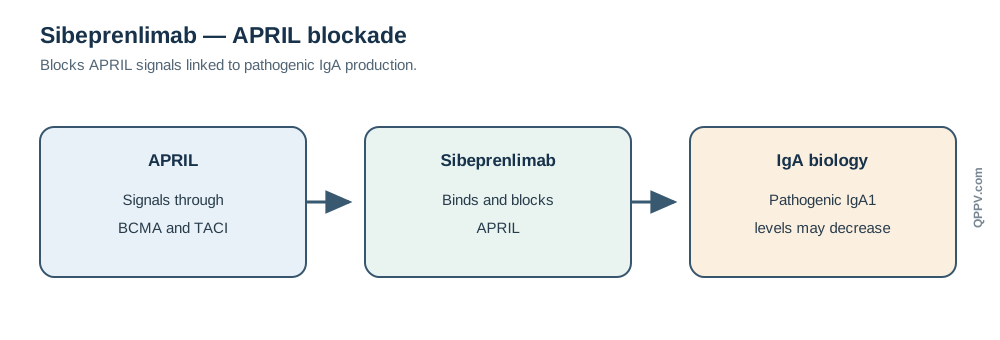
Figure 1. Sibeprenlimab blocks APRIL signalling through BCMA/TACI; downstream biomarker changes are not themselves kidney outcomes.
3. U.S. indication and clinical evidence
The U.S. indication is to reduce proteinuria in adults with primary IgA nephropathy at risk for disease progression. FDA granted accelerated approval on 25 November 2025 based on reduction in proteinuria. The prescribing information states that it had not been established whether treatment slows long-term kidney-function decline and that continued approval may depend on verification of clinical benefit in a confirmatory trial.[1,2]
In the phase 3 VISIONARY interim analysis, adults with IgA nephropathy received subcutaneous sibeprenlimab or placebo every four weeks. At nine months, the adjusted 24-hour urine protein-to-creatinine ratio was 51.2% lower with sibeprenlimab than with placebo; the primary publication reported similar reductions from baseline in the active-treatment group and an increase in the placebo group.[3] Proteinuria is a clinically relevant marker and was the accelerated-approval endpoint, but the original label appropriately distinguished this surrogate from established long-term kidney benefit.
Later 24-month VISIONARY kidney-function results were announced by the study sponsor on 4 August 2026, including a reported key secondary eGFR-slope result.[4] This newer report should be identified as sponsor-announced trial data; it does not itself change the wording of the FDA label. The article therefore preserves both facts: the accelerated label’s stated evidentiary basis and the later study report. Recheck the FDA label and regulatory status before using this summary for a current treatment decision.
4. Administration and safety
The U.S. regimen is 400 mg by subcutaneous injection every four weeks. The product is supplied as a prefilled syringe; correct storage, warming, injection site and device use should follow the current instructions for use.[1]
The label warns that immunosuppression may increase infection risk. In clinical trials, infections occurred in 49% of treated patients and 45% of placebo recipients. Patients with chronic or recurring infections may be at increased risk of serious infection; the label recommends assessment before treatment, monitoring during treatment and considering interruption if a serious infection develops.[1] Live vaccines are not recommended shortly before or during treatment because of potential effects on vaccine response and infection risk.[1,2]
APRIL inhibition also changes immunoglobulin concentrations. A lower IgG or IgM result is a pharmacodynamic observation that should be assessed alongside infection history, symptoms, laboratory trend and other immunosuppressive medicines. It is not, by itself, proof of clinically important antibody deficiency.
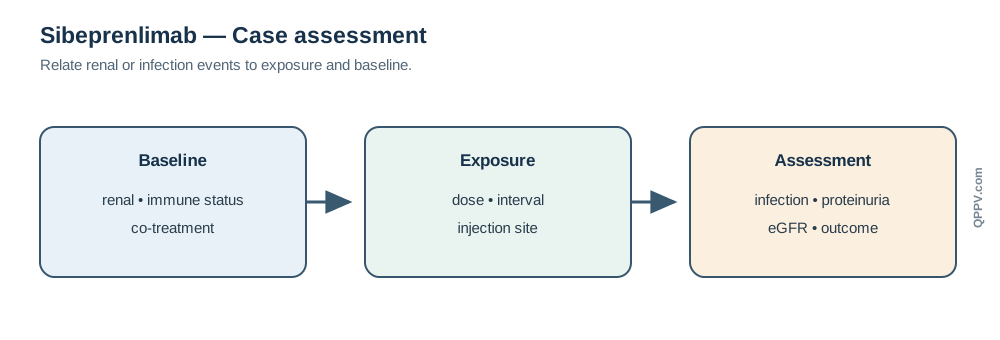
Figure 2. Review infection or kidney outcomes against dose chronology, immune status, renal trajectory and co-treatment.
5. Pharmacovigilance case assessment
For a suspected infection, record the infection site, pathogen testing, severity, treatment, outcome, baseline infection history and concurrent immunosuppressants. Include the timing of the last sibeprenlimab dose and the trajectory of immunoglobulin levels when available. Do not attribute an infection solely to a laboratory reduction in immunoglobulin or solely to the antibody’s mechanism.
For suspected lack of effect or worsening kidney disease, capture baseline and follow-up proteinuria, serum creatinine/eGFR, blood pressure, adherence, dose dates and concurrent renoprotective treatment. Distinguish an isolated proteinuria change from a sustained eGFR trajectory or a confirmed clinical outcome. A report of pregnancy exposure or hypersensitivity should include timing, outcome and relevant follow-up, in line with the product information.[1]
Keep clinical evidence and regulatory evidence separate in case narratives. The label’s accelerated status concerns the population-level basis for authorisation; it does not determine the causality assessment of an individual report. Likewise, later sponsor-reported trial results do not automatically revise the expectedness or regulatory status of an event.
6. Regulatory status and practical safeguards
As of the cited FDA label, sibeprenlimab has U.S. accelerated approval for reducing proteinuria in adults with primary IgA nephropathy at risk of progression.[1,2] The label states that long-term slowing of kidney-function decline had not been established at the time of that version. The two-year VISIONARY results announced in August 2026 post-date that label version and should be described separately unless and until a revised label or FDA action changes the approved indication.[4]
For pharmacovigilance, preserve the difference between biomarker response, kidney-function outcome and regulatory confirmation. Record the evidence version used in a benefit-risk discussion, especially when trial data, prescribing information and post-authorisation communications were published at different times.
Key takeaways
- Sibeprenlimab blocks APRIL and reduces signalling through BCMA and TACI.
- The cited U.S. accelerated indication is based on proteinuria reduction, not a label-established long-term kidney outcome.
- Two-year VISIONARY results were announced by the sponsor in August 2026 and should be dated and attributed as later study evidence.
- Infection, immunoglobulin changes, renal trends and concomitant treatment all matter in case assessment.
References
- U.S. Food and Drug Administration. VOYXACT prescribing information. 2025.
- U.S. Food and Drug Administration. Accelerated approval notice for sibeprenlimab. 25 November 2025.
- VISIONARY Trial Investigators Group. Sibeprenlimab in IgA Nephropathy: Interim Analysis of a Phase 3 Trial. New England Journal of Medicine. 2026;394:635–646.
- Study sponsor. VISIONARY two-year eGFR results announcement. 4 August 2026. Sponsor-reported results; not an FDA label update.
Regulatory Note
This article describes the FDA label and public trial information checked on 25 September 2026. It is an educational reference, not a treatment recommendation or a substitute for current jurisdiction-specific product information, applicable law or clinical judgement.