Signal Management for Biological Medicinal Products
A safety signal is information suggesting a new potentially causal association, or a new aspect of a known association, between a medicine and an event that warrants further investigation. A signal is a hypothesis, not proof. Signal management is the controlled process that detects such hypotheses, determines whether they deserve formal evaluation, assesses the total evidence and converts conclusions into proportionate action.
A scientific analogy is radar. A radar return indicates that something may be present; it does not identify the object or establish danger. Detection sensitivity, background noise and the cost of missing an important object influence what is examined. The analogy stops there: pharmacovigilance signals arise from heterogeneous clinical, epidemiological, quality and scientific evidence, not one physical measurement.
For a biological medicine, the “medicine” in a drug–event combination may have several nested identities: target class, active substance, authorised product, brand, batch, manufacturing period, formulation, route or device. The correct level is part of the hypothesis. “The antibody causes loss of effect” is different from “one injector lot delivered incomplete doses” and from “target blockade increases opportunistic infection risk”.
Table of Contents
- Regulatory framework and terminology
- Continuing worked example
- Signal-management system design
- Data-source readiness
- Spontaneous reports and EudraVigilance
- Clinical and observational evidence
- Literature, quality and manufacturing sources
- Exposure and product hierarchy
- Signal detection
- Qualitative detection
- Disproportionality and quantitative screening
- Observed-versus-expected analysis
- Batch, manufacturing-period and device surveillance
- Signal validation
- Signal confirmation
- Signal analysis and prioritisation
- Signal assessment
- Case-series assessment
- Immunogenicity assessment
- Quality and manufacturing assessment
- Biosimilar and switching assessment
- Class and target assessment
- Recommendations and regulatory action
- Communication, tracking and closure
- Interfaces with PSURs and RMPs
- Governance, documentation and inspection evidence
- Practical workflow
- Key Takeaways
- References
- Regulatory Note
Regulatory framework and terminology
Commission Implementing Regulation (EU) No 520/2012 establishes requirements for signal management within EU pharmacovigilance. GVP Module IX explains the lifecycle and responsibilities. Module IX Addendum I addresses methodological aspects of detection from spontaneous reports. GVP Product- or Population-Specific Considerations II adds requirements and recommendations relevant to biologicals. Current EMA signal-management questions and answers should be checked for procedural detail.
Validation tests whether available evidence contains sufficient documentation and novelty to justify further analysis. Confirmation is the EU procedural step in which the competent authority or responsible lead agrees that the validated signal should proceed. Prioritisation determines urgency using seriousness, severity, preventability, exposure, public-health impact and strength of evidence. Assessment evaluates the total evidence and reaches a recommendation.
These terms describe connected decisions, not synonyms.
Continuing worked example
Fictional mAb-Z is an immunomodulatory monoclonal antibody marketed as an infusion and a self-injected presentation. Biosimilars exist. During one quarter:
- six reports describe delayed anaphylaxis after different batches;
- fifteen reports describe loss of effect after switching;
- eight device complaints from one lot document incomplete injection;
- a registry suggests more serious fungal infection than expected;
- a manufacturing change altered a glycan distribution within the approved comparability range.
The example is illustrative and does not represent a real medicine.
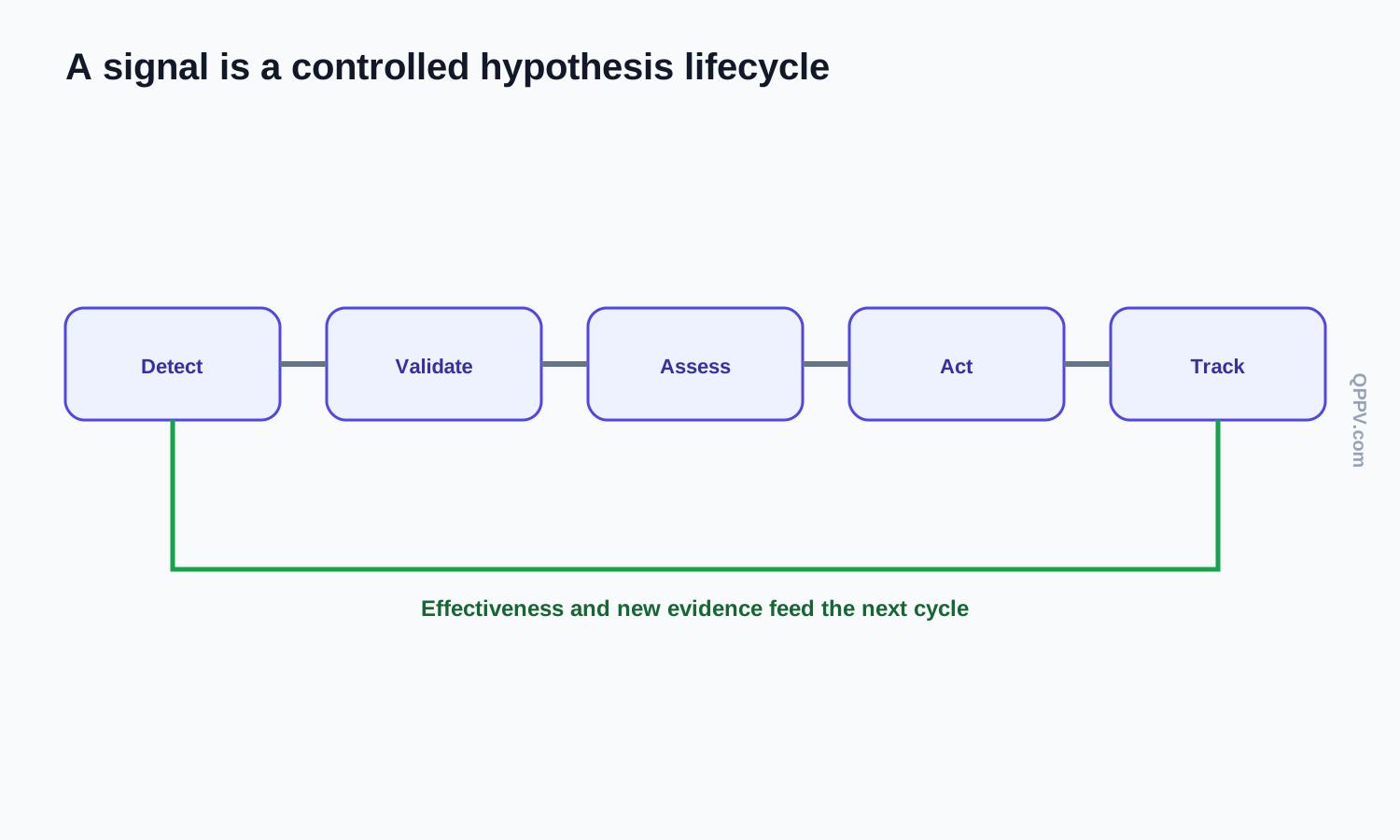
Figure 1. Signal management moves from observation to a defined hypothesis, evidence assessment, recommendation and action. Tracking continues until actions and residual uncertainty are controlled.
Signal-management system design
A signal system needs written methods, defined review frequency, product assignments, data access, medical and statistical competence, escalation routes, timelines, governance and an audit trail. The method should reflect product age, exposure, known risks and data volume. One threshold is unlikely to work equally for a newly launched rare-disease antibody and a mature high-volume biosimilar.
For biologicals, the safety database must preserve brand and batch where available, and the signal team must access product complaints, quality investigations, manufacturing changes, immunogenicity data and actual-use exposure. A pharmacovigilance procedure that cannot connect to quality information is structurally incomplete for product-specific signal work.
Data-source readiness
Spontaneous reports and EudraVigilance
Individual case safety reports provide clinical detail and may reveal rare events. Their limitations include under-reporting, stimulated reporting, missing denominators, duplicate reports and incomplete product identity. EudraVigilance statistical outputs help screening but do not replace case review.
For biologicals, calculate and trend completeness of brand, batch, route and device fields. “Unknown batch” is not evidence that batches are irrelevant; it is a data-quality limitation.
Clinical and observational evidence
Trials provide defined populations and denominators but may be too small or short for rare or delayed risks. Registries and databases provide scale and routine-practice context but may identify only the active substance, making brand or switch comparisons unreliable.
Immunogenicity studies require assay context: sampling time, drug tolerance, titre, persistence, neutralising activity, pharmacokinetics and clinical outcomes.
Literature, quality and manufacturing sources
Literature can supply case detail, mechanism, class evidence and independent studies. Product-quality complaints can reveal particulate matter, leakage, incomplete dose, contamination or storage problems. Manufacturing data can define affected batches and periods.
A quality deviation is not automatically a safety signal. It becomes pharmacovigilance-relevant when patient exposure and a plausible clinical consequence exist or when the defect itself requires safety action.
Exposure and product hierarchy
Signal interpretation needs the best available exposure denominator. Hospital biological use may be poorly represented in prescription databases. Marketing authorisation holders should seek product-specific actual-use data where feasible.
Before screening, define a hierarchy:
| Level | Example question |
|---|---|
| Target/class | Does complement inhibition increase meningococcal infection? |
| Active substance | Is an event associated with eculizumab? |
| Product/brand | Is one product overrepresented after exposure adjustment? |
| Batch/period | Did events cluster after a manufacturing change? |
| Formulation/route | Does subcutaneous use alter hypersensitivity? |
| Device/use | Are incomplete doses linked to one injector? |
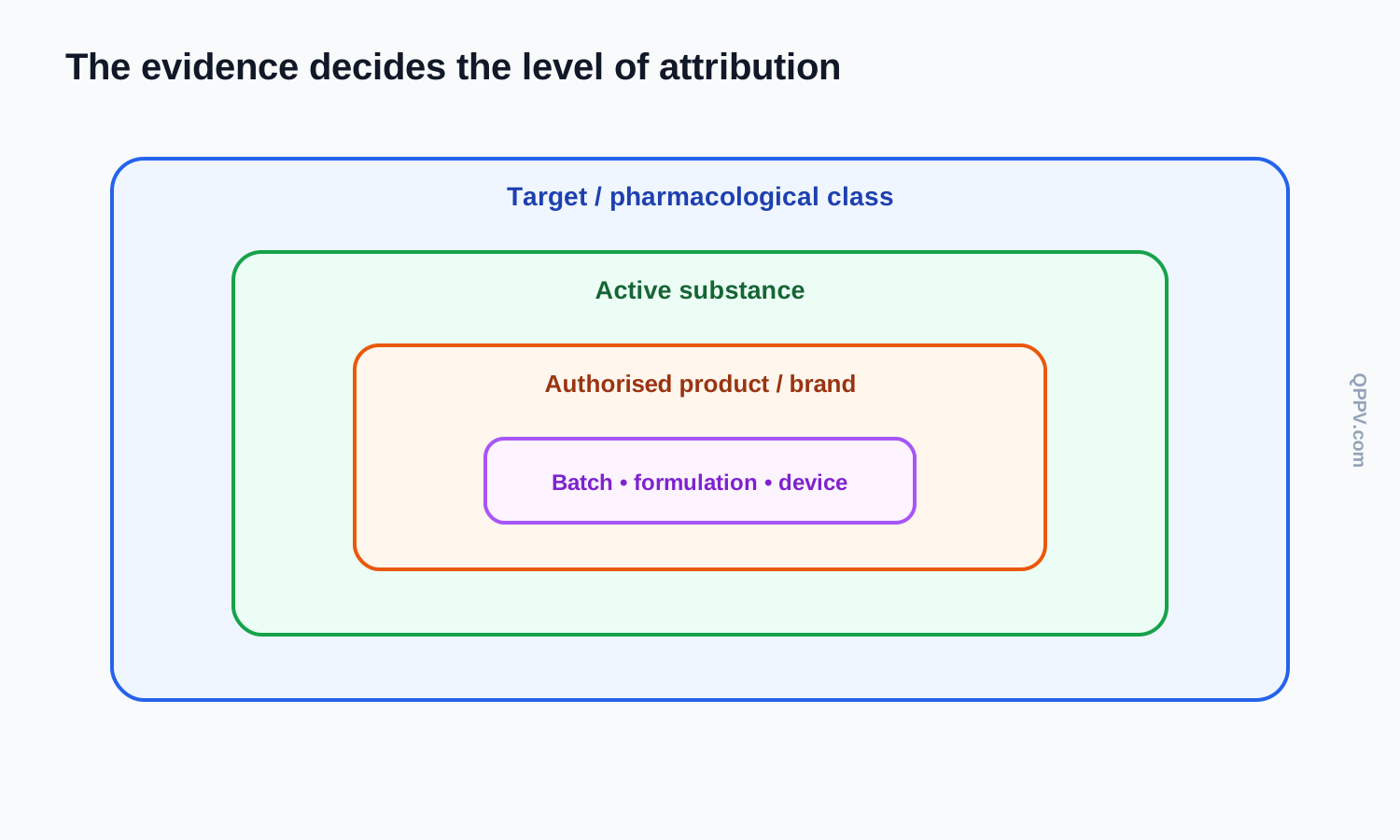
Figure 2. Evidence may support different levels of attribution. Analysis should move between levels without losing product identity or fragmenting class evidence.
Signal detection
Qualitative detection
Qualitative detection includes medical review of cases, literature, trial findings, aggregate reports, study results, quality complaints and regulatory intelligence. One well-documented serious case can be more informative than many poorly documented reports.
For mAb-Z, delayed anaphylaxis across different batches has clinical coherence and seriousness. The six cases may deserve review even without statistical disproportionality.
Disproportionality and quantitative screening
Disproportionality asks whether a drug–event pair is reported more often than expected relative to other pairs in the same database. It detects reporting patterns, not incidence or causality.
Biological-specific stratification can reveal or erase patterns. Active-substance aggregation improves power for a class effect; brand stratification may detect product specificity but becomes unstable when reports or exposure are small. Reporting stimulated by a biosimilar launch or switch can create an apparent imbalance.
Review MedDRA hierarchy, related terms, indication, age, geography, time and duplicates. Anaphylaxis may be coded under several terms; loss of effect may coexist with disease progression or device failure.
Observed-versus-expected analysis
Observed-versus-expected analysis compares observed events with expected background occurrence in a defined population and time. Its value depends on compatible case definitions, risk windows, population characteristics and exposure estimates.
For fungal infection with mAb-Z, the comparator must reflect severe inflammatory disease and concomitant immunosuppression. A general-population rate would exaggerate the contrast.
Batch, manufacturing-period and device surveillance
Analyse reports against batch distribution, size, geography and timing. A batch with more reports may simply have greater exposure. Use complaint data, retained-sample testing and distribution records.
For the injector lot, eight complaints among a defined distributed quantity create a product-quality hypothesis. Link associated clinical events without counting one complaint and one ICSR as two independent patients.
Signal validation
Validation asks whether the information is sufficiently documented and whether it adds something new to current knowledge. Define the hypothesis in one sentence with population, exposure, event and proposed level.
Validation questions include:
- Are cases identifiable and clinically compatible?
- Is chronology plausible?
- Is the event already adequately described in product information?
- Does evidence suggest greater severity, frequency, new population or new mechanism?
- Are alternative explanations overwhelming?
- Is there credible biological or quality plausibility?
- Are duplicates removed?
- Is product identity adequate for the proposed level?
mAb-Z examples: delayed anaphylaxis validates as a possible active-substance/product signal. The injector cluster validates as a lot/device issue. “Loss of effect after switching” may validate as a broad hypothesis but requires separation of nocebo, dosing gaps, immunogenicity and device delivery.
A validation memo should record searches, cases, reference information, reasoning, decision and reviewer.
Signal confirmation
In EU regulatory signal management, confirmation is a procedural authority decision following validation. It determines whether the signal proceeds for formal analysis and prioritisation. A company’s internal governance may use different labels; it should not misrepresent internal acceptance as regulatory confirmation.
Provide a concise signal description, supporting evidence, current product information, affected products and proposed urgency. For biologicals, state explicitly whether the hypothesis might apply to reference product, biosimilars or the whole class and why evidence is or is not product-specific.
Signal analysis and prioritisation
Analysis refines the validated hypothesis. Review case counts, clinical patterns, time to onset, dose, route, dechallenge/rechallenge, alternative causes, exposure, reporting trends, trials, studies, literature, class information, quality data and regulatory history.
Prioritisation determines speed and resources. Consider seriousness, severity, reversibility, preventability, vulnerable populations, exposure, public-health impact, evidence strength and potential for rapid spread. A fatal unexpected infection in a widely used immunosuppressive biological may outrank a larger number of reversible injection-site reactions.
Product-quality containment can make a batch issue urgent even when case numbers are small.
Signal assessment
Case-series assessment
Create a clinically coherent case series using a case definition and inclusion/exclusion rules. Reconstruct product, dose, batch, formulation, route, device, indication, concomitant therapy and event evidence. Analyse time-to-onset and risk windows.
For delayed anaphylaxis, distinguish immediate infusion reactions, delayed immune reactions, disease symptoms and excipient allergy. Case quality and phenotype consistency matter more than a bare preferred-term count.
Immunogenicity assessment
Immunogenicity is the ability of a therapeutic protein to provoke an immune response. Antidrug antibodies can be transient, persistent, neutralising or clinically silent. They may alter exposure, efficacy or hypersensitivity risk.
Assessment must integrate:
- assay design and drug tolerance;
- sampling schedule;
- baseline antibody status;
- titre and persistence;
- neutralising activity;
- pharmacokinetics/pharmacodynamics;
- loss of effect or reaction phenotype;
- product, batch, handling and switching.
For mAb-Z, post-switch antibody positivity does not establish biosimilar causation if pre-switch samples were absent or the assay changed.
Quality and manufacturing assessment
Connect the pharmacovigilance case series to deviation, batch, release, stability, complaint and comparability information. Ask whether a critical quality attribute could affect clinical performance.
The approved glycan shift for mAb-Z remained within comparability limits and did not align temporally with anaphylaxis. That weakens a manufacturing-change explanation without refuting the clinical signal.
Biosimilar and switching assessment
Biosimilar and reference products share expected clinical performance, but surveillance retains product identity. Compare brand-level reports only with exposure and reporting context. Switching can introduce channeling, stimulated reporting, dosing gaps, device learning and expectation effects.
Reconstruct all products and switch dates. A report listing only the final brand cannot support product-specific attribution for a delayed event.
Class and target assessment
Class evidence can strengthen plausibility when mechanism is shared. It may be misleading when molecules differ in epitope, Fc function, target affinity, tissue distribution, conjugated payload, route or pharmacodynamic persistence.
Ask which biological feature is necessary for the event. If infection follows target blockade, class relevance may be high. If aggregation in one formulation provokes antibodies, class relevance may be low.
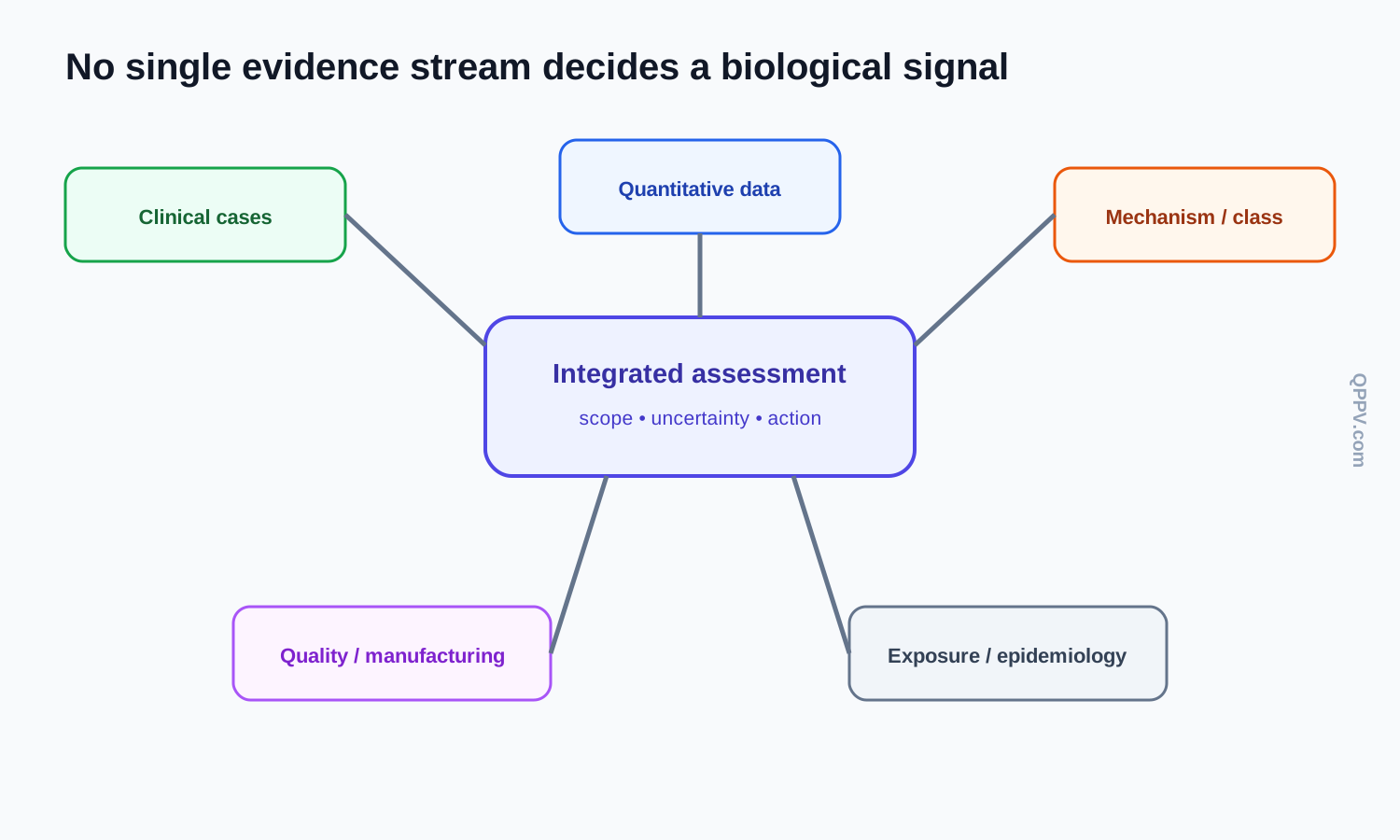
Figure 3. Signal assessment tests clinical, quantitative, mechanistic, quality and exposure evidence together. No single stream automatically determines causality.
Recommendations and regulatory action
Possible conclusions include:
- refuted signal;
- insufficient evidence with continued monitoring;
- new identified or potential risk;
- new aspect of a known risk;
- product-, batch-, formulation- or device-specific problem;
- class effect requiring broader review.
Recommendations may include product-information change, RMP update, additional pharmacovigilance, risk minimisation, communication, quality action, recall, study or referral. State evidence, uncertainty, scope and urgency.
For mAb-Z:
- delayed anaphylaxis remains supported and proceeds to label/RMP consideration;
- injector lot issue is confirmed as a device defect with field action;
- switching-related loss of effect remains unproven and receives targeted follow-up;
- fungal infection requires further comparative study because confounding remains substantial;
- manufacturing change is not supported as the root cause.
Communication, tracking and closure
Track ownership, milestones, authority requests, decisions and implementation. Signal closure requires a documented scientific conclusion and disposition of actions. It does not mean the event disappears from routine surveillance.
Communicate complex biological issues at the correct level. Saying “biosimilar safety problem” when one device lot failed can cause inappropriate concern. Saying “quality only” when incomplete dosing caused disease worsening can suppress clinical consequences.
After action, evaluate effectiveness. Did label wording change reporting quality? Did device complaints decline after correction? Did brand/batch capture improve?
Interfaces with PSURs and RMPs
The PSUR summarises new, ongoing and closed signals and evaluates completed signals and known risks in the benefit–risk context. The RMP safety specification and plans should change when signal conclusions materially affect important risks or uncertainty.
Systems must reconcile status, name, dates and conclusions. A signal cannot be closed in the tracker, ongoing in the PSUR and absent from an updated RMP without explanation.
Quality systems, clinical governance, regulatory affairs, epidemiology and medical information may each hold relevant evidence. Controlled interfaces prevent fragments from reaching contradictory conclusions.
Governance, documentation and inspection evidence
Governance should define detection frequency, validation authority, prioritisation criteria, escalation, assessment ownership, decision forums and QPPV access. Decisions require traceable evidence, dissent and rationale.
Inspection evidence includes:
- screening outputs and review logs;
- search strategies and thresholds;
- case-series listings and duplicate handling;
- validation and prioritisation records;
- exposure and batch-distribution data;
- quality/PV reconciliation;
- assessment reports and minutes;
- authority correspondence;
- PSUR/RMP reconciliation;
- action tracking and effectiveness evaluation.
Illustrative failure modes include:
- screening only active-substance totals and missing a batch cluster;
- comparing biosimilar report counts without exposure;
- treating disproportionality as causality;
- failing to review related MedDRA terms;
- calling antidrug-antibody positivity a safety signal without clinical correlation;
- losing switch sequence;
- excluding quality complaints from signal review;
- closing a signal without documenting residual uncertainty;
- implementing label change without checking effectiveness.
These are hypothetical quality failures, not published inspection findings.
Practical workflow
- Capture the observation. Record source, date, product hierarchy and event.
- Triage urgency. Escalate serious public-health or quality threats immediately.
- Define the hypothesis. Specify population, exposure, event and proposed level.
- Clean the evidence. Remove duplicates and verify product identity.
- Validate. Test documentation, novelty, plausibility and alternatives.
- Confirm procedurally. Follow applicable EU roles and timelines.
- Analyse and prioritise. Integrate clinical, quantitative, exposure and quality data.
- Assess total evidence. Include immunogenicity, switching, class and manufacturing context.
- Recommend. State conclusion, scope, uncertainty and action.
- Implement and communicate. Coordinate regulatory, quality and risk-management work.
- Track and reconcile. Align tracker, PSUR, RMP and product information.
- Evaluate effectiveness and close. Document outcome and residual monitoring.
Minimum biological signal dataset
| Domain | Required where relevant |
|---|---|
| Identity | INN, brand, suffix, batch, country |
| Exposure | dose, dates, route, formulation, device |
| Context | indication, disease activity, concomitant therapy |
| Switching | prior products, dates, reason, gaps |
| Event | diagnosis, chronology, tests, treatment, outcome |
| Immunogenicity | assay, sampling, titre, persistence, neutralisation |
| Quality | complaint, lot distribution, investigation, retained sample |
| Aggregate | exposure, reporting trend, comparator limitations |
Key Takeaways
- A signal is a hypothesis requiring investigation, not proof of causality.
- Biological signal hypotheses must state their level: class, active substance, product, batch, formulation, route or device.
- Disproportionality detects reporting patterns, not incidence.
- Batch analysis requires batch-specific exposure and distribution.
- Immunogenicity is clinically interpretable only when assay, exposure and outcome are linked.
- Switching signals are vulnerable to missing product sequences and stimulated reporting.
- Quality and pharmacovigilance evidence must be linked without being conflated.
- Closure requires a documented conclusion, action disposition and residual monitoring.
References
- European Medicines Agency. GVP Module IX: Signal management (Rev. 1). EMA/827661/2011; legally effective 22 November 2017.
- European Medicines Agency. GVP Module IX Addendum I: Methodological aspects of signal detection from spontaneous reports. EMA/209012/2015.
- European Medicines Agency. Questions and answers on signal management. EMA/261758/2013 Rev.5, updated 20 January 2026.
- European Medicines Agency. GVP Product- or Population-Specific Considerations II: Biological medicinal products. EMA/168402/2014.
- European Commission. Commission Implementing Regulation (EU) No 520/2012, Articles 19–23, as amended.
- European Parliament and Council. Regulation (EC) No 726/2004, as amended.
- European Parliament and Council. Directive 2001/83/EC, as amended.
- Wisniewski AFZ, Bate A, Bousquet C, et al. Good signal detection practices: evidence from IMI PROTECT. Drug Saf. 2016;39:469–490.
- QPPV.com. GVP Product- or Population-Specific Considerations II: Biological Medicinal Products.
- QPPV.com. GVP Module IX: Signal Management Explained.
Regulatory Note
This article is an educational interpretation of biological-medicine signal management. It does not replace current EU legislation, GVP Module IX, its addendum, EMA procedural questions and answers, product-specific obligations or competent-authority instructions. The mAb-Z examples are fictional and do not represent regulatory precedent.