Siltuximab: Classification, History, Mechanism of Action, Safety and Pharmacovigilance
- Siltuximab: Classification, History, Mechanism of Action, Safety and Pharmacovigilance
- Multidimensional classification
- IL-6 and Castleman disease
- Mechanism of action
- Development and regulatory history
- Clinical use and treatment monitoring
- Major safety domains
- Disease response and adverse-event interpretation
- Special situations
- Pharmacovigilance case assessment
- Signal detection and aggregate review
- Periodic benefit-risk evaluation
- Risk management and operational controls
- Potential failure modes
- Inspection and governance perspective
- Practical checklist
- Key Takeaways
- References
- Regulatory Note
Siltuximab is a chimeric monoclonal antibody directed against interleukin-6 (IL-6). Its authorised use is unusually focused: adults with multicentric Castleman disease who are negative for both human immunodeficiency virus (HIV) and human herpesvirus-8 (HHV-8). That narrow indication makes the molecule educationally valuable because disease biology, target biology and clinical monitoring are closely linked.
IL-6 is a pleiotropic cytokine involved in inflammation, acute-phase responses, haematopoiesis and immune regulation. In idiopathic multicentric Castleman disease, excessive IL-6 activity contributes to systemic inflammatory symptoms, abnormal laboratory findings and lymph-node pathology. Siltuximab therefore acts by neutralising a disease-driving cytokine rather than by depleting a lymphocyte population.
Multidimensional classification
| Classification axis | Siltuximab classification | Scientific or PV significance |
|---|---|---|
| Molecular class | Chimeric monoclonal antibody | Biological medicinal product with non-fully-human sequence components |
| Target | Interleukin-6 | Neutralises the cytokine itself rather than the IL-6 receptor |
| Functional class | Anti-cytokine immunomodulator | Reduces downstream IL-6 signalling and inflammatory effects |
| Authorised disease setting | Adult multicentric Castleman disease in patients who are HIV-negative and HHV-8-negative | Virological status is part of the authorised population definition |
| Administration | Intravenous infusion every 3 weeks under current EU product information | Infusion chronology is central to reaction assessment |
| Monitoring | Haematology before dosing; clinical review for infection and treatment toxicity | Laboratory eligibility is part of treatment governance |
| PV-critical domains | Infection, infusion reactions/anaphylaxis, cytopenias, lipid abnormalities, gastrointestinal-perforation context, product traceability | Requires longitudinal laboratory and disease-specific review |
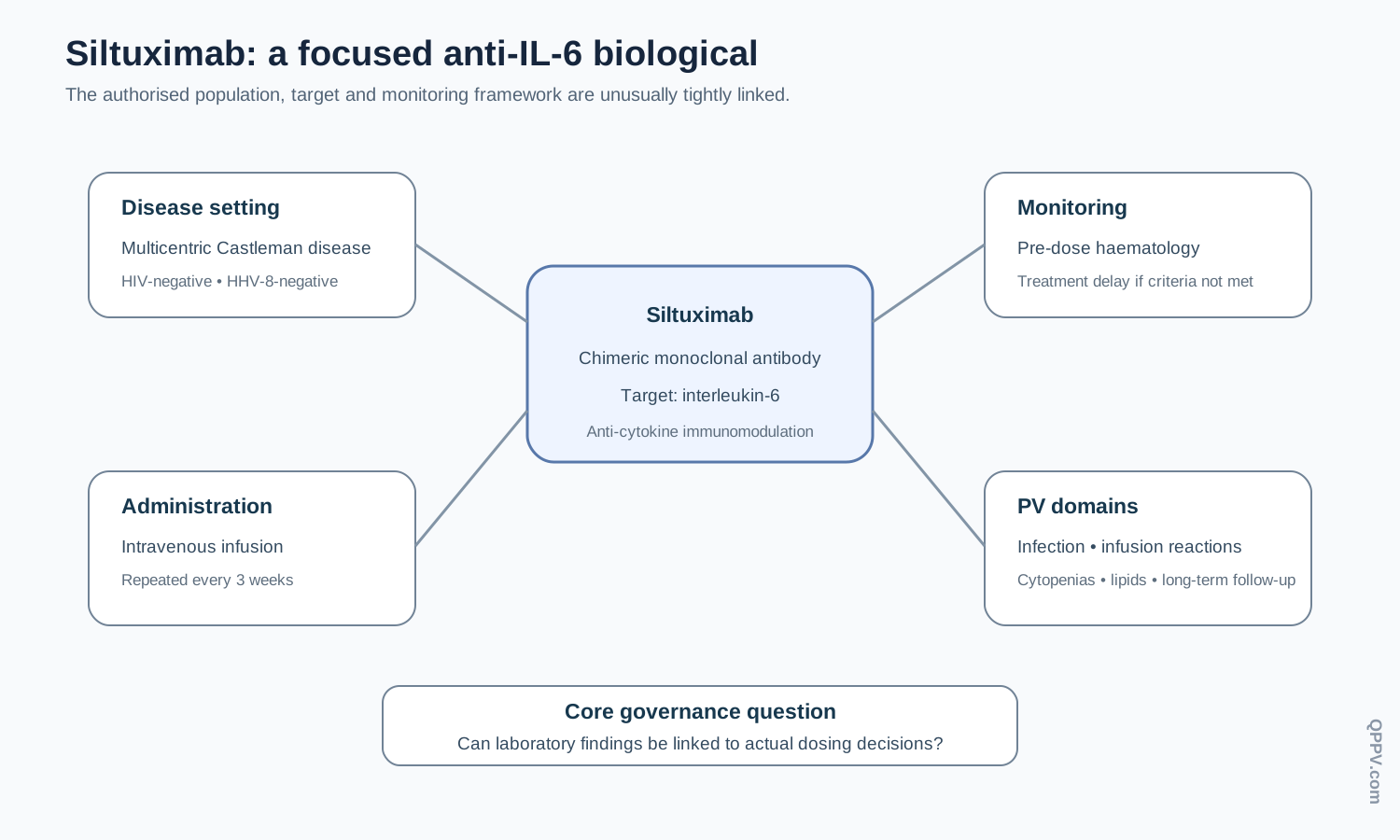
Figure 1. Siltuximab is a chimeric anti-IL-6 monoclonal antibody used in a narrowly defined Castleman-disease population. Its pharmacovigilance combines cytokine-blockade biology with infusion safety, infection surveillance and repeated laboratory eligibility checks.
IL-6 and Castleman disease
IL-6 signals through a receptor complex that ultimately activates intracellular pathways controlling inflammatory and immune responses. Excessive IL-6 activity can increase acute-phase proteins, alter iron metabolism, contribute to anaemia and drive constitutional symptoms such as fever, fatigue and weight loss.
Multicentric Castleman disease is not simply enlarged lymph nodes. It is a systemic lymphoproliferative disorder in which inflammatory signalling can affect multiple organs. The authorised siltuximab population excludes HHV-8-associated disease and HIV-positive disease because those settings have distinct viral and immunological biology.
Mechanism of action
Siltuximab binds human IL-6 and reduces its ability to engage the IL-6 receptor complex. The antibody therefore acts upstream of receptor activation. This is conceptually different from an IL-6-receptor-blocking antibody: both approaches interrupt IL-6 signalling, but they bind different molecular structures.
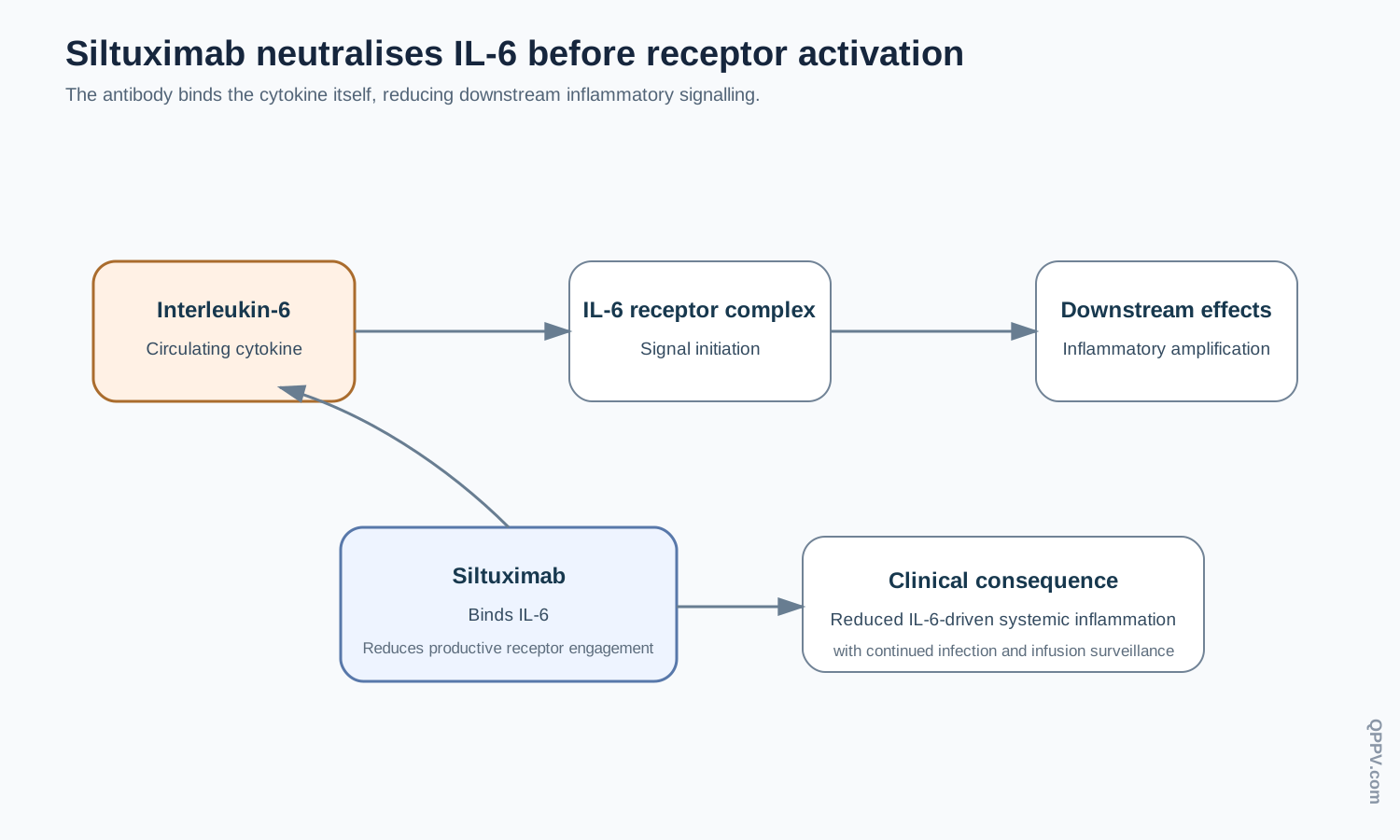
Figure 2. IL-6 normally engages its receptor complex and drives inflammatory signalling. Siltuximab binds circulating IL-6, reducing productive receptor engagement and downstream inflammatory effects.
Why target location matters
The distinction between cytokine and receptor targeting is not semantic. It determines the molecule's binding partner, pharmacokinetic interactions and the way mechanistic questions are framed. A safety finding associated broadly with IL-6 pathway suppression may be biologically relevant across the class, while quantitative risk and product-specific evidence must still be evaluated separately.
Development and regulatory history
Siltuximab was developed in a disease in which IL-6 overproduction had become a central mechanistic hypothesis. The pivotal randomised study enrolled HIV-negative and HHV-8-negative patients with symptomatic multicentric Castleman disease and compared siltuximab plus supportive care with placebo plus supportive care.
The European Union authorised siltuximab in May 2014 following accelerated assessment. Current EMA product information was updated in July 2026. The medicine remains under additional monitoring in the EU, and long-term data collection has been an important part of its post-authorisation safety framework.
The rarity of the disease has a direct pharmacovigilance consequence: spontaneous case numbers and trial populations are relatively small. Safety interpretation therefore benefits from medically rich individual cases, longitudinal follow-up and integration of registry and long-term-extension evidence rather than reliance on raw reporting counts.
Clinical use and treatment monitoring
Siltuximab is administered by intravenous infusion, with repeat treatment every three weeks under current EU product information. Haematology testing is performed before dosing, particularly during the first year, because neutrophil and platelet counts can determine whether treatment should proceed or be delayed.
That monitoring structure means laboratory chronology is part of the exposure record. A case of neutropenia is much more interpretable when baseline values, pre-dose values, dose delays and subsequent recovery are available.
Major safety domains
Infection
IL-6 participates in host defence and inflammatory signalling. Serious infections, including pneumonia and sepsis, have occurred during clinical development. Before treatment, active serious infection should be addressed according to current product information.
For pharmacovigilance, infection cases should capture site, organism, severity, hospitalization, baseline immune status, recent dose, neutrophil count, concomitant corticosteroids and outcome. Fever may be difficult to interpret because Castleman disease itself can cause constitutional inflammatory symptoms; microbiological and clinical evidence therefore matter.
Infusion reactions, hypersensitivity and anaphylaxis
Intravenous administration creates a defined window for infusion-related reactions. Current product information distinguishes severe infusion reactions, anaphylaxis, severe allergic reactions and cytokine-release syndrome as events that can require permanent discontinuation.
A useful case includes onset during or after infusion, blood pressure, respiratory symptoms, skin findings, treatment, interruption, rechallenge and outcome. Generic coding as “infusion reaction” is insufficient when a more specific clinical syndrome is documented.
Haematological abnormalities
Neutropenia and thrombocytopenia are relevant both as potential treatment effects and as determinants of whether a scheduled dose should be given. Castleman disease itself can produce haematological abnormalities, so baseline status and disease response must be considered.
Haemoglobin deserves special interpretation because successful control of IL-6-driven inflammation may improve anaemia. An increasing haemoglobin concentration can therefore be a therapeutic consequence rather than toxicity.
Lipid abnormalities
Clinical development identified hypertriglyceridaemia and hypercholesterolaemia more often in siltuximab-treated patients than placebo in the pivotal programme. Lipid surveillance should therefore be longitudinal and interpreted with baseline cardiovascular risk, metabolic disease and treatment duration.
An isolated laboratory abnormality should not be treated as equivalent to a clinical cardiovascular event. Periodic benefit-risk evaluation should preserve that distinction.
Gastrointestinal perforation context
Gastrointestinal perforations were observed in broader siltuximab development outside the core multicentric Castleman-disease population, often with important confounding factors. Current product information includes precautions concerning patients who may be at increased risk.
This is a useful example of evidence hierarchy. A mechanistically or clinically plausible event observed in development can justify vigilance without proving a high or precisely quantified risk in the authorised population. Cases should document diverticular disease, gastrointestinal malignancy, corticosteroids, prior surgery and other competing causes.
Renal and hepatic impairment
Formal pharmacokinetic studies in renal or hepatic impairment are limited. Adverse events in patients with organ dysfunction therefore require careful documentation of baseline function, disease status and concomitant medicines. Lack of formal PK data should not be converted into an unsupported dosing rule; current product information remains authoritative.
Disease response and adverse-event interpretation
IL-6 blockade can normalise inflammatory laboratory abnormalities and improve constitutional symptoms. That creates a reverse attribution problem: changes in C-reactive protein, haemoglobin, albumin or fever may reflect therapeutic response rather than an adverse reaction.
Conversely, suppression of inflammatory markers can potentially make infection assessment less straightforward. A low or falling inflammatory marker does not by itself exclude serious infection in an immunomodulated patient. Clinical evidence and microbiology remain central.
Special situations
Virological status
The authorised population is HIV-negative and HHV-8-negative. Those variables should be captured because HHV-8-associated multicentric Castleman disease is biologically different and is not simply the same indication with an additional infection.
Paediatric exposure
Current EU product information states that safety and efficacy in children 17 years and younger have not been established. Paediatric reports should therefore be clearly identifiable and assessed in relation to local authorisation and the circumstances of exposure.
Long-term treatment
Patients may receive repeated three-weekly therapy for prolonged periods while benefit continues. Longitudinal trends in infection, cytopenias, lipids, renal function and disease control are therefore more informative than isolated events viewed without treatment duration.
Pharmacovigilance case assessment
Siltuximab cases should be reconstructed around disease status, infusion chronology, laboratory eligibility and competing infection risk. Because Castleman disease itself produces constitutional and haematological abnormalities, objective baseline and follow-up data are unusually important.
Event-specific follow-up priorities
| Event or issue | High-value follow-up information |
|---|---|
| Serious infection | Site, organism, cultures/imaging, hospitalization, neutrophil count, concomitant corticosteroids, outcome |
| Infusion reaction | Dose number, onset during/after infusion, vital signs, respiratory/skin findings, treatment, interruption, recurrence |
| Neutropenia/thrombocytopenia | Baseline and serial counts, timing, dose delay, infection, marrow disease, recovery |
| Lipid abnormality | Baseline and serial lipids, metabolic risk, treatment duration, clinical consequences |
| GI perforation | Site, imaging/surgery, diverticular disease, malignancy, corticosteroids, prior abdominal disease |
| Renal event | Baseline creatinine/eGFR, disease status, hydration, infection, concomitant nephrotoxins |
| Apparent disease worsening | Lymph-node findings, inflammatory markers, haemoglobin, symptoms, imaging, adherence/infusion history |
| Off-label/paediatric exposure | Age, indication, virological status, rationale, dose, outcome |
Signal detection and aggregate review
Signal detection in a rare disease should emphasise medical coherence rather than report volume alone. Recurrent serious infections, severe infusion reactions or unusual laboratory patterns may deserve case-series review even when absolute numbers are small.
Analyses should retain HIV and HHV-8 status, treatment duration and laboratory context. Reports from biologically different Castleman-disease subtypes should not be pooled automatically merely because the diagnostic label contains “Castleman disease.”
Periodic benefit-risk evaluation
Periodic review should integrate tumour/symptom response and control of IL-6-driven inflammation with infection, infusion reactions, cytopenias, lipid changes, renal findings and other serious events. Long-term-extension and registry evidence are particularly important because pivotal-trial numbers were necessarily limited by disease rarity.
The review should also examine whether the monitoring system itself is functioning: whether scheduled blood counts are available, whether abnormal values led to appropriate treatment delay, and whether severe infusion reactions triggered the actions specified in current product information.
Risk management and operational controls
Current product information governs pre-dose haematology, treatment delay, infection precautions and discontinuation for severe infusion-related events. Recommended operational practice includes explicit capture of HIV/HHV-8 status, dose-cycle number, pre-infusion blood counts, infusion-reaction management and exact biological product/batch.
Rare-disease registries and long-term follow-up can provide evidence that spontaneous reporting alone cannot, particularly for cumulative or delayed effects.
Potential failure modes
The following are illustrative scenarios, not published inspection findings:
- Fever is coded as infection without determining whether cultures, imaging or another diagnostic basis exists.
- Neutropenia is assessed without the pre-dose blood count or whether treatment was delayed.
- Anaphylaxis is grouped with mild infusion reactions, obscuring severity and management.
- Hypertriglyceridaemia is treated as equivalent to a cardiovascular event rather than a laboratory safety observation.
- A gastrointestinal perforation case lacks diverticular disease, malignancy and corticosteroid history.
- HHV-8 status is missing, preventing confirmation that the patient fits the authorised disease population.
Inspection and governance perspective
An inspector assessing siltuximab pharmacovigilance could examine whether laboratory monitoring is traceable to dosing decisions, whether serious infections and infusion reactions receive targeted follow-up, whether rare but important events are reviewed as medically coherent case series, and whether long-term registry evidence is integrated into periodic benefit-risk evaluation.
The effectiveness question is whether monitoring is merely scheduled or whether the organisation can demonstrate that abnormal findings change clinical action and remain visible in safety data.
Practical checklist
For a siltuximab case or aggregate analysis, confirm:
- Castleman-disease subtype and HIV/HHV-8 status;
- dose number and infusion date;
- pre-dose neutrophil, platelet and haemoglobin values;
- infection site, organism and severity;
- exact phenotype and management of infusion reactions;
- baseline and serial lipid values where relevant;
- GI risk factors for suspected perforation;
- renal/hepatic baseline status for organ events;
- objective evidence of disease response or progression;
- exact biological product and batch where available.
Key Takeaways
Siltuximab is a chimeric monoclonal antibody that neutralises IL-6. Its authorised use in HIV-negative, HHV-8-negative multicentric Castleman disease illustrates a relatively direct connection between cytokine excess, systemic disease manifestations and targeted biological therapy.
Its pharmacovigilance depends heavily on chronology and laboratory context: infection must be separated from inflammatory disease symptoms, infusion reactions must be clinically characterised, haematological values must be linked to dosing decisions, and long-term evidence must compensate for the unavoidable limitations of small rare-disease populations.
References
- European Medicines Agency. Siltuximab (Sylvant): EPAR and current product information. Product information updated 30 July 2026. https://www.ema.europa.eu/en/medicines/human/EPAR/sylvant
- European Medicines Agency. Sylvant product information. https://www.ema.europa.eu/en/documents/product-information/sylvant-epar-product-information_en.pdf
- van Rhee F, Wong RS, Munshi N, et al. Siltuximab for multicentric Castleman's disease: a randomised, double-blind, placebo-controlled trial. Lancet Oncol. 2014;15:966-974. doi:10.1016/S1470-2045(14)70319-5.
- van Rhee F, Casper C, Voorhees PM, et al. Long-term safety of siltuximab in patients with idiopathic multicentric Castleman disease: a prespecified, open-label, extension analysis of two trials. Lancet Haematol. 2020;7:e209-e217. doi:10.1016/S2352-3026(19)30257-1.
- European Medicines Agency. Sylvant European Public Assessment Report. EMA/CHMP/258608/2014. https://www.ema.europa.eu/en/documents/assessment-report/sylvant-epar-public-assessment-report_en.pdf
Regulatory Note
Authorised population definitions, monitoring requirements, dosing and safety wording may change. This article explains the scientific and pharmacovigilance framework and does not replace current product information or specialist haematology guidance. Regulatory information was checked against EMA material current in September 2026.