Sipavibart: Classification, History, Mechanism of Action, Safety and Pharmacovigilance
Sipavibart is a long-acting monoclonal antibody for pre-exposure prophylaxis of COVID-19 in immunocompromised people who may remain vulnerable despite vaccination or previous infection. It provides ready-made antiviral antibody rather than asking the recipient's immune system to generate that antibody response. In this respect it is passive immunisation, but unlike a vaccine its effectiveness can change rapidly if circulating SARS-CoV-2 variants alter the precise spike epitope recognised by the antibody.
That variant dependence is central to its pharmacovigilance. A medicine can remain chemically unchanged, correctly manufactured and adequately dosed while its expected clinical benefit falls because the virus has evolved. Sipavibart therefore requires a form of benefit-risk surveillance in which viral genomic epidemiology and neutralisation susceptibility are part of the exposure context.
Current EU product information also permits two administration routes—intramuscular injection and intravenous infusion—so local injection reactions, infusion-site reactions and infusion-related reactions must be interpreted separately. Serious hypersensitivity, including anaphylaxis, must be manageable at the time of administration.
- Sipavibart: Classification, History, Mechanism of Action, Safety and Pharmacovigilance
- Multidimensional classification
- SARS-CoV-2 entry and the receptor-binding domain
- Mechanism of action and antibody engineering
- Development and regulatory history
- Variant-dependent effectiveness
- Safety architecture
- Cardiovascular and thromboembolic events: how to interpret an evolving signal
- Immunocompromised-host context
- Vaccination and passive prophylaxis
- Pregnancy and lactation
- Pharmacovigilance case assessment
- Signal detection and aggregate review
- Periodic benefit-risk evaluation
- Risk management and operational controls
- Potential failure modes
- Inspection and governance perspective
- Practical checklist
- Key Takeaways
- References
- Regulatory Note
Multidimensional classification
| Classification axis | Sipavibart classification | Scientific or PV significance |
|---|---|---|
| Molecular format | Recombinant human IgG1 monoclonal antibody | Long-lived biological requiring product/batch traceability |
| Viral target | SARS-CoV-2 spike receptor-binding domain (RBD) | Blocks the interaction required for viral entry |
| Functional class | Antiviral neutralising monoclonal antibody | Provides passive immunisation rather than active vaccination |
| Half-life engineering | YTE Fc substitutions | Extends antibody persistence |
| Effector-function engineering | TM substitutions | Reduces Fc effector function and theoretical antibody-dependent enhancement concerns |
| Current EU population | Immunocompromised adults and adolescents ≥12 years and ≥40 kg | Baseline immune deficit strongly affects infection risk and vaccine response |
| Dose/routes | 300 mg IM or IV | Route-specific local and infusion reactions must remain distinct |
| Effectiveness determinant | Susceptibility of circulating viral variants | A mutation can change benefit without changing the medicine |
| Additional monitoring | Yes | Supports rapid collection of new safety information |
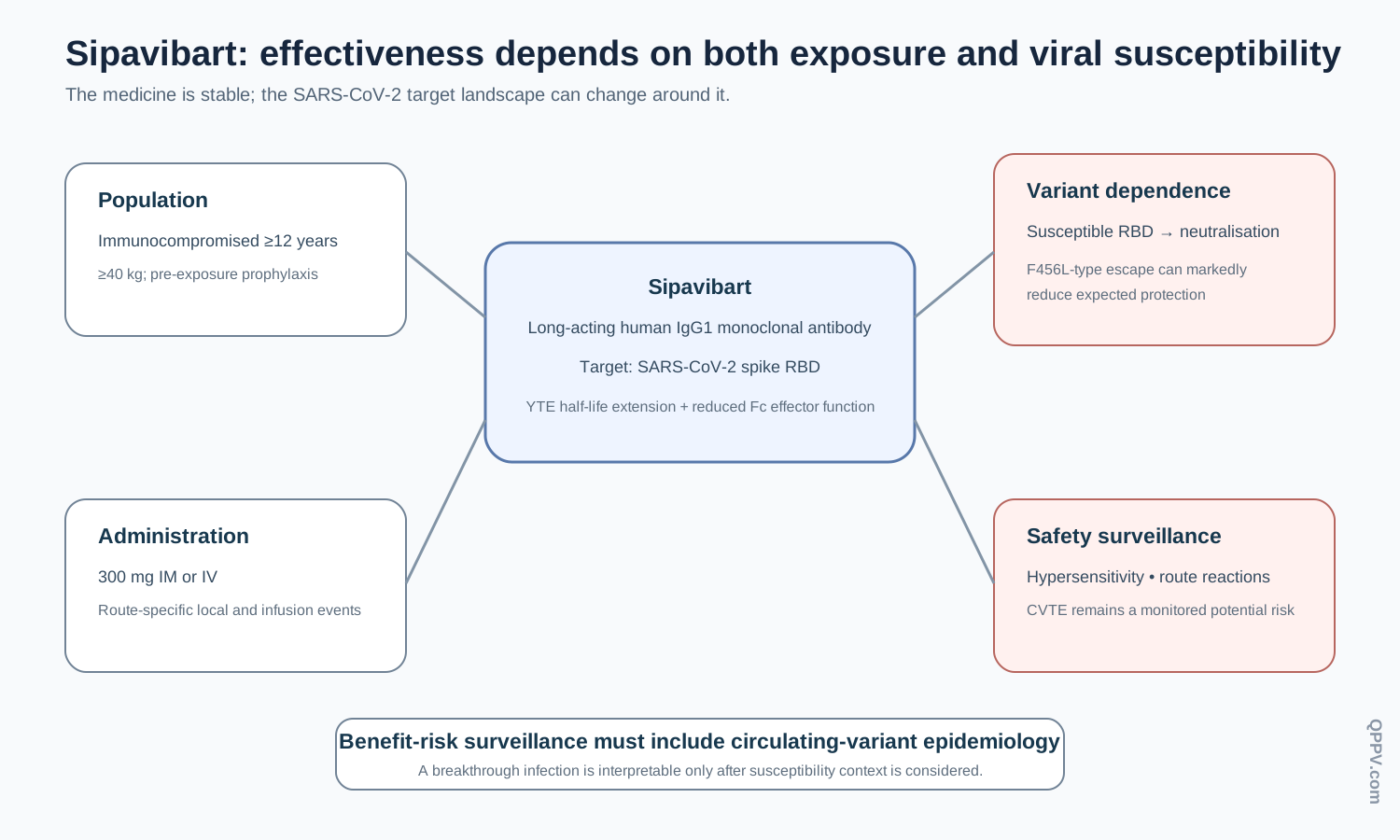
Figure 1. Sipavibart combines a long-acting anti-RBD antibody with a uniquely dynamic effectiveness variable: whether currently circulating SARS-CoV-2 variants remain susceptible to neutralisation.
SARS-CoV-2 entry and the receptor-binding domain
The SARS-CoV-2 spike protein attaches the virus to host cells. Within spike, the receptor-binding domain (RBD) interacts with the human ACE2 receptor. Productive entry then requires additional structural changes and membrane-fusion steps.
A neutralising antibody directed at the RBD can interfere early in this process. Sipavibart binds the RBD and blocks its interaction with ACE2, reducing viral entry into susceptible cells. This mechanism acts before infection becomes established; the authorised purpose is therefore prevention rather than treatment of symptomatic COVID-19.
The RBD is also under evolutionary pressure. Amino-acid substitutions can preserve viral fitness while altering the shape or chemistry of an antibody-binding site. A single antibody is consequently more vulnerable to antigenic escape than a broad polyclonal immune response directed at multiple epitopes.
Mechanism of action and antibody engineering
Sipavibart is a recombinant human IgG1 antibody. Current EU product information describes two Fc-engineering features. YTE substitutions extend antibody half-life, supporting prolonged prophylactic exposure. TM substitutions reduce antibody effector function and the potential theoretical risk of antibody-dependent enhancement of disease.
After administration, sipavibart remains in the extracellular compartment and binds susceptible SARS-CoV-2 spike RBD. When binding is sufficiently strong, RBD engagement with ACE2 is blocked and viral entry is reduced.
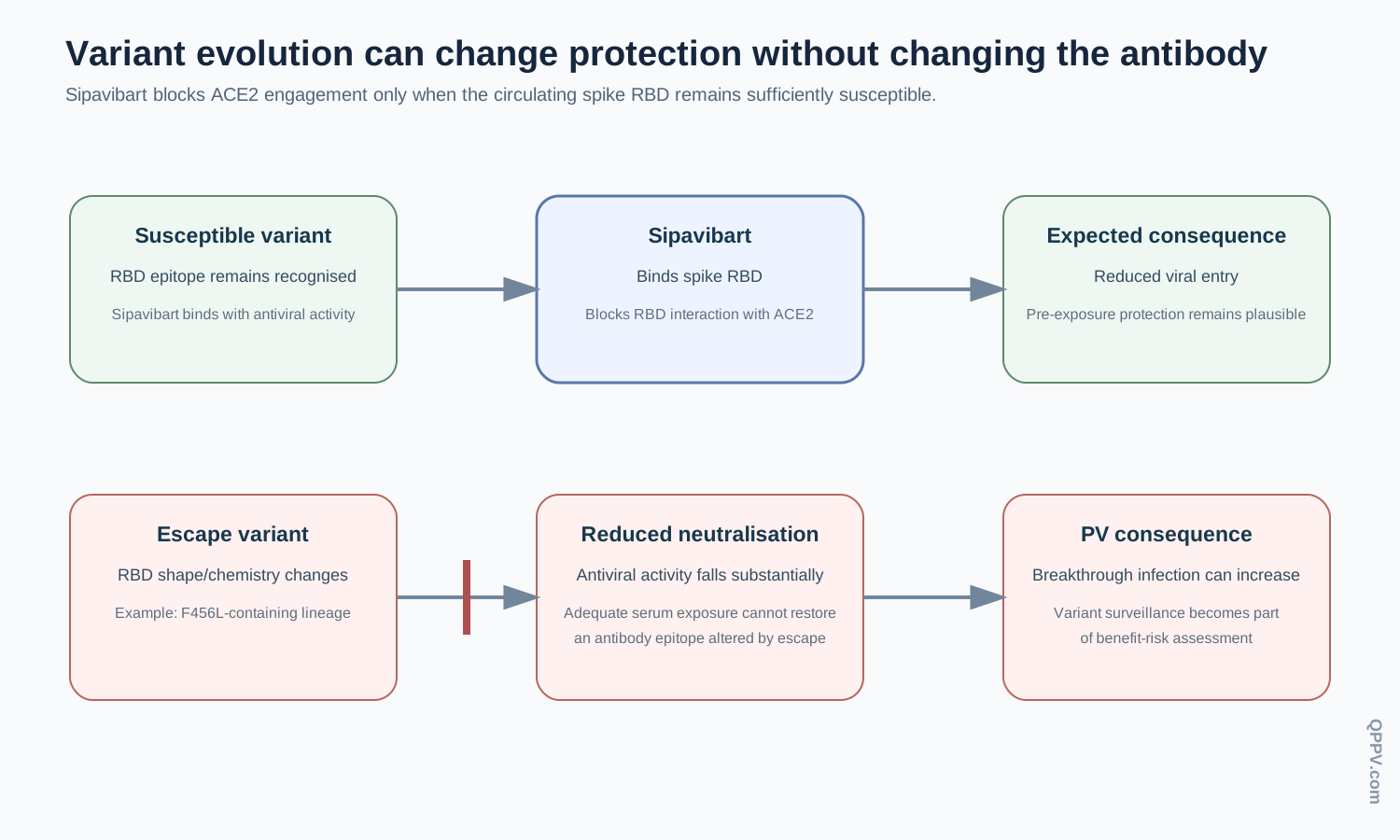
Figure 2. Sipavibart blocks a susceptible RBD from engaging ACE2. Spike evolution can alter that epitope; variants carrying substitutions such as F456L can show marked loss of neutralisation, converting a pharmacologically adequate exposure into little or no expected antiviral protection.
Development and regulatory history
The phase III SUPERNOVA programme studied pre-exposure prophylaxis in immunocompromised adults and adolescents. Participants included people receiving immunosuppressive medicines, patients with haematological malignancies, solid-organ transplant recipients, people with secondary immunodeficiencies and patients exposed to B-cell-depleting therapy.
The European Union authorised sipavibart on 20 January 2025 for pre-exposure prophylaxis of COVID-19 in immunocompromised adults and adolescents aged at least 12 years and weighing at least 40 kg. Current product information, updated in September 2026, specifies a 300 mg dose administered either intramuscularly or intravenously.
The authorisation contains an unusual but scientifically necessary qualification: use should take account of activity against currently circulating viral variants. That statement makes variant susceptibility part of the medicine's practical regulatory context rather than a research-only consideration.
Variant-dependent effectiveness
Sipavibart pharmacology cannot be interpreted without knowing which viral variants are circulating. Current EU product information reports substantial loss of in-vitro susceptibility for variants carrying the spike F456L substitution and states that sipavibart is not anticipated to protect against symptomatic COVID-19 caused by such variants. Other variants can retain neutralisation but at reduced potency.
The clinical implication is important. A breakthrough infection may represent one of several different situations:
- exposure to a susceptible variant despite incomplete prophylactic efficacy;
- exposure to a variant with reduced susceptibility;
- exposure to a non-susceptible variant such as one carrying F456L;
- insufficient or delayed exposure after dosing;
- severe baseline immune compromise and high viral inoculum;
- or an error in product, dose or administration.
Pharmacovigilance should not collapse these into a single category of “drug ineffective”. Variant identification or reliable epidemiological inference can materially change the interpretation.
Evidence from SUPERNOVA
The pivotal trial itself demonstrated why variant stratification matters. Protection was clearer when analyses focused on variants expected to remain susceptible to sipavibart, whereas efficacy was not established against resistant F456L-containing variants. The trial therefore provides a direct clinical bridge between laboratory neutralisation and real-world benefit-risk assessment.
This is a useful regulatory-science lesson: mechanism remains intact only if the target epitope remains recognisable. An antibody can retain normal pharmacokinetics while becoming clinically ineffective against an evolved virus.
Safety architecture
Hypersensitivity and anaphylaxis
Current product information requires administration by a healthcare professional under conditions where severe hypersensitivity, including anaphylaxis, can be managed. Serious hypersensitivity has been observed with IgG1 monoclonal antibodies, and clinically significant reactions require immediate treatment.
For a suspected reaction, useful follow-up includes administration route, dose number, latency, skin or mucosal findings, respiratory compromise, blood pressure, treatment, hospitalisation, recovery and any subsequent exposure. Syncope or light-headedness after an intramuscular injection should not automatically be equated with anaphylaxis without objective allergic or circulatory features.
Route-specific administration reactions
Intramuscular administration can produce injection-site pain, bruising, erythema, swelling, haematoma and related reactions. Intravenous administration can produce infusion-site reactions and infusion-related systemic symptoms such as nausea, headache, pyrexia, chills, hypotension, flushing, cough or shortness of breath.
These should remain separate analytical domains. A local IM haematoma has a different mechanism from an IV infusion-related reaction, even though both occur shortly after administration.
Bleeding risk with intramuscular dosing
As with other intramuscular injections, caution is relevant in people with thrombocytopenia or coagulation disorders. This is an administration-route consideration rather than an antiviral target effect. Cases of significant injection-site bleeding should include platelet count, coagulation disorder, anticoagulant/antiplatelet exposure and injection details.
Cardiovascular and thromboembolic events: how to interpret an evolving signal
Post-authorisation safety review in 2026 considered cardiovascular and thromboembolic events (CVTEs). In January 2026, the EMA Pharmacovigilance Risk Assessment Committee reviewed an RMP update in the context of a proposed product-information variation. PRAC advised that CVTEs should not be classified as an important potential risk in the RMP; instead they should be retained as a non-important potential risk and monitored through routine pharmacovigilance.
That distinction must be preserved. It does not mean that cardiovascular or thromboembolic events are established adverse reactions caused by sipavibart. Immunocompromised patients may have substantial baseline cardiovascular risk, malignancy, transplantation, renal disease, immobility and COVID-19 itself—all of which can independently produce thrombotic events.
A suspected case should therefore capture event phenotype, arterial versus venous location, timing, baseline cardiovascular and thrombotic risk factors, active COVID-19 or recent infection, malignancy, concomitant treatment, diagnostic confirmation and outcome. Aggregate assessment should compare observed patterns with expected background risk rather than rely on temporal association alone.
Immunocompromised-host context
The authorised population is heterogeneous. A patient receiving B-cell-depleting therapy, a solid-organ transplant recipient and a person on haemodialysis can all meet the broad label but have different infection risk, vaccine response, concomitant medication and competing morbidity.
Breakthrough COVID-19 should therefore be stratified by type and degree of immune compromise where data permit. The same applies to safety signals. For example, a thromboembolic event in active cancer should not be interpreted identically to one in a young patient with isolated antibody deficiency.
Vaccination and passive prophylaxis
Sipavibart does not replace vaccination where COVID-19 vaccination is recommended. Vaccination and passive antibody prophylaxis operate through different mechanisms: vaccination aims to induce an adaptive immune response, while sipavibart provides a defined exogenous antibody concentration.
In pharmacovigilance, vaccination history remains relevant because prior immune priming can alter disease severity and because an immunocompromised patient may have mounted little or no antibody response despite vaccination. Reporting “vaccinated” is therefore not equivalent to documenting effective immunity.
Pregnancy and lactation
Human pregnancy data remain limited. IgG1 antibodies can cross the placenta, particularly later in pregnancy, so maternal exposure can lead to fetal exposure. Pregnancy reports should capture gestational timing, dose date, underlying immunocompromising condition, concomitant immunosuppressants, COVID-19 infection and maternal/fetal outcomes.
Current RMP evolution is also instructive: PRAC considered routine pharmacovigilance sufficient for pregnancy monitoring rather than retaining a proposed additional pregnancy PASS. That is a governance decision about surveillance method, not evidence that pregnancy exposure is risk-free.
Pharmacovigilance case assessment
A useful sipavibart case reconstruction should link patient immune status, administered route and dose, viral variant context, event phenotype and competing causes. For effectiveness cases, viral epidemiology is not optional background; it can be the main explanation for apparent prophylaxis failure.
Event-specific follow-up priorities
| Event or issue | High-value follow-up information |
|---|---|
| Breakthrough COVID-19 | Symptom onset, SARS-CoV-2 test, sequence/variant if available, local variant prevalence, dose date/route, vaccination history, immune-compromising condition and severity/outcome |
| Suspected variant resistance | Viral sequence or defining spike substitutions, neutralisation data where available, exposure timing and clinical severity |
| Hypersensitivity/anaphylaxis | Route, latency, skin/mucosal findings, respiratory or circulatory involvement, emergency treatment, hospitalisation and recovery |
| IM injection-site reaction | Site, pain/swelling/bruising/haematoma, platelet/coagulation status, concomitant antithrombotic treatment and outcome |
| IV infusion-related reaction | Infusion timing/rate, symptoms, vital signs, interruption or slowing, supportive treatment and re-exposure |
| Cardiovascular/thromboembolic event | Exact diagnosis, arterial/venous site, imaging, baseline risk factors, cancer/transplant status, COVID-19 timing, concomitant medicines and outcome |
| Pregnancy exposure | Gestational timing, dose, immune condition, concomitant therapy, maternal infection and fetal/neonatal outcome |
Signal detection and aggregate review
Breakthrough infections should be stratified by variant susceptibility whenever feasible. A time trend in “drug ineffective” reports may simply reflect replacement of a susceptible lineage by a resistant lineage. Aggregate review should therefore combine pharmacovigilance data with contemporary viral-surveillance information rather than interpret spontaneous case counts in isolation.
Hypersensitivity, route-specific reactions and CVTE reports should remain separate case series. For cardiovascular and thromboembolic events, the 2026 PRAC classification as a non-important potential risk supports continued surveillance but does not justify presenting the events as established adverse reactions. Analyses should preserve baseline risk and recent COVID-19 because confounding is substantial.
Periodic benefit-risk evaluation
Sipavibart creates an unusual benefit-risk model in which the benefit can change faster than the product's intrinsic safety profile. Variant evolution can reduce neutralisation over weeks or months while the antibody's formulation, dose and administration remain unchanged.
Periodic evaluation should therefore integrate:
- prevalence of susceptible and non-susceptible variants;
- laboratory neutralisation data;
- breakthrough-infection phenotype and severity;
- route-specific administration reactions;
- hypersensitivity/anaphylaxis;
- cardiovascular and thromboembolic reports with background-risk assessment;
- pregnancy exposure;
- product usage by type of immunocompromise.
A favourable safety profile cannot compensate for absent neutralising activity against the dominant variant. Conversely, emergence of a susceptible lineage could restore clinical relevance without any change to the medicinal product.
Risk management and operational controls
Current EU product information instructs that use should reflect official recommendations and knowledge of activity against circulating variants. Recommended operational controls include recording exact product and batch, administration route, dose date, reason for immune compromise, breakthrough variant where available and local variant epidemiology at the time of infection.
For serious hypersensitivity, administration settings must support prompt clinical management in accordance with current product information. For emerging CVTE reports, routine pharmacovigilance should capture enough baseline information to permit meaningful medical assessment rather than using a dedicated signal questionnaire merely because the event is being monitored.
Potential failure modes
The following are illustrative scenarios, not published inspection findings:
- Breakthrough COVID-19 is classified as product failure without identifying that a non-susceptible F456L-containing variant dominated locally.
- A resistant variant is inferred from treatment failure even though no sequence or epidemiological evidence is available.
- IM bruising in a thrombocytopenic patient is interpreted as systemic antibody toxicity rather than an injection-route complication.
- An IV infusion reaction and an IM injection-site reaction are pooled into one administration-event category.
- A pulmonary embolism in a patient with active malignancy and recent COVID-19 is attributed to sipavibart solely because it occurred after dosing.
- The PRAC classification of CVTEs as a non-important potential risk is misrepresented as an established causal adverse reaction.
- Aggregate benefit-risk review discusses breakthrough infections without contemporaneous variant-surveillance data.
Inspection and governance perspective
An inspector or quality reviewer could ask how the organisation determines whether a reported breakthrough infection occurred during circulation of susceptible or resistant variants, whether variant information is incorporated into aggregate benefit-risk documents, and whether product-information updates are translated into case follow-up and medical-review procedures.
For CVTE surveillance, the governance test is equally important: can the system retain an emerging potential risk without prematurely converting uncertainty into causality? The evidence trail should show how cases, epidemiology, trial data and regulatory conclusions are kept distinct and periodically reassessed.
Practical checklist
For a sipavibart case or aggregate analysis, confirm:
- reason for immunocompromise and major comorbidities;
- age and body weight eligibility;
- exact dose, date and IM or IV route;
- COVID-19 vaccination history;
- SARS-CoV-2 test and variant/sequence where available;
- local circulating-variant context at event onset;
- COVID-19 severity and treatment;
- objective allergic findings for hypersensitivity cases;
- coagulation/platelet status for IM bleeding events;
- baseline cardiovascular and thrombotic risks for CVTE reports;
- pregnancy timing where relevant;
- exact biological product and batch.
Key Takeaways
Sipavibart is a long-acting anti-SARS-CoV-2 RBD monoclonal antibody providing passive pre-exposure prophylaxis to immunocompromised adults and adolescents. Its defining pharmacovigilance feature is variant-dependent effectiveness: viral evolution can materially change expected benefit without altering the medicinal product itself.
F456L-containing variants show marked loss of susceptibility and are not expected to be protected against by sipavibart. Safety surveillance should separately address hypersensitivity, route-specific administration reactions and emerging cardiovascular/thromboembolic reports, while preserving PRAC's 2026 conclusion that CVTEs are a non-important potential risk rather than an established causal adverse reaction.
References
- European Medicines Agency. Kavigale (sipavibart): EPAR. EU marketing authorisation issued 20 January 2025; EPAR updated 8 September 2026. https://www.ema.europa.eu/en/medicines/human/EPAR/kavigale
- European Medicines Agency. Kavigale product information. Current indication, 300 mg IM/IV administration, variant-susceptibility information, hypersensitivity and administration-related adverse reactions. https://www.ema.europa.eu/en/documents/product-information/kavigale-epar-product-information_en.pdf
- European Medicines Agency. Minutes of the PRAC meeting, 12–15 January 2026. Sipavibart: cardiovascular and thromboembolic events retained as a non-important potential risk in the RMP; routine pharmacovigilance considered sufficient for pregnancy monitoring. https://www.ema.europa.eu/en/documents/minutes/minutes-prac-meeting-12-15-january-2026_en.pdf
- Haidar G, Thomas S, Loubet P, et al. Efficacy and safety of sipavibart for prevention of COVID-19 in individuals who are immunocompromised (SUPERNOVA): a randomised, controlled, double-blind, phase 3 trial. Lancet Infect Dis. 2025;25:813-826. doi:10.1016/S1473-3099(24)00804-1.
Regulatory Note
Sipavibart effectiveness depends on the susceptibility of circulating SARS-CoV-2 variants, and recommendations for use can therefore change rapidly without a change to the product itself. Safety specifications and regulatory conclusions may also evolve as post-authorisation evidence accumulates. This article explains the scientific and pharmacovigilance framework and does not replace current regional product information, official variant recommendations or specialist infectious-disease guidance. Regulatory information was checked against EMA sources current in September 2026.