Somatrogon: Classification, Mechanism, Growth Hormone Use and Pharmacovigilance
Somatrogon is a long-acting recombinant growth-hormone fusion protein used in children and adolescents with growth hormone deficiency. It retains the biological activity of human growth hormone but is engineered to remain active for longer, allowing once-weekly rather than daily subcutaneous administration.
That apparently simple change in dosing interval alters several pharmacovigilance questions. Exposure becomes less frequent but more prolonged, missed doses have different consequences, injection-device use becomes part of treatment reliability, and adverse effects must be interpreted against growth-hormone class biology rather than against monoclonal-antibody mechanisms.
- Somatrogon: Classification, Mechanism, Growth Hormone Use and Pharmacovigilance
- Classification and Molecular Design
- Clinical and Regulatory Context
- Why Weekly Administration Changes the Safety Model
- Safety Profile Through Growth-Hormone Biology
- Practical Pharmacovigilance Assessment
- Medication Errors and Device Use
- Signal Detection and Long-Term Benefit-Risk Review
- Illustrative Failure Modes
- Inspection and Governance Considerations
- Practical Checklist
- Key Takeaways
- References
- Regulatory Note
Classification and Molecular Design
Somatrogon is a recombinant protein derived from human growth hormone and modified by fusion with repeated peptide sequences derived from the C-terminal peptide of human chorionic gonadotropin. These added sequences prolong persistence in the circulation without turning the medicine into chorionic gonadotropin.
Growth hormone receptor signalling
Human growth hormone binds the growth hormone receptor, activating intracellular JAK2–STAT signalling and stimulating production of insulin-like growth factor 1 (IGF-1), particularly in the liver and peripheral tissues. IGF-1 mediates much of the effect on longitudinal bone growth, while growth hormone also influences protein synthesis, lipid metabolism and glucose homeostasis.
Somatrogon therefore uses the same core biological axis as somatropin; its major pharmacological innovation is prolonged exposure.
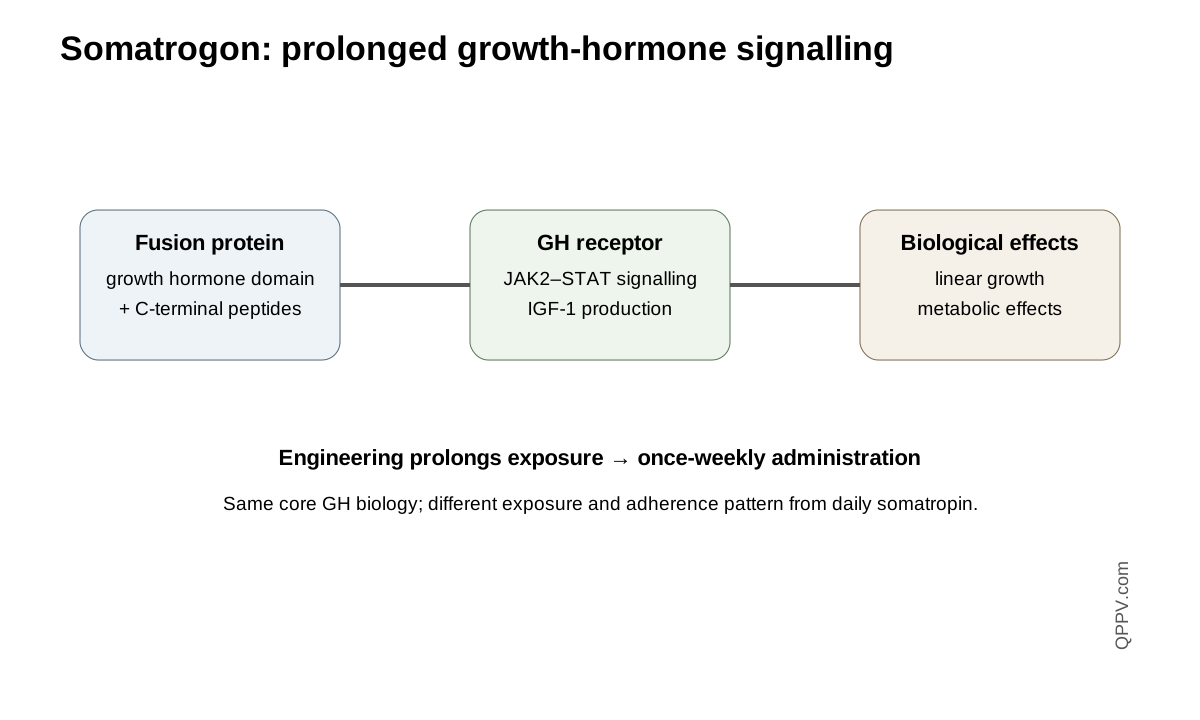
Figure 1. Somatrogon activates the growth hormone receptor and downstream IGF-1 biology like recombinant human growth hormone, while fusion-protein engineering prolongs exposure sufficiently for weekly administration.
Clinical and Regulatory Context
In the European Union, somatrogon is authorised for long-term treatment of paediatric patients from 3 years of age with growth disturbance due to insufficient growth hormone secretion. It is administered subcutaneously once weekly using pre-filled pens.
The EU product information was updated in August 2026. A proposed extension to adults with growth hormone deficiency was withdrawn in December 2024; that withdrawal does not affect the authorised paediatric indication.
This distinction is important for PV because adult growth-hormone-deficiency data should not be used to silently broaden the authorised population in aggregate interpretation.
Why Weekly Administration Changes the Safety Model
Daily somatropin creates many small exposure events. Somatrogon creates a longer weekly exposure profile. The total biological objective is similar, but adherence errors, timing of laboratory assessment and injection-device use differ.
A reported “missed dose” therefore requires the actual dosing interval, date of omission and corrective action. Likewise, IGF-1 interpretation should consider when the sample was taken within the weekly dosing cycle rather than treating every concentration as temporally equivalent.
Safety Profile Through Growth-Hormone Biology
Injection-site reactions
Injection-site reactions are among the most commonly reported adverse reactions. Local pain, erythema, swelling or pruritus should be distinguished from systemic hypersensitivity. Because treatment is weekly and often caregiver-administered, recurrent local reactions can affect adherence even when medically non-serious.
A useful report captures injection site, device used, technique, whether sites were rotated, recurrence on subsequent doses and whether treatment was interrupted.
Glucose intolerance and insulin sensitivity
Growth hormone can reduce insulin sensitivity. Patients with pre-existing metabolic risk may therefore develop worsening glucose tolerance or diabetes. PV assessment should capture baseline metabolic status, glucose and HbA1c where available, family history, obesity, concomitant corticosteroids and changes over time.
Thyroid and adrenal function
Growth hormone therapy can alter the clinical expression of central hypothyroidism and adrenal insufficiency. The relevant safety question is not simply whether a laboratory value changed after treatment but whether an underlying pituitary-hormone deficiency became clinically apparent during restoration of the growth-hormone axis.
Intracranial hypertension
Severe or recurrent headache, visual disturbance, nausea or vomiting may indicate intracranial hypertension. A suspected case should capture ophthalmological examination, papilloedema, neuroimaging where performed, treatment interruption and outcome.
Growth-related orthopaedic complications
Rapid growth can reveal or worsen orthopaedic problems such as slipped capital femoral epiphysis or progression of scoliosis in susceptible children. New limp, hip or knee pain and gait change therefore warrant attention. These events are mechanistically different from direct drug toxicity; they arise from the interaction between accelerated growth and skeletal vulnerability.
Neoplasia and prior malignancy
Growth hormone and IGF-1 are proliferative signals. Current product information includes precautions for patients with active malignancy or relevant tumour history. A malignancy case requires careful reconstruction of the underlying diagnosis, prior radiotherapy or chemotherapy, predisposition and latency. Temporal association alone is insufficient to infer causation.
Pancreatitis and other class risks
Abdominal pain with vomiting may require evaluation for pancreatitis. Other growth-hormone class concerns should be interpreted against the current regional product information and the patient's underlying pituitary or genetic disorder.
Practical Pharmacovigilance Assessment
Somatrogon cases are best interpreted using a longitudinal growth-and-exposure record:
| Domain | Important information |
|---|---|
| Growth response | Height, height velocity, pubertal status, bone age where relevant |
| Exposure | Weekly dose, weight-based changes, missed doses, device and technique |
| Endocrine | IGF-1 timing, thyroid function, adrenal status |
| Metabolic | Glucose, HbA1c, obesity and diabetes risk |
| Neurological/orthopaedic | Headache, visual symptoms, limp, hip/knee pain, scoliosis |
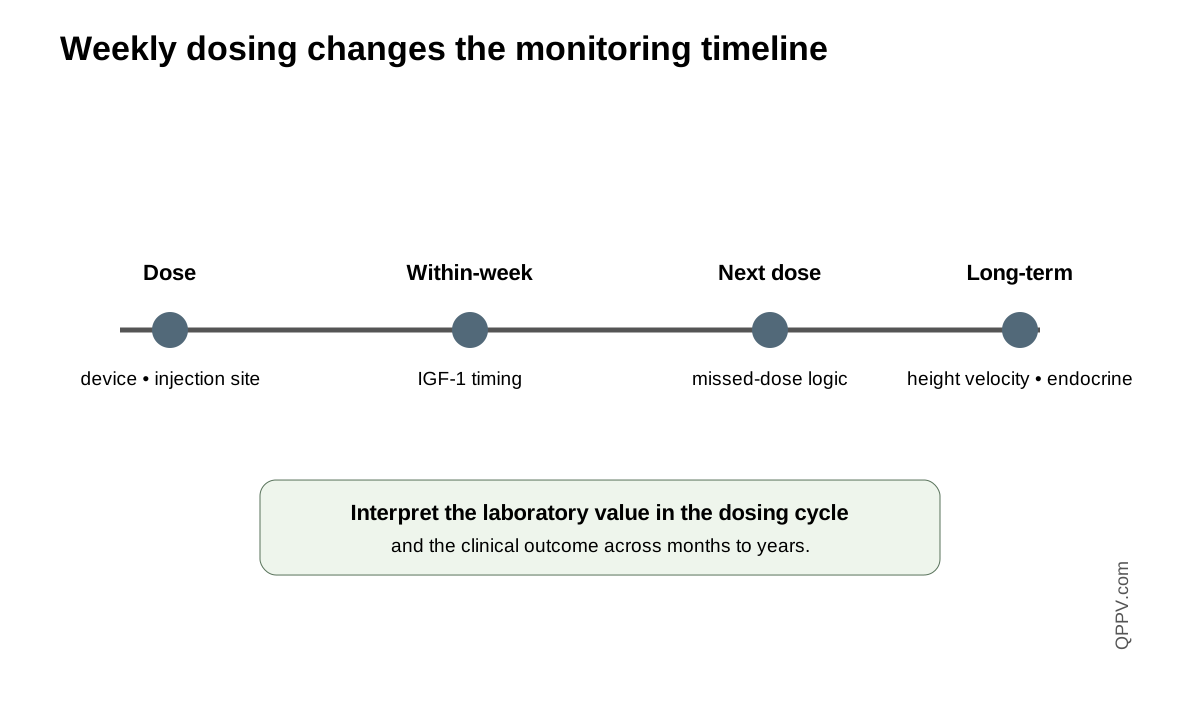
Figure 2. Weekly administration changes the temporal structure of monitoring. Dose timing, IGF-1 sampling, injection-site experience and missed-dose history should be interpreted within the weekly cycle while growth and endocrine outcomes are followed longitudinally.
Medication Errors and Device Use
Pre-filled pens simplify administration but introduce device-specific error modes: wrong strength selection, incomplete dose delivery, failure to rotate injection sites, use of an incorrect weekly day, and misunderstanding of what to do after a missed dose. In heavier children, the required weekly dose may require more than one injection, creating another opportunity for partial dosing.
Medication-error reports should therefore capture whether the intended dose was fully delivered, the pen strength, number of injections, caregiver training and any clinical consequence.
Signal Detection and Long-Term Benefit-Risk Review
Somatrogon is used over years rather than short oncology cycles. Aggregate review therefore needs a longitudinal frame. Growth response, IGF-1 exposure, adherence, metabolic effects and uncommon serious events should be evaluated over time rather than as disconnected cases.
An apparent loss of efficacy may reflect under-dosing after weight gain, missed weekly doses, device problems, incorrect diagnosis, poor adherence or development of another endocrine disorder. Height velocity is more informative than a single height measurement.
Illustrative Failure Modes
The following are hypothetical examples.
Headache recorded without visual assessment. Recurrent severe headache is coded as a common adverse event, but fundoscopy is never obtained and papilloedema is not excluded.
Poor growth attributed to drug inefficacy without dose review. A child gains substantial weight but the prescribed weekly dose is not adjusted, leading to relative underexposure.
IGF-1 result interpreted without dose timing. A laboratory value is classified as persistently high without documenting where sampling occurred in the weekly exposure cycle.
Partial dose delivery mistaken for adherence. The caregiver reports giving the medicine every week, but device review shows that a required second injection was repeatedly omitted.
Inspection and Governance Considerations
An inspector assessing long-term pharmacovigilance could examine whether the system links medication errors and device complaints to clinical outcomes, whether serious neurological and metabolic events receive appropriate follow-up, and whether growth-response data are interpreted with dose and adherence information.
For a paediatric chronic therapy, governance also includes maintaining traceability across transitions between caregivers, paediatric endocrine clinics, pharmacies and home administration.
Practical Checklist
- Confirm paediatric growth-hormone deficiency and authorised age range.
- Record current weight and weight-based weekly dose.
- Capture pen strength, number of injections and administration technique.
- Document missed or partial doses and corrective action.
- Interpret IGF-1 with timing within the weekly dose cycle.
- Follow glucose metabolism, thyroid function and adrenal status where clinically relevant.
- Investigate recurrent headache or visual symptoms for intracranial hypertension.
- Capture new limp, hip/knee pain or scoliosis progression.
- Evaluate suspected lack of efficacy against height velocity, adherence and dose adjustment.
- Maintain long-term product and batch traceability for biological exposure.
Key Takeaways
Somatrogon is a long-acting recombinant growth-hormone fusion protein, not a monoclonal antibody. Its inclusion broadens biological-product pharmacovigilance beyond immune-targeted therapies.
Its central PV challenge is longitudinal: weekly exposure must be connected to growth response, endocrine and metabolic effects, neurological and skeletal symptoms, adherence and device performance. The prolonged dosing interval improves convenience but creates its own timing and medication-error questions.
References
- European Medicines Agency. Ngenla (somatrogon): EPAR and product information. Product information updated 21 August 2026. https://www.ema.europa.eu/en/medicines/human/EPAR/ngenla
- European Medicines Agency. Ngenla public assessment report. https://www.ema.europa.eu/en/documents/assessment-report/ngenla-epar-public-assessment-report_en.pdf
- European Medicines Agency. Withdrawal of application to extend somatrogon to adults with growth hormone deficiency, 2025. https://www.ema.europa.eu/en/medicines/human/variation/ngenla
- Deal CL, et al. Efficacy and safety of once-weekly somatrogon compared with daily somatropin in paediatric growth hormone deficiency. Phase 3 clinical literature.
Regulatory Note
The authorised population and dosing instructions differ by jurisdiction. In the European Union, the authorised indication is paediatric; the withdrawn adult variation did not alter that indication. Current regional product information should govern clinical use and formal regulatory assessment.