Sotrovimab: Classification, Mechanism, EU Authorisation History and Pharmacovigilance
Sotrovimab's EU authorisation has ended, but accurate pharmacovigilance still depends on reconstructing historical exposures and their clinical context.
- Sotrovimab: Classification, Mechanism, EU Authorisation History and Pharmacovigilance
1. Sotrovimab and its EU lifecycle
Sotrovimab is a human immunoglobulin G1 monoclonal antibody directed against an epitope in the SARS-CoV-2 spike protein's receptor-binding region. In the EU it was authorised under the product name Xevudy for treatment of selected patients with early COVID-19 at increased risk of progression, who did not require supplemental oxygen. The historic label covered adults and adolescents aged 12 years or older weighing at least 40 kg.[1,2]
The European Commission withdrew the EU marketing authorisation on 18 February 2026 at the marketing authorisation holder's request, following a decision to permanently discontinue marketing for commercial reasons.[1] The withdrawal was not described by EMA as a safety-based regulatory withdrawal. Xevudy is therefore not currently authorised in the EU. Historical cases should be assessed against the product information applicable at the time of exposure, and the current status should not be represented as ongoing authorisation.
The distinction matters for PV data interpretation. A medicine may continue to appear in historical case records, literature, clinical databases or spontaneous-report systems after its authorisation ends. That does not make its former indication current or establish present availability.
2. Neutralisation and clinical context
Sotrovimab binds a conserved spike epitope and can neutralise susceptible SARS-CoV-2 variants by interfering with viral entry. The conservation of a target epitope does not guarantee activity against every emerging variant. Susceptibility is variant-dependent and can change as the virus evolves; clinical interpretation must be tied to the relevant period, laboratory evidence and applicable public-health guidance rather than an assumption of uniform activity.
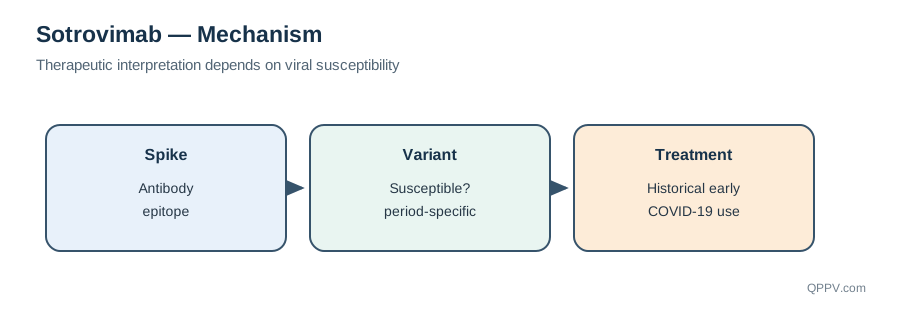
Figure 1. Sotrovimab's historical therapeutic role depended on spike recognition, viral susceptibility and early treatment of eligible patients; EU authorisation ended in 2026.
2.1 Historical use is not a present recommendation
During the authorised period, Xevudy was given as a single intravenous infusion under the label then in force. Its intended role was early treatment for patients at risk of severe progression, before a need for supplemental oxygen. Case review should therefore retain symptom onset, disease severity, oxygen status, risk factors and timing of administration. These details describe the historical indication; they do not recommend use now that the EU authorisation has been withdrawn.
3. Safety profile and individual case assessment
3.1 Infusion and hypersensitivity reactions
EMA's public assessment and product information identify hypersensitivity and infusion-related reactions as relevant safety topics.[2,3] Symptoms may include rash, pruritus, flushing, throat irritation, dizziness, dyspnoea, fever, chills, nausea or changes in blood pressure. A report should distinguish a reaction during infusion from later COVID-19 progression, another infection or a post-infectious event.
For a suspected acute reaction, preserve onset relative to infusion, infusion rate and interruption, vital signs, signs of airway or circulatory involvement, treatment, response and outcome. Record whether the infusion was restarted or discontinued and whether a subsequent dose occurred. Do not infer anaphylaxis from nonspecific symptoms without clinical support.
3.2 Disease progression and competing explanations
COVID-19 itself can produce fever, hypoxia, thromboembolic complications and organ injury. Co-morbid illness, concomitant medicines and co-administered COVID-19 therapies may also be relevant. A case narrative should document the virological and clinical course, oxygen requirement, hospitalisation, relevant investigations, therapies and outcome. Where available, include the date and method of SARS-CoV-2 testing and the variant or sequencing information, while recognising that variant data may be unavailable or uncertain.
3.3 Minimum product-specific information
For a report from the authorised period, seek the following where available:
- Exact product identity, batch/lot, dose, route, infusion date/time and source of exposure information.
- Patient age, weight where relevant to the historic label, risk factors and disease onset.
- COVID-19 severity, oxygen status, hospitalisation, test results and outcome.
- For infusion or hypersensitivity events: symptom chronology, observations, intervention and recovery.
- Concomitant medicines, prior COVID-19 therapy, relevant allergies and medical history.
- Reporter assessment and clinically important follow-up, including attempts and unresolved gaps.
The four minimum elements for a valid ICSR and applicable reporting timelines are determined by EU requirements. Seriousness, expectedness and causality are independent assessments. The former authorisation's withdrawal does not erase the need to process reports concerning exposures that occurred while the product was in use.
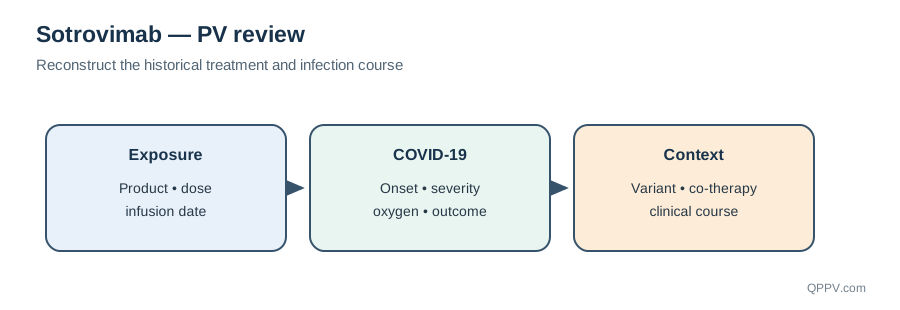
Figure 2. Historical sotrovimab cases require linked exposure, infection-course, reaction and variant-period context.
4. Signal review and lifecycle-aware governance
Aggregate review should account for calendar period, treatment access, circulating variants, disease severity, risk profile and changes in testing or reporting. These factors can alter who received the medicine and what outcomes were observed. A spontaneous-report count cannot establish incidence or comparative effectiveness.
When evaluating a suspected loss of effect, separate lack of clinical response from documented virological resistance or reduced in-vitro susceptibility. Consider timing of treatment, disease progression, immune status, co-interventions and quality of variant data. An observed outcome alone cannot establish that a variant caused treatment failure.
For historical assessments, maintain a clear separation between the authorisation period and the post-withdrawal period. Product identity, exposure date, applicable label, reporting source and any special-access context should remain traceable. The MAH pharmacovigilance system should preserve intake, follow-up, coding, submission, aggregate review and benefit–risk records under applicable requirements. The QPPV's system oversight should be informed by relevant safety information without replacing clinical judgement.
Common data weaknesses include missing symptom onset, omitting oxygen status, coding infusion symptoms without chronology, assuming activity against a variant from the antibody's original design rationale, and describing the EU authorisation as current after its 2026 withdrawal.
5. Key takeaways
Sotrovimab is a human IgG1 anti-spike antibody whose clinical role depended on early treatment and viral susceptibility. Its EU marketing authorisation ended on 18 February 2026 at the holder's request for commercial reasons. This is a historical product-use article, not a current EU treatment recommendation.
Pharmacovigilance records should retain the exposure period, infection course, oxygen status, infusion chronology, variant context when known, concomitant treatment and outcome. The label and regulatory status relevant to the exposure date govern historical case interpretation.
References
- European Medicines Agency. Xevudy: European Public Assessment Report. EU authorisation history and withdrawal on 18 February 2026. Accessed 23 September 2026.
- European Medicines Agency. Xevudy: product information. Historical EU indication, posology, warnings and adverse reactions. Accessed 23 September 2026.
- European Medicines Agency. EMA recommends authorisation of antibody medicine Xevudy. Initial EU assessment, intended population and early safety assessment.
- European Medicines Agency. ETF warns that monoclonal antibodies may not be effective against emerging strains of SARS-CoV-2. Variant-dependent clinical context.
- European Medicines Agency. GVP Module VI: Collection, management and submission of reports of suspected adverse reactions. Current module and addenda.
- European Medicines Agency. GVP Module IX: Signal management. Current module and addenda.
- European Commission. Commission Implementing Regulation (EU) No 520/2012. EU pharmacovigilance requirements, as amended.
Regulatory Note
This article describes sotrovimab's historical EU-authorised use. The European Commission withdrew the Xevudy marketing authorisation on 18 February 2026 at the holder's request for commercial reasons. It is not currently authorised in the EU. This educational reference does not replace applicable legislation, historical product information, current regulatory guidance or clinical judgement.