Tafasitamab: Mechanism, Clinical Safety and Pharmacovigilance
Tafasitamab is a monoclonal antibody directed against CD19, a protein expressed on B cells, including malignant B cells in the authorised lymphoma settings. Binding to CD19 engages immune-mediated mechanisms that can kill target cells. The pharmacology is therefore relevant to both the intended antitumour effect and the possibility of infusion reactions, cytopenias and infection during treatment.
Tafasitamab is not used in an identical regimen for every indication. Current EU product information describes treatment in relapsed or refractory diffuse large B-cell lymphoma (DLBCL) with lenalidomide followed by tafasitamab monotherapy, and in relapsed or refractory follicular lymphoma in combination with lenalidomide and rituximab.[1,2] These distinct regimens create a central PV issue: an event occurring during treatment may reflect tafasitamab, one or more concomitant medicines, underlying lymphoma or overlapping effects.
- Tafasitamab: Mechanism, Clinical Safety and Pharmacovigilance
- Purpose and Treatment Context
- CD19 Targeting and Safety Interpretation
- Regulatory Context and Labelled Regimens
- Clinical Safety Domains and Follow-up
- Causality in Combination Treatment
- Aggregate Review and Benefit-Risk
- Practical Pharmacovigilance Implementation
- Potential Failure Modes
- Inspection and Governance Perspective
- Practical QPPV Checklist
- Key Takeaways
- References
- Regulatory Note
Purpose and Treatment Context
The current EU product information sets out the indication, schedule, premedication, monitoring and dose-modification instructions for each authorised lymphoma population.[1,2] This information should be checked against the actual exposure date because the label has been updated after initial authorisation. A static article summary cannot replace the current product information.
Treatment phase is clinically consequential. Infusion reactions tend to require close attention around administration, particularly early infusions. Myelosuppression and infection need longitudinal review across cycles. The DLBCL regimen changes from combination therapy to tafasitamab monotherapy after the initial combination period, whereas follicular lymphoma treatment includes both lenalidomide and rituximab alongside tafasitamab for the labelled period.[2] A PV database or narrative that records only “tafasitamab plus chemotherapy” loses the treatment distinctions needed for assessment.
The minimum exposure reconstruction should identify indication, regimen phase, exact product, dose, infusion date, cycle, concomitant agents, dose interruptions or reductions and batch where available. It should also establish baseline blood counts, infection status, prior therapies and disease course. These details support causality assessment and maintain biological-product traceability.
CD19 Targeting and Safety Interpretation
CD19 is expressed on B cells. Tafasitamab binds this target and supports immune-mediated killing of target cells. The intended effect is directed against the malignant B-cell population, but the same target biology and the treatment regimen require attention to haematological and infectious outcomes. This is not a basis for attributing every low blood count or infection to tafasitamab; it is a framework for asking what happened, when, and under which combination of exposures.
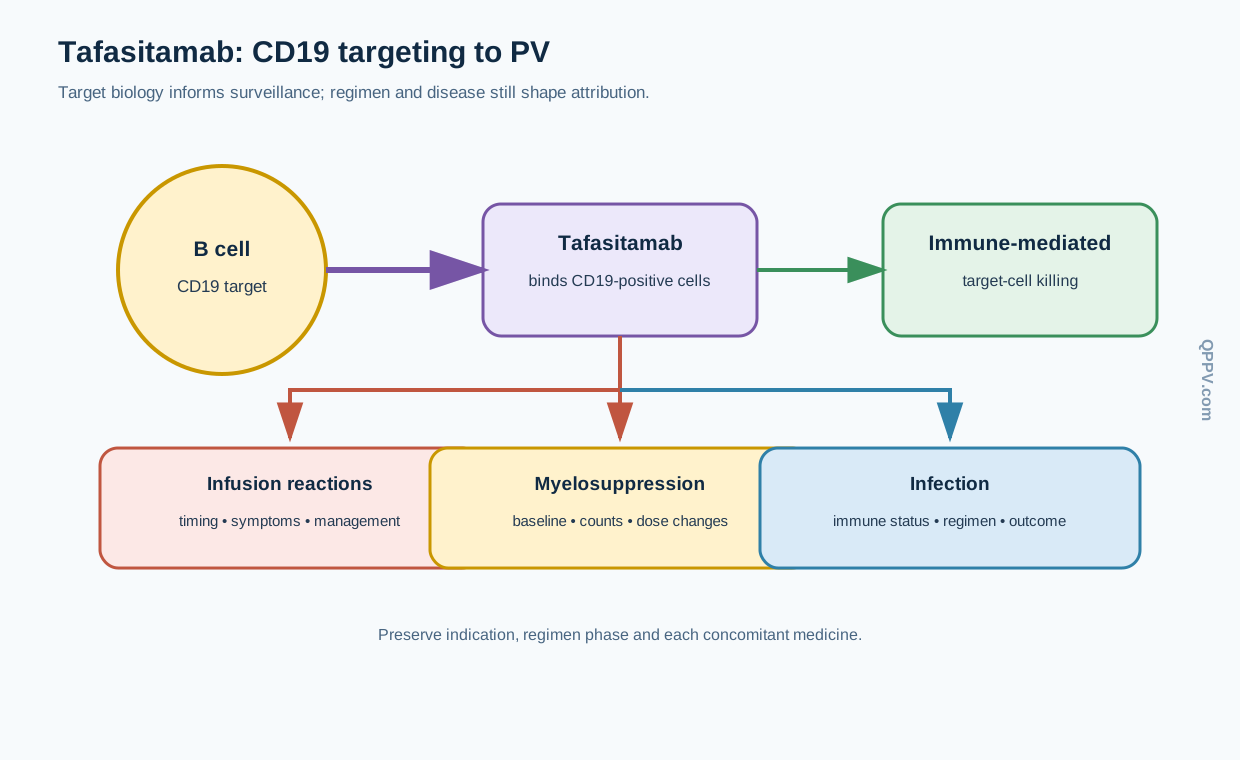
Figure 1. Tafasitamab targets CD19-positive B cells. PV assessment connects the treatment mechanism with infusion-related events, blood-count changes and infections while retaining co-treatment and disease context.
The EU product information highlights infusion-related reactions and serious or severe myelosuppression, including neutropenia, thrombocytopenia and anaemia. It calls for blood-count monitoring during treatment and before each treatment cycle, and for attention to infection.[2] These product-information recommendations should be accurately reflected in relevant PV procedures. They should not be expanded into invented legal deadlines or local requirements.
Combination treatment further complicates interpretation. Lenalidomide and rituximab have their own safety profiles and may be modified independently. The tafasitamab product information directs readers to lenalidomide product information for recommendations on prophylactic antithrombotic medicines during combination use.[2] A safety case should therefore preserve the dose and timing of each agent and which component was interrupted, reduced or continued.
Regulatory Context and Labelled Regimens
The EMA EPAR provides the public regulatory assessment, while the current product information defines the authorised EU conditions of use. The EMA overview describes both DLBCL and follicular lymphoma settings, and the current product information gives regimen-specific schedules and precautions.[1,2] This distinction matters for pharmacovigilance: an event during a three-drug regimen cannot be interpreted as though it arose during monotherapy.
For DLBCL, the clinical course includes lenalidomide combination followed by tafasitamab alone. For follicular lymphoma, the current EU label uses tafasitamab with lenalidomide and rituximab. These pathways should be represented separately in medical review, case coding where feasible and aggregate analysis. Disease subtype and prior therapy can further affect baseline risks and the interpretation of response or progression.
A product’s additional-monitoring status, where applicable, affects collection and review expectations but does not alter general case validity criteria. The PV system should apply current reporting rules and distinguish approved product information from good operational practice.
Clinical Safety Domains and Follow-up
The main PV domains for tafasitamab are infusion-related reactions, myelosuppression and infection, interpreted against the lymphoma and full combination regimen. Each requires a different kind of case evidence.
| Domain | Information needed for a reasoned assessment |
|---|---|
| Infusion-related reaction | Infusion number and cycle, onset during or after infusion, symptoms, severity, premedication, interruption or rate change, treatment and outcome |
| Myelosuppression | Baseline and serial blood counts, grade, clinical consequence, timing, infection or bleeding, other medicines and dose modifications |
| Infection | Site, diagnostic basis, microbiology where available, severity, neutrophil status, treatment, outcome and concurrent immunosuppression |
| Regimen attribution | Indication, disease subtype, exact dose and timing for tafasitamab, lenalidomide and rituximab, and each component’s interruption or reduction |
| Disease context | Tumour burden, marrow involvement, prior therapies, progression, transplant history where relevant and supportive care |
| Traceability | Product name, presentation, batch where available, preparation and infusion details |
The product information describes premedication to reduce infusion-related reactions and dose interruption or modification according to severity.[2] In a case narrative, record what was actually given and what happened rather than infer the clinical response from a protocol. Timing and event features can help distinguish an infusion-related reaction from infection, disease-related fever, hypersensitivity or another concurrent event.
For cytopenias, compare pretreatment and serial laboratory values. Establish whether neutropenia, thrombocytopenia or anaemia was symptomatic; whether it led to infection, bleeding, transfusion, dose delay or treatment interruption; and what other therapies were being administered. A laboratory abnormality and a clinically consequential event are related but not interchangeable outcomes.
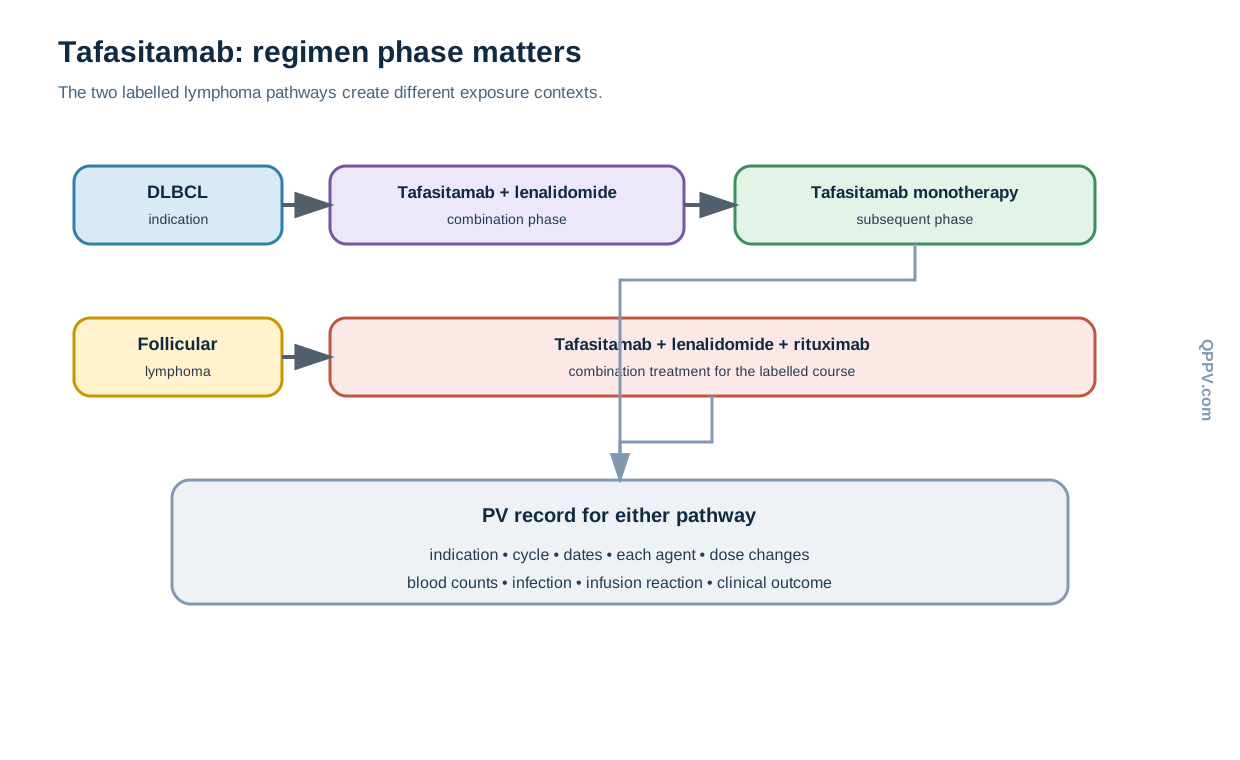
Figure 2. The labelled treatment pathway differs by lymphoma indication. Capturing regimen phase and each component prevents combination exposure from being collapsed into one attribution.
Causality in Combination Treatment
A combination regimen increases the number of plausible causes, but it does not make individual assessment impossible. The case chronology should show the start and stop dates, dose changes, infusion times, laboratory trends, event onset, management and outcome for each relevant medicine. If one agent was withheld while others continued, that information may help interpretation, though it does not automatically establish which component caused an event.
In the follicular lymphoma setting, tafasitamab is added to a lenalidomide-rituximab backbone. A randomised study compared the tafasitamab-containing regimen with the same backbone without tafasitamab, providing a comparative evidence framework for the regimen as a whole.[2] That evidence can inform aggregate interpretation but cannot identify causality in every individual case. In DLBCL, the transition to monotherapy may offer a different exposure context for events arising later in treatment.
The disease itself may cause marrow abnormalities, fever, infection susceptibility or clinical deterioration. Prior systemic therapy and supportive medicines can contribute as well. A medical review should assess these alternatives without using them to dismiss a potential treatment contribution. The conclusion should state whether tafasitamab, a concomitant agent, the disease or several factors are plausible and identify any uncertainty.
Aggregate Review and Benefit-Risk
Aggregate review should be stratified by lymphoma indication, regimen phase, concomitant lenalidomide and rituximab exposure, cycle, event phenotype and clinically relevant baseline factors. Combining DLBCL combination-phase cases with later monotherapy cases, or pooling both lymphoma indications without justification, may obscure different exposure patterns.
For comparative evidence, distinguish events observed in the tafasitamab group from events occurring in a comparator regimen. Similar event frequencies between treatment arms do not prove absence of a tafasitamab contribution, while events in the combination arm cannot automatically be attributed to tafasitamab. Review should integrate individual narratives, current product information, clinical-trial evidence, post-authorisation data and the completeness of source information.[3,4]
Spontaneous reports do not establish incidence without appropriate exposure denominators. Apparent changes over time may reflect expanded indications, longer exposure, changes in treatment sequencing, stimulated reporting or changes in case follow-up. The rationale for grouping cases and the limitations of the evidence should be documented.
Practical Pharmacovigilance Implementation
Safety systems should model regimen components as distinct exposures. The narrative should make it possible to identify which medicine was administered on each date, the indication, treatment phase, dose modification and relevant laboratory or infection findings. Where the electronic case form has only one “study drug” field, the narrative and supplemental data should prevent co-treatment from becoming invisible.
Recommended operational controls include a regimen-specific follow-up aid; medical review prompts for infusion reactions, blood-count changes and infection; a clear interface with oncology and product-quality teams; and aggregate analyses stratified by regimen phase. Local procedures may add internal review targets or escalation pathways, but they should label these as operational standards rather than statutory reporting requirements unless supported by the applicable source.
Potential Failure Modes
The following are illustrative failure modes, not published inspection findings:
- A safety case records “combination therapy” without identifying each medicine, dose or treatment phase.
- An infusion-related reaction lacks the infusion number, timing, premedication and management.
- A low blood count is assessed without baseline trends or the co-administered regimen.
- An infection report omits neutrophil status, microbiology or treatment outcome where available.
- A dose modification is attributed to tafasitamab even though the record does not show which agent was changed.
- DLBCL combination-phase and monotherapy cases are pooled without a reasoned comparison.
- The newer follicular lymphoma regimen is not represented in the safety database or case-processing guidance.
- Company or local training documents are treated as the controlling source instead of the current approved product information.
Corrective action should address the cause, such as inadequate data fields, insufficient source-document access or unclear ownership of follow-up. Effectiveness should be assessed through subsequent case quality and aggregate interpretability.
Inspection and Governance Perspective
An inspector could test whether the organisation has translated the product’s changing labelled indications and combination regimens into usable case-processing and review controls. Relevant evidence may include current product-information tracking, regimen-specific medical-review guidance, follow-up records, dose-modification narratives, signal evaluations, periodic reports and governance decisions.
The evidence should show traceability from source data to clinical assessment and action. For example, an infusion-reaction trend should be traceable to infusion chronology and management; a neutropenia analysis should retain regimen phase and serial counts; and an infection assessment should consider the patient’s immune and disease context. These are potential inspection questions, not claims about actual inspection findings.
Practical QPPV Checklist
- Confirm lymphoma indication and the product information applicable to the exposure.
- Record regimen phase and each co-administered medicine separately.
- Preserve tafasitamab dose, infusion date, cycle, presentation and batch where available.
- For infusion reactions, capture infusion number, symptoms, timing, premedication, management and outcome.
- For cytopenias, obtain baseline and serial blood counts and document clinical consequences.
- For infection, capture site, evidence, severity, neutrophil status, treatment and outcome.
- Record which regimen component was reduced, withheld, resumed or discontinued.
- Assess disease progression, marrow involvement, prior therapy and supportive medicines.
- Keep indication and regimen strata visible in aggregate review.
- Explain uncertainty and connect the evidence to benefit-risk governance.
Key Takeaways
Tafasitamab targets CD19-positive B cells, but its pharmacovigilance cannot be separated from the regimen in which it is used. DLBCL and follicular lymphoma have different labelled combinations and treatment phases. Infusion reactions, myelosuppression and infection should be assessed against exact exposure, laboratory trends, disease status and other medicines.
A useful safety system preserves each agent and treatment phase as a traceable exposure. This supports more credible individual causality assessments and prevents aggregate review from obscuring clinically distinct populations.
References
- European Medicines Agency: tafasitamab EPAR.
- European Medicines Agency: current tafasitamab product information.
- European Medicines Agency: Good pharmacovigilance practices.
- ICH E2C(R2): Periodic benefit-risk evaluation report guideline.
Regulatory Note
This article is an educational pharmacovigilance reference. It does not replace current regulator-approved product information, applicable legislation, local oncology protocols or clinical judgment. Indications, regimens, warnings and monitoring may differ across jurisdictions and can change over time. Consult the product information applicable to the actual exposure date and market.