Taliglucerase Alfa: Plant-Cell Recombinant Enzyme Replacement in Gaucher Disease and Pharmacovigilance
Taliglucerase alfa is a recombinant form of human glucocerebrosidase used for long-term enzyme replacement therapy in type 1 Gaucher disease. It is notable not merely because it replaces a deficient lysosomal enzyme, but because it is produced in genetically modified carrot plant cells and naturally presents terminal mannose structures that facilitate uptake by macrophage mannose receptors.
That manufacturing feature is part of the medicine's functional design. Pharmacovigilance therefore has to connect product identity and immunogenicity with infusion tolerance and the slow clinical manifestations of lysosomal substrate clearance.
- Taliglucerase Alfa: Plant-Cell Recombinant Enzyme Replacement in Gaucher Disease and Pharmacovigilance
- Gaucher Disease and the Therapeutic Problem
- Classification and Molecular Design
- Clinical Context
- How the Enzyme Replacement Works
- Major Safety and Pharmacovigilance Domains
- Special Situations
- Practical Pharmacovigilance Implementation
- Potential Failure Modes and Inspection Questions
- Governance
- Key Takeaways
- References
- Regulatory Note
Gaucher Disease and the Therapeutic Problem
Type 1 Gaucher disease results from deficient activity of lysosomal glucocerebrosidase, also called beta-glucocerebrosidase. The enzyme normally hydrolyses glucosylceramide. When activity is insufficient, lipid substrate accumulates particularly in macrophages, producing characteristic Gaucher cells and contributing to splenomegaly, hepatomegaly, anaemia, thrombocytopenia and skeletal disease.
Enzyme replacement therapy supplies functional enzyme to the cells that accumulate substrate. The therapeutic problem is therefore not simply low enzyme concentration in plasma; the administered protein must reach macrophage lysosomes.
Classification and Molecular Design
Taliglucerase alfa is a recombinant lysosomal hydrolase and an enzyme-replacement biological medicinal product. Its plant-cell expression system naturally creates terminal mannose residues that support macrophage uptake.
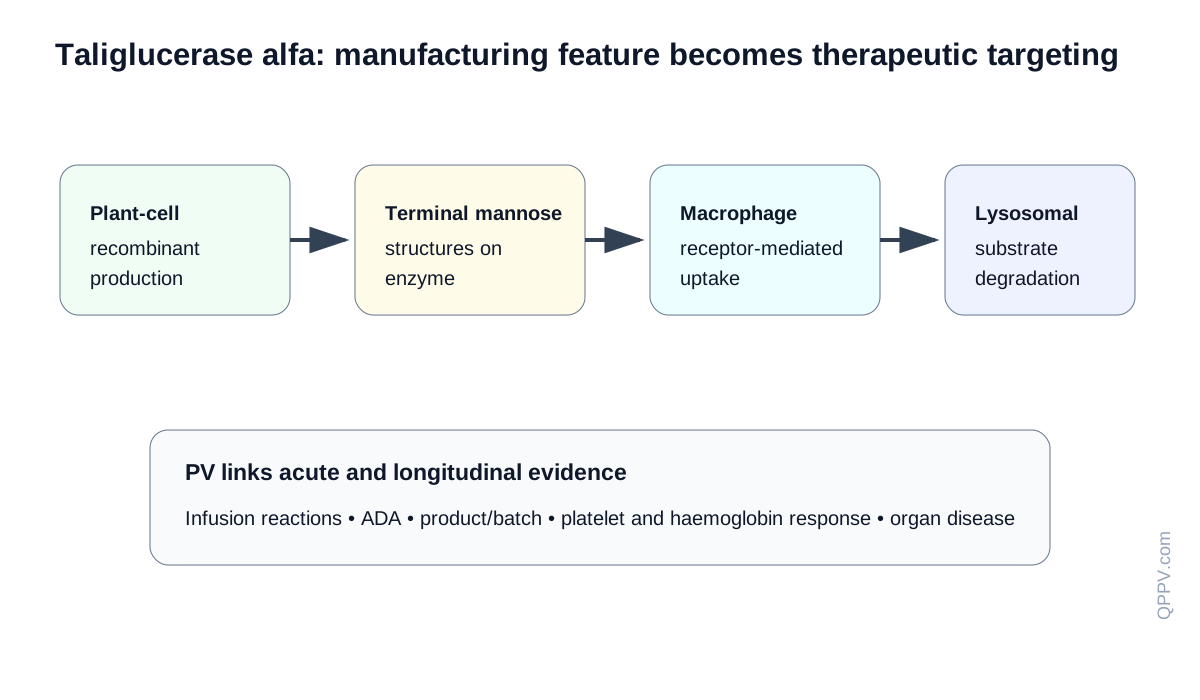
Figure 1. Taliglucerase alfa links recombinant plant-cell production to mannose-receptor uptake by macrophages and lysosomal substrate degradation.
Why mannose matters
Macrophages express receptors that recognise terminal mannose. Receptor-mediated endocytosis therefore acts as a cellular address system: the enzyme is taken into the same cell population in which glucosylceramide has accumulated and is delivered toward lysosomal compartments.
Clinical Context
Taliglucerase alfa is used for long-term enzyme replacement therapy in adults and children with confirmed type 1 Gaucher disease. Treatment response develops over time and may be assessed through haemoglobin, platelet count, liver and spleen size, skeletal manifestations and patient symptoms.
This creates an important PV distinction. An infusion reaction is an acute safety event, whereas inadequate response is a longitudinal effectiveness question. The two may nevertheless become linked when anti-drug antibodies, dose interruptions or poor adherence alter exposure.
How the Enzyme Replacement Works
Following intravenous infusion, taliglucerase alfa is taken up by macrophages through mannose-recognising receptors. Within lysosomes, the enzyme hydrolyses accumulated glucosylceramide. The mechanism is therefore a sequence of delivery → cellular uptake → lysosomal localisation → substrate degradation.
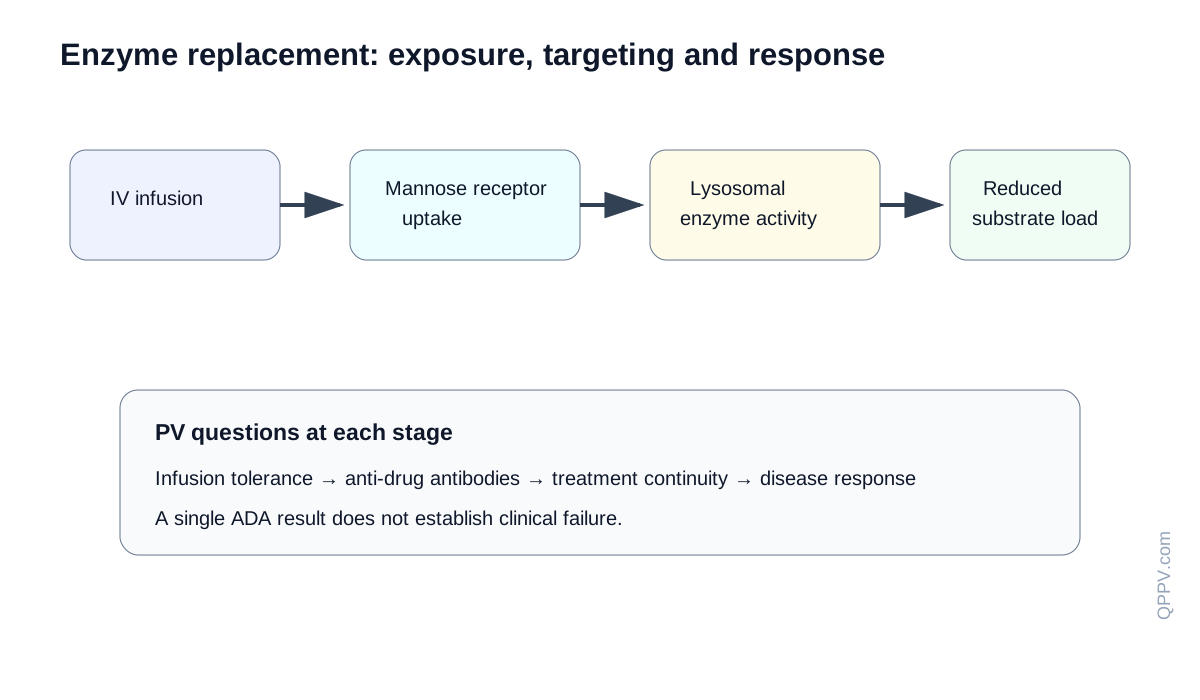
Figure 2. The same pathway that produces therapeutic benefit also defines the information needed for PV: product exposure, immune response, macrophage targeting and longitudinal disease response.
Major Safety and Pharmacovigilance Domains
Infusion-related reactions and hypersensitivity
Infusion-related reactions may occur during or within the period following infusion. Clinical manifestations can include headache, arthralgia, flushing, vomiting, pruritus, rash, chest discomfort and other symptoms. Hypersensitivity, including anaphylaxis, requires immediate clinical recognition and appropriate management.
PV follow-up should capture infusion number, dose, rate, latency from infusion start, phenotype, treatment, whether the infusion was interrupted or slowed, and the outcome on re-exposure.
Anti-drug antibodies
Patients can develop IgG antibodies to taliglucerase alfa, and neutralising activity has been detected in some antibody-positive patients. The clinical significance varies and cannot be inferred from antibody positivity alone.
This is a useful example of why immunogenicity must be interpreted as a chain rather than an isolated laboratory result. Relevant questions are whether antibodies coincide with hypersensitivity, altered pharmacological response, loss of effectiveness or a change in infusion tolerance.
Patients switching from another enzyme replacement therapy may also have a different immunological history. Product identity and prior treatment therefore matter when interpreting reactions after a switch.
Lack or loss of effectiveness
Possible lack of effectiveness should be assessed using the disease manifestations that treatment is intended to modify. Platelet count, haemoglobin, organ volumes, bone symptoms and treatment adherence may all be relevant. A single laboratory value rarely establishes treatment failure.
Product and lot traceability
As with other biological medicinal products, recording the exact product and batch is important, particularly for hypersensitivity clusters, suspected quality defects or unusual changes in effectiveness.
Special Situations
Home administration
Where home administration is permitted under applicable product information and clinical supervision arrangements, PV should capture who administered the infusion, the infusion rate, any preparation or device issues and the ability to recognise and manage hypersensitivity.
Pregnancy
Gaucher disease itself can influence pregnancy and haematological status. Reports during pregnancy therefore need maternal disease severity, treatment continuity, obstetric outcome and neonatal outcome rather than a binary exposure flag.
Carrot allergy
Because the enzyme is produced in carrot plant cells, concern about carrot allergy is understandable. Current product information notes that the occurrence of allergic reactions in patients with known carrot allergy is not established; this uncertainty should not be transformed into a claim that carrot allergy predicts taliglucerase hypersensitivity.
Practical Pharmacovigilance Implementation
A high-quality case should preserve the relationship between infusion exposure, immune response and disease course. Useful follow-up includes exact product and batch, dose, infusion rate, prior enzyme-replacement therapy, infusion number, reaction timing and phenotype, anti-drug antibody results where clinically obtained, treatment changes, and objective markers of Gaucher disease response.
Aggregate review should distinguish acute infusion tolerance from long-term effectiveness. Trends in hypersensitivity, treatment discontinuation, antibody positivity and clinical response are more informative when examined together than when each is reviewed in isolation.
Potential Failure Modes and Inspection Questions
Illustrative failure modes include coding every infusion reaction simply as 'hypersensitivity' without timing or phenotype; failing to capture prior enzyme-replacement therapy after a switch; treating anti-drug antibody positivity as synonymous with clinical failure; and losing batch traceability in a suspected cluster.
An inspector could ask whether the PV system can identify recurrent reactions in the same patient, whether product-switch history is retained, how lack-of-effectiveness reports are linked to objective Gaucher disease measures, and whether quality complaints and safety cases can be reconciled by batch.
Governance
Effective oversight requires coordination between pharmacovigilance, medical, product quality and regulatory functions. Immunogenicity signals in particular may span case reports, laboratory data, clinical effectiveness and manufacturing investigations.
Key Takeaways
Taliglucerase alfa is a plant-cell-produced recombinant glucocerebrosidase whose terminal mannose structures support macrophage targeting. The manufacturing platform is therefore part of its therapeutic architecture, not merely a production detail.
Its PV model combines acute infusion reactions and hypersensitivity with anti-drug antibodies, product traceability and slow longitudinal measures of Gaucher disease response.
References
- Current taliglucerase alfa product information and prescribing information, including sections on antibody response, infusion-related reactions and hypersensitivity. Accessed September 2026.
- U.S. Food and Drug Administration. Regulatory information for taliglucerase alfa for type 1 Gaucher disease.
- Zimran A, Brill-Almon E, Chertkoff R, et al. Pivotal clinical development publications on plant-cell-expressed recombinant glucocerebrosidase in type 1 Gaucher disease.
- Pastores GM, Hughes DA. Gaucher disease: pathophysiology, clinical manifestations and enzyme replacement principles. Authoritative reviews and clinical guidance.
Regulatory Note
Indications, dosing and home-administration arrangements vary by jurisdiction. This article uses current authoritative product information available in 2026 to explain scientific and pharmacovigilance principles; it does not replace the locally applicable label or specialist clinical guidance.