Talimogene laherparepvec is an oncolytic virus: a genetically modified herpes simplex virus type 1 (HSV-1) designed to infect and lyse tumour cells while expressing granulocyte-macrophage colony-stimulating factor (GM-CSF) within the tumour environment. It is marketed as Imlygic and is administered by direct injection into melanoma lesions.
The product is conceptually different from a conventional monoclonal antibody or recombinant protein. The therapeutic agent is a replication-competent genetically modified virus. Its safety system must therefore consider not only the treated patient but also viral handling, lesion dressings, accidental exposure of healthcare workers or close contacts, viral shedding and the possibility of herpetic infection outside the injected tumour.
This makes talimogene laherparepvec especially useful for pharmacovigilance teaching. Product safety is inseparable from administration technique and biosafety controls.
Table of Contents
- Product identity and classification
- Development and regulatory history
- HSV-1 biology and oncolytic engineering
- Why HSV-1 can be engineered as an oncolytic virus
- Key genetic modifications
- Mechanism of action
- Clinical positioning in melanoma
- Treatment and handling architecture
- Safety profile and mechanism-informed interpretation
- Herpetic infection
- Accidental exposure and transmission
- Injection-site complications and impaired healing
- Immune-mediated events
- Product pharmacovigilance
- Practical assessment framework
- Key Takeaways
- References
- Regulatory Note
Product identity and classification
| Dimension | Classification |
|---|---|
| Modality | Genetically modified replication-competent virus |
| Viral backbone | Herpes simplex virus type 1 |
| Therapeutic class | Oncolytic immunotherapy / gene therapy product |
| Engineered payload | Human GM-CSF |
| Route | Intralesional injection |
| Therapeutic area | Unresectable melanoma with injectable lesions within the approved stage/organ scope |
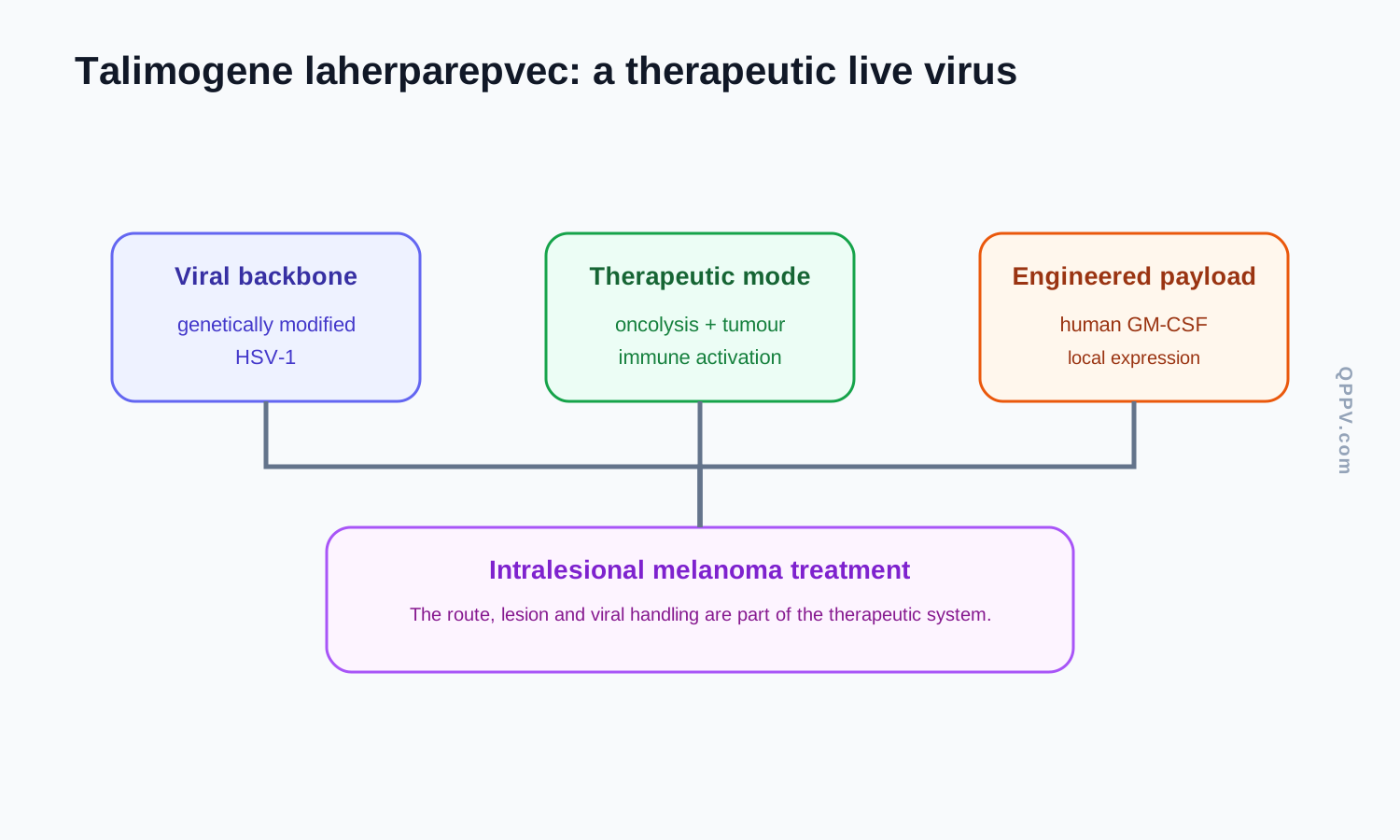
Figure 1. Talimogene laherparepvec is simultaneously a modified HSV-1 virus, an intralesional oncolytic therapy and a GM-CSF-expressing gene therapy product. Those classifications create safety obligations beyond ordinary parenteral medicines.
Development and regulatory history
Oncolytic-virus development sought to exploit a basic difference between many malignant cells and healthy tissue: tumour cells often have disrupted antiviral defence pathways, making them more permissive to selected viral replication. HSV-1 offered a large, manipulable genome, established virology and the ability to infect many cell types.
Talimogene laherparepvec was engineered from HSV-1 and evaluated in unresectable melanoma. The pivotal OPTiM trial compared intralesional talimogene laherparepvec with subcutaneous GM-CSF and showed improvement in durable response rate, particularly in disease confined to skin, subcutaneous tissue and lymph nodes.
FDA approved Imlygic in October 2015 for local treatment of unresectable cutaneous, subcutaneous and nodal lesions in melanoma recurrent after initial surgery. The EU authorised Imlygic for adults with unresectable regionally or distantly metastatic melanoma at stages IIIB, IIIC and IVM1a without bone, brain, lung or other visceral disease. The narrower EU wording reflects the clinical population in which benefit was most convincing.
HSV-1 biology and oncolytic engineering
Why HSV-1 can be engineered as an oncolytic virus
Wild-type HSV-1 is a human pathogen capable of lytic infection and lifelong latency in sensory neurons. A therapeutic oncolytic HSV must therefore be modified to reduce pathogenicity while preserving enough replicative competence to destroy tumour cells.
Tumour selectivity is not absolute. Instead, viral engineering shifts the balance so replication and lysis are favoured in malignant tissue while attenuation reduces normal-tissue pathogenicity. This is why the product remains biologically capable of causing herpetic infection and why accidental exposure cannot be treated as contact with an inert injectable medicine.
Key genetic modifications
Talimogene laherparepvec contains deletions affecting ICP34.5, a major HSV neurovirulence factor, and ICP47, which normally interferes with antigen presentation. The modified virus also carries a gene encoding human GM-CSF.
Deletion of ICP34.5 contributes to attenuation and tumour-selective replication. Deletion of ICP47 enhances antigen presentation and changes viral gene expression. Local GM-CSF production is intended to recruit and activate antigen-presenting cells in the tumour environment.
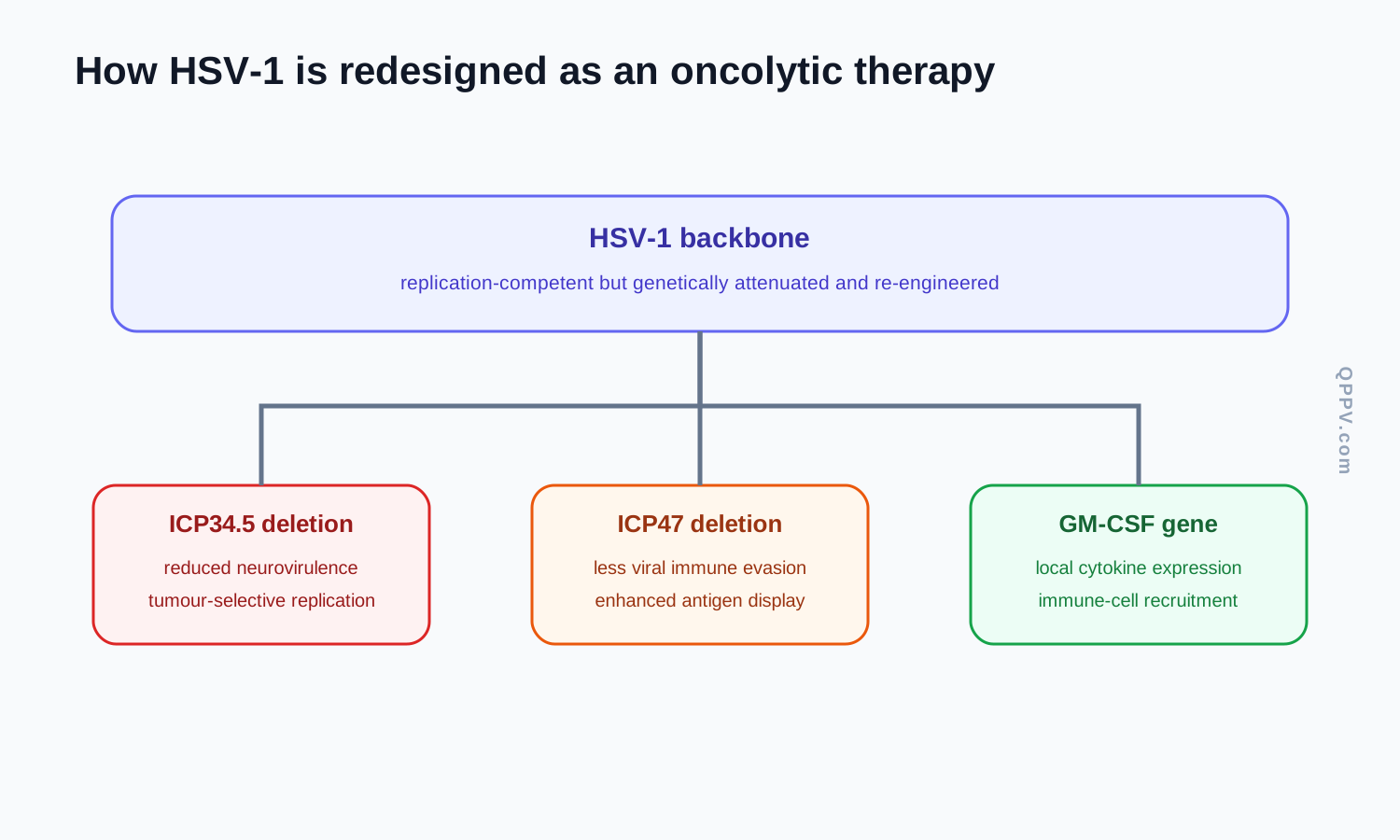
Figure 2. The therapeutic virus combines attenuation and tumour-selective replication with enhanced antigen presentation and local GM-CSF expression. The diagram is conceptual; the product remains a live genetically modified HSV-1 capable of herpetic infection under some circumstances.
Mechanism of action
After intralesional injection, the virus infects susceptible tumour cells and replicates. Viral replication causes tumour-cell lysis, releasing tumour-derived antigens together with viral inflammatory signals. GM-CSF produced locally can support recruitment and maturation of antigen-presenting cells.
The intended antitumour effect therefore has two connected components: direct local oncolysis and stimulation of tumour-directed immune responses. Responses in uninjected lesions observed in clinical studies support an immune-mediated systemic component, although intralesional tumour destruction remains central.
This dual mechanism explains why inflammatory swelling of treated lesions does not always equal tumour progression and why immune-mediated phenomena may occur even though the product is injected locally.
Clinical positioning in melanoma
Talimogene laherparepvec is most relevant when melanoma produces accessible cutaneous, subcutaneous or nodal lesions that can be repeatedly injected. It is not a general intravenous treatment for widespread visceral metastatic disease. The physical accessibility of lesions is therefore part of the therapeutic mechanism: the medicine must be delivered into tumour tissue.
Modern melanoma care includes immune checkpoint inhibitors, targeted BRAF/MEK therapy for appropriate molecular subgroups, surgery and radiotherapy. Talimogene laherparepvec should therefore be understood as one modality within a broader treatment map rather than as a replacement for systemic therapy in every metastatic patient.
For PV, the treatment map matters because adverse events may arise from concurrent or sequential checkpoint blockade, corticosteroids, surgery or radiotherapy. Immune-mediated events in a patient receiving both an oncolytic virus and an immune checkpoint inhibitor require exposure to both therapies to be preserved in the causal assessment.
Treatment and handling architecture
Imlygic is injected directly into lesions by trained healthcare professionals. The initial dose uses a lower viral concentration, followed by subsequent dosing at the therapeutic concentration according to the product schedule. Dose volume depends on lesion size and the total injectable tumour burden.
Because the medicine is a genetically modified live virus, treatment includes operational controls beyond ordinary aseptic injection:
| Control | Purpose |
|---|---|
| Appropriate storage and thawing | Preserve viral product quality and concentration |
| PPE during preparation/administration | Reduce accidental exposure |
| Avoidance of direct contact with injected lesions/body fluids | Reduce transmission risk |
| Occlusive dressing over treated lesions | Contain local viral material and wound drainage |
| Biohazard disposal | Prevent environmental and occupational exposure |
| Patient/contact education | Reduce exposure of susceptible close contacts |
| Lesion documentation | Support dose calculation and interpretation of local reactions |
Pregnant healthcare workers and severely immunocompromised persons require particular attention to exposure avoidance under current product information. The exact precautions should be taken from the current label or SmPC.
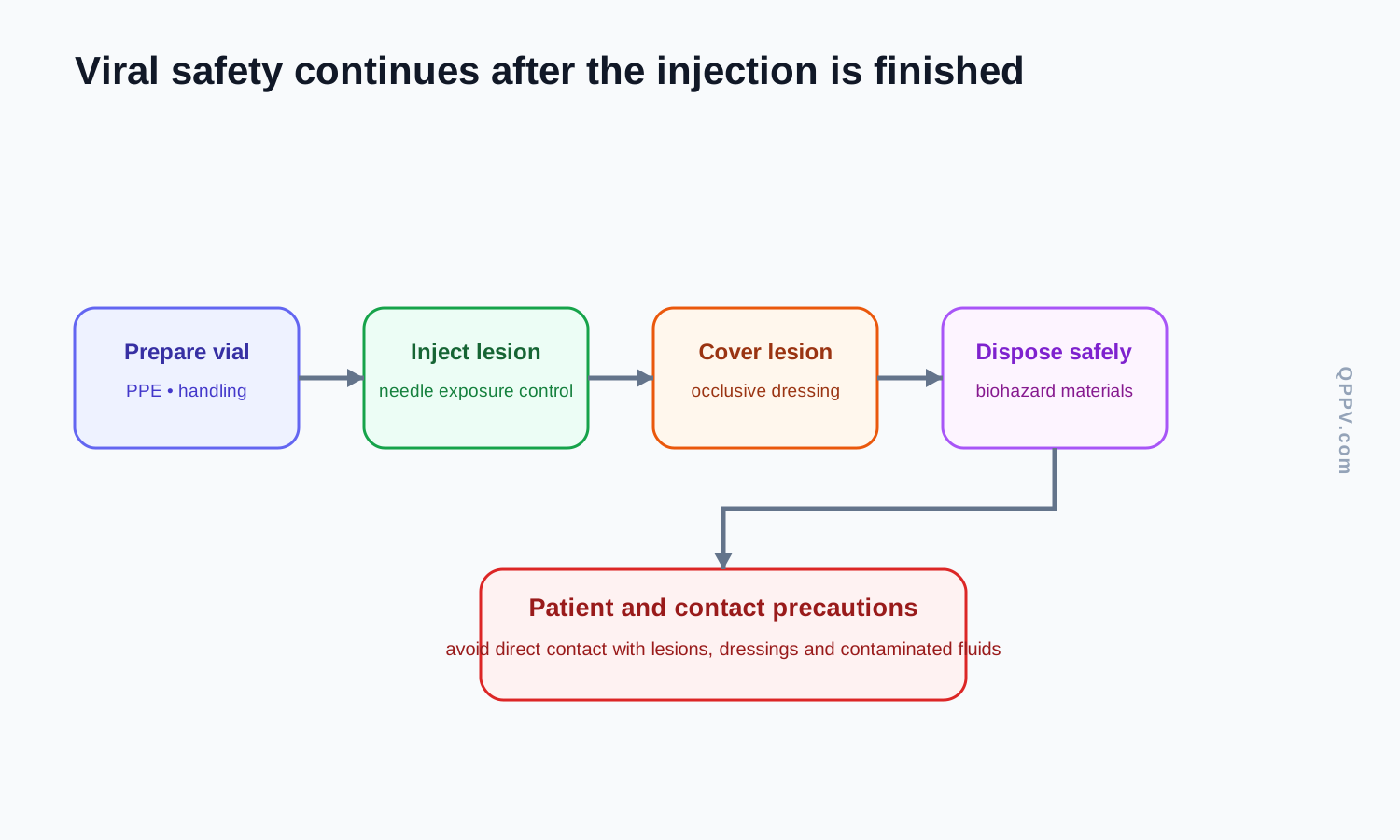
Figure 3. The safety system extends from the vial to the lesion and beyond: preparation, injection, dressing, waste disposal and contact precautions all contribute to preventing unintended HSV-1 exposure.
Safety profile and mechanism-informed interpretation
Herpetic infection
Because the product is an HSV-1 derivative, herpetic infection is a direct mechanism-linked risk. Infection may involve oral lesions, disseminated disease or other HSV manifestations, and severe cases are of particular concern in immunocompromised patients.
A suspected herpetic event should capture lesion site and morphology, PCR/culture results if performed, neurological or systemic features, immune status, concomitant immunosuppression, antiviral treatment and outcome. Where possible, testing that distinguishes talimogene laherparepvec from wild-type HSV can materially improve assessment.
This distinction is important because HSV-1 infection is common in the population. A cold sore after treatment could represent reactivation of pre-existing wild-type virus, infection with the therapeutic strain or an unrelated process. Mechanism alone cannot answer which.
Accidental exposure and transmission
Occupational or close-contact exposure is a special situation unique to live viral therapy. Exposure may occur through needle-stick injury, splashes to mucosa or broken skin, contact with lesion exudate or improper handling of dressings.
Reports should identify who was exposed, the route and site, whether skin was intact, immediate decontamination, immune/pregnancy status, subsequent symptoms and any diagnostic testing. Exposure without symptoms may still warrant documentation under applicable company and biosafety procedures.
The treated patient's household is also part of the safety environment. Dressings should be handled according to product instructions, and close contacts should avoid direct contact with injected lesions or contaminated materials.
Injection-site complications and impaired healing
Injected tumours may ulcerate, bleed, become painful or develop bacterial infection. Some patients can experience impaired healing or tissue necrosis. These events can arise from tumour biology, repeated needle trauma, viral oncolysis, prior radiation, poor vascular supply or infection.
A useful case assessment includes lesion size before treatment, anatomical site, prior surgery/radiation, ulceration before injection, culture findings, wound care and whether the lesion was injected again.
Immune-mediated events
Oncolysis releases tumour antigens and inflammatory signals, while GM-CSF supports immune activation. Immune-mediated phenomena, including glomerulonephritis, vasculitis, pneumonitis or worsening psoriasis, have been reported in the wider product experience.
Such events require careful alternative-cause assessment, particularly when checkpoint inhibitors are used concomitantly. The presence of an immune mechanism increases plausibility but does not identify which immunotherapy caused the event.
Flu-like and systemic inflammatory symptoms
Pyrexia, chills, fatigue, influenza-like illness and nausea are common and can occur after injection. These symptoms generally reflect innate immune activation but can resemble infection. Persistent high fever, hypotension or focal infectious symptoms should not be dismissed as expected treatment reaction without appropriate clinical evaluation.
Product pharmacovigilance
Talimogene laherparepvec PV must connect patient safety, viral biology, product handling and third-party exposure. A conventional adverse-event database can capture fever or cellulitis, but a complete safety system also needs occupational exposure, close-contact transmission questions, product-quality handling and lesion-specific treatment information.
High-value case information includes:
| Domain | Useful information |
|---|---|
| Product | concentration, vial/lot, storage/thawing, dose date |
| Lesion | anatomical site, size, injected volume, ulceration, prior radiation/surgery |
| Exposure | needle-stick, mucosal contact, broken skin, dressing/body-fluid contact |
| Immune status | patient and exposed contact immunocompromise, pregnancy status where relevant |
| Event | lesion morphology, fever, infection site, neurologic/systemic features |
| Testing | HSV PCR/culture, strain differentiation if available, bacterial cultures |
| Treatment | antivirals, antibiotics, wound care, hospitalisation |
| Co-therapy | checkpoint inhibitors, corticosteroids, other anticancer treatment |
Product-quality and preparation events
Temperature excursions, incorrect thawing, wrong viral concentration, damaged vials or incomplete injection may affect product viability or dose. These events can result in ineffective treatment without producing a classic adverse reaction. Product-quality complaints and medication errors should remain linked to the clinical case when they concern the same exposure.
Viral shedding and transmission surveillance
Viral DNA detection does not necessarily indicate infectious transmissible virus. Safety interpretation should distinguish PCR positivity from recovery of replication-competent virus. The anatomical source—lesion surface, dressing, oral mucosa or blood—also matters.
A suspected transmission event to a close contact is especially important. The case should link patient and contact records while respecting privacy, reconstruct direct contact with lesions/dressings and seek virological confirmation where clinically appropriate.
Aggregate interpretation
Aggregate review benefits from stratification by lesion location, immune status, concomitant checkpoint therapy, occupational versus household exposure, wild-type versus therapeutic-strain evidence, and treatment cycle. A small number of well-characterised viral transmission cases can be more informative than a large count of non-specific “cold sore” reports.
Practical assessment framework
- Confirm the product and viral concentration. Initial and subsequent concentrations differ.
- Identify the injected lesion. Location, size and condition are part of exposure.
- Define whether the report concerns patient, healthcare worker or close contact. The safety pathway differs.
- Characterise infection clinically and virologically. HSV typing/strain evidence is highly valuable.
- Reconstruct handling and dressing controls. Exposure can occur after the patient leaves the clinic.
- Assess immune status. Immunocompromise can transform a local exposure into a serious infection risk.
- Separate expected inflammatory symptoms from serious infection. Persistent or focal findings require investigation.
- Assess concomitant immunotherapy. Immune-mediated events may have multiple plausible contributors.
- Preserve batch and product-quality information. Live viral viability depends on correct handling.
Illustrative scenario: healthcare-worker needle-stick
A nurse sustains a needle-stick immediately after injecting a melanoma lesion. The wound is washed promptly. The nurse is not immunocompromised and develops no symptoms.
This is an occupational exposure even without an adverse reaction. The report should document route, immediate management, product concentration, patient dose, healthcare-worker risk factors and follow-up. If a vesicular lesion later appears at the injury site, virological testing becomes highly informative.
Illustrative scenario: vesicular rash in an immunosuppressed patient
A patient receiving corticosteroids for an immune-mediated complication develops disseminated vesicular lesions after several Imlygic treatments. The case requires urgent assessment for HSV infection. PCR confirmation, strain differentiation if available, corticosteroid dose, antiviral therapy and organ involvement are central follow-up elements.
Illustrative scenario: ulcerated injected lesion
A treated subcutaneous lesion becomes painful and ulcerates with purulent drainage. Tumour necrosis from oncolysis, bacterial superinfection and impaired wound healing can coexist. Culture data, baseline lesion condition and wound trajectory are needed before assigning a single cause.
Key Takeaways
- Talimogene laherparepvec is a genetically modified replication-competent HSV-1 designed for tumour-selective oncolysis and local GM-CSF expression.
- Direct tumour injection is part of the mechanism and creates lesion-specific dosing and safety considerations.
- The product remains biologically capable of herpetic infection; it is not an inert vector.
- PV must extend beyond the patient to occupational and close-contact exposure.
- Viral DNA detection and infectious-virus transmission are not equivalent findings.
- Lesion complications can reflect tumour necrosis, injection trauma, bacterial infection and viral effects simultaneously.
- Concomitant checkpoint inhibitors complicate attribution of immune-mediated events.
- Handling, dressing and waste controls are genuine risk-minimisation measures, not merely logistics.
References
- U.S. Food and Drug Administration. IMLYGIC (talimogene laherparepvec) product information and Package Insert. https://www.fda.gov/vaccines-blood-biologics/cellular-gene-therapy-products/imlygic
- European Medicines Agency. Imlygic (talimogene laherparepvec) EPAR and current product information. Updated 6 January 2026. https://www.ema.europa.eu/en/medicines/human/EPAR/imlygic
- Andtbacka RHI, Kaufman HL, Collichio F, et al. Talimogene laherparepvec improves durable response rate in patients with advanced melanoma. J Clin Oncol. 2015;33:2780-2788.
- European Medicines Agency. Imlygic post-authorisation safety study information: herpetic infection among patients, close contacts and healthcare providers.
- U.S. FDA Purple Book. Imlygic, BLA 125518. Original approval 27 October 2015.
Regulatory Note
This article is an educational pharmacovigilance reference and does not replace current biosafety procedures, product information or institutional handling requirements for genetically modified organisms. US and EU melanoma indications differ in wording and disease scope. Handling, PPE, dressing, disposal and exposure-management instructions should always be taken from the current jurisdiction-specific label and local biosafety procedures.