Talquetamab: Classification, History, Mechanism of Action, Safety and Pharmacovigilance
- Talquetamab: Classification, History, Mechanism of Action, Safety and Pharmacovigilance
- Multidimensional classification
- GPRC5D biology
- Mechanism of action
- Why step-up dosing matters
- Development and regulatory history
- Clinical use and treatment-course context
- Major safety domains
- GPRC5D-associated oral and taste effects
- Skin and nail toxicity
- Cytopenias and marrow context
- Product traceability and administration accuracy
- Pharmacovigilance case assessment
- Signal detection and aggregate review
- Periodic benefit-risk evaluation
- Risk management and operational controls
- Potential failure modes
- Inspection and governance perspective
- Practical checklist
- Key Takeaways
- References
- Regulatory Note
Talquetamab is a T-cell-redirecting bispecific antibody used in relapsed or refractory multiple myeloma. One arm recognises G protein-coupled receptor class C group 5 member D (GPRC5D), a cell-surface protein highly expressed on many myeloma cells; the other binds CD3 on T cells. The antibody thereby converts GPRC5D expression into a spatial signal for T-cell-mediated cytotoxicity.
The scientific interest of talquetamab lies not only in being a bispecific antibody, but in which tumour-side antigen it uses. BCMA is the best-established target for several plasma-cell-directed cellular and bispecific therapies. GPRC5D provides a different antigenic route and may retain relevance after previous BCMA-directed treatment. At the same time, GPRC5D is expressed in selected normal epithelial structures, including hard-keratin-producing tissues and parts of the tongue. This creates a distinctive group of on-target, off-tumour effects involving taste, the oral cavity, skin and nails.
Talquetamab pharmacovigilance therefore has three connected domains. The CD3-engaging mechanism creates acute T-cell-redirection risks such as cytokine release syndrome (CRS) and neurological toxicity. The heavily pretreated myeloma context contributes infection, cytopenia and immune-deficiency risk. GPRC5D biology adds a third domain—dysgeusia, dry mouth, dysphagia, dermatologic and nail effects, reduced appetite and weight loss—that is much less prominent with BCMA-directed bispecific antibodies.
Multidimensional classification
| Classification axis | Talquetamab classification | Scientific or PV significance |
|---|---|---|
| Molecular class | Humanised IgG4-PAA bispecific antibody | Full-length biological with two antigen specificities |
| Tumour-side target | GPRC5D | Highly expressed on many myeloma cells, with selected normal-tissue expression |
| Effector-side target | CD3 | Redirects and activates T cells against GPRC5D-expressing cells |
| Functional class | T-cell-redirecting bispecific antibody | Acute immune activation can produce CRS and neurological toxicity |
| Disease setting | Relapsed/refractory multiple myeloma after multiple prior therapies | Baseline immune impairment and marrow dysfunction complicate attribution |
| Administration | Subcutaneous with step-up dosing | Dose sequence is central to acute toxicity interpretation |
| Target-specific PV domain | Oral, taste, skin, nail and nutritional effects | GPRC5D expression outside the tumour creates clinically meaningful on-target, off-tumour toxicity |
| EU regulatory status | Conditional marketing authorisation with additional monitoring | Continuing evidence generation and long-term safety characterisation remain important |
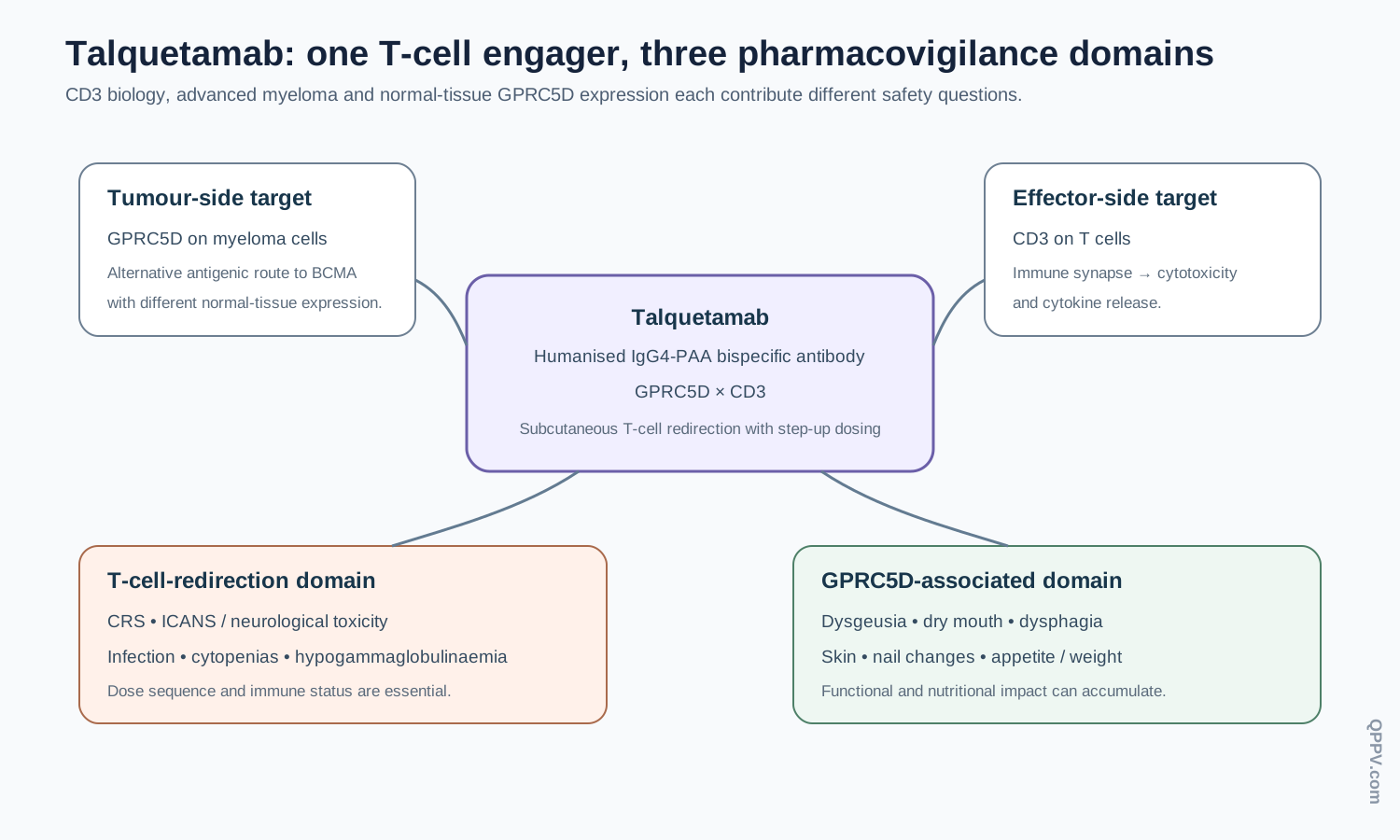
Figure 1. Talquetamab shares CD3-mediated immune-redirection risks with other T-cell engagers, but its GPRC5D tumour-side target adds a distinctive oral, taste, skin, nail and nutritional pharmacovigilance domain.
GPRC5D biology
GPRC5D is an orphan G-protein-coupled receptor whose physiological function is not fully defined. It is highly expressed on many malignant plasma cells and has comparatively restricted expression in most normal internal tissues, making it an attractive myeloma-associated antigen. Importantly, normal expression is not absent. Histological studies identified GPRC5D expression in differentiating cells associated with hard keratin, including hair shafts, nail structures and filiform papillae of the tongue.
That distribution provides a mechanistic framework for the adverse-event pattern seen clinically. Nail changes and skin effects fit expression in keratinised tissues, while taste disturbance and other oral effects plausibly relate to target expression in the tongue and oral epithelial context. The exact pathophysiology of every individual symptom remains incompletely defined, so the phrase on-target, off-tumour is most useful as a mechanistic model rather than proof of causation for every oral or dermatologic event.
Why GPRC5D is different from BCMA
BCMA and GPRC5D are distinct cell-surface targets. A myeloma cell can express both, but antigen abundance and persistence can vary with disease biology and prior treatment. Targeting GPRC5D therefore does not simply reproduce BCMA therapy under another name. It creates a different antigen-selection pressure and, because normal-tissue expression differs, a different toxicity phenotype.
This distinction is central to cross-product pharmacovigilance. CRS is largely linked to T-cell redirection and can therefore appear across several bispecific antibodies. Dysgeusia, nail disorders and characteristic oral effects are much more informative about the GPRC5D side of talquetamab biology.
Mechanism of action
Talquetamab binds GPRC5D on a target cell and CD3 on a T cell, bringing the two cells into close proximity. CD3 engagement within this target-dependent bridge activates the T cell, promotes immune-synapse formation and triggers cytotoxic effector mechanisms, including perforin and granzyme release. The result can be lysis of GPRC5D-expressing myeloma cells.
As with other T-cell redirectors, the activation process releases cytokines. This connects the intended antitumour mechanism to CRS. Neurological toxicity is clinically associated with immune-effector therapies but cannot be explained simply by direct GPRC5D binding in the central nervous system; it requires syndrome-level assessment rather than a simplistic target-expression model.
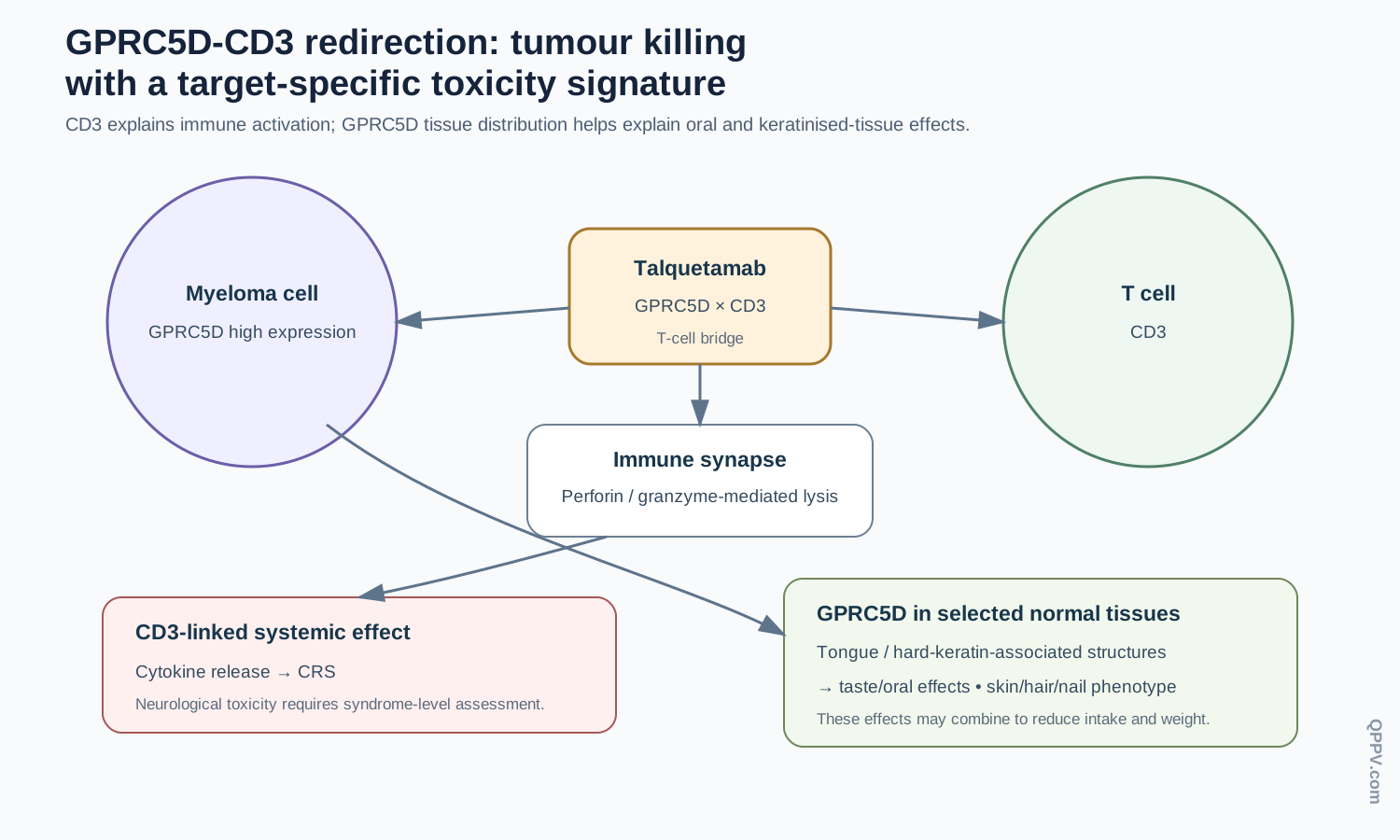
Figure 2. Talquetamab bridges a GPRC5D-positive myeloma cell and a CD3-positive T cell. T-cell activation drives tumour-cell killing and can produce CRS, while recognition of GPRC5D in selected normal epithelial structures provides a mechanistic basis for distinctive oral, taste, skin and nail toxicity.
Why step-up dosing matters
Talquetamab is initiated with step-up dosing before the selected full treatment schedule. This reduces the abruptness of initial T-cell activation and creates a defined period of enhanced observation for CRS and neurological toxicity. Current EU treatment can proceed with weekly or every-two-week dosing after the appropriate step-up sequence.
For pharmacovigilance, the exact dose position matters more than a generic statement such as "on treatment." A fever after an early step-up dose has a different differential diagnosis from fever after months of exposure in a patient with neutropenia or hypogammaglobulinaemia.
Development and regulatory history
Clinical development established GPRC5D-CD3 redirection as an active strategy in heavily pretreated multiple myeloma, including patients previously exposed to several established drug classes and, in some studies, previous T-cell-redirection therapy. The European Union granted talquetamab a conditional marketing authorisation in August 2023 for adults with relapsed and refractory multiple myeloma after at least three prior therapies including an immunomodulatory agent, a proteasome inhibitor and an anti-CD38 antibody, with progression on the most recent therapy.
As of September 2026 the EU authorisation remains conditional and the medicine remains under additional monitoring. EMA materials describe continuing obligations to confirm effectiveness and safety and to further characterise long-term safety. That status should not be interpreted as meaning that efficacy or safety are unknown; it means the authorisation was granted on less comprehensive evidence than a standard authorisation and specified post-authorisation evidence remains required.
Clinical use and treatment-course context
Talquetamab is used in a population with extensive prior treatment and advanced myeloma. Baseline infection susceptibility, cytopenias, neuropathy, renal impairment, nutritional compromise and prior immune-directed therapies are therefore common competing explanations for later adverse events. A clinically useful report should reconstruct what was present before treatment rather than treating every post-dose abnormality as new.
The safety course is best understood in overlapping phases. CRS and neurological toxicity cluster around the early step-up period. Infection and haematological toxicity remain relevant throughout treatment. Oral, taste, skin and nail effects can emerge after exposure and may persist long enough to affect nutrition, adherence and quality of life.
Major safety domains
Cytokine release syndrome
CRS is a characteristic toxicity of the CD3-engaging mechanism. Fever, hypotension, hypoxia and systemic inflammatory symptoms should be interpreted relative to the precise step-up or treatment dose. A high-quality case includes dose position, latency, objective vital signs, organ involvement, infectious evaluation, CRS grade, treatment and outcome.
The differential diagnosis remains important. In a heavily pretreated patient, infection can occur at the same time as or shortly after immune activation. Fever should therefore not be converted automatically into CRS without clinical assessment.
Neurological toxicity and ICANS
Neurological toxicity, including ICANS, is a recognised serious risk. Case characterisation should include mental status, speech and writing changes, level of consciousness, motor findings, seizures where present, timing relative to CRS and dosing, metabolic and infectious investigations, treatment and recovery.
Broad symptom terms such as headache or dizziness should not be equated automatically with ICANS. Syndrome-level classification requires the clinical pattern and temporal context.
Infection and hypogammaglobulinaemia
The treated population often enters therapy with disease-related immunoparesis and cumulative immune injury. Hypogammaglobulinaemia is also frequently observed during talquetamab therapy. Infection cases therefore need site, organism, microbiology, neutrophil and lymphocyte counts, immunoglobulin concentrations, prophylaxis, replacement immunoglobulin where used, recent corticosteroid exposure and outcome.
The target-specific biology differs from BCMA therapy, but the clinical immune-deficiency problem can still be substantial. Aggregate analyses should therefore rely on observed immunoglobulin and infection data rather than assuming that a non-BCMA target eliminates humoral immune risk.
GPRC5D-associated oral and taste effects
Dysgeusia
Taste disturbance is one of the most characteristic adverse effects of talquetamab. Patients may describe reduced taste intensity, altered taste quality or loss of enjoyment of food. Prospective clinical work has documented objective reductions in taste function as well as patient-reported dysgeusia.
For pharmacovigilance, severity should not be judged only by whether the event is medically "serious." Persistent dysgeusia can reduce dietary intake, contribute to weight loss, impair quality of life and ultimately influence dose continuity. Useful follow-up includes onset, specific taste changes, oral examination, appetite, nutritional intake, weight trajectory, supportive interventions and response to dose modification.
Dry mouth and oral symptoms
Patients may report xerostomia even when measured salivary flow is not markedly reduced, indicating that the symptom is not always equivalent to objective salivary-gland failure. Oral discomfort, mucosal symptoms and swallowing difficulty can interact with dysgeusia and further reduce intake.
A safety report should therefore separate the subjective sensation of dry mouth from measured hyposalivation when testing is available. It should also document oral infection, mucosal lesions, dental problems and other causes of dysphagia or poor intake.
Dysphagia, appetite and weight loss
Dysphagia and decreased appetite can convert an apparently local target effect into a systemic clinical problem through inadequate nutrition. Weight change should be measured longitudinally rather than recorded only when it reaches a threshold that triggers treatment modification.
In advanced myeloma, weight loss also has competing explanations including progressive disease, infection, gastrointestinal toxicity and general cancer-related cachexia. The combination of taste change, oral symptoms and reduced intake provides stronger mechanistic context than weight loss alone.
Skin and nail toxicity
Skin disorders, rash, xerosis and nail changes are characteristic of GPRC5D-targeted treatment. Nail findings may include brittleness, altered growth or separation, while skin effects can vary from dryness to inflammatory eruptions. These events fit the known expression of GPRC5D in keratinised structures, but alternative dermatologic diagnoses should still be considered.
Useful case information includes morphology, body distribution, nail photographs or dermatology findings where available, secondary infection, pain, functional impact, topical or systemic treatment, dose modification and recovery. Skin and nail events should not be merged into a single broad term when the phenotype is known.
Cytopenias and marrow context
Neutropenia, anaemia, thrombocytopenia and lymphopenia occur in the treated population. Baseline marrow infiltration, prior therapies and active infection can contribute. Case interpretation requires baseline and nadir counts, duration, marrow status where available, supportive treatment and clinical complications.
Product traceability and administration accuracy
Talquetamab is supplied in different concentrations used during step-up and treatment dosing. Medication-error surveillance should capture concentration, intended and actual dose, step-up position, weekly versus every-two-week schedule, interruption history and clinical consequence. Biological-product and batch traceability should be maintained for all serious or quality-related cases.
Pharmacovigilance case assessment
Talquetamab cases should be reconstructed around the dose sequence, baseline immune status, GPRC5D-associated phenotype and nutritional consequence. The last two variables are especially important because a collection of individually non-serious oral or dermatologic events can become clinically important when they impair eating, hydration, daily function or treatment persistence.
Event-specific follow-up priorities
| Event or issue | High-value follow-up information |
|---|---|
| CRS | Step-up/full dose, latency, fever, blood pressure, oxygen requirement, organ involvement, infectious work-up, treatment, grade, outcome |
| ICANS/neurological toxicity | Neurological phenotype, language/cognition, timing to dose and CRS, competing causes, treatment and recovery |
| Serious infection | Site, organism, microbiology, neutrophils/lymphocytes, immunoglobulins, prophylaxis, recent steroids, outcome |
| Dysgeusia | Onset, qualitative taste change, objective taste testing if available, appetite, intake, supportive measures, dose modification |
| Dry mouth/oral toxicity | Subjective xerostomia, salivary testing if performed, mucosal/dental findings, candidiasis or other infection, treatment |
| Dysphagia/weight loss | Swallowing assessment, baseline and serial weight, nutritional intake, dietetic review, competing causes, intervention |
| Skin/nail toxicity | Morphology, distribution, nail phenotype, secondary infection, functional impact, dermatologic management, outcome |
| Cytopenia | Baseline count, nadir, marrow context, infection/bleeding, supportive treatment, recovery |
| Medication error | Concentration, intended/actual step-up or treatment dose, QW/Q2W schedule, interruption history, clinical consequence |
Signal detection and aggregate review
CRS and neurological case series should preserve dose sequence. Infection analyses should retain pathogen, site, neutrophil and immunoglobulin context. For GPRC5D-associated effects, separate retrieval of taste disturbance, xerostomia, dysphagia, skin disorders, nail disorders, appetite change and weight loss is preferable to one broad "mucocutaneous" category because these events have different functional consequences.
At the same time, these terms should be reviewed together when investigating a nutritional syndrome. Dysgeusia followed by reduced intake, dysphagia and progressive weight loss may be clinically coherent even if the individual events were reported on different dates or coded separately.
Periodic benefit-risk evaluation
Periodic review should integrate myeloma response with CRS, neurological toxicity, infection, hypogammaglobulinaemia, cytopenias and the cumulative GPRC5D-associated burden on oral function, nutrition, skin and nails. Long-term safety is particularly relevant because the EU marketing authorisation remains conditional and EMA has required additional evidence to further characterise effectiveness and safety.
Benefit-risk evaluation should avoid treating only grade 3-4 or formally serious events as meaningful. Persistent grade 1-2 dysgeusia or oral toxicity can materially reduce quality of life, dietary intake and treatment persistence, making duration and functional impact important dimensions of aggregate analysis.
Risk management and operational controls
Current EU materials include recommendations for management of CRS and neurological toxicity and educational risk-minimisation materials concerning neurological toxicity, ICANS and CRS. Operational PV controls should demonstrate that early immune toxicity is recognised according to the step-up schedule and that later oral, nutritional and dermatologic toxicities are actively characterised rather than dismissed as cosmetic or low grade.
Useful longitudinal controls include serial weight, oral and nutritional assessment when clinically indicated, documentation of nail and skin phenotype, and linkage of recurrent infection with immunoglobulin status. Medication-safety controls should make the two product concentrations and alternative maintenance schedules clearly distinguishable.
Potential failure modes
The following are illustrative scenarios, not published inspection findings:
- Fever during step-up dosing is labelled CRS without an infectious evaluation.
- A neurological complaint is coded as ICANS without documenting syndrome-level findings.
- Dysgeusia, dry mouth and weight loss are reviewed as unrelated events, obscuring their combined nutritional impact.
- Nail toxicity is grouped under nonspecific rash and loses its target-specific phenotype.
- Weight loss is attributed to progressive myeloma without reconstructing taste, swallowing and dietary intake.
- A dosing error cannot be reconstructed because concentration and weekly versus every-two-week schedule were omitted.
Inspection and governance perspective
An inspector assessing talquetamab pharmacovigilance could examine whether CRS and neurological cases retain dose-sequence information, whether target-specific oral and dermatologic events are medically characterised, whether nutrition and weight effects can be followed longitudinally, and whether post-authorisation obligations under conditional approval are supported by complete safety data. The effectiveness question is whether the system recognises that clinically important toxicity may emerge as a connected pattern across several individually modest events.
Practical checklist
For a talquetamab case or aggregate analysis, confirm:
- exact step-up or treatment dose and schedule;
- baseline myeloma burden and immune status where available;
- objective CRS or neurological findings;
- infection site, microbiology and immunoglobulin context;
- detailed taste, oral, swallowing, skin and nail phenotype;
- baseline and serial weight for nutritional concerns;
- supportive treatment and dose modification;
- product concentration, dose and batch for administration issues.
Key Takeaways
Talquetamab is a humanised IgG4-PAA GPRC5D-CD3 bispecific antibody that redirects T cells against GPRC5D-expressing myeloma cells. Like other T-cell engagers, it can cause CRS and neurological toxicity, while advanced myeloma and ongoing treatment create important infection and haematological risks.
What distinguishes talquetamab is the tumour-side target. GPRC5D expression in selected keratinised and oral tissues provides a biologically coherent explanation for dysgeusia, dry mouth, dysphagia, skin and nail changes and associated nutritional effects. Effective pharmacovigilance therefore needs to connect symptom phenotype with function, food intake and weight over time.
References
- European Medicines Agency. Talquetamab: EPAR and current product information. Product information updated 28 November 2025. https://www.ema.europa.eu/en/medicines/human/EPAR/talvey
- Chari A, Minnema MC, Berdeja JG, et al. Talquetamab, a T-cell-redirecting GPRC5D bispecific antibody for multiple myeloma. N Engl J Med. 2022;387:2232-2244. doi:10.1056/NEJMoa2204591.
- Chari A, Touzeau C, Schinke C, et al. Safety and activity of talquetamab in patients with relapsed or refractory multiple myeloma (MonumenTAL-1): a multicentre, open-label, phase 1-2 study. Lancet Haematol. 2025;12:e269-e281. doi:10.1016/S2352-3026(24)00385-5.
- Inoue S, Nambu T, Shimomura T. The RAIG family member, GPRC5D, is associated with hard-keratinized structures. J Invest Dermatol. 2004;122:565-573. doi:10.1046/j.0022-202X.2004.12628.x.
- Laheij AMGA, van de Donk NWCJ. Characterization of dysgeusia and xerostomia in patients with multiple myeloma treated with the T-cell redirecting GPRC5D bispecific antibody talquetamab. Support Care Cancer. 2024;32:20. doi:10.1007/s00520-023-08233-0.
Regulatory Note
Authorised prior-treatment requirements, step-up schedules, risk-minimisation measures and conditional-authorisation obligations can change. This article explains the scientific and pharmacovigilance framework and does not replace current regional product information, institutional immune-effector-toxicity procedures or specialist haematology and supportive-care guidance. Regulatory information was checked against EMA material current in September 2026.