Teclistamab: Classification, History, Mechanism of Action, Safety and Pharmacovigilance
- Teclistamab: Classification, History, Mechanism of Action, Safety and Pharmacovigilance
- Multidimensional classification
- BCMA biology
- How CD3 redirection works
- Why step-up dosing matters
- Development and regulatory history
- Clinical use and immune context
- Major safety domains
- Monotherapy and combination treatment
- Product traceability and administration accuracy
- Pharmacovigilance case assessment
- Signal detection and aggregate review
- Periodic benefit-risk evaluation
- Risk management and operational controls
- Potential failure modes
- Inspection and governance perspective
- Practical checklist
- Key Takeaways
- References
- Regulatory Note
Teclistamab is a T-cell-redirecting bispecific antibody used in relapsed or refractory multiple myeloma. One binding arm recognises B-cell maturation antigen (BCMA) on plasma cells and many myeloma cells; the other binds CD3, a component of the T-cell receptor complex. By physically bringing a T cell into proximity with a BCMA-expressing target cell, teclistamab creates an immune synapse that activates cytotoxic T-cell function.
The same mechanism that produces tumour-cell killing also explains several major safety problems. Rapid T-cell activation can release inflammatory cytokines and cause cytokine release syndrome (CRS). Neurological toxicity, including immune effector cell-associated neurotoxicity syndrome (ICANS), can occur in the broader immune-activation context. Because BCMA is also associated with normal plasma-cell biology, prolonged treatment can impair normal antibody production and contribute to hypogammaglobulinaemia and infection susceptibility.
Pharmacovigilance must therefore follow more than calendar time. Dose sequence matters because the highest CRS risk is concentrated around early step-up and initial treatment doses. Immune status matters because heavily pretreated myeloma itself and previous therapies can leave profound baseline immune impairment. And regimen now matters because current EU use includes both monotherapy in later-line disease and combination treatment with daratumumab after fewer prior therapies.
Multidimensional classification
| Classification axis | Teclistamab classification | Scientific or PV significance |
|---|---|---|
| Molecular class | Humanised IgG4-PAA bispecific antibody | Full-length T-cell-redirecting antibody with two antigen specificities |
| Tumour-side target | BCMA | Highly expressed on many malignant plasma cells and linked to normal plasma-cell biology |
| Effector-side target | CD3 | Engages T cells and creates target-dependent cytotoxic activation |
| Functional class | T-cell-redirecting bispecific antibody | Efficacy and acute toxicity arise from deliberate immune-synapse formation |
| Disease context | Relapsed/refractory multiple myeloma | Baseline cytopenias, infection risk and prior immune damage complicate attribution |
| Administration | Subcutaneous with step-up dosing | Dose sequence is a key safety variable, particularly for CRS and neurotoxicity |
| Current EU setting | Later-line monotherapy and combination with daratumumab after prior therapy | Exposure population and competing toxicities now differ by regimen |
| PV priorities | CRS, ICANS/neurological toxicity, serious infection, hypogammaglobulinaemia, cytopenias and injection-site reactions | Acute immune activation and longer-term immune deficiency require different surveillance approaches |
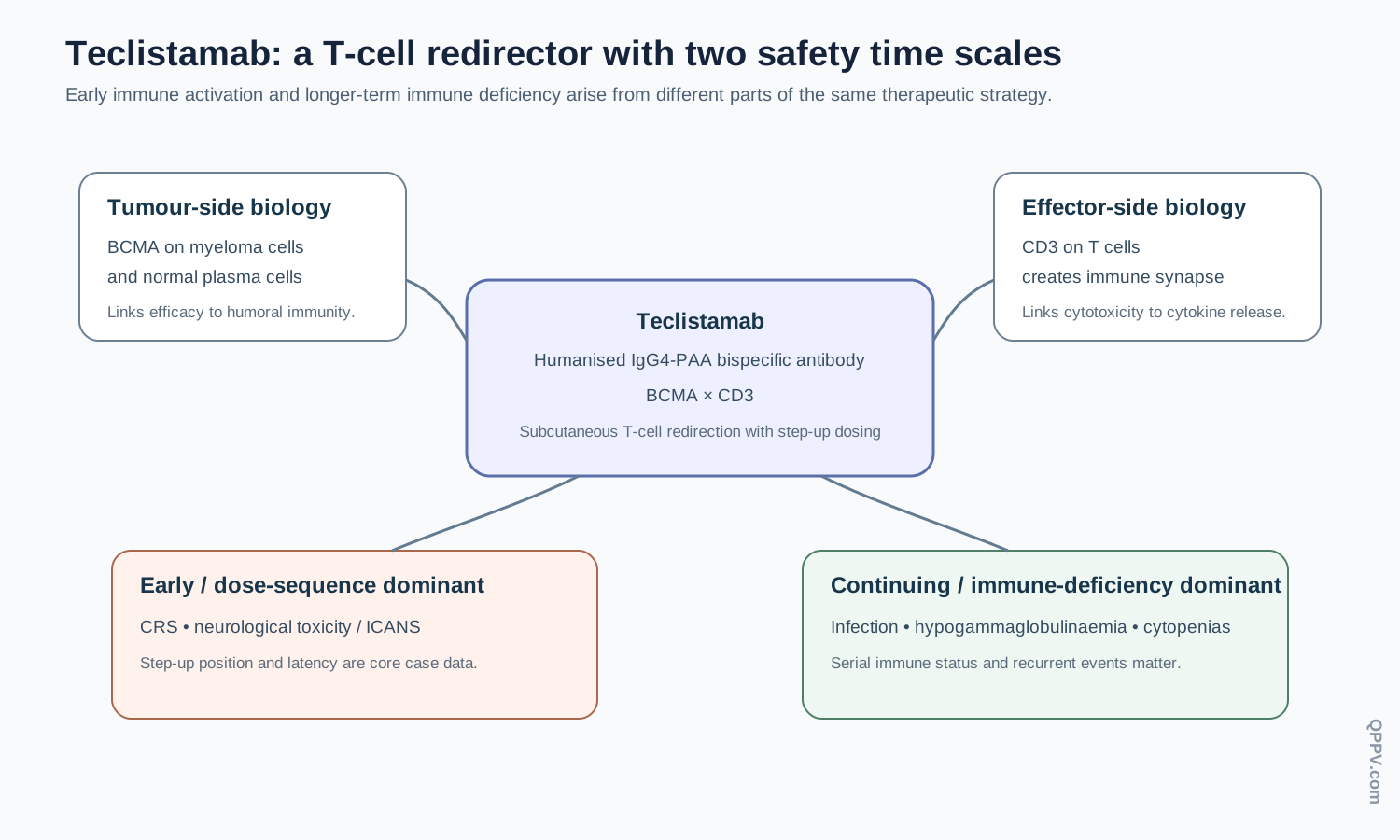
Figure 1. Teclistamab is simultaneously a BCMA-directed plasma-cell therapy and a CD3-directed T-cell engager. Its pharmacovigilance therefore has an acute immune-activation phase and a longer-term infection and immune-deficiency phase.
BCMA biology
BCMA is a member of the tumour-necrosis-factor receptor superfamily expressed predominantly in the later stages of B-cell differentiation. Expression is high on plasmablasts and plasma cells and is frequently high on multiple-myeloma cells. This restricted distribution makes BCMA a useful tumour-associated target compared with antigens expressed broadly across many normal tissues.
BCMA is not tumour-specific. Normal plasma cells contribute to durable antibody production, so effective BCMA-directed treatment can reduce functional normal plasma-cell populations as well as malignant cells. This provides a biological bridge between antimyeloma efficacy and hypogammaglobulinaemia. The resulting infection risk, however, is multifactorial: disease-related immunoparesis, prior therapy, cytopenias, corticosteroids and other treatments also contribute.
How CD3 redirection works
CD3 forms part of the T-cell receptor signalling complex. Teclistamab does not need a T cell to recognise a conventional tumour peptide through its native T-cell receptor. Instead, the bispecific antibody supplies the spatial link: BCMA binding anchors the molecule to the target cell, while CD3 binding recruits a nearby T cell. This proximity promotes T-cell activation, formation of a cytolytic synapse and release of perforin and granzymes that can kill the BCMA-expressing cell.
Cytokines are released during this activation process. The therapeutic mechanism and CRS are therefore mechanistically connected, but CRS is not proof of antitumour efficacy in an individual patient and absence of CRS does not imply lack of activity.
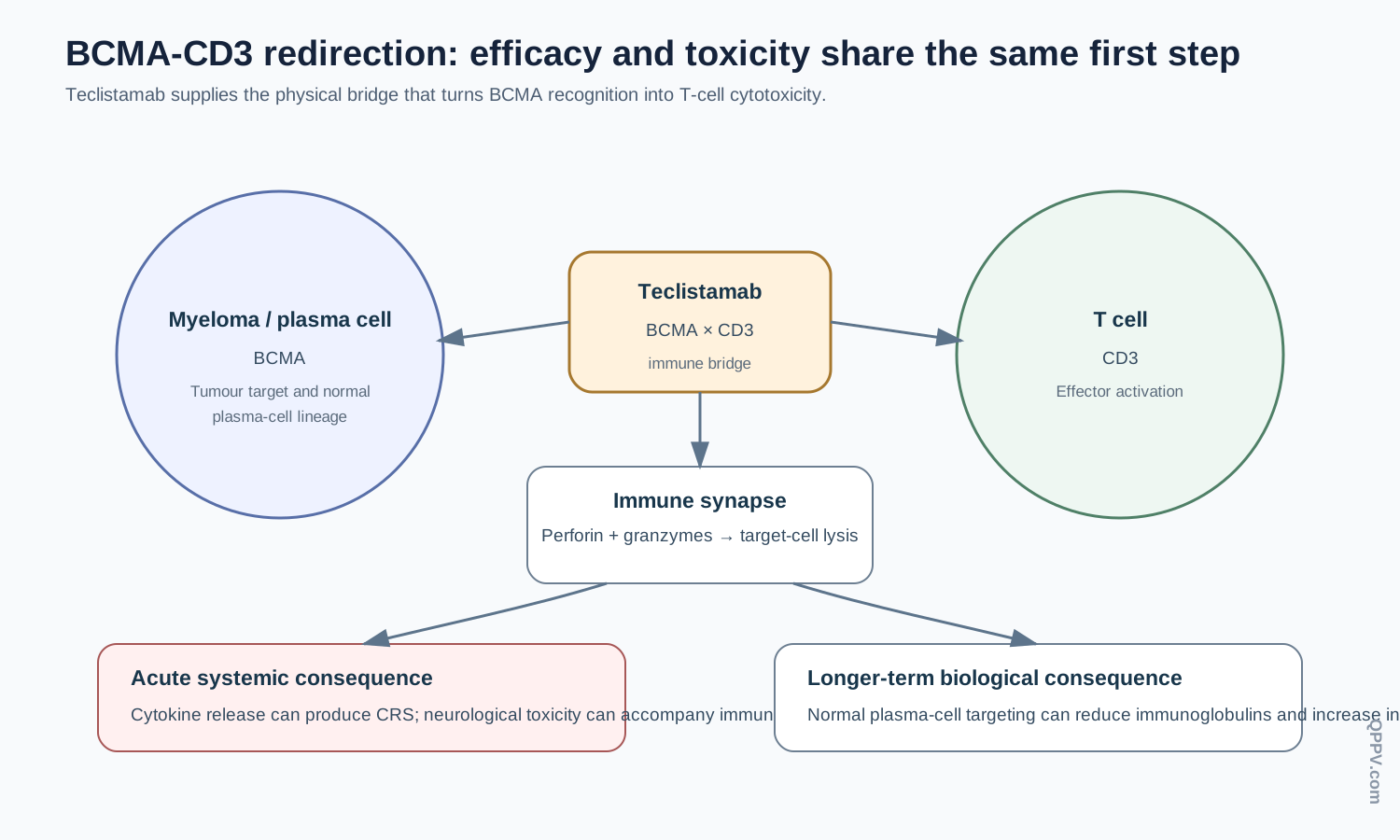
Figure 2. Teclistamab bridges BCMA on a plasma cell or myeloma cell with CD3 on a T cell. Cytotoxic granule release drives target-cell killing, while systemic cytokine release can produce CRS; sustained plasma-cell targeting can also impair normal antibody production.
Why step-up dosing matters
T-cell redirection produces its greatest acute perturbation when active effector cells first encounter a substantial target-cell burden. Step-up dosing deliberately begins with lower exposures before the full treatment dose. The purpose is to reduce the abruptness of early immune activation and permit recognition and management of toxicity.
For case assessment, "day 3 of treatment" is less informative than knowing whether the patient had received the first step-up dose, second step-up dose, first full dose or a later maintenance dose. Fever after a step-up dose may fit CRS; fever months later in a neutropenic, hypogammaglobulinaemic patient may be much more concerning for infection. The same symptom therefore changes meaning across the treatment course.
Development and regulatory history
Clinical development established BCMA-CD3 redirection as an active approach in heavily pretreated multiple myeloma. The European Union granted teclistamab a conditional marketing authorisation in August 2022 for adults with relapsed and refractory disease after at least three prior classes of treatment including an immunomodulatory agent, a proteasome inhibitor and an anti-CD38 antibody.
In August 2026, after additional evidence became available, the EU authorisation was converted from conditional to standard. Current EU information also includes teclistamab in combination with daratumumab for adults with relapsed or refractory multiple myeloma after at least one prior therapy. This is a material pharmacovigilance change: a medicine initially concentrated in heavily pretreated late-line patients is now also used in a different treatment setting and in combination with another antibody.
Clinical use and immune context
Teclistamab is administered subcutaneously using a step-up schedule before full treatment dosing. The practical safety model has two overlapping phases. Early in treatment, surveillance is dominated by acute immune activation, particularly CRS and neurological toxicity. With continuing exposure, infection, hypogammaglobulinaemia and cytopenias become increasingly important. These phases are not rigid boundaries, but they provide a useful framework for case assessment.
The baseline population is also unusually complex. Relapsed or refractory myeloma can cause immunoparesis and marrow dysfunction, while previous proteasome inhibitors, immunomodulatory agents, anti-CD38 therapy, transplantation and corticosteroids can leave cumulative immune and haematological effects. A post-treatment infection or cytopenia therefore requires reconstruction of what was already present before teclistamab.
Major safety domains
Cytokine release syndrome
CRS is a characteristic adverse reaction of T-cell-redirection therapy. Typical manifestations include fever, hypotension, hypoxia and systemic inflammatory symptoms, with severity ranging from self-limited fever to clinically serious organ dysfunction. The probability is strongly related to early treatment and step-up dosing, so dose sequence and exact onset are fundamental PV variables.
A useful CRS case includes the most recent dose and step-up position, latency to symptoms, temperature, blood pressure, oxygen requirement, organ involvement, infectious evaluation, grading system used, treatment such as cytokine-directed therapy or corticosteroids, treatment interruption and outcome. Fever alone should not automatically be classified as CRS when infection remains plausible.
Neurological toxicity and ICANS
Neurological adverse reactions can occur with T-cell-engaging therapy, including ICANS. Symptoms may include confusion, reduced consciousness, language disturbance, tremor or other neurological abnormalities. Neurological findings require careful chronology because metabolic abnormalities, infection, medications, stroke and myeloma-related complications can mimic treatment-associated neurotoxicity.
Case follow-up should record the neurological phenotype, cognitive or language findings, timing relative to CRS and dosing, imaging or cerebrospinal-fluid evaluation where performed, concomitant medicines, treatment and recovery. The term ICANS should be reserved for cases clinically assessed within that syndrome rather than used as a synonym for any headache or dizziness.
Infection
Infection is one of the most important longer-term safety problems. Susceptibility reflects several converging mechanisms: myeloma-related immune dysfunction, previous therapy, cytopenias, corticosteroid exposure during toxicity management and reduced normal immunoglobulin production during BCMA-directed treatment.
Serious infection cases should preserve site, organism, microbiological evidence, neutrophil and lymphocyte counts, immunoglobulin concentrations, prophylaxis, immunoglobulin replacement where used, vaccination context if relevant, recent CRS treatment and outcome. Opportunistic, viral, bacterial and fungal infections should not be pooled indiscriminately when pathogen information is available.
Hypogammaglobulinaemia
Reduced immunoglobulin levels are an expected biological consequence of targeting a plasma-cell-associated antigen in a population already prone to immunoparesis. The clinically important question is not merely whether IgG is below the laboratory reference range, but whether the reduction is persistent, associated with recurrent or severe infection, and managed appropriately.
For aggregate review, serial immunoglobulin data can be more informative than isolated measurements. Reports involving immunoglobulin replacement should capture indication, timing and infection history rather than assuming replacement itself represents an adverse event.
Cytopenias
Neutropenia, anaemia, thrombocytopenia and lymphopenia occur in treated patients. Baseline marrow infiltration, previous treatment and active infection can contribute. A useful case records pre-treatment counts, nadir, duration, marrow findings where available, infection or bleeding complications, growth-factor or transfusion support, treatment interruption and recovery.
Injection-site reactions
Subcutaneous administration can produce local injection-site reactions. These are mechanistically and operationally distinct from CRS. Local erythema, swelling or pain should be characterised separately from systemic fever, hypotension or hypoxia, even when both occur after the same dose.
Monotherapy and combination treatment
Current EU authorisation includes monotherapy in a heavily pretreated population and combination treatment with daratumumab after at least one prior therapy. This expansion changes the comparator for safety interpretation. Daratumumab itself affects humoral immunity, infection risk and cytopenias in combination regimens, so attribution should not be reduced to whichever drug was administered most recently.
Aggregate analyses should stratify monotherapy from combination exposure and should record prior anti-CD38 therapy separately from concurrent anti-CD38 treatment. This distinction becomes increasingly important as teclistamab moves earlier in the treatment pathway.
Product traceability and administration accuracy
Teclistamab is supplied in different concentrations used within the step-up and treatment schedule. Medication-safety surveillance should therefore capture concentration, intended and actual dose, step-up position, administration date and any interruption requiring schedule reassessment. As a biological medicinal product, exact product and batch traceability should also be retained.
Pharmacovigilance case assessment
Teclistamab cases should be organised around dose sequence, immune status, disease burden and regimen. Those four variables help separate acute immune activation from infection, marrow toxicity and disease-related complications.
Event-specific follow-up priorities
| Event or issue | High-value follow-up information |
|---|---|
| CRS | Step-up/full dose, latency, fever, blood pressure, oxygen requirement, organ involvement, infectious work-up, treatment, grade, outcome |
| ICANS/neurological toxicity | Neurological phenotype, language/cognition, timing to dose and CRS, imaging/CSF if performed, metabolic/infectious causes, treatment, recovery |
| Serious infection | Site, organism, microbiology, neutrophils/lymphocytes, immunoglobulins, prophylaxis, recent steroids/CRS treatment, outcome |
| Hypogammaglobulinaemia | Baseline and serial IgG, infection history, replacement therapy, duration and recovery if treatment stops |
| Cytopenia | Baseline count, nadir, duration, marrow involvement, concomitant therapy, supportive treatment, clinical complications |
| Injection-site reaction | Local phenotype, onset, duration, systemic symptoms, dose and site, recurrence |
| Medication error | Product concentration, intended/actual dose, step-up position, interruption history and clinical consequence |
| Loss of efficacy | Disease markers, BCMA-directed treatment history, regimen adherence, dosing interruptions and progression criteria |
Signal detection and aggregate review
CRS and neurological analyses should preserve dose sequence and distinguish step-up dosing from later treatment. Infection analyses should be pathogen- and site-aware and should incorporate immunoglobulin and neutrophil status where available. A generic "fever" series that mixes early CRS with late infection is clinically incoherent.
The expanding EU treatment setting also requires regimen stratification. Monotherapy and teclistamab-daratumumab combination exposure should be analysed separately when the question could plausibly be modified by concurrent anti-CD38 treatment, particularly infection, cytopenia and immune-deficiency outcomes.
Periodic benefit-risk evaluation
Periodic review should integrate depth and durability of myeloma control with CRS, neurological toxicity, serious and opportunistic infection, hypogammaglobulinaemia, cytopenias, administration errors and the cumulative burden of continuous immune redirection. As treatment moves earlier in disease, baseline immune fitness and duration of exposure can change; historical late-line rates should not automatically be assumed to represent future populations.
Risk management and operational controls
Current product information governs step-up dosing, monitoring, dose interruption, management of CRS and neurological toxicity, and infection precautions. Operational PV controls should ensure that dose sequence is captured in serious acute events, that fever is evaluated for both CRS and infection, that immunoglobulin and infection patterns can be reviewed longitudinally, and that concentration or schedule errors are retrievable.
The key effectiveness question for acute risk minimisation is whether healthcare teams can recognise and manage immune toxicity at the correct point in the step-up sequence. For longer-term risk, it is whether recurrent infections and declining humoral immunity are detected before they become an unstructured series of unrelated reports.
Potential failure modes
The following are illustrative scenarios, not published inspection findings:
- Fever after treatment is coded as CRS without documenting the dose sequence or evaluating infection.
- A neurological event is labelled ICANS without a neurological examination or competing-cause assessment.
- Recurrent infections are reviewed separately without linking them to persistent hypogammaglobulinaemia.
- Cytopenias are attributed to treatment without baseline marrow status or prior therapy.
- Monotherapy and daratumumab-combination safety data are pooled despite different treatment contexts.
- A dosing error is recorded without the concentration or step-up position needed to reconstruct actual exposure.
Inspection and governance perspective
An inspector assessing teclistamab pharmacovigilance could examine whether serious CRS and neurological cases retain dose-sequence and management detail, whether infection cases include immune-status information, whether recurrent infection and immunoglobulin decline can be linked longitudinally, and whether monotherapy can be separated from combination exposure. The system should demonstrate that it understands the two time scales of T-cell redirection: acute immune activation and longer-term immune impairment.
Practical checklist
For a teclistamab case or aggregate analysis, confirm:
- monotherapy or combination regimen;
- prior lines and prior BCMA/anti-CD38 treatment where relevant;
- exact step-up or full-dose position and date;
- tumour burden and baseline marrow/immune status where available;
- objective CRS or neurological findings rather than symptom labels alone;
- infection site, pathogen and immune context;
- serial immunoglobulins for recurrent infection or hypogammaglobulinaemia;
- product concentration, dose and batch for administration issues.
Key Takeaways
Teclistamab is a humanised IgG4-PAA BCMA-CD3 bispecific antibody that redirects T cells toward plasma cells and myeloma cells. The mechanism produces a characteristic dual safety pattern: early immune activation with CRS and possible neurotoxicity, followed by clinically important infection and humoral immune-deficiency concerns during ongoing treatment.
The most important pharmacovigilance variable is often not simply time since first exposure but where the patient is in the dose sequence and treatment pathway. Current EU use now spans late-line monotherapy and earlier combination treatment, making regimen-specific surveillance increasingly important.
References
- European Medicines Agency. Teclistamab: EPAR and current product information. Product information updated 27 August 2026. https://www.ema.europa.eu/en/medicines/human/EPAR/tecvayli
- Pillarisetti K, Powers G, Luistro L, et al. Teclistamab is an active T-cell-redirecting bispecific antibody against B-cell maturation antigen for multiple myeloma. Blood Adv. 2020;4:4538-4549. doi:10.1182/bloodadvances.2020002393.
- Usmani SZ, Garfall AL, van de Donk NWCJ, et al. Teclistamab, a B-cell maturation antigen × CD3 bispecific antibody, in patients with relapsed or refractory multiple myeloma (MajesTEC-1): a multicentre, open-label, single-arm, phase 1 study. Lancet. 2021;398:665-674. doi:10.1016/S0140-6736(21)01338-6.
- European Medicines Agency. Teclistamab product information. Current step-up dosing, warnings and safety-management provisions. https://www.ema.europa.eu/en/documents/product-information/tecvayli-epar-product-information_en.pdf
Regulatory Note
Authorised combinations, prior-treatment requirements, step-up schedules, warnings and monitoring provisions can change. This article explains the scientific and pharmacovigilance framework and does not replace current regional product information, institutional immune-effector-toxicity procedures or specialist haematology guidance. Regulatory information was checked against EMA material current in September 2026.