Telisotuzumab Vedotin: Classification, Mechanism, Clinical Evidence and Pharmacovigilance
Telisotuzumab vedotin is a c-Met-directed antibody–drug conjugate (ADC). Its monoclonal antibody binds the MET receptor, while a linker carries monomethyl auristatin E (MMAE), a microtubule-disrupting cytotoxic payload. This composite design creates a safety profile in which target biology, internalisation, linker–payload behaviour and conventional infusion risks all matter.
The FDA granted accelerated approval on 14 May 2025 for adults with locally advanced or metastatic non-squamous non-small cell lung cancer (NSCLC), high c-Met protein overexpression defined as at least 50% of tumour cells with strong (3+) staining using an FDA-approved test, and prior systemic therapy. That U.S. indication is biomarker- and population-specific; it should not be generalised to all MET-altered tumours or to other jurisdictions. [1,2]
Classification and construct
The molecule has two pharmacologic components. The antibody portion recognises c-Met, the product of the MET proto-oncogene and a receptor for hepatocyte growth factor. The conjugated MMAE payload inhibits microtubule polymerisation after intracellular release. Vedotin ADCs use a protease-cleavable linker; the intended sequence is antigen binding, internalisation, intracellular processing and cytotoxic payload activity. A targeted ADC can still produce systemic payload-related toxicity, so “targeted” does not mean tumour-exclusive.
c-Met protein overexpression by immunohistochemistry is not synonymous with a MET gene mutation, amplification or fusion. The approved test threshold defines the labelled treatment-selection biomarker; molecular alterations should be described separately. The FDA also approved a companion diagnostic assay for identifying the label-defined high protein-expression group. [1]
Why ADC pharmacology changes the PV frame
Adverse reactions can arise from the antibody–target interaction, the cytotoxic payload, the linker-conjugate exposure, infusion, or combinations of these. Peripheral neuropathy is biologically plausible with MMAE; interstitial lung disease/pneumonitis and ocular surface disorders are also labelled risks. Attribution should use the observed clinical pattern and label definitions, not a presumed mechanism alone.
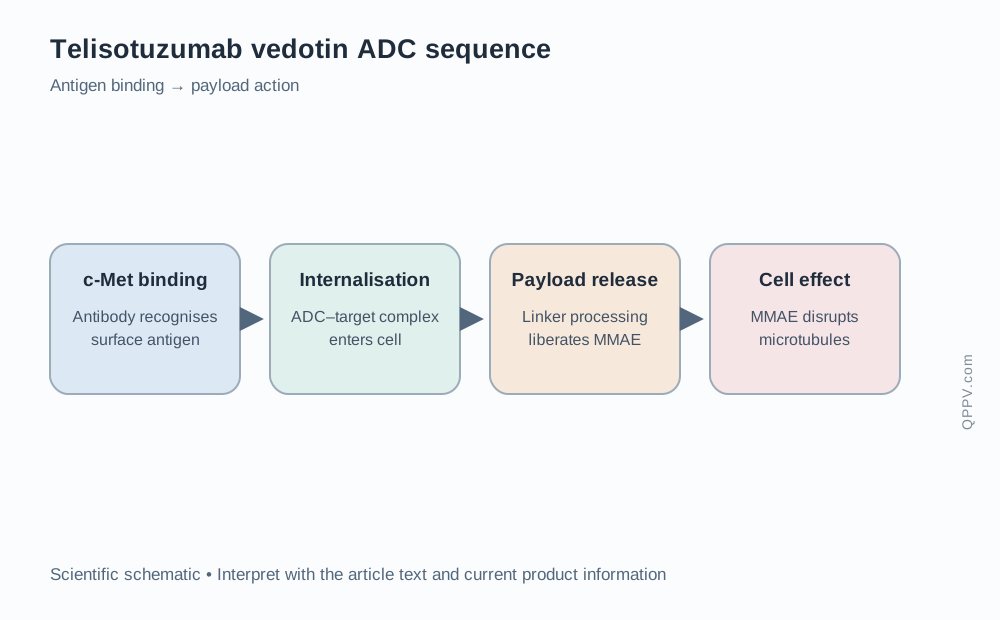
Figure 1. Simplified ADC sequence from c-Met binding to intracellular MMAE-mediated microtubule disruption. The diagram is conceptual; it does not imply that uptake occurs only in tumour cells.
Clinical evidence and regulatory status
LUMINOSITY was a multicentre, open-label, single-arm, multi-cohort study. FDA’s primary efficacy population included 84 previously treated patients with EGFR wild-type non-squamous NSCLC and high c-Met protein overexpression. The accelerated authorisation therefore rests on response evidence in a defined biomarker-positive cohort, rather than a randomised demonstration of comparative survival benefit. Continued approval may depend on verification and description of clinical benefit in the required post-authorisation study. [1,3]
The U.S. label recommends 1.9 mg/kg intravenously every two weeks, with a maximum of 190 mg for patients weighing at least 100 kg, until disease progression or unacceptable toxicity. Dose interruption, reduction and discontinuation instructions vary by event and severity. The current label, including any revision, should be used at the point of care. [2]
Safety profile
The U.S. prescribing information identifies peripheral neuropathy, interstitial lung disease/pneumonitis, ocular surface disorders, infusion-related reactions and embryo-fetal toxicity as warnings and precautions. In the 168-patient LUMINOSITY safety population, peripheral neuropathy occurred in 51% (grade 3: 11%), ILD/pneumonitis in 10% (including three fatal cases), ocular surface disorders in 25%, and infusion-related reactions in 3%. These are trial-specific frequencies; they are not directly comparable with rates from studies of other ADCs. [2]
The most common adverse reactions (at least 20%) were peripheral neuropathy, fatigue, decreased appetite and peripheral oedema. A strong CYP3A inhibitor may increase MMAE exposure; the label advises monitoring for increased adverse reactions. Moderate or severe hepatic impairment is a labelled avoid-use population. Reproductive counselling and contraception intervals are specified in the prescribing information. [2]
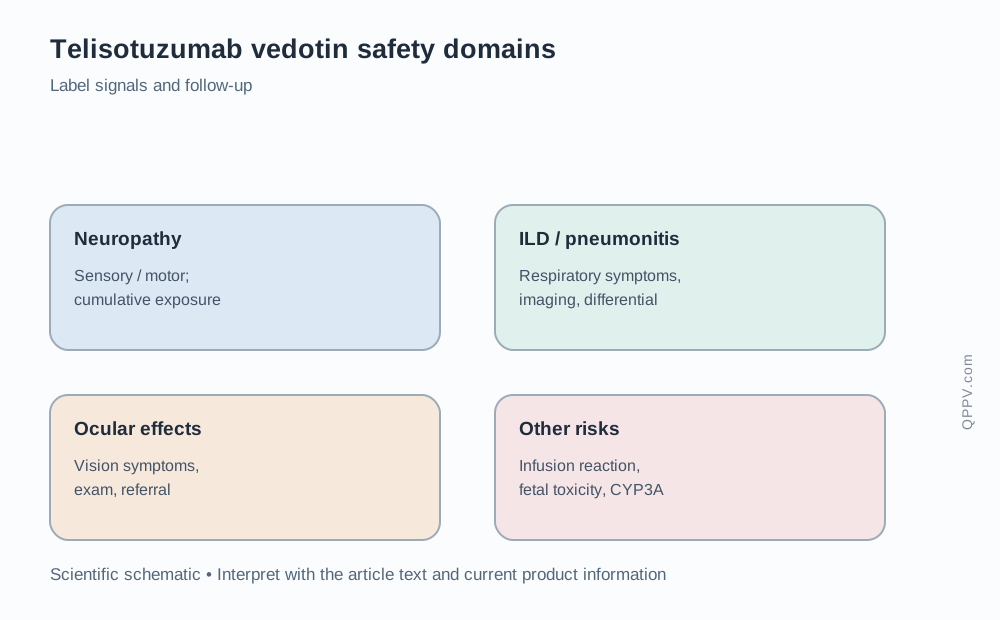
Figure 2. Safety signals and follow-up elements derived from the U.S. label. Event-specific dose modification and escalation should follow the current prescribing information.
Pharmacovigilance in practice
Identify, grade and follow up the event
For neuropathy, document sensory and motor features, functional impact, onset relative to cumulative exposure, competing causes and recovery after interruption or dose reduction. For new respiratory symptoms, record oxygenation, imaging, infection evaluation, differential diagnosis, corticosteroid use, severity and outcome; prompt evaluation matters because ILD/pneumonitis can be serious or fatal. For ocular complaints, preserve symptom detail and examination findings, including referral and intervention. Infusion reactions should include timing, symptoms, infusion rate, interventions and subsequent dosing.
A complete ADC case also records the dose and cycle, weight used for dose calculation, prior systemic therapy, tumour histology, c-Met assay method and result, hepatic function, concomitant CYP3A inhibitors, and any companion-diagnostic issue. These fields support exposure and eligibility assessment; they do not establish causality.
Post-authorisation evidence and safety governance
Because the approval is accelerated, maintain clear separation between routine spontaneous reporting, ongoing clinical studies, and the confirmatory obligation. Review whether observed events alter benefit–risk understanding for the biomarker-defined population, and assess whether diagnostic misclassification, treatment line or prior therapy changes interpretation. Do not describe an unverified clinical benefit as established.
Safety database coding and aggregate review should preserve the clinically important distinction between c-Met expression and genomic alteration, between neuropathy and disease-related neurologic symptoms, and between suspected drug-induced pneumonitis and infection or tumour progression. Serious suspected adverse reactions must be reported under applicable jurisdictional rules.
Key takeaways
- Telisotuzumab vedotin is an ADC, not an unconjugated c-Met antibody.
- FDA accelerated approval is restricted to prior-treated, non-squamous NSCLC with the label-defined high c-Met protein expression.
- MMAE exposure informs concern for neuropathy; the label also highlights potentially fatal ILD/pneumonitis and ocular toxicity.
- Capture biomarker assay, prior therapy, dose exposure, liver status and interacting medicines in safety cases.
- Distinguish accelerated approval and confirmatory evidence obligations from general clinical-trial findings.
References
- U.S. Food and Drug Administration. Accelerated approval of telisotuzumab vedotin-tllv for NSCLC with high c-Met protein overexpression. https://www.fda.gov/drugs/resources-information-approved-drugs/fda-grants-accelerated-approval-telisotuzumab-vedotin-tllv-nsclc-high-c-met-protein-overexpression
- U.S. National Library of Medicine. EMRELIS (telisotuzumab vedotin-tllv), U.S. prescribing information. DailyMed. https://dailymed.nlm.nih.gov/dailymed/drugInfo.cfm?setid=bc04f980-3957-4e35-ab81-8ec2ffe87215
- FDA. Multidisciplinary review: telisotuzumab vedotin, application 761384. https://www.accessdata.fda.gov/drugsatfda_docs/nda/2025/761384Orig1s000MultidisciplineR.pdf
- FDA. Ongoing cancer accelerated approvals: telisotuzumab vedotin confirmatory study information. https://www.fda.gov/drugs/resources-information-approved-drugs/ongoing-cancer-accelerated-approvals
Regulatory Note
Regulatory status and label details in this article were checked on 25 September 2026. The indication described is the U.S. FDA accelerated approval and remains subject to the applicable confirmatory evidence framework. Do not infer authorisation in other jurisdictions or use the U.S. label as a substitute for local product information.