Tezepelumab is a fully human monoclonal antibody directed against thymic stromal lymphopoietin (TSLP), an epithelial cytokine that helps translate airway barrier stress into organised inflammation. Understanding the medicine therefore requires more than memorising that it is an “asthma biologic”. The useful mental model is upstream: environmental and infectious triggers stimulate epithelial cells, TSLP helps activate several immune pathways, and downstream inflammation contributes to airway disease. Tezepelumab interrupts that early signal.
The same biology is relevant beyond asthma. In the European Union, Tezspire is authorised both as add-on maintenance treatment for severe asthma in adults and adolescents 12 years and older who remain inadequately controlled despite high-dose inhaled corticosteroids plus another maintenance medicine, and as add-on therapy with intranasal corticosteroids for adults with severe chronic rhinosinusitis with nasal polyps (CRSwNP) when systemic corticosteroids and/or surgery do not provide adequate disease control. The product is subject to additional monitoring in the EU.
This article develops the product from first principles: what TSLP is, how tezepelumab is classified, how it differs from downstream asthma biologics, why disease heterogeneity matters, how the approved uses relate to the mechanism, and how those concepts should shape product-level pharmacovigilance.
Table of Contents
- Product identity and classification
- Molecular and therapeutic classification
- Why “upstream” is a useful classification
- Development history
- Disease context: severe asthma and CRSwNP
- Severe asthma is biologically heterogeneous
- CRSwNP as an epithelial-inflammatory disease
- TSLP biology
- The airway epithelium as an active immune interface
- From TSLP release to downstream inflammation
- Mechanism of action
- What tezepelumab binds
- What the mechanism does not imply
- Clinical positioning
- Relationship to other asthma biologics
- Biomarkers and treatment selection
- Administration and treatment role
- Safety profile and mechanism-informed interpretation
- Hypersensitivity and administration-related reactions
- Respiratory worsening and disease confounding
- Infections, immune modulation and uncertainty
- Corticosteroid reduction and attribution
- Product pharmacovigilance
- Case assessment
- Special situations and traceability
- Signals and aggregate interpretation
- Practical assessment framework
- Key Takeaways
- References
- Regulatory Note
Product identity and classification
Tezepelumab is marketed as Tezspire. The active substance is a human monoclonal antibody produced using recombinant DNA technology in Chinese hamster ovary cells. The EU product information describes the product as a 210 mg solution for subcutaneous injection in a pre-filled syringe or pre-filled pen.
Molecular and therapeutic classification
Tezepelumab can be classified along several independent dimensions:
| Dimension | Classification | Why it matters |
|---|---|---|
| Modality | Biological medicinal product; monoclonal antibody | Establishes biological traceability and immunogenicity considerations |
| Target | TSLP | Defines the molecular mechanism |
| Functional level | Upstream epithelial alarmin blockade | Explains broader pathway effects compared with a single downstream mediator |
| Therapeutic area | Severe asthma and severe CRSwNP | Defines the treated populations and their background event rates |
| Treatment role | Add-on long-term treatment | Distinguishes it from rescue therapy for acute symptoms |
This multidimensional classification is more informative than calling tezepelumab merely an “anti-inflammatory biologic”.
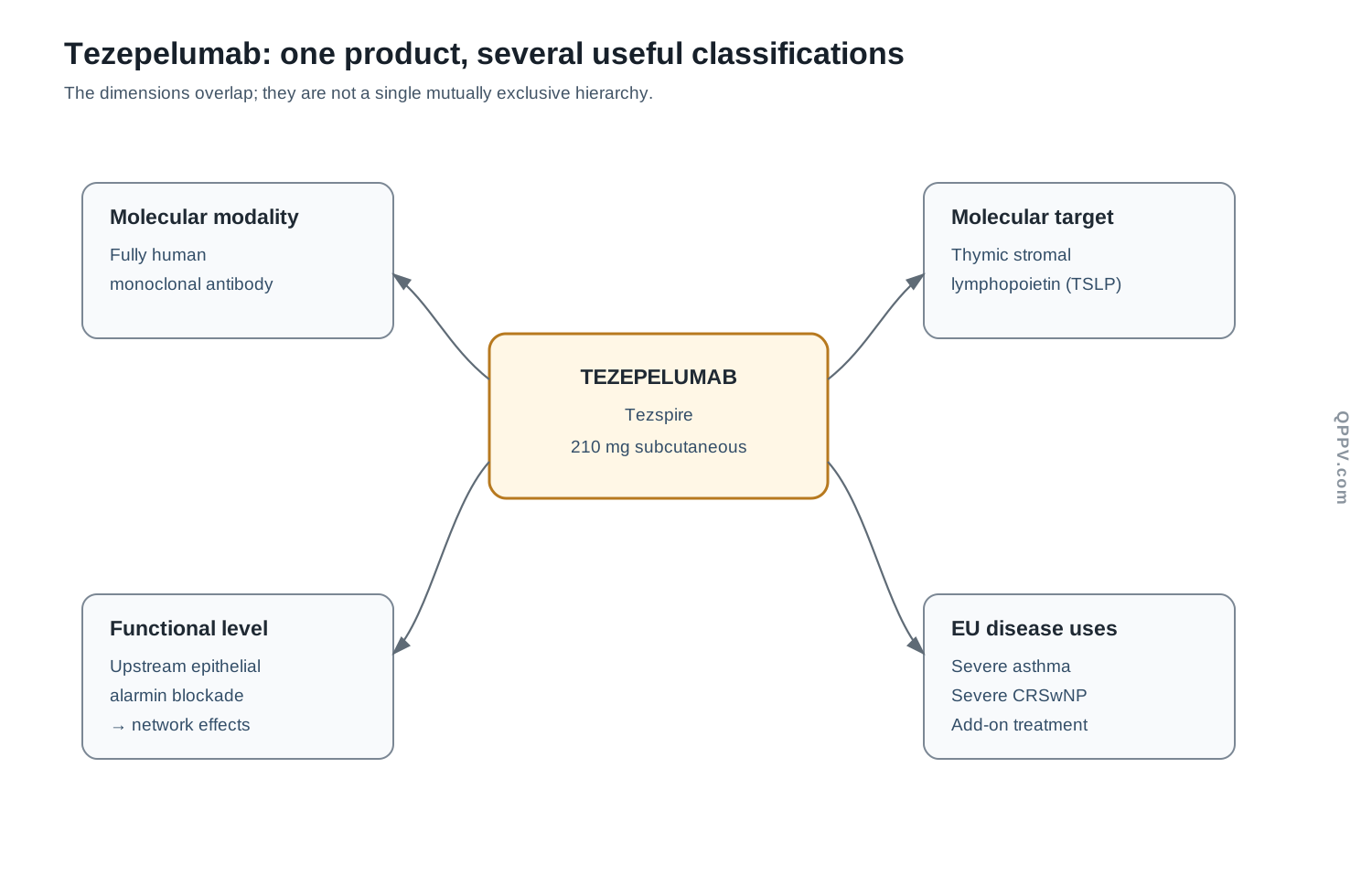
Figure 1. Tezepelumab is simultaneously a monoclonal antibody, a TSLP inhibitor, an upstream epithelial-alarmin intervention and an add-on biologic used in severe inflammatory airway disease. The dimensions overlap rather than forming a single mutually exclusive hierarchy.
Why “upstream” is a useful classification
Many asthma biologics target mediators that sit downstream within type 2 inflammation. Omalizumab targets IgE; mepolizumab and reslizumab target IL-5; benralizumab targets the IL-5 receptor; dupilumab blocks IL-4 receptor alpha and thereby inhibits IL-4 and IL-13 signalling. Tezepelumab instead targets TSLP, a cytokine released early by epithelial cells after barrier stress.
“Upstream” does not mean universal or nonspecific. It means that TSLP can influence several later inflammatory pathways before they diverge. Blocking it therefore has the potential to modify a broader inflammatory network than blocking a single downstream effector. That distinction helps explain both clinical trial findings across differing biomarker strata and the need for careful interpretation rather than assuming that every asthma phenotype is biologically identical.
Development history
Tezepelumab originated from a programme targeting TSLP as an upstream driver of airway inflammation and was initially studied as AMG 157. Early clinical development provided proof of concept that blocking TSLP could reduce allergen-induced airway responses. The phase 2 PATHWAY programme then showed reduced exacerbation rates in adults with uncontrolled asthma across differing baseline eosinophil counts, strengthening the rationale for an upstream biologic strategy.
The phase 3 NAVIGATOR trial extended this evidence in adults and adolescents with severe, uncontrolled asthma and supported the product's regulatory development. Tezspire subsequently received EU marketing authorisation on 19 September 2022 for severe asthma. Post-authorisation development has continued rather than treating asthma as the endpoint of the molecule's clinical story. The EU indication was later expanded to include severe CRSwNP in adults, reflecting the relevance of TSLP biology across inflammatory airway compartments.
For pharmacovigilance, development history matters because the exposed population changes over time. A product initially characterised mainly in severe asthma may later accumulate exposure in another disease, with different concomitant therapies, clinical endpoints and background adverse-event rates. Aggregate safety evaluation should therefore retain indication and time-period context rather than assuming that all post-authorisation exposure is homogeneous.
Disease context: severe asthma and CRSwNP
Severe asthma is biologically heterogeneous
Asthma is defined clinically by variable respiratory symptoms and variable expiratory airflow limitation, but the inflammatory biology is heterogeneous. Some patients have strongly eosinophilic type 2 inflammation, some have allergic disease dominated by IgE-mediated mechanisms, and others have mixed or less clearly type 2-high patterns. Similar symptoms can therefore arise from different immunological routes.
This heterogeneity becomes especially important in severe asthma. A patient who remains poorly controlled despite optimised inhaled therapy is not automatically a candidate for any biologic. The clinician must first confirm the diagnosis, assess adherence and inhaler technique, identify relevant comorbidities and exposures, and then determine whether a biologic fits the remaining disease biology.
Tezepelumab is particularly instructive because its efficacy in the NAVIGATOR programme was demonstrated across the spectrum of baseline blood eosinophil counts, although treatment effects can still vary with baseline inflammatory characteristics. That observation should not be translated into “biomarkers no longer matter”. Biomarkers remain useful for understanding disease, comparing biologic options and estimating likely response.
CRSwNP as an epithelial-inflammatory disease
CRSwNP is a chronic inflammatory disorder of the nose and paranasal sinuses characterised by persistent mucosal inflammation and nasal polyps. Many patients have type 2 inflammatory biology and overlap with asthma. The epithelium, local cytokine networks, eosinophils and other immune cells all contribute.
The EU expansion of tezepelumab into severe CRSwNP is biologically coherent with its TSLP target because TSLP participates in inflammatory signalling in the nasal and sinus mucosa as well as the lower airways. Nevertheless, asthma and CRSwNP are distinct diseases with different clinical endpoints, background event patterns and treatment pathways. Pharmacovigilance assessment should therefore retain the actual indication rather than collapsing all exposure into a generic “airway disease” category.
TSLP biology
The airway epithelium as an active immune interface
The respiratory epithelium is not simply a physical lining. It continuously senses allergens, microbes, pollutants, smoke and mechanical or chemical injury. When stressed, epithelial cells can release cytokines sometimes called alarmins, including TSLP, IL-25 and IL-33. These signals alert and shape the local immune response.
A useful analogy is a building’s alarm system. The epithelium is the boundary exposed to the outside world; TSLP is one of the alarm signals transmitted when that boundary detects danger. The analogy has limits: TSLP is not an on/off switch, and inflammation arises from many interacting mediators. But it helps place the target at the correct biological level.
From TSLP release to downstream inflammation
TSLP binds to a heterodimeric receptor complex composed of TSLP receptor and IL-7 receptor alpha. Signalling can influence dendritic cells, T cells, type 2 innate lymphoid cells and other immune populations. Through these relationships, TSLP can amplify pathways involving type 2 cytokines, eosinophilic inflammation and airway hyperresponsiveness.
The consequence is a network rather than a simple linear chain. TSLP can sit near the beginning of several pathways that later converge on mucus production, bronchial hyperresponsiveness, inflammatory cell recruitment and exacerbation risk. This is why a network diagram is a better mental model than a single arrow from TSLP directly to “asthma”.
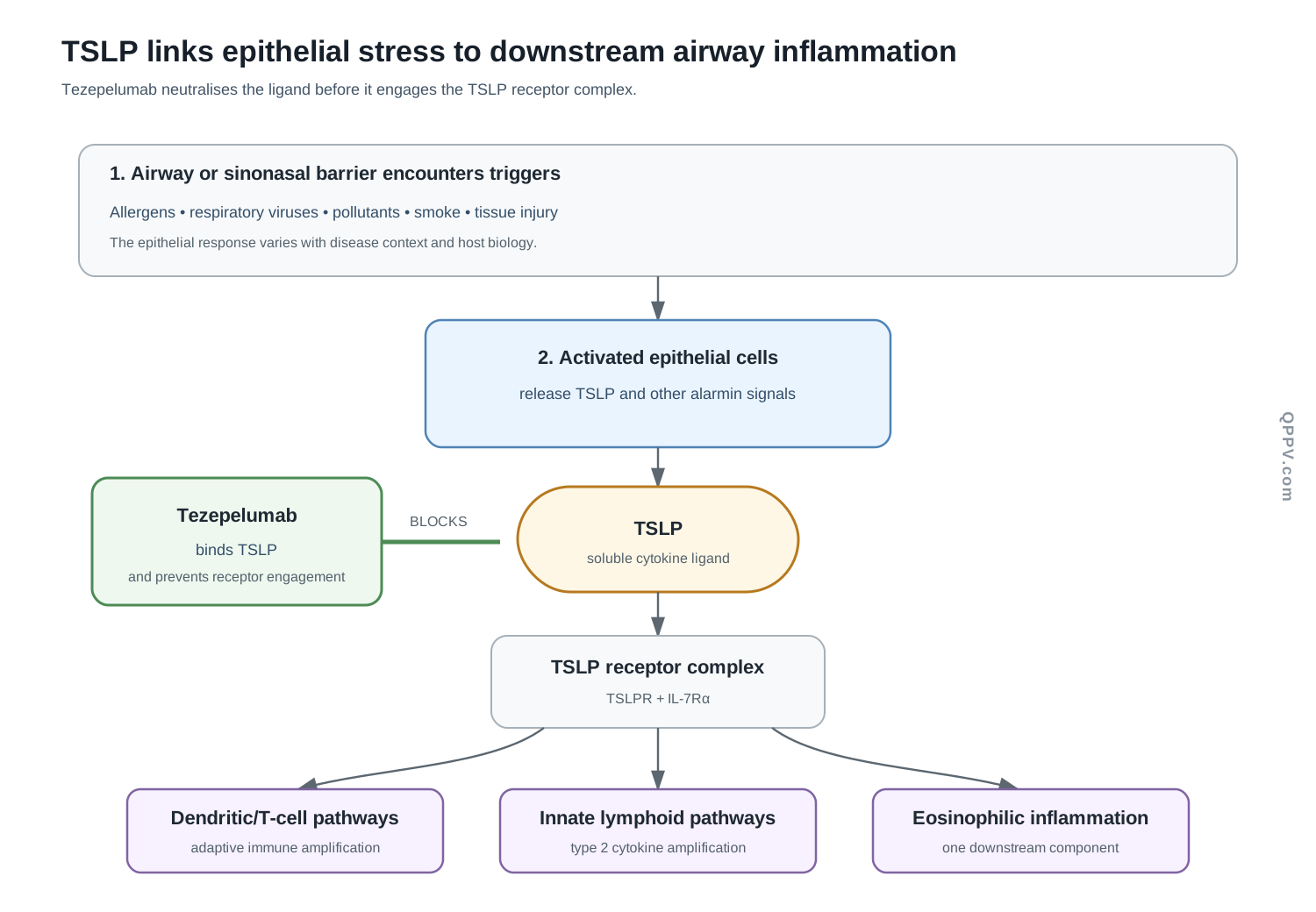
Figure 2. Environmental or infectious stress at the airway epithelium can promote TSLP release. TSLP signals through its receptor complex and contributes to several downstream inflammatory pathways. Tezepelumab binds TSLP and prevents receptor engagement; the figure intentionally represents a network rather than a single deterministic pathway.
Mechanism of action
What tezepelumab binds
Tezepelumab binds human TSLP and prevents TSLP from interacting with its receptor complex. The direct pharmacological action is therefore ligand neutralisation. It does not bind the TSLP receptor, deplete TSLP-producing epithelial cells or directly remove eosinophils.
Once receptor engagement is reduced, signalling that would otherwise promote several downstream inflammatory processes is attenuated. In asthma studies, treatment has been associated with reductions in biomarkers such as blood eosinophils, fractional exhaled nitric oxide and IgE. These biomarker changes are useful evidence of network effects, but they should not be interpreted as proof that every pathway in every patient is suppressed to the same extent.
What the mechanism does not imply
Three boundaries are important.
First, tezepelumab is not a bronchodilator. It does not acutely relax airway smooth muscle, so it is not a rescue treatment for an asthma attack.
Second, upstream blockade does not mean complete immune suppression. TSLP is one component of a redundant immune network. Host defence and inflammation can proceed through pathways that do not depend on TSLP.
Third, the mechanism does not establish causality for every infection, inflammatory event or respiratory deterioration reported after treatment. Pharmacological plausibility is one element of causality assessment; chronology, dechallenge/rechallenge information, alternative causes, disease activity and background rates remain essential.
Clinical positioning
Relationship to other asthma biologics
The current severe-asthma biologic landscape is best understood by target rather than by brand name.
| Target/pathway | Example strategy | Dominant biological concept |
|---|---|---|
| IgE | Anti-IgE | Allergic sensitisation and IgE-mediated activation |
| IL-5 / IL-5R | Anti-IL-5 or anti-IL-5R | Eosinophil differentiation, survival and depletion |
| IL-4Rα | IL-4Rα blockade | IL-4/IL-13 signalling and type 2 inflammation |
| TSLP | Tezepelumab | Upstream epithelial alarmin signalling |
This table should not be treated as a prescribing algorithm. Eligibility, local reimbursement criteria, comorbidities, prior therapy, biomarker profile, expected response, administration preferences and approved indications all influence treatment selection.
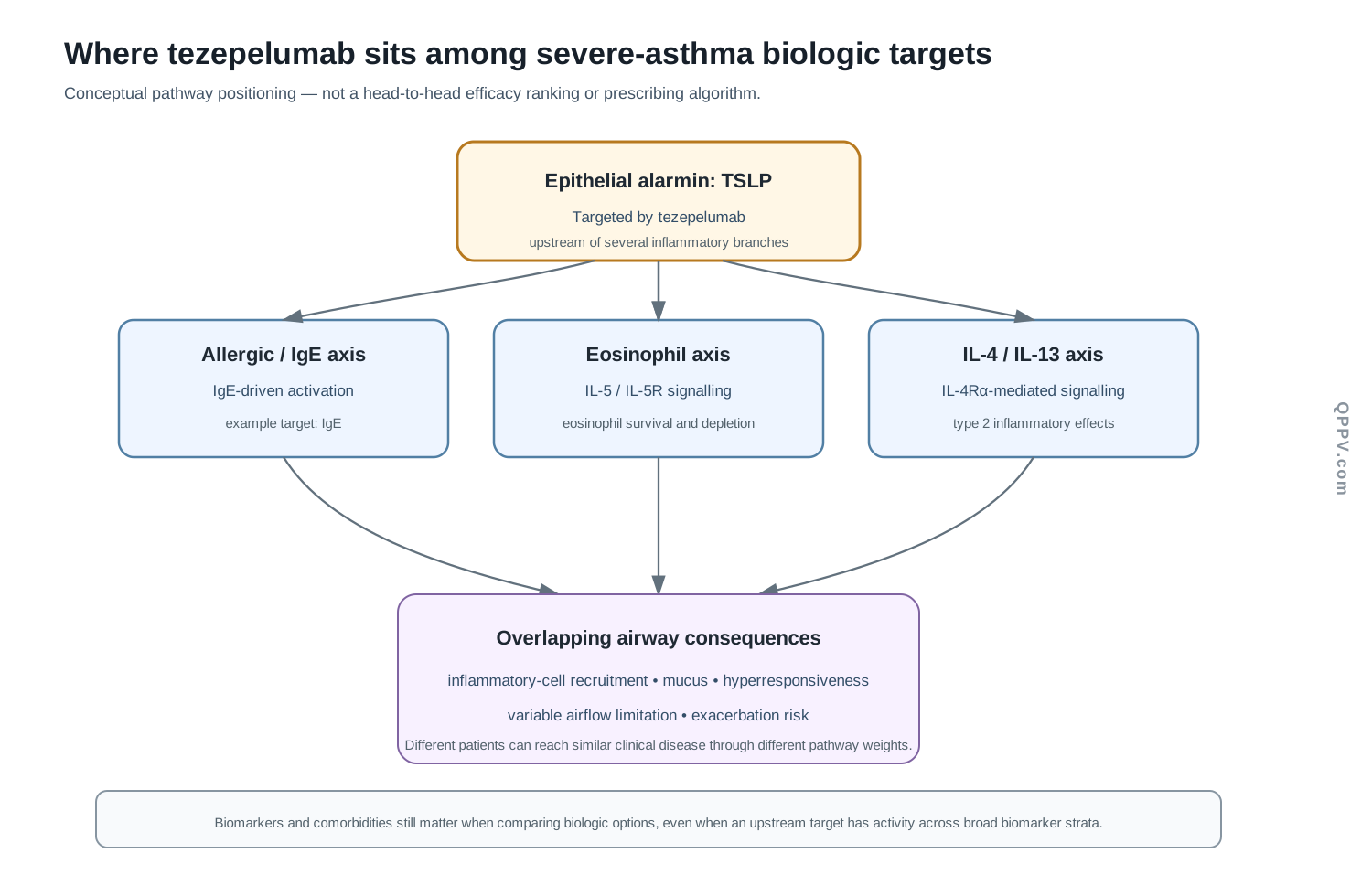
Figure 3. Simplified positioning of major biologic targets in severe asthma. Tezepelumab acts at TSLP, upstream of several downstream type 2 inflammatory pathways. The map is conceptual and is not a head-to-head efficacy ranking or prescribing algorithm.
Biomarkers and treatment selection
One reason tezepelumab is distinctive is that its pivotal asthma evidence included patients across a broad range of blood eosinophil counts. NAVIGATOR showed a reduction in annualised asthma exacerbations in the overall population and benefit across eosinophil strata. This supports the concept that an upstream target can remain relevant when a single downstream biomarker is low.
However, “works regardless of biomarkers” is an oversimplification. Baseline eosinophils, FeNO, allergic status and comorbidities can still provide information about inflammatory phenotype and likely magnitude of response. They also matter when comparing alternative biologics. Product pharmacovigilance should therefore capture clinically relevant baseline phenotype when it is available, particularly in reports of lack of effect or worsening disease.
Administration and treatment role
In the EU, the recommended dose for the authorised indications is 210 mg by subcutaneous injection every four weeks. Tezspire is intended for long-term treatment, with the need for continued therapy reviewed periodically according to disease control and clinical context. Patients or caregivers may administer the medicine after appropriate training where the product presentation and local instructions permit self-administration.
The treatment role is additive. Background controller therapy should not be abruptly withdrawn simply because a biologic has been started. This is particularly important for systemic corticosteroids, where rapid reduction can precipitate withdrawal symptoms or unmask conditions previously suppressed by corticosteroid therapy.
Safety profile and mechanism-informed interpretation
The EU product information provides the regulatory baseline for recognised adverse reactions, warnings and precautions. A product-PV article should not replace that document; its purpose is to explain how to interpret safety information in the clinical setting.
Hypersensitivity and administration-related reactions
Hypersensitivity reactions, including serious reactions, are a key safety consideration for monoclonal antibodies. Reported reactions should be characterised carefully: timing after injection, clinical features, treatment required, seriousness, recurrence, alternative allergens or concomitant medicines, and whether the event occurred after a first or later dose.
Not every rash or respiratory symptom after injection is allergic. Severe asthma itself can generate dyspnoea and wheeze; viral infections can produce respiratory symptoms; injection-site reactions can remain local. The assessor should therefore reconstruct the syndrome rather than coding “hypersensitivity” solely because symptoms occurred after administration.
Respiratory worsening and disease confounding
Asthma exacerbations remain possible during treatment. A report of worsening asthma may represent lack of effect, natural variability, infection-triggered exacerbation, poor adherence to background therapy, exposure to allergens or irritants, a dosing interruption, or an adverse reaction. The product is not indicated to treat acute bronchospasm or status asthmaticus.
For PV purposes, useful details include baseline severity, previous exacerbation frequency, maintenance therapy, corticosteroid changes, time since the last tezepelumab dose, presence of infection, biomarkers if known, and whether hospitalisation or systemic corticosteroids were required.
CRSwNP reports require their own context. Worsening nasal obstruction, anosmia, infection, polyp recurrence or surgery should not automatically be interpreted using an asthma framework. Indication-specific assessment preserves clinical meaning.
Infections, immune modulation and uncertainty
Because TSLP participates in immune signalling, infection reports deserve thoughtful assessment. The appropriate approach is not to assume either that every infection is drug-related or that immune modulation is irrelevant. Instead, assess the type and site of infection, pathogen if identified, severity, recurrence, immunosuppressive co-therapies, corticosteroid exposure, comorbidities and temporal relationship.
Mechanistic plausibility is especially useful at aggregate level. A pattern of unusual, severe or recurrent infections may be more informative than isolated common respiratory infections occurring in a population already prone to airway infections.
Corticosteroid reduction and attribution
A classic attribution problem occurs when a patient improves after biologic initiation and clinicians reduce corticosteroid therapy. Subsequent fatigue, arthralgia, eosinophilic symptoms, adrenal insufficiency or disease worsening may be temporally associated with tezepelumab but mechanistically related to corticosteroid withdrawal or loss of corticosteroid suppression.
This does not make the event irrelevant to PV. It changes the causal model. The case should document the corticosteroid dose before and after the change, tapering schedule, timing of symptoms, investigations and response to corticosteroid reintroduction where applicable. Without that information, an apparently simple adverse-event report can be substantially misclassified.
Product pharmacovigilance
Product pharmacovigilance for tezepelumab should connect the molecular mechanism, the treated disease, the administration setting and the regulatory safety profile. The objective is not merely to count adverse events. It is to determine whether reported events form clinically meaningful patterns, whether those patterns are expected in the exposed population, and whether new evidence changes the product's benefit-risk profile.
Case assessment
A useful individual-case assessment starts with four questions: what happened, when did it happen, what else could explain it, and what does the product mechanism add to the interpretation?
For tezepelumab, the following data elements often materially improve assessment:
| Domain | High-value information |
|---|---|
| Exposure | Dose, date, product presentation, batch/lot where available, first or subsequent dose, missed or delayed doses |
| Indication | Severe asthma or severe CRSwNP; disease duration and baseline control |
| Phenotype | Eosinophil count, FeNO, allergic status or other relevant inflammatory features when available |
| Background treatment | Inhaled corticosteroids, systemic corticosteroids, other biologics, intranasal corticosteroids and relevant concomitant medicines |
| Event | Diagnosis, onset, severity, seriousness, treatment, investigations and outcome |
| Alternatives | Infection, allergen exposure, adherence problems, corticosteroid taper, comorbidity and natural disease fluctuation |
| Follow-up | Dechallenge, rechallenge, subsequent doses and recurrence |
The value of these data depends on the event. A hypersensitivity report requires minute-to-hour timing and clinical phenotype; an apparent lack-of-effect report requires longitudinal disease-control information; an infection report requires microbiology and immunosuppressive co-exposures where available.
Special situations and traceability
As a biological medicinal product, tezepelumab should be traceable by product name and batch number where feasible. This is particularly useful when investigating product-quality concerns, clusters, immunogenicity questions or presentation-specific medication errors.
Special-situation reports may include pregnancy exposure, breastfeeding, medication errors, overdose, off-label use, occupational exposure, misuse, abuse or lack of therapeutic effect depending on applicable pharmacovigilance rules and company procedures. The reporting obligation and data handling should follow the relevant jurisdictional framework rather than a generic checklist.
Self-administration introduces practical information needs. Reports should distinguish device problems from user technique, storage problems, product-quality defects and adverse reactions. A failed injection, incomplete dose or leakage may result in inadequate exposure and subsequent disease worsening without representing pharmacological lack of efficacy.
Signals and aggregate interpretation
Aggregate review should preserve indication, phenotype and exposure context. Combining all respiratory events into one undifferentiated category can obscure whether a pattern reflects asthma exacerbation, CRSwNP progression, respiratory infection, hypersensitivity or treatment interruption.
Mechanism can generate hypotheses, but signal evaluation requires evidence. A biologically plausible association should be tested against temporal patterns, disproportionality where appropriate, clinical coherence, exposure-adjusted data when available, trial and observational evidence, class effects, dechallenge/rechallenge information and alternative explanations.
The EU additional-monitoring status is a regulatory mechanism to support rapid identification of new safety information; it does not mean the medicine is unsafe. Suspected adverse reactions should be reported in accordance with the applicable national system.
Practical assessment framework
An experienced PV assessor can work through a tezepelumab report in a reproducible sequence:
- Confirm the treated condition. Asthma and CRSwNP have overlapping biology but different clinical manifestations and background events.
- Reconstruct exposure. Establish dose, timing, administration success and relevant missed or delayed doses.
- Define the event clinically. Avoid replacing a syndrome with a broad verbatim term when diagnostic detail is available.
- Map the chronology. Compare onset with the most recent dose, cumulative exposure, corticosteroid changes and infectious or allergen triggers.
- Identify alternative causes. Severe airway disease itself creates substantial confounding.
- Use mechanism proportionately. TSLP biology can support or weaken hypotheses but cannot establish causality alone.
- Seek discriminating follow-up. Ask for information that can actually change the assessment rather than collecting data indiscriminately.
- Preserve product traceability. Record brand and batch/lot when available.
- Consider aggregate relevance. A single common event may be uninformative; a coherent pattern across cases may justify signal-level review.
Illustrative scenario: respiratory deterioration after corticosteroid taper
A patient with severe asthma receives tezepelumab for several months and improves. Oral corticosteroids are then reduced rapidly. Two weeks later the patient reports fatigue, wheeze and eosinophilia. The event is reported as “asthma worsening due to Tezspire”.
A weak assessment would accept the reporter's causal label unchanged. A stronger assessment would reconstruct the taper, determine whether adrenal insufficiency or loss of corticosteroid suppression could explain the symptoms, assess infection and adherence, examine the timing of the last tezepelumab dose, and document whether corticosteroid reintroduction altered the course. The case remains reportable if it meets the applicable criteria, but the causal interpretation becomes more disciplined.
Illustrative scenario: apparent device failure
A caregiver reports that after pressing the pre-filled pen against the skin, liquid was visible on the skin and the patient later experienced worsening symptoms. The correct initial model contains at least three distinct questions: was there a product-quality defect, was administration technique incorrect, and did the patient receive an incomplete dose? Only after these are separated should worsening disease be assessed as possible lack of effect or inadequate exposure.
Key Takeaways
- Tezepelumab is a fully human monoclonal antibody that neutralises TSLP, an epithelial alarmin positioned upstream of several inflammatory pathways.
- In the EU, Tezspire is authorised for severe asthma in adults and adolescents aged 12 years and older and, more recently, for severe CRSwNP in adults under the conditions specified in the product information.
- Upstream action distinguishes tezepelumab conceptually from anti-IgE, anti-IL-5/IL-5R and anti-IL-4Rα biologics, but does not mean that biomarkers or disease phenotype are irrelevant.
- The medicine is a long-term add-on treatment, not rescue therapy for acute bronchospasm.
- Pharmacovigilance assessment should separate disease activity, infection, hypersensitivity, corticosteroid withdrawal, administration failure and pharmacological lack of effect rather than collapsing them into a single causal narrative.
- Biological traceability, including product name and batch where available, remains an important part of high-quality case documentation.
References
- European Medicines Agency. Tezspire (tezepelumab): EPAR and current product information. EMA. Product information first published 21 September 2022; EMA EPAR page current through 2026. https://www.ema.europa.eu/en/medicines/human/EPAR/tezspire
- European Medicines Agency. Tezspire: EPAR Product Information. Summary of Product Characteristics, labelling and package leaflet. https://www.ema.europa.eu/en/documents/product-information/tezspire-epar-product-information_en.pdf
- Menzies-Gow A, Corren J, Bourdin A, et al. Tezepelumab in Adults and Adolescents with Severe, Uncontrolled Asthma. N Engl J Med. 2021;384:1800-1809. doi:10.1056/NEJMoa2034975.
- Corren J, Parnes JR, Wang L, et al. Tezepelumab in Adults with Uncontrolled Asthma. N Engl J Med. 2017;377:936-946. doi:10.1056/NEJMoa1704064.
- European Medicines Agency. Tezspire EPAR assessment history and risk-management documentation. Available from the Tezspire EPAR page.
Regulatory Note
This article is an educational pharmacovigilance reference and does not replace the current Summary of Product Characteristics, package leaflet, risk-management documentation, national requirements, clinical guidelines or individual medical judgement. Regulatory status and product information can change after publication. For case processing, signal management and regulatory decisions, use the current authorised product information and the pharmacovigilance requirements applicable to the relevant jurisdiction.