Tick-Borne Encephalitis Vaccine: Inactivated-Virus Biology, Immunisation and Pharmacovigilance
Tick-borne encephalitis (TBE) is a flaviviral infection transmitted principally by infected ticks in endemic regions of Europe and Asia. Infection may be asymptomatic, febrile or biphasic, but neurological disease can include meningitis, encephalitis or myelitis. Prevention through vaccination therefore addresses a geographically structured exposure risk rather than a universally distributed infection.
- Tick-Borne Encephalitis Vaccine: Inactivated-Virus Biology, Immunisation and Pharmacovigilance
- Classification and Vaccine Manufacture
- Mechanism of Protection
- Regulatory and Use Context
- Reactogenicity and Hypersensitivity
- Administration and Schedule Errors
- Breakthrough TBE After Vaccination
- Special Populations
- Practical Pharmacovigilance Assessment
- Illustrative Failure Modes
- Inspection and Governance Considerations
- Key Takeaways
- References
- Regulatory Note
Classification and Vaccine Manufacture
The vaccine is an inactivated whole-virus vaccine. TBE virus is propagated in chick-embryo fibroblast cells, harvested, purified and inactivated with formaldehyde. The antigen is adsorbed to aluminium hydroxide as an adjuvant. Because the virus is inactivated, vaccination cannot cause replicating TBE infection.
The product is supplied in age-specific prefilled-syringe presentations. FDA product information describes a 0.5 mL adult presentation and a 0.25 mL paediatric presentation, the latter containing half the antigen quantity. This presentation distinction is operationally important because a wrong-age-product error can translate directly into an incorrect antigen dose.
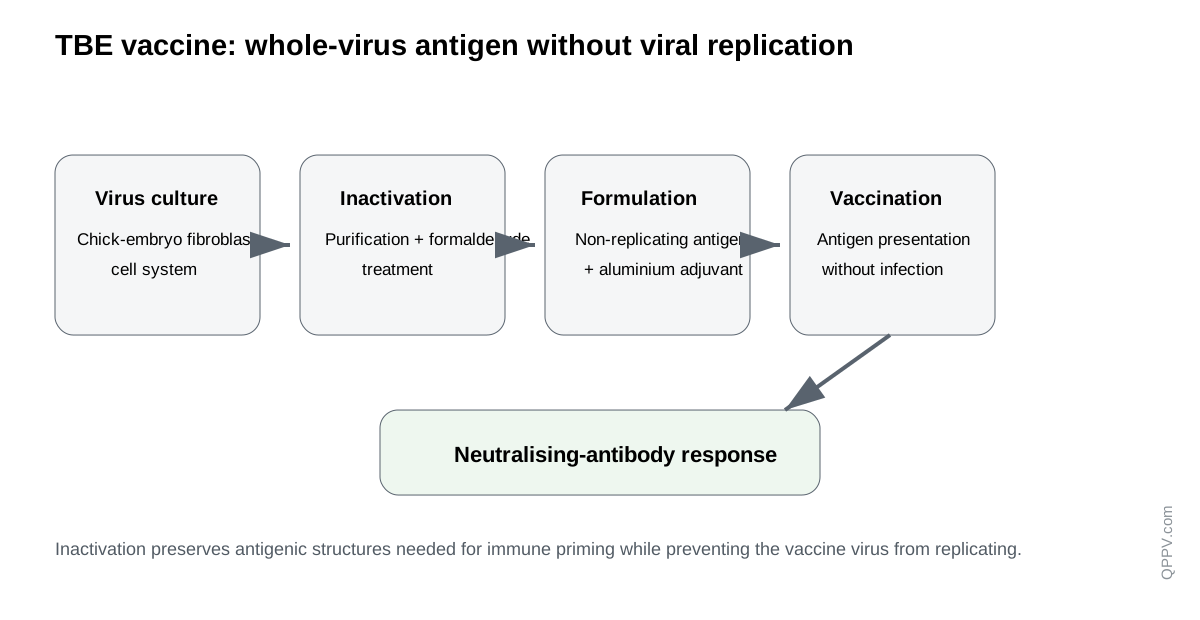
Figure 1. TBE virus is cultured, inactivated and presented as non-replicating antigen with adjuvant, generating neutralising antibodies without exposing the recipient to replicating vaccine virus.
Mechanism of Protection
Vaccination presents viral structural antigens to the immune system, generating antibodies capable of neutralising TBE virus before it establishes productive infection. The important distinction is between antigen exposure and viral replication: the vaccine supplies the former while preventing the latter.
Neutralising-antibody responses after the primary series provide the principal immunological bridge to protection. The need for multiple primary doses and later booster dosing reflects the time required to establish and maintain protective immune memory.
Regulatory and Use Context
In the United States, the vaccine is licensed for active immunisation against TBE in individuals from 1 year of age. Use is primarily relevant to persons travelling to or living in areas where TBE-virus exposure is plausible.
Schedules differ by age and may include accelerated timing under defined circumstances. Pharmacovigilance should therefore record the exact presentation, dose number, date, interval and planned travel or endemic exposure rather than treating vaccination as a single undifferentiated event.
Reactogenicity and Hypersensitivity
Local pain and systemic symptoms such as headache, fatigue, myalgia or fever are expected after many inactivated vaccines. In children, fever can be especially relevant to follow-up because the clinical consequences and differential diagnosis vary with age.
Immediate hypersensitivity should be clinically reconstructed rather than inferred from a nonspecific term such as "allergic reaction." The vaccine contains residual materials related to its manufacturing process, including trace chick-cell-derived material and antibiotics. Relevant allergy history, onset, organ systems involved, treatment and outcome should therefore be obtained when a serious immediate reaction is reported.
Administration and Schedule Errors
The existence of separate paediatric and adult prefilled syringes creates a clear error pathway. The intended age presentation, actual presentation, administered volume and subsequent corrective action should be recorded. A wrong presentation is not automatically synonymous with clinical harm, but it is important for dose interpretation and prevention.
Multi-dose schedules create additional errors: excessive interval, incorrect accelerated interval, missed third dose, unnecessary repeat dose or failure to give a booster when ongoing exposure warrants one. These are product-use problems whose clinical significance depends on timing and exposure risk.
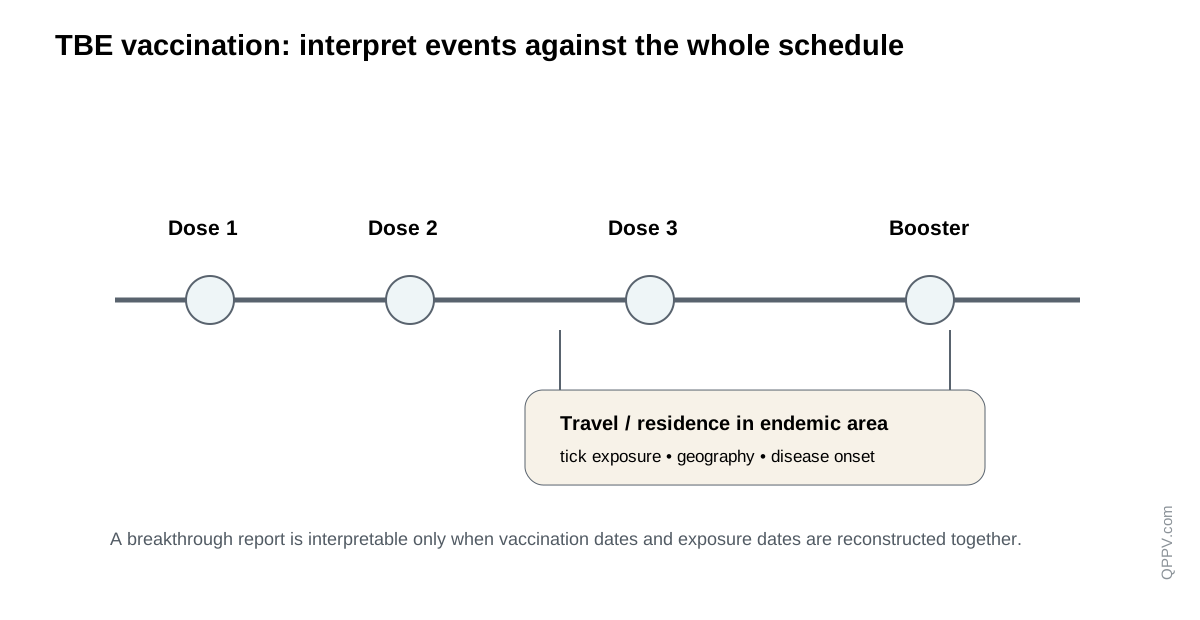
Figure 2. TBE vaccine pharmacovigilance should reconstruct the primary series and booster history against the person's period of travel or endemic exposure, because schedule completion changes the interpretation of breakthrough disease.
Breakthrough TBE After Vaccination
Neurological illness after vaccination can represent coincidental disease, another infection, an adverse event temporally associated with vaccination, or true TBE despite vaccination. A credible breakthrough assessment therefore requires virological/serological confirmation, vaccination history and exposure geography.
A report of "encephalitis after TBE vaccine" is especially ambiguous. The key question is whether the patient developed laboratory-supported TBE after exposure, another cause of encephalitis, or a neurological syndrome without evidence of TBE virus infection.
For confirmed TBE after an apparently complete series, obtain age, immune status, dates of all doses, product/lot where available, time since last booster, location and timing of likely tick exposure, diagnostic test results and outcome.
Special Populations
Data in pregnancy and some immunocompromised groups are more limited than in the general vaccinated population. Immunosuppression may reduce vaccine response without creating a distinctive adverse-event syndrome. This matters because suspected lack of effect and adverse reaction are analytically different concepts.
Older adults may also have different immune responses and underlying neurological or cardiovascular morbidity. Age should therefore be retained in both safety and effectiveness analyses rather than treated only as a demographic descriptor.
Practical Pharmacovigilance Assessment
The minimum useful exposure record includes vaccine presentation, dose number, date, interval from previous dose, lot and age. For suspected breakthrough disease, add travel or residence geography, tick exposure, immune status, laboratory confirmation and time since the most recent booster.
Safety surveillance should distinguish common reactogenicity from medically important neurological events. Effectiveness surveillance should separately evaluate confirmed disease after an appropriately administered series.
Illustrative Failure Modes
These are hypothetical examples rather than reported inspection findings.
| Failure mode | Why it weakens assessment | Control |
|---|---|---|
| Adult versus paediatric presentation not recorded | Dose cannot be verified | Capture presentation and volume |
| "Encephalitis" accepted without diagnostic work-up | TBE cannot be distinguished from other causes | Obtain laboratory and neurological evidence |
| Breakthrough case lacks travel geography | Exposure plausibility is unknown | Capture location and dates |
| Multi-dose history reduced to "vaccinated" | Series completion cannot be assessed | Reconstruct every dose and booster |
| Storage excursion omitted from a cluster | Product-quality contribution may be missed | Preserve cold-chain and lot data |
Inspection and Governance Considerations
An inspector could examine whether age-specific presentations are distinguishable in the safety database, whether vaccination-error coding preserves the actual error mechanism, and whether confirmed TBE after vaccination is routed for effectiveness as well as safety review.
The governance interface extends beyond PV to medical information, quality, supply and travel-vaccine programmes. A product complaint involving a prefilled syringe, for example, may be relevant to both quality and safety even when no adverse event occurred.
Key Takeaways
The TBE vaccine is a formaldehyde-inactivated whole-virus biological. Its central PV distinction is that the vaccine cannot replicate, while real TBE infection can cause serious neurological disease.
High-quality surveillance connects exact age presentation and multi-dose history to the person's exposure geography. A neurological event after vaccination and laboratory-confirmed breakthrough TBE are different questions and should be evaluated accordingly.
References
- U.S. Food and Drug Administration. Tick-Borne Encephalitis Vaccine: licensed product information and supporting documents. Original U.S. approval 13 August 2021.
- U.S. Food and Drug Administration. Package Insert: Tick-Borne Encephalitis Vaccine.
- U.S. Food and Drug Administration. Clinical Review Memorandum: Tick-Borne Encephalitis Vaccine. 2021.
- World Health Organization. Vaccines against tick-borne encephalitis: WHO position paper and subsequent applicable guidance.
- European Centre for Disease Prevention and Control. Tick-borne encephalitis: epidemiology and prevention resources.
Regulatory Note
Indications, schedules, accelerated schedules and booster recommendations differ by jurisdiction and patient circumstances. Current locally applicable product information and immunisation recommendations should be checked before operational use.