Tirzepatide: Discovery, Dual Incretin Pharmacology, Clinical Development and Pharmacovigilance
Tirzepatide connects three subjects that must be understood together: dual incretin pharmacology, the changing evidence for treatment of metabolic disease, and safety surveillance during rapid expansion of use. An active-substance name identifies the molecule, but it does not establish the indication, dose, presentation or applicable national product information. Those distinctions matter when interpreting both a clinical study and an individual safety report.
This article follows tirzepatide from its scientific origins through current use, then explains how its safety profile should be evaluated in practice. Brand names appear only where they identify a specific authorisation, presentation or revenue disclosure. Regulatory information was reviewed on 17 October 2026; historical trial findings are distinguished from current authorisation conditions.
- Tirzepatide: Discovery, Dual Incretin Pharmacology, Clinical Development and Pharmacovigilance
- Scientific identity and therapeutic rationale
- Discovery and early translation
- How clinical development changed the treatment question
- Authorisation and commercial lifecycle
- From pharmacology to clinically meaningful safety assessment
- Reproductive exposure, oral medicines and regional differences
- Practical pharmacovigilance across expanding use
- Regulatory governance and inspection considerations
- Key Takeaways
- References
- Regulatory Note
Scientific identity and therapeutic rationale
Tirzepatide is a synthetic, long-acting peptide agonist of the glucose-dependent insulinotropic polypeptide (GIP) and glucagon-like peptide-1 (GLP-1) receptors. It is neither a monoclonal antibody nor a combination of two separately administered active substances. One engineered molecule provides activity at both receptors. Its development addressed whether adding GIP-receptor stimulation could extend the metabolic effects already established for GLP-1-receptor agonism. [1]
| Dimension | Classification | Why it matters |
|---|---|---|
| Molecular modality | Synthetic peptide | Distinguish it from antibodies and recombinant insulin products |
| Pharmacological targets | GIP and GLP-1 receptors | Dual receptor activity is intrinsic to one active substance |
| Development identity | LY3298176 | Early publications use the development code |
| Administration | Subcutaneous injection | Presentation and injection technique must be identified |
| Therapeutic contexts | Diabetes and weight management, with additional jurisdiction-specific uses | Benefit-risk assessment depends on the treated population |
The word “dual” describes receptor pharmacology. It does not establish that every clinical effect can be apportioned between the two receptors, or that an adverse event reflects a distinct GIP-mediated mechanism. Such attribution requires specific evidence rather than inference from the molecule's classification.
Both receptor pathways contribute to glucose-dependent insulin secretion. Tirzepatide also reduces food intake and delays gastric emptying. Its pharmacological effects therefore connect metabolic benefit with the interpretation of gastrointestinal symptoms and interactions with oral medicines. Glucose-dependent action should not be translated into an assertion that hypoglycaemia cannot occur, particularly when other glucose-lowering medicines are present. [2,14]
Discovery and early translation
The 2018 report by Coskun and colleagues documented the LY3298176 programme from molecular characterisation and preclinical experiments to early human evaluation. The author group included Eli Lilly investigators and academic collaborators. The molecule was developed on a GIP-based peptide framework with engineering intended to preserve activity at both receptors and prolong exposure. Preclinical receptor and metabolic experiments supplied biological rationale; early clinical work tested whether that rationale translated into usable exposure and metabolic effects in people. [1]
This sequence is more informative than treating discovery as an approval date. Receptor activity, animal metabolic responses, human pharmacokinetics and clinical outcomes answer different questions. Early studies could establish feasibility and justify larger trials, but they could not establish long-term cardiovascular benefit or exclude rare adverse reactions. Gastrointestinal adverse events were already evident in the early programme, helping connect dose selection with tolerability. [1]
The original EU assessment subsequently examined the manufacturing and quality package, nonclinical findings, clinical evidence and immunogenicity evaluation. A peptide's molecular design does not remove the need to assess product quality or immune responses. Equally, the presence of anti-drug antibodies in a development programme does not by itself demonstrate clinically meaningful loss of efficacy or hypersensitivity. The original assessment is a historical account of the approval evidence, not a substitute for later product-information revisions. [2]
How clinical development changed the treatment question
From glycaemic control to weight management
The SURPASS programme developed the diabetes evidence base. In SURPASS-2, adults with type 2 diabetes inadequately controlled on metformin received tirzepatide or semaglutide. Tirzepatide doses of 5, 10 and 15 mg were compared with semaglutide 1 mg weekly over 40 weeks. Tirzepatide met the study's glycaemic superiority comparisons and produced greater weight reductions. This was a comparison with a particular dose in a particular population; it was not evidence against every semaglutide regimen or indication. [3]
The obesity programme then asked a different question. SURMOUNT-1 enrolled adults with obesity, or overweight with a weight-related complication, without diabetes. At 72 weeks, mean weight changes were −15.0%, −19.5% and −20.9% with the three tirzepatide maintenance doses, compared with −3.1% with placebo. These are group averages under trial conditions, not an individual prediction or a guaranteed response. Gastrointestinal tolerability and treatment discontinuation remain relevant when interpreting the benefit. [4]
SURMOUNT-4 extended the question from initial weight reduction to maintenance. Following an open-label tirzepatide lead-in, participants were randomised to continued treatment or placebo. Withdrawal was associated with substantial weight regain, whereas continuation maintained and extended the initial reduction. Because randomisation followed successful participation in the lead-in, this design should not be read as a completely unselected initiation cohort. It supports the chronic-treatment context while leaving long-term adherence, access and tolerability as practical questions. [5]
A later direct obesity comparison, SURMOUNT-5, used maximum tolerated tirzepatide and semaglutide regimens in adults without diabetes. It addresses a different comparison from SURPASS-2. Keeping the studies separate prevents the common error of transferring a diabetes-dose comparison into a claim about obesity treatment at other doses. [6]
From metabolic measurements to clinical outcomes
Weight and glycated haemoglobin are important outcomes, but additional studies were needed to examine specific complications and cardiovascular events.
| Programme | Population and question | Interpretation for the lifecycle |
|---|---|---|
| SURMOUNT-OSA | Adults with obesity and moderate-to-severe obstructive sleep apnoea, studied with and without baseline positive airway pressure treatment | Reduced apnoea-hypopnoea index and supported a specific US indication; it does not establish that every patient can stop positive airway pressure [7,10] |
| SUMMIT | Adults with obesity and heart failure with preserved ejection fraction | The composite of cardiovascular death or worsening heart failure favoured tirzepatide; this is not a demonstrated cardiovascular mortality benefit in isolation [8] |
| SURPASS-CVOT | Type 2 diabetes with established atherosclerotic cardiovascular disease; active comparison with dulaglutide | Noninferiority was established for the primary cardiovascular composite; superiority was not established [9] |
SURPASS-CVOT is especially useful for teaching interpretation. The primary endpoint occurred in 12.2% versus 13.1% of the modified intention-to-treat populations, with a hazard ratio of 0.92 and a 95.3% confidence interval of 0.83–1.01. The result satisfied noninferiority, while the superiority test was not significant. Calling this simply “cardiovascular superiority” would change the study's conclusion. Gastrointestinal adverse events were more frequent with tirzepatide. [9]
These programmes broaden the evidence base without making trial success equivalent to regulatory approval. An outcome described in a study or in a product-information efficacy section may not be a separately authorised indication. That distinction becomes essential when considering the product's regional history.
Authorisation and commercial lifecycle
Tirzepatide received an EU marketing authorisation on 15 September 2022. The current EU indication includes type 2 diabetes from age 10 years, whereas weight management remains an adult indication. The EU product information discusses obstructive sleep apnoea and heart-failure study results in its clinical-efficacy material; this should not be rewritten as a separate EU heart-failure indication. [11,12]
In the United States, the diabetes product was initially approved in May 2022 under the name Mounjaro. The weight-management product, Zepbound, was approved in November 2023, followed by approval for moderate-to-severe obstructive sleep apnoea in adults with obesity in December 2024. These names distinguish authorisation contexts within this one tirzepatide article; they do not justify separate ingredient-level articles. [10,13,14]
| Regulatory setting | Distinction to retain in a safety assessment |
|---|---|
| EU | Match age, indication and posology to the current SmPC |
| US diabetes authorisation | Use its own prescribing information rather than the obesity-product label |
| US weight management and obstructive sleep apnoea authorisation | Retain the authorised population and presentation |
| UK | Apply current UK product information and MHRA communications; do not automatically substitute EU wording |
Eli Lilly's 2025 financial disclosure reported US$22.965 billion for Mounjaro and US$13.542 billion for Zepbound, a combined US$36.507 billion for those two tirzepatide brands. These figures document commercial expansion, not patient counts or doses administered. The selected primary sources establish Lilly's development and commercial stewardship; this account does not infer an undocumented licensing transaction or acquisition. [15]
For pharmacovigilance, commercial growth changes the scale of surveillance and the diversity of exposure. The operational implication is to stratify evidence by indication, age, co-medication, presentation and actual dosing history. Revenue cannot supply an exposure denominator for adverse-reaction incidence.
From pharmacology to clinically meaningful safety assessment
The starting point is the observed clinical syndrome, followed by the exposure circumstances and competing explanations. A mechanism can make an association plausible; it cannot by itself establish causality in an individual patient.
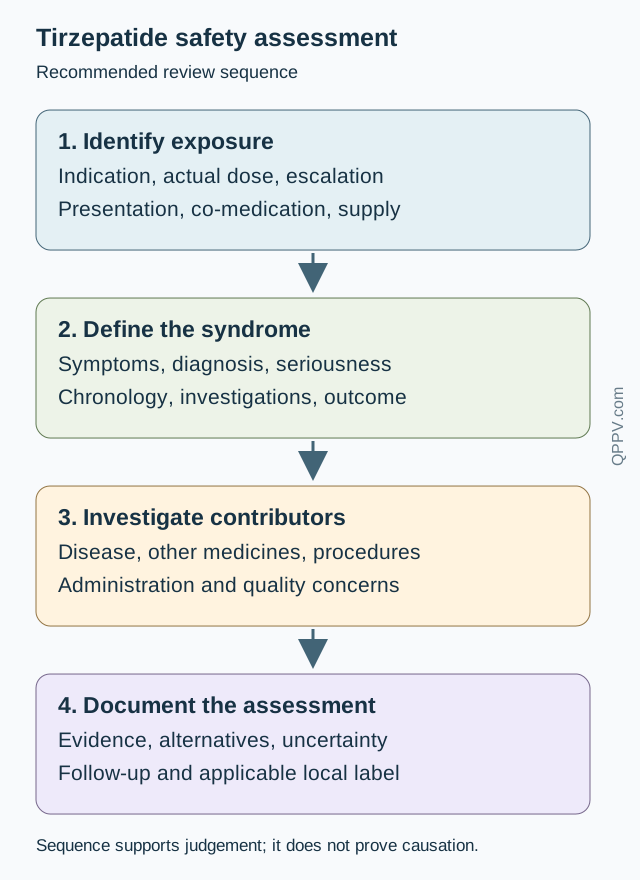
Figure 1. A recommended pharmacovigilance reasoning sequence. Identify the actual exposure before interpreting the syndrome; investigate relevant alternatives before reaching an assessment. The arrows indicate review sequence, not proof of causation or a regulatory reporting algorithm.
Gastrointestinal intolerance, fluid depletion and hypoglycaemia
Gastrointestinal reactions are prominent in tirzepatide treatment. The current US diabetes prescribing information addresses severe gastrointestinal reactions, acute kidney injury associated with volume depletion, gallbladder disease, hypersensitivity, hypoglycaemia with insulin or insulin secretagogues, and retinopathy-related monitoring. It also describes post-marketing reports, whose voluntary nature limits frequency estimation and causal inference. [14]
These concerns require different follow-up questions. In a vomiting report, the useful chronology includes initiation, the last escalation, duration of symptoms, oral intake and subsequent renal findings. In hypoglycaemia, the concomitant insulin or secretagogue regimen is central. A case narrative that records only “nausea” or “low glucose” may conceal the medically important consequence or the treatment interaction.
This is a recommended review approach, not a claim that every gastrointestinal reaction requires extensive investigation. Follow-up should be proportionate to seriousness and clinical uncertainty. Persistent vomiting with hospitalisation calls for a different depth of reconstruction from brief nausea without functional consequences.
Pancreatitis and abdominal syndromes
The MHRA strengthened class warnings in January 2026 to emphasise severe acute pancreatitis, including necrotising and fatal cases. This communication concerns GLP-1 and dual GIP/GLP-1 agonists; its aggregate spontaneous reports should not be converted into a tirzepatide-specific incidence estimate. [16]
For an abdominal-pain report, recommended follow-up should establish the diagnosis rather than replace it with an assumed class reaction. Clinical assessment, relevant investigations, symptom timing, other medicines, alcohol exposure and biliary disease can alter interpretation. An isolated laboratory abnormality is not interchangeable with a clinically confirmed syndrome. The record should preserve the reporter's diagnosis and distinguish it from the company's medical assessment.
Delayed gastric emptying and procedural aspiration
The MHRA's January 2025 communication describes residual gastric contents and potential aspiration during general anaesthesia or deep sedation, including when routine fasting instructions have been followed. It also explains the limited evidence for prescribing a universal interruption interval and the need for individualised anaesthetic assessment. A blanket instruction to stop tirzepatide for a fixed period should therefore not be presented as a universal regulatory rule. [17]
For pharmacovigilance, the procedure belongs in the causal chronology. Useful details include the last dose, escalation status, gastrointestinal symptoms, fasting history, anaesthetic technique, observed regurgitation, aspiration diagnosis and clinical outcome. These details help distinguish retained gastric contents, a procedural complication and an assumed drug mechanism. They also prevent loss of the anaesthesia interface when reports arrive through a diabetes or weight-management service.
Thyroid findings and changing psychiatric warnings
The US weight-management prescribing information retains a boxed warning concerning thyroid C-cell tumours observed in rats. Human relevance remains unknown; the warning must not be paraphrased as proof that tirzepatide causes human medullary thyroid carcinoma. The US contraindications include a personal or family history of medullary thyroid carcinoma and multiple endocrine neoplasia syndrome type 2. The same label also addresses severe gastrointestinal reactions, hypersensitivity, gallbladder disease, hypoglycaemia, renal injury and retinopathy complications. [18]
Safety writing must also track conclusions that change. In January 2026, FDA requested removal of the suicidal behaviour and ideation warning from the affected weight-management labels after its review did not identify increased risk. The current tirzepatide weight-management label records removal of that warning in February 2026. Historical approval announcements still contain earlier wording and cannot establish the present warning status. [18,19]
Removal of a warning is not an instruction to discard psychiatric adverse-event reports. The operational response is to continue appropriate case handling while using current evidence in causality, expectedness and aggregate interpretation. The reporting question and the current strength of evidence are related, but they are not identical.
Reproductive exposure, oral medicines and regional differences
Tirzepatide illustrates why global safety documents should preserve local wording. US prescribing information advises switching to a non-oral contraceptive or adding a barrier method for four weeks after initiation and after each dose increase. MHRA advice likewise emphasises additional contraceptive precautions. The reviewed EU SmPC states that the observed oral-contraceptive exposure reduction does not require dose adjustment. These positions should be described as jurisdiction-specific advice rather than reconciled into an invented universal requirement. [12,14,20]
The current EU information recommends contraception, advises against use during pregnancy and specifies discontinuation at least one month before a planned pregnancy. Its lactation wording has evolved and should not be replaced by an automatic, unsupported absolute contraindication. For practice, consult the current local document and individual clinical assessment. [12]
A recommended pregnancy follow-up dataset includes gestational dating, exposure dates, dose changes, indication, maternal disease and concomitant medicines, followed by the pregnancy and infant outcomes that become available. When contraceptive failure is reported, identify the method, adherence, gastrointestinal illness and timing relative to treatment changes. These are questions for investigating the report, not grounds for assuming that tirzepatide caused a pregnancy or an adverse outcome.
Practical pharmacovigilance across expanding use
The scientific active-substance name should anchor literature searches and cross-product aggregation, while the underlying record retains product identity. Ingredient-level analysis and presentation-level traceability serve complementary purposes. Combining them avoids both fragmentation by brand and loss of clinically meaningful exposure detail.
For the general case-writing method, see How to Write an ICSR Case Narrative. Assessment of the governing reference document is explained in Listedness, Expectedness and Reference Safety Information.
Product identity, administration and source of supply
FDA has described concerns with unapproved semaglutide and tirzepatide products, including doses or titration beyond approved instructions. Such products have not undergone the same premarketing review as approved medicines. These concerns do not justify treating all reports as manufacturing defects, nor assuming that an event involving a compounded preparation arose from the authorised manufacturer's product. [21]
Recommended follow-up should distinguish the prescribed dose from the amount actually administered. Record strength, concentration where relevant, device or vial, dosing interval, dispensing source and any available batch information. A volume without a concentration may be insufficient to reconstruct exposure. Conversely, uncertain authenticity should be documented as uncertainty rather than converted into a confirmed counterfeit diagnosis.
Where a suspected quality problem accompanies an adverse event, coordinate the quality complaint and safety assessment without allowing one process to replace the other. The source information may be shared, but the clinical question, investigation and decision trail remain distinct.
Clinical reconstruction and learning examples
A useful case narrative explains what happened over time, what evidence supports the diagnosis, and which factors remain uncertain. It should avoid replacing the actual presentation with a generic list of labelled adverse reactions.
| Illustrative scenario | Information that could change interpretation |
|---|---|
| Hospitalisation after vomiting following an increase in dose | Actual administered dose, interval, fluid intake, renal baseline, laboratory course and alternative illness |
| Hypoglycaemia in a person also using insulin | Insulin adjustments, glucose documentation, food intake, renal function and the timing of both treatments |
| Suspected pancreatitis during weight management | Diagnostic basis, onset, biliary assessment, alcohol and medicine history, treatment withdrawal and outcome |
| Aspiration during a procedure | Anaesthetic record, fasting, last dose, gastrointestinal symptoms and confirmation of the pulmonary complication |
| Pregnancy reported during oral-contraceptive use | Exposure and gestational dates, contraceptive history, gastrointestinal illness and applicable local advice |
These are hypothetical teaching scenarios, not published inspection findings or claims about observed frequencies. Their purpose is to show why medically specific follow-up is more useful than simply counting reports under a broad term.
The same discipline applies to apparent lack of effect. Establish the indication, baseline condition, duration, adherence and actual administration before interpreting a report as pharmacological failure. An expectation derived from an average trial weight reduction is not a diagnostic threshold for individual treatment failure.
Aggregate assessment and evidence limitations
For recommended aggregate review, separate indication, baseline diabetes, age, relevant co-medication and treatment phase when the data support it. Changes in report volume may reflect expanded use, publicity, a new presentation or improved reporting as well as a changing risk. These are competing explanations to examine, not reasons to dismiss a signal.
Clinical trials and spontaneous reports contribute differently. Randomisation supports particular comparative questions; restricted eligibility and follow-up limit generalisation. Spontaneous reports can identify clinically important patterns but usually cannot provide reliable incidence without additional exposure and ascertainment information. Sales revenue is particularly unsuitable as a substitute for numbers of exposed patients or treatment duration.
The outcome studies also illustrate the importance of specifying the endpoint. SURPASS-CVOT supports noninferiority against dulaglutide for its primary composite, while SUMMIT addresses a distinct heart-failure population and composite. Neither result removes the need to investigate an individual cardiovascular event, and neither warrants a general statement that all cardiovascular risks have been excluded. [8,9]
Regulatory governance and inspection considerations
In the EU, the marketing-authorisation conditions specify RMP activities and PSUR submission according to the applicable framework. These are authorisation obligations. A suggested internal case-review checklist is operational practice; it should not be described as an additional legal requirement. Current product information, the agreed RMP and applicable regional procedures should govern implementation. [12]
An illustrative inspection review could trace a safety-information change from its source assessment through impact review, local implementation, communication and version-controlled safety reference documents. It could also examine whether staff can distinguish ingredient-level aggregation from brand and presentation attribution. These are potential inspection questions, not a report that an authority has found a deficiency.
A proportionate governance review could ask:
- Can the team identify the local product information applicable to the case date and country?
- Are actual dose and presentation reconstructed when an administration problem is suspected?
- Do serious gastrointestinal cases receive medically appropriate follow-up?
- Are anaesthesia, pregnancy and product-quality interfaces represented in procedures and reconciliation?
- Can aggregate conclusions be traced to the underlying evidence and its limitations?
- Are historical warnings distinguished from current regulatory conclusions?
The purpose is to demonstrate that important safety information can travel through the system without losing its clinical context. Useful evidence includes reviewed source documents, documented medical assessments, traceable follow-up decisions and records of implemented changes. A procedure alone does not show that these activities occurred.
Key Takeaways
Tirzepatide developed from a single dual-receptor peptide into a medicine studied across diabetes, obesity and associated complications. Each expansion adds evidence while changing the population and practical setting in which safety must be understood.
Its pharmacovigilance requires accurate exposure reconstruction, recognition of serious consequences within familiar gastrointestinal presentations, and attention to co-medication, procedures and reproductive exposure. Regional advice can differ, and historical safety wording can become outdated. Sound assessment therefore combines INN-based aggregation with product-specific traceability, current regulatory documents and explicit limits on causal interpretation.
References
- Coskun T, Sloop KW, Loghin C, et al. LY3298176, a novel dual GIP and GLP-1 receptor agonist for the treatment of type 2 diabetes mellitus: from discovery to clinical proof of concept. Molecular Metabolism. 2018;18:3–14. doi:10.1016/j.molmet.2018.09.009.
- EMA. Original public assessment report for tirzepatide, EMA/791310/2022. Historical approval assessment.
- Frías JP, Davies MJ, Rosenstock J, et al. Tirzepatide versus semaglutide once weekly in patients with type 2 diabetes. New England Journal of Medicine. 2021. doi:10.1056/NEJMoa2107519.
- Jastreboff AM, Aronne LJ, Ahmad NN, et al. Tirzepatide once weekly for the treatment of obesity. New England Journal of Medicine. 2022. doi:10.1056/NEJMoa2206038.
- Aronne LJ, Sattar N, Horn DB, et al. Continued treatment with tirzepatide for maintenance of weight reduction in adults with obesity: the SURMOUNT-4 randomized clinical trial. JAMA. 2024;331:38–48. doi:10.1001/jama.2023.24945.
- SURMOUNT-5 investigators. Tirzepatide as compared with semaglutide for the treatment of obesity. New England Journal of Medicine. 2025. doi:10.1056/NEJMoa2416394.
- Malhotra A, Grunstein RR, Fietze I, et al. Tirzepatide for the treatment of obstructive sleep apnea and obesity. New England Journal of Medicine. 2024;391:1193–1205. doi:10.1056/NEJMoa2404881. A published erratum is indexed with the original paper; detailed OSA efficacy estimates are not reproduced in this article.
- Packer M, Zile MR, Kramer CM, et al. Tirzepatide for heart failure with preserved ejection fraction and obesity. New England Journal of Medicine. 2025;392:427–437. doi:10.1056/NEJMoa2410027.
- Nicholls SJ, Pavo I, Bhatt DL, et al. Cardiovascular outcomes with tirzepatide versus dulaglutide in type 2 diabetes. New England Journal of Medicine. 2025;393:2409–2420. doi:10.1056/NEJMoa2505928.
- FDA. First medication approval for obstructive sleep apnoea. 20 December 2024. Historical approval announcement.
- EMA. Tirzepatide EPAR and authorisation history.
- EMA. Current EU tirzepatide product information, including SmPC and authorisation conditions. Reviewed 17 October 2026.
- FDA. Approval for chronic weight management. 8 November 2023.
- Eli Lilly. Current US prescribing information for the tirzepatide diabetes product. Reviewed 17 October 2026.
- Eli Lilly. 2025 sales and earnings disclosure filed with SEC.
- MHRA. Strengthened warnings on acute pancreatitis, including necrotising and fatal cases. January 2026.
- MHRA. Potential risk of pulmonary aspiration during general anaesthesia or deep sedation. January 2025.
- DailyMed. Current US prescribing information for the tirzepatide weight-management and obstructive-sleep-apnoea product. Revised August 2026.
- FDA. Request to remove suicidal behaviour and ideation warnings from affected GLP-1 medicines. 13 January 2026.
- MHRA. GLP-1 medicines for weight loss and diabetes: what you need to know. Updated February 2026.
- FDA. Concerns with unapproved GLP-1 drugs used for weight loss.
Regulatory Note
This educational reference distinguishes published clinical evidence, current regional product information and recommended pharmacovigilance practice. It is not an individual prescribing recommendation or a replacement for the current local label, agreed RMP or applicable reporting requirements. Authorisations, presentations and safety wording can change; consult the source documents for the relevant jurisdiction and date.