Tisotumab Vedotin: Classification, Mechanism, Safety and Pharmacovigilance
Tisotumab vedotin is an antibody-drug conjugate (ADC) directed against tissue factor, a transmembrane glycoprotein involved physiologically in initiation of coagulation and expressed at high levels in several malignancies. It combines target recognition with the microtubule-disrupting payload monomethyl auristatin E (MMAE).
- Tisotumab Vedotin: Classification, Mechanism, Safety and Pharmacovigilance
- Classification and therapeutic role
- Mechanism of action
- Why ocular toxicity is a defining PV issue
- Development and regulatory context
- Major safety domains
- The eye-care protocol as a risk-control system
- Case attribution in advanced cervical cancer
- Pharmacovigilance implementation
- Illustrative failure modes
- Inspection and governance considerations
- Practical checklist
- Key Takeaways
- References
- Regulatory Note
Classification and therapeutic role
Tisotumab vedotin belongs to the vedotin ADC family, but its safety profile cannot be inferred from other MMAE-containing ADCs alone. Tissue-factor biology, cervical-cancer disease context and the medicine's pronounced ocular-risk profile create a distinct pharmacovigilance problem.
The medicine is authorised in the EU as monotherapy for adults with recurrent or metastatic cervical cancer whose disease has progressed on or after systemic therapy. It is under additional monitoring in the EU.
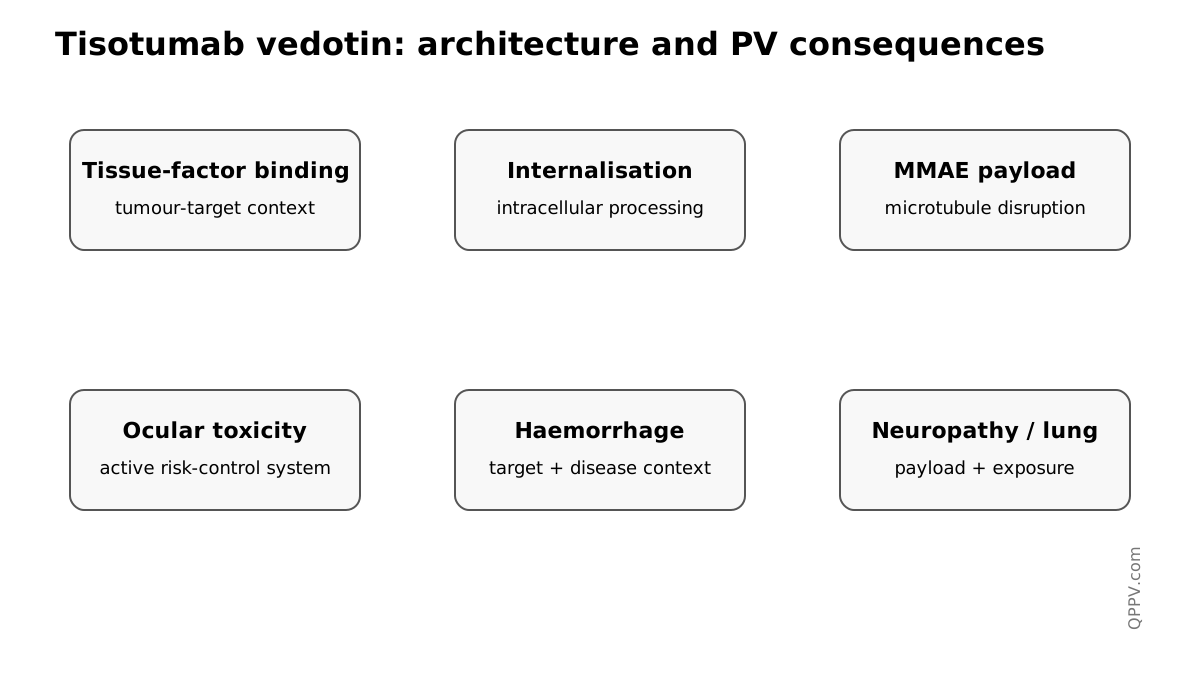
Figure 1. Tisotumab vedotin combines tissue-factor targeting with an MMAE payload; target context, payload toxicity and route-specific ocular exposure jointly determine the safety profile.
Mechanism of action
The antibody component binds tissue factor on tumour cells. The ADC is internalised and processed intracellularly, releasing MMAE. MMAE binds tubulin, interferes with microtubule dynamics and arrests dividing cells. Additional mechanisms described for tissue-factor-directed ADC activity may include antibody-dependent effector functions, but cytotoxic payload delivery is central to the clinical mechanism.
Why ocular toxicity is a defining PV issue
Ocular adverse reactions are sufficiently important that administration is accompanied by a structured eye-care approach. The pharmacovigilance consequence is that a report of “eye irritation” is usually inadequate. Meaningful assessment requires the specific diagnosis or examination finding, laterality, corneal involvement, visual symptoms, timing, prophylactic measures used, contact-lens status where relevant, treatment interruption and ophthalmic management.
The product therefore illustrates a broader PV principle: when risk minimisation depends on a procedure performed around every dose, surveillance must assess both the adverse event and whether the preventive procedure was followed.
Development and regulatory context
EU authorisation in 2025 brought the medicine into a setting with substantial prior systemic treatment and disease-related morbidity. Current product information updated in 2026 provides the regulatory baseline for ocular precautions, dose modification and other safety management.
Major safety domains
Ocular adverse reactions
The ocular spectrum includes conjunctival, corneal and other eye-surface events. Case follow-up should identify the exact clinical finding rather than rely on a symptom label. Useful details include baseline eye disease, ophthalmic examination, visual acuity change, corneal staining or keratitis, dose-cycle timing, prophylactic eye drops, cold-pack use, treatment interruption and recovery.
Haemorrhage
Bleeding is clinically important because the target itself is tissue factor and because patients may have tumour-related, treatment-related or concomitant-drug bleeding risks. Reports should capture bleeding site, severity, platelet count, anticoagulant/antiplatelet exposure, tumour involvement, procedures and transfusion or haemostatic treatment.
Peripheral neuropathy
MMAE-related microtubule disruption can produce cumulative sensory or motor neuropathy. Baseline neuropathy, prior neurotoxic chemotherapy, cumulative exposure, functional impairment and reversibility are central to interpretation.
Pulmonary toxicity
New dyspnoea, cough or hypoxia requires evaluation for pneumonitis/interstitial lung disease, infection, tumour progression, pulmonary embolism and other competing causes. Imaging and treatment response materially improve case assessment.
Infusion and administration-related events
Infusion reactions, extravasation and preparation errors should be linked to dose, cycle, administration sequence and local management. Because ocular prophylaxis is part of the administration process, failures in preventive measures should also be captured as process information rather than treated only as background detail.
The eye-care protocol as a risk-control system
The practical risk-control sequence can include eye examination and specified prophylactic measures around infusion according to the current local product information. From a PV perspective, the important question is not merely whether an eye event occurred, but whether the control system was implemented correctly and whether the event occurred despite appropriate implementation.
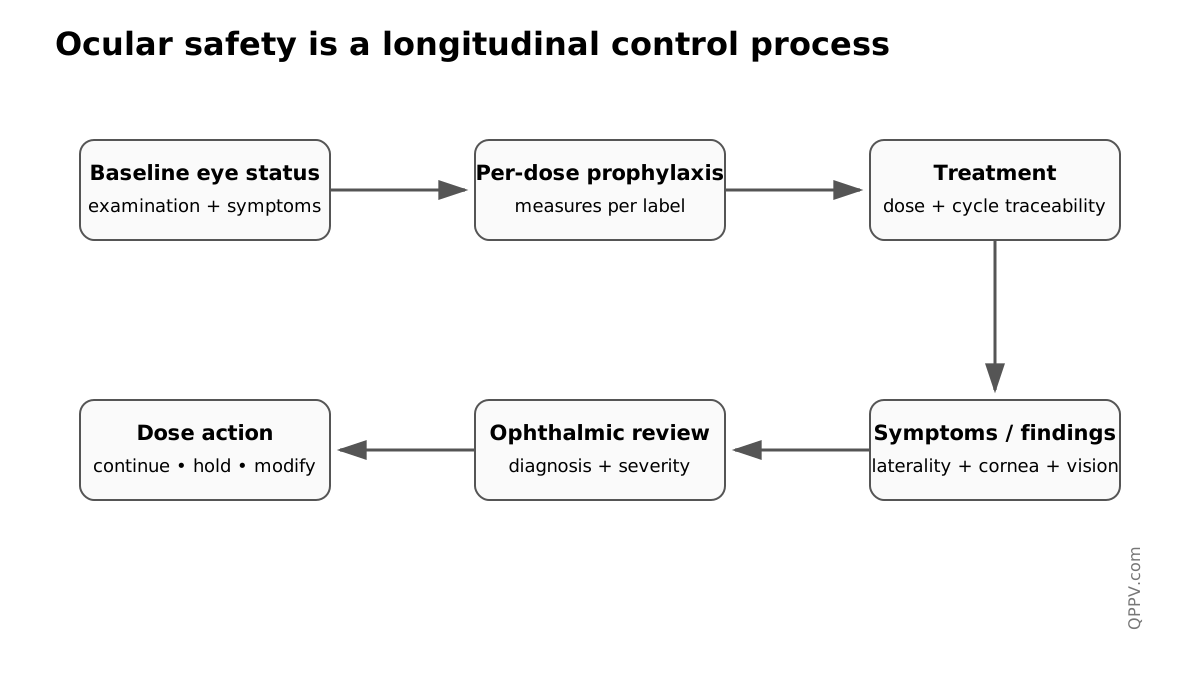
Figure 2. Ocular safety surveillance links baseline assessment, per-dose preventive measures, symptom recognition, ophthalmic evaluation and dose action into one longitudinal control loop.
Case attribution in advanced cervical cancer
Advanced cervical cancer itself can produce bleeding, infection and pelvic complications, while prior systemic therapy may contribute neuropathy or marrow dysfunction. A good causality assessment therefore reconstructs baseline disease burden and prior treatment rather than assuming every event after infusion is drug-related.
Pharmacovigilance implementation
A high-quality case report should capture indication, dose and cycle, cumulative exposure, previous neurotoxic treatment, baseline ophthalmic status, prophylactic eye measures, bleeding risk factors, event phenotype, investigations, management and outcome. For eye events, the examination finding is usually more informative than the symptom term alone.
Aggregate review should distinguish ocular-event subtypes, serious bleeding sites, neuropathy progression and pulmonary events. Rates or reporting proportions should not be compared across periods without considering exposure growth, indication expansion and stimulated reporting under additional monitoring.
Illustrative failure modes
An illustrative failure mode is an ocular report that records only “red eye” without corneal examination or information on prophylactic measures. Another is a vaginal-bleeding report without tumour status, platelet count or anticoagulant exposure. A third is cumulative neuropathy assessed without prior taxane or platinum exposure.
These are examples of information-quality problems, not descriptions of actual inspection findings.
Inspection and governance considerations
An inspector could examine whether ocular follow-up questions map to the risk-minimisation process, whether deviations from preventive eye measures are captured, whether haemorrhage cases include competing disease causes and whether neurological follow-up supports cumulative-dose assessment. Governance should connect safety review with medical information, clinical operations and product-quality functions when administration or packaging errors are involved.
Practical checklist
- Record the exact ocular diagnosis and laterality.
- Confirm whether prescribed eye-risk controls were implemented.
- Capture dose, cycle and cumulative exposure.
- Characterise bleeding site, severity and competing causes.
- Document baseline and evolving neuropathy.
- Investigate respiratory events for infection, progression and ILD/pneumonitis.
- Preserve product/batch traceability where available.
Key Takeaways
Tisotumab vedotin is not simply another MMAE ADC. Its PV profile is defined by the interaction between tissue-factor biology, cytotoxic payload exposure and a highly operational ocular-risk programme. Effective surveillance therefore follows both clinical events and the performance of the preventive process around each dose.
References
- European Medicines Agency. Tivdak (tisotumab vedotin): EPAR and product information. Product information updated 5 June 2026.
- European Medicines Agency. Tivdak: European public assessment report. 2025.
- Coleman RL, et al. Tisotumab vedotin in recurrent or metastatic cervical cancer. Lancet Oncology. 2021.
- Vergote I, et al. Tisotumab vedotin compared with investigator's choice chemotherapy in recurrent or metastatic cervical cancer. New England Journal of Medicine. 2024.
Regulatory Note
Ocular precautions, required examinations, prophylactic measures, contraindications and dose modifications must be taken from the current locally applicable product information. This article explains the pharmacovigilance logic and does not replace the prescribing information.