Tixagevimab and Cilgavimab: Classification, History, Mechanism, Safety and Pharmacovigilance
Tixagevimab and cilgavimab are two monoclonal antibodies used together to neutralise SARS-CoV-2. Each binds a different, non-overlapping region of the spike-protein receptor-binding domain (RBD). By preventing productive interaction between spike and the human ACE2 receptor, the pair can block viral entry into susceptible cells.
The combination is particularly instructive for pharmacovigilance because its benefit-risk profile depended on a moving biological target. The antibodies themselves did not need to change for effectiveness to decline: mutations in circulating SARS-CoV-2 variants changed the structure of spike sufficiently that later variants became poorly susceptible. Clinical usefulness therefore became linked to contemporary virology, not merely to the safety and efficacy demonstrated when the product was first authorised.
The combination is now historical in major Western jurisdictions. Its U.S. emergency use authorisation was revoked in December 2024 after it had already ceased to be authorised for use because non-susceptible variants dominated circulation. The EU marketing authorisation was withdrawn in September 2025 at the marketing-authorisation holder's request for commercial reasons. These are different regulatory histories and should not be collapsed into a single statement that the product was “withdrawn because it was unsafe.”
- Tixagevimab and Cilgavimab: Classification, History, Mechanism, Safety and Pharmacovigilance
- Multidimensional classification
- Why two antibodies were combined
- Mechanism of action
- Development and regulatory lifecycle
- Effectiveness is a relationship between antibody and variant
- Breakthrough COVID-19 and lack-of-efficacy assessment
- Safety architecture
- Viral resistance and surveillance
- Product pharmacovigilance in a rapidly changing pandemic
- Aggregate benefit-risk assessment
- Potential failure modes
- Inspection and governance perspective
- Practical checklist
- Key Takeaways
- References
- Regulatory Note
Multidimensional classification
| Classification axis | Tixagevimab + cilgavimab | Pharmacovigilance significance |
|---|---|---|
| Molecular format | Pair of long-acting monoclonal antibodies | Both active substances and administered doses belong in the exposure record |
| Viral target | Non-overlapping epitopes on SARS-CoV-2 spike RBD | Combination design reduces reliance on one binding site but does not prevent variant escape |
| Functional class | Virus-neutralising passive immunotherapy | Provides immediate antibody activity rather than inducing host immune memory |
| Principal historical use | Pre-exposure prophylaxis of COVID-19, with treatment authorised in the EU during part of the lifecycle | Indication and jurisdiction must be time-stamped |
| Administration | Two sequential intramuscular injections in the principal prophylaxis regimen | Injection chronology and administration-site reactions are relevant |
| Distinctive effectiveness variable | Susceptibility of circulating SARS-CoV-2 variants | Benefit can change without any change to product quality or patient adherence |
| Current lifecycle status | U.S. EUA revoked; EU marketing authorisation withdrawn | Historical cases must be interpreted against the regulatory status at the time of exposure |
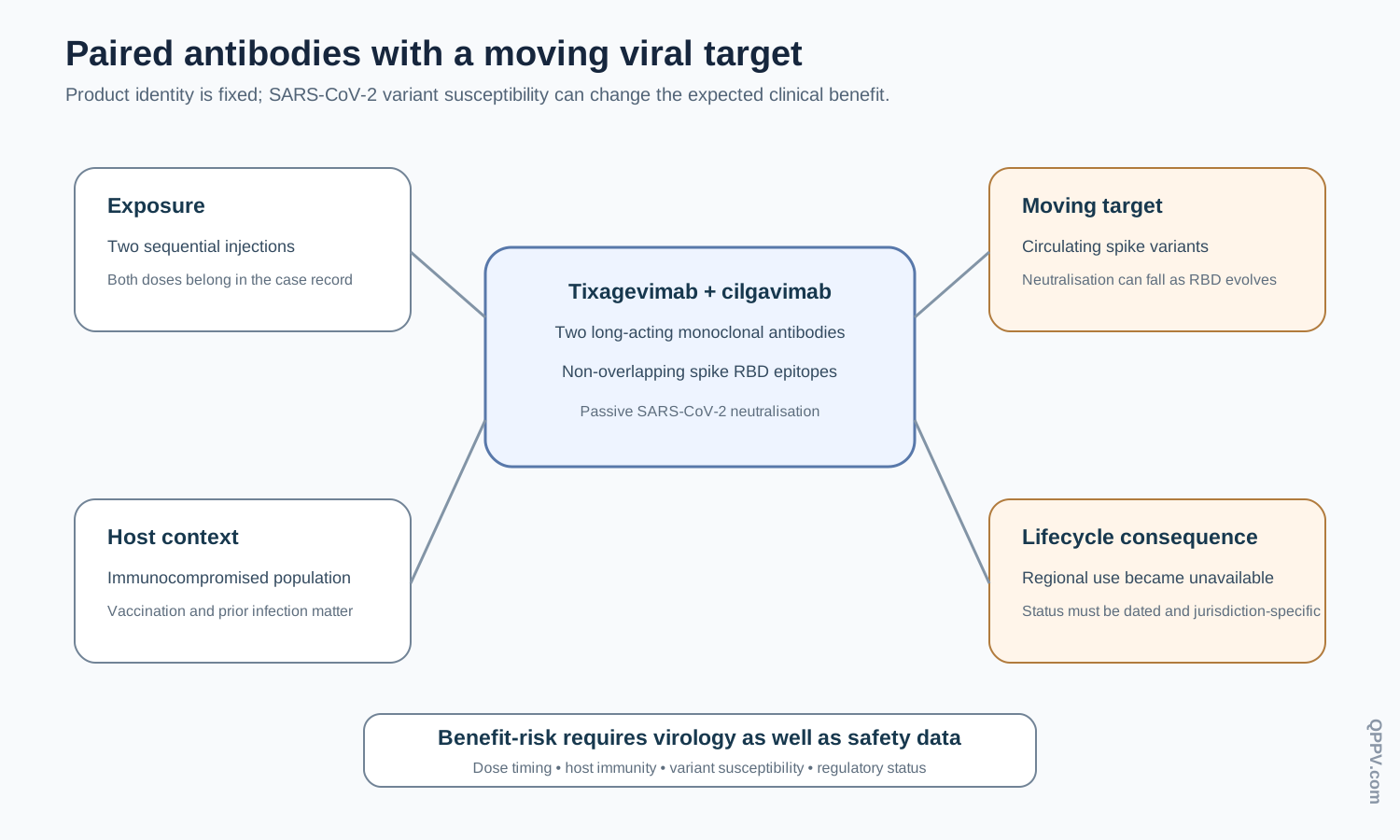
Figure 1. The combination is defined not only by two antibodies and one viral target, but by a third moving dimension: the susceptibility of the circulating SARS-CoV-2 variant.
Why two antibodies were combined
A single neutralising antibody places strong dependence on one viral epitope. Tixagevimab and cilgavimab bind different regions of the RBD, allowing simultaneous engagement of spike. This was intended to provide potent neutralisation and make loss of activity less likely to result from a single target-site change.
The logic resembles using two independent locks on the same entry mechanism. Both antibodies interfere with the spike-ACE2 interaction, but they approach the viral surface from different binding sites. The design reduces one form of vulnerability; it does not make the combination evolution-proof because a variant can accumulate multiple structural changes across the RBD.
Mechanism of action
SARS-CoV-2 uses the spike glycoprotein to attach to ACE2 and enter host cells. The RBD is the portion of spike that directly engages the receptor. Tixagevimab and cilgavimab bind non-overlapping RBD epitopes and sterically interfere with this interaction. When the antibodies retain adequate affinity for a circulating variant, they can neutralise virus before cell entry.
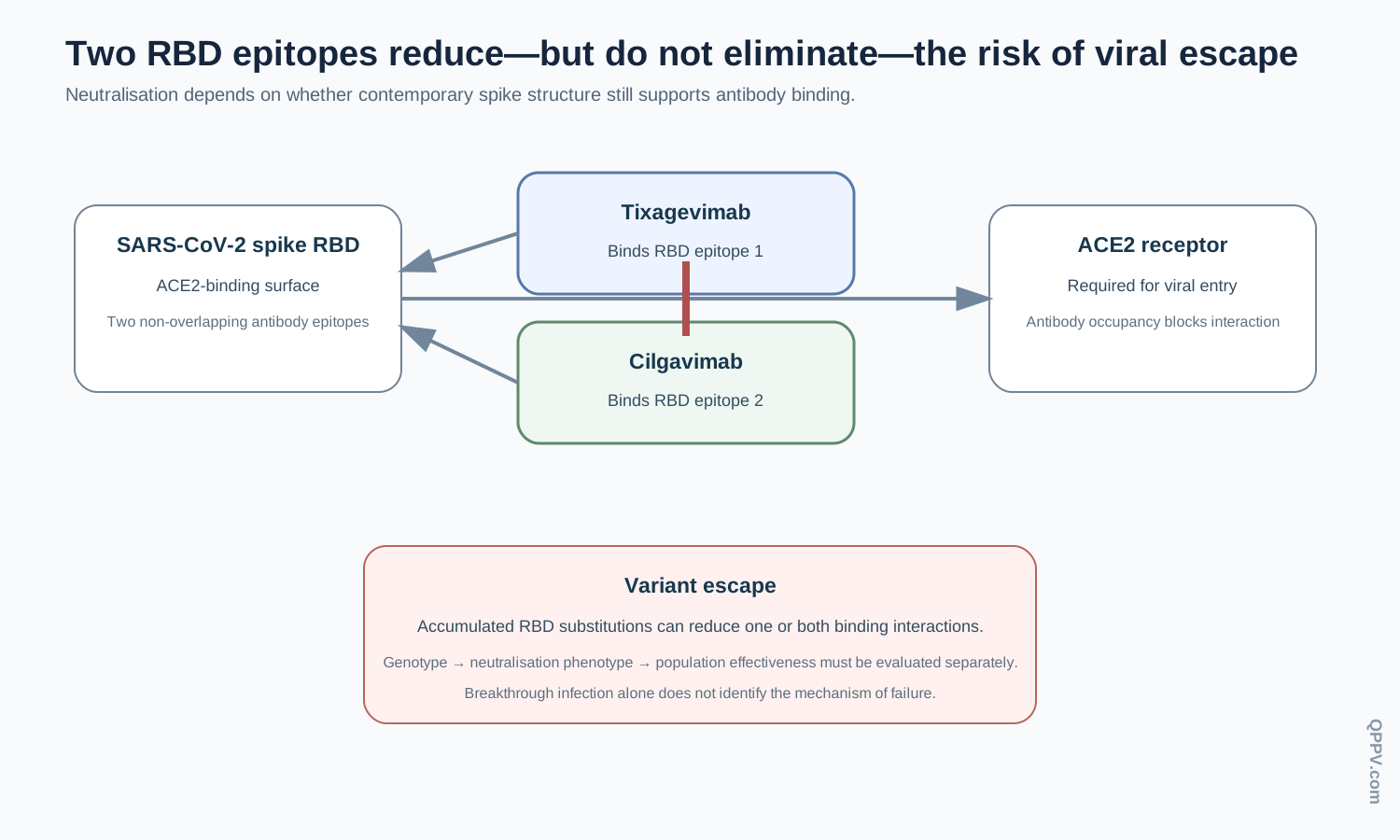
Figure 2. Tixagevimab and cilgavimab bind different RBD epitopes and block spike-ACE2 interaction. Accumulated spike mutations can reduce binding and neutralisation, converting viral evolution into an effectiveness variable.
The key qualification is that mechanism is sequence-dependent. “Binds SARS-CoV-2 spike” is not a permanent binary property across all future variants. Neutralisation assays must test the actual or representative spike sequences of circulating lineages, and clinical effectiveness depends on whether laboratory susceptibility translates into protection in the population being treated.
Development and regulatory lifecycle
The U.S. FDA issued an Emergency Use Authorization for the co-packaged antibodies on 8 December 2021 for pre-exposure prophylaxis in defined individuals. As variant prevalence changed, FDA repeatedly updated the authorised conditions. By January 2023, variants predicted to be non-susceptible accounted for more than 90% of circulating SARS-CoV-2 nationally, and the product was no longer authorised for use in any U.S. region. The EUA itself was formally revoked on 13 December 2024 after a request noting that distributed lots had expired and the product would no longer be offered under the EUA.
The European Union granted a marketing authorisation on 25 March 2022. The authorised lifecycle included prevention and, after a later variation, treatment of COVID-19 under defined conditions. On 12 September 2025, the European Commission withdrew the marketing authorisation at the holder's request following a decision to discontinue marketing for commercial reasons.
These histories illustrate why regulatory-status statements require a date and jurisdiction. “Not authorised because variants were resistant,” “EUA revoked,” and “EU marketing authorisation withdrawn for commercial reasons” describe different events.
Effectiveness is a relationship between antibody and variant
For most monoclonal-antibody products, lack of efficacy is assessed principally through patient exposure, disease biology and the target pathway. Antiviral monoclonal antibodies add another layer: the target itself evolves in the population. A breakthrough infection can therefore arise even after correctly prepared, correctly administered and pharmacokinetically adequate treatment if the infecting virus is no longer susceptible.
This creates three distinct evidence levels that should not be confused. Genotypic evidence describes spike substitutions. Phenotypic evidence measures neutralisation in laboratory assays. Clinical evidence asks whether treated individuals remain protected from infection or severe disease. A mutation associated with reduced neutralisation is biologically relevant, but the magnitude of clinical impact depends on exposure, host factors, circulating lineage prevalence and the endpoint being assessed.
Breakthrough COVID-19 and lack-of-efficacy assessment
A useful case reconstruction includes the date and dose of each antibody, reason for prophylaxis, immune status, vaccination and prior infection history, date of SARS-CoV-2 exposure or symptom onset, diagnostic test, severity, treatment, hospitalisation and outcome. Where available, sequencing or credible epidemiological inference about the circulating variant materially strengthens interpretation.
The timing matters. A breakthrough infection shortly after dosing during circulation of a susceptible lineage raises different questions from infection months later during dominance of a resistant lineage. Waning antibody concentration, profound immunosuppression and variant escape can coexist; pharmacovigilance should not force one explanation before the evidence is assembled.
“Treatment failure” also differs from “infection after prophylaxis”. Passive prophylaxis reduces risk; it does not create sterilising immunity in every recipient. A case series therefore requires an appropriate denominator and contemporaneous variant context before changes in reporting frequency are interpreted as a signal of reduced effectiveness.
Safety architecture
Hypersensitivity and administration reactions
The combination was administered as separate sequential intramuscular injections in its principal prophylaxis use. Immediate hypersensitivity and local administration-site events require dose-specific chronology because two active substances were given during the same visit. Reports should capture which injection was administered first, injection sites, onset after each administration, clinical features, treatment and subsequent outcome.
Cardiovascular and thromboembolic events
Clinical development identified a numerical imbalance in serious cardiovascular adverse events in the prophylaxis programme. Many affected participants had cardiovascular risk factors, and a causal relationship to the antibodies was not established. This is a useful pharmacovigilance example of why a numerical imbalance should not be converted automatically into a labelled causal mechanism.
For myocardial infarction, arrhythmia, heart failure, stroke or thromboembolic events, case assessment should preserve baseline cardiovascular disease, age, smoking, metabolic risk, immobility, acute COVID-19, concomitant medicines and event timing. COVID-19 itself is prothrombotic and can precipitate cardiovascular complications, making infection status an important competing factor.
Interaction with vaccination and passive immunity
Tixagevimab/cilgavimab supplied exogenous antibodies; it did not train the immune system to produce durable memory in the way vaccination does. A recipient could therefore be vaccinated and also receive passive prophylaxis. Pharmacovigilance records should not treat those exposures as interchangeable or assume that use of the antibody pair implies vaccine failure.
Viral resistance and surveillance
Resistance surveillance was not a conventional adverse-reaction activity. It was part of maintaining confidence that the product still had benefit. Genotypic and phenotypic testing, together with population variant surveillance, informed whether the antibodies were likely to neutralise contemporary virus.
This distinction matters for governance. A pharmacovigilance system may have a stable rate of hypersensitivity and other adverse reactions while the overall benefit-risk balance deteriorates because the virus has escaped. The benefit side therefore requires active linkage between clinical safety functions, virology, epidemiology and regulatory intelligence.
Product pharmacovigilance in a rapidly changing pandemic
Case interpretation should always use the product information and regulatory status that applied at the time of exposure. A 2022 case occurred in a different variant and authorisation environment from a 2023 case, even if both are coded with the same drug name and COVID-19 term.
High-value variables include:
| Domain | Information to preserve |
|---|---|
| Exposure | Both active substances, doses, date, administration route and sites |
| Patient susceptibility | Immunocompromising condition, immunosuppressants, age and comorbidity |
| Background immunity | Vaccination dates, prior infection and prior passive-antibody exposure |
| Breakthrough infection | Symptom onset, test date, severity, treatment and outcome |
| Viral context | Sequence where available, or dominant regional variant at the relevant date |
| Regulatory context | Country, indication and authorisation status on the exposure date |
| Safety event | Latency, objective diagnosis and competing causes |
The combination also illustrates why spontaneous-report databases alone cannot determine antiviral effectiveness. Reporting intensity changes with media attention, testing availability, variant waves and clinical practice. Clinical trials, observational studies, laboratory neutralisation data and epidemiological surveillance must be integrated.
Aggregate benefit-risk assessment
The central aggregate question for tixagevimab/cilgavimab was not only whether new adverse reactions emerged, but whether the combination continued to neutralise the virus that patients were actually encountering. This makes the product a particularly clear example of effectiveness surveillance as part of benefit-risk management.
A meaningful periodic review would separate periods dominated by susceptible variants from periods dominated by reduced-susceptibility or resistant variants. Breakthrough infections should be interpreted against time since dosing, host immune status, vaccination, infection pressure and contemporaneous variant prevalence. Without that context, a rise in reported infections could reflect viral evolution, longer follow-up, increased community transmission or reporting changes rather than a new product defect.
Potential failure modes
The following are illustrative scenarios, not published inspection findings:
- A breakthrough infection is classified as product failure without recording the administration date or circulating variant.
- Tixagevimab and cilgavimab are entered as though they were interchangeable names for one active substance rather than a two-antibody combination.
- A 2022 exposure is assessed using the product's 2025 regulatory status instead of the status applicable at the time.
- The U.S. loss of authorisation during variant escape is described as a safety withdrawal.
- The later EU commercial withdrawal is described as proof that regulators found the product ineffective or unsafe.
- A myocardial infarction report is attributed mechanistically to the antibodies without cardiovascular history or COVID-19 status.
- Neutralisation loss in vitro is described as equivalent to a quantified clinical failure rate without supporting clinical evidence.
Inspection and governance perspective
A quality or regulatory reviewer could ask whether the safety system preserved both active-substance identities, whether breakthrough cases were linked to dosing and variant context, whether cardiovascular cases retained major confounders, and whether regulatory documents accurately represented regional lifecycle decisions.
The broader governance question is whether the organisation could integrate information that sits outside a conventional adverse-event database. Variant surveillance, neutralisation assays, public-health epidemiology and regulatory restrictions could materially alter the benefit side of the benefit-risk balance. A system that reviewed only adverse-reaction counts would therefore be incomplete for this product class.
Practical checklist
For a historical tixagevimab/cilgavimab case or aggregate analysis, confirm:
- both antibody names and administered doses;
- route, administration sites and exact dosing date;
- indication and jurisdiction applicable at the time;
- immunocompromising condition and relevant concomitant therapy;
- vaccination and prior SARS-CoV-2 infection history;
- breakthrough infection date, diagnostic evidence, severity and outcome;
- viral lineage or contemporaneous regional variant data where available;
- time from prophylaxis to infection;
- cardiovascular and thromboembolic risk factors for relevant events;
- hypersensitivity chronology relative to the two injections;
- the regulatory status in force when the exposure occurred.
Key Takeaways
Tixagevimab and cilgavimab were designed as a paired neutralising-antibody strategy against non-overlapping SARS-CoV-2 spike RBD epitopes. Their lifecycle demonstrates that antiviral monoclonal-antibody effectiveness is not fixed: viral evolution can materially alter target recognition while the manufactured product remains unchanged.
That makes variant susceptibility a benefit-risk variable. U.S. use became unavailable when non-susceptible variants predominated, and the EUA was subsequently revoked; the EU marketing authorisation was later withdrawn at the holder's request for commercial reasons. These events require precise historical description rather than a generic statement that the medicine was “withdrawn”.
References
- European Medicines Agency. Evusheld: EPAR. EU marketing authorisation issued 25 March 2022; marketing authorisation withdrawn 12 September 2025. https://www.ema.europa.eu/en/medicines/human/EPAR/evusheld. Accessed 15 September 2026.
- European Medicines Agency. Evusheld: Public Assessment Report and variation assessment reports. https://www.ema.europa.eu/en/medicines/human/EPAR/evusheld.
- European Medicines Agency. Evusheld assessment report: treatment variation. Mechanism and variant-susceptibility assessment for tixagevimab/cilgavimab. https://www.ema.europa.eu/en/documents/variation-report/evusheld-epar-assessment-report-variation_en.pdf.
- U.S. Food and Drug Administration. Emergency Use Authorization—Archived Information: Evusheld. EUA issued 8 December 2021; revoked 13 December 2024. https://www.fda.gov/emergency-preparedness-and-response/mcm-legal-regulatory-and-policy-framework/emergency-use-authorization-archived-information.
- U.S. Food and Drug Administration. Revocation of EUA 104 for Evusheld. 13 December 2024. https://www.fda.gov/media/184468/download.
- Levin MJ, Ustianowski A, De Wit S, et al. Intramuscular AZD7442 (tixagevimab-cilgavimab) for prevention of Covid-19. N Engl J Med. 2022;386:2188-2200. doi:10.1056/NEJMoa2116620.
- European Medicines Agency Emergency Task Force. Warning that monoclonal antibodies may not be effective against emerging SARS-CoV-2 strains. December 2022. Available through the Evusheld EPAR assessment history.
Regulatory Note
This is a historical pharmacovigilance reference. Tixagevimab/cilgavimab is not presented as a currently authorised COVID-19 prophylactic option in the United States or European Union as of September 2026. Historical indications, doses and regulatory restrictions changed during the pandemic. Any retrospective case assessment should use the product information, variant landscape and regulatory status applicable on the date of exposure.