Topical Bovine Thrombin: Haemostasis, Immunogenicity and Pharmacovigilance
Thrombin sits near the final common pathway of coagulation. It converts soluble fibrinogen into fibrin, helping transform a fluid blood phase into a stabilising clot. Applying thrombin directly to a bleeding surface therefore provides concentrated local enzymatic support when conventional surgical haemostasis is ineffective or impractical.
The apparent simplicity of topical use can obscure the product's most distinctive safety issue. Because the thrombin is bovine-derived, exposure can generate antibodies against bovine proteins. Some antibodies can cross-react with human coagulation factor V, producing systemic coagulopathy long after the original topical exposure.
- Topical Bovine Thrombin: Haemostasis, Immunogenicity and Pharmacovigilance
- Classification and Biological Origin
- Normal Thrombin Biology
- Why Bovine Origin Changes the Safety Model
- Severe Bleeding and Factor-V Inhibitors
- Thrombosis and Anti-Thrombin Antibodies
- Re-Exposure
- Wrong-Route and Preparation Errors
- Hypersensitivity
- Practical Pharmacovigilance Assessment
- Illustrative Failure Modes
- Inspection and Governance Considerations
- Key Takeaways
- References
- Regulatory Note
Classification and Biological Origin
The product is a topical bovine coagulation protein biological, not a systemic anticoagulant or replacement coagulation factor. It is used on accessible bleeding tissue as an aid to haemostasis.
Current FDA information includes powder presentations requiring reconstitution and a liquid presentation approved in April 2026. Route identity is critical: the medicine is for topical application to bleeding tissue and must not be injected.
Normal Thrombin Biology
The coagulation cascade generates human thrombin from prothrombin. Thrombin cleaves fibrinogen to fibrin and activates additional coagulation components, amplifying clot formation. In normal haemostasis, this occurs in a tightly localised and regulated manner.
Topical thrombin bypasses part of the upstream cascade by supplying active enzyme at the surface where fibrin formation is needed.
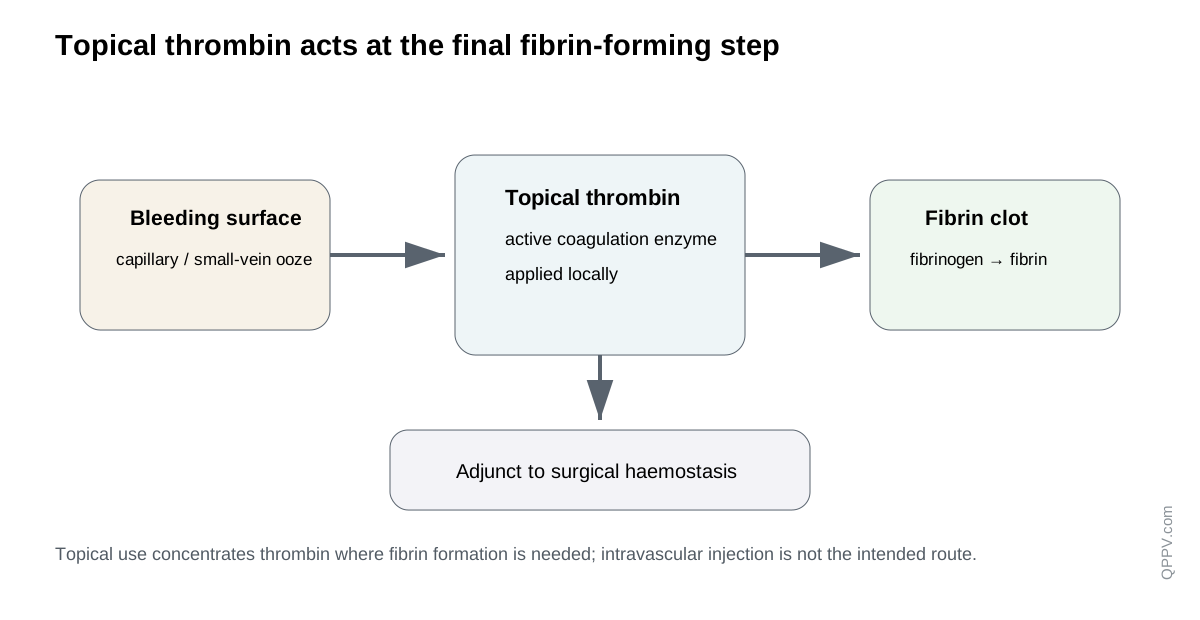
Figure 1. Topical thrombin acts at the fibrinogen-to-fibrin step on the bleeding surface, providing local haemostatic activity without replacing the patient's entire coagulation cascade.
Why Bovine Origin Changes the Safety Model
A therapeutic protein from another species is immunologically foreign. Antibodies may form against bovine thrombin and contaminating or associated bovine coagulation proteins. Of particular clinical importance, antibodies against bovine factor V can cross-react with human factor V.
Human factor V is an essential coagulation cofactor. Functionally important neutralisation can therefore impair thrombin generation and cause serious bleeding. The risk is mechanistically different from failure of the topical product to stop the original surgical ooze.
FDA's current prescribing information carries a boxed warning describing severe bleeding and thrombosis associated with antibody development and advises against re-exposure when antibodies to bovine thrombin and/or factor V are known or suspected.
Severe Bleeding and Factor-V Inhibitors
The most characteristic systemic adverse outcome is acquired coagulopathy caused by antibodies that interfere with human factor V. Clinical presentation may include unexpected postoperative bleeding, bruising, mucosal bleeding or laboratory abnormalities. Because the antibody response may emerge after the operation, the temporal link to a topical surgical product can be missed.
PV follow-up should therefore ask about prior surgical exposure, previous bovine thrombin use, onset relative to surgery, PT/INR and aPTT, mixing studies where performed, factor-V activity, inhibitor testing, transfusion or haemostatic treatment and outcome.
A prolonged PT/aPTT after surgery has many possible causes—including liver dysfunction, dilution, anticoagulants and disseminated intravascular coagulation—so anti-factor-V activity should not be inferred without appropriate evidence.
Thrombosis and Anti-Thrombin Antibodies
Current U.S. labelling also warns about thrombosis associated with antibodies against bovine thrombin. A thrombotic event requires standard vascular assessment plus the product-specific exposure history. Surgery itself is a major thrombotic context; therefore causality cannot be assigned solely because thrombosis followed topical thrombin use.
The PV task is to determine whether there is evidence of antibody formation, whether thrombotic risk factors were present and whether the event pattern is compatible with an immune-mediated complication.
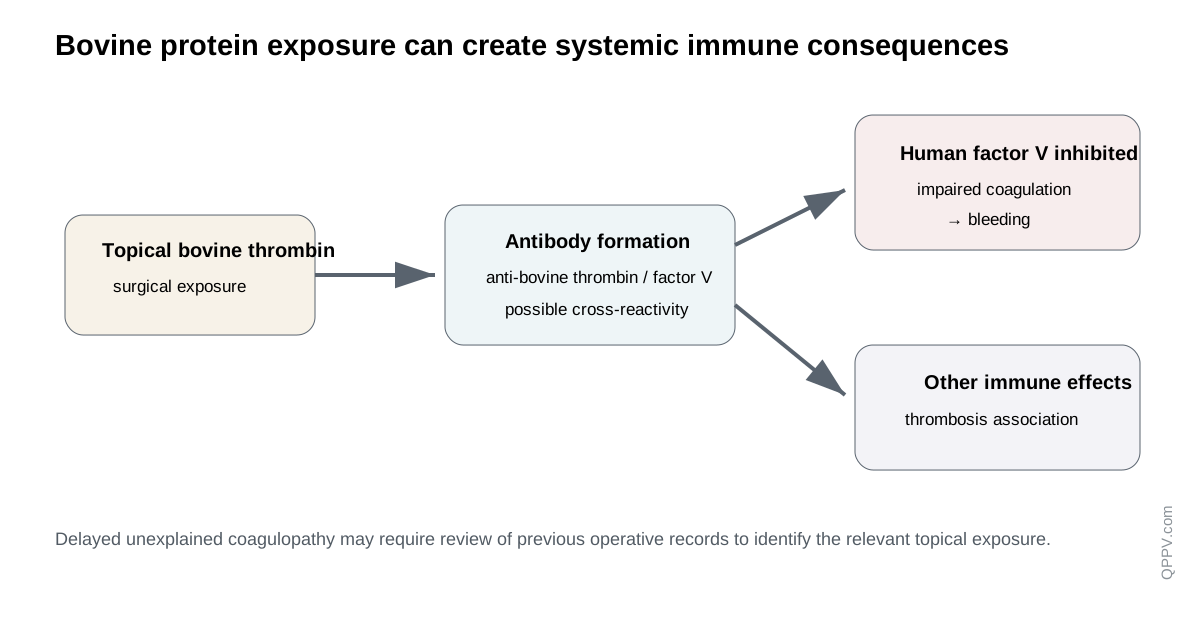
Figure 2. Exposure to bovine coagulation proteins can generate antibodies; cross-reactivity with human factor V may impair coagulation and cause severe bleeding, while other antibody responses can be associated with thrombosis.
Re-Exposure
Re-exposure is particularly important because an immune response from a previous operation may persist or be recalled. A patient may not remember receiving topical thrombin, and the product may appear only in an operative record rather than a medication list.
Current prescribing information advises against re-exposure when antibodies to bovine thrombin or factor V are known or suspected. PV case follow-up should therefore seek previous procedure records when unexplained coagulopathy occurs after repeat surgery.
Wrong-Route and Preparation Errors
Topical thrombin must not be injected. Intravascular administration creates a fundamentally different hazard because active thrombin can drive uncontrolled clot formation. Wrong-route events should be treated as serious medication errors even when no immediate clinical consequence is reported.
Powder presentations also require correct reconstitution and concentration. Product complaints involving transfer devices, sprays, syringes or liquid presentation should be linked to safety assessment when they contribute to dosing or administration errors.
Hypersensitivity
As a bovine protein preparation, the product can cause hypersensitivity. Immediate reactions should be characterised by timing, organ systems involved, treatment and outcome, with prior bovine thrombin exposure included where known.
Practical Pharmacovigilance Assessment
The exposure record should include surgical procedure, anatomical site, product presentation, lot, method of application, concentration if reconstituted, and prior exposure to bovine thrombin. For bleeding or thrombosis, the report should also reconstruct the entire coagulation context, including anticoagulants, liver function, transfusions, infection, disseminated intravascular coagulation and surgical complications.
Why operative records matter
Topical haemostatic agents are often documented in theatre or operative records rather than conventional outpatient medication histories. A PV process that relies only on a medication list may therefore miss the exposure most relevant to an acquired factor inhibitor.
Illustrative Failure Modes
These are hypothetical examples, not reported inspection findings.
| Failure mode | Consequence | Control |
|---|---|---|
| Product recorded as generic "thrombin" | Bovine, human and recombinant products become indistinguishable | Capture biological origin and product identity |
| Postoperative bleeding assessed without prior surgical exposure | Delayed inhibitor mechanism may be missed | Review previous operative records |
| Prolonged coagulation tests labelled factor-V inhibitor without testing | Alternative causes are ignored | Obtain factor activity/inhibitor evidence |
| Wrong-route event coded only as product-use issue | Potential systemic thrombosis risk is obscured | Escalate injection/intravascular exposure |
| Re-exposure history omitted | Immune-memory context is lost | Capture all known previous bovine thrombin use |
Inspection and Governance Considerations
An inspector could assess whether the safety system distinguishes bovine from human and recombinant thrombin, whether serious bleeding cases trigger targeted coagulation follow-up, and whether product complaints or wrong-route errors are shared between quality and PV functions.
The 2026 introduction of an additional liquid presentation also illustrates lifecycle governance. New presentations should be incorporated into product dictionaries, training and error surveillance while preserving the same core immunogenicity considerations.
Key Takeaways
Topical bovine thrombin supports local surgical haemostasis by accelerating fibrin formation, but its non-human protein origin creates a distinctive systemic immunogenicity risk.
The central PV pattern is remote surgical exposure → antibody formation → possible cross-reaction with human coagulation proteins → later bleeding or thrombosis. Product origin, prior exposure and coagulation investigations are therefore more informative than a generic record of "topical haemostatic agent."
References
- U.S. Food and Drug Administration. Thrombin, Topical (Bovine) USP: licensed product information. Current page includes April 10, 2026 approval of a liquid presentation.
- U.S. Food and Drug Administration. Package Insert: Thrombin, Topical (Bovine). Current boxed warning for severe bleeding and thrombosis complications.
- Chapman WC, et al. A phase 3 randomized comparison of recombinant human thrombin and bovine thrombin in surgical haemostasis. J Am Coll Surg. 2007;205:256-265.
- Paterson CA, et al. Immune responses associated with perioperative exposure and re-exposure to topical bovine thrombin. Clin Appl Thromb Hemost. 2011;17:620-632.
Regulatory Note
Topical bovine thrombin has product- and jurisdiction-specific indications, presentations, preparation instructions and contraindications. It must not be assumed interchangeable with topical human or recombinant thrombin. Current local product information should be checked before clinical or regulatory use.