Tralokinumab: Mechanism, Clinical Safety and Pharmacovigilance
Tralokinumab is a monoclonal antibody that binds interleukin 13 (IL-13) and prevents it from exerting its biological effects. In atopic dermatitis, IL-13 contributes to skin inflammation and symptoms such as erythema and pruritus. The pharmacological action is therefore directed at one inflammatory pathway within a disease that also involves skin-barrier dysfunction, host susceptibility, environmental exposures and other immune mechanisms.
For pharmacovigilance, this distinction matters. A reduction in IL-13 activity may explain some treatment effects, but it does not make every infection, eye symptom or change in eczema a drug reaction. The underlying disease can itself affect the skin and eyes, while topical and systemic co-treatments may influence the same clinical findings. A useful safety assessment begins with the phenotype and its timing, then tests plausible mechanisms against the complete patient and treatment context.
- Tralokinumab: Mechanism, Clinical Safety and Pharmacovigilance
- Purpose and Clinical Context
- IL-13 Neutralisation and Safety Reasoning
- Regulatory Context and Current Product Information
- Safety Domains and Targeted Follow-up
- Causality, Disease Activity and Co-treatment
- Signal Detection and Benefit-Risk Review
- Practical Pharmacovigilance Implementation
- Potential Failure Modes
- Inspection and Governance Perspective
- Practical QPPV Checklist
- Key Takeaways
- References
- Regulatory Note
Purpose and Clinical Context
The EU indication covers moderate-to-severe atopic dermatitis in adults and adolescents from 12 years of age who are candidates for systemic therapy. The current product information defines the authorised population, dose schedule, warnings, vaccination advice and adverse-reaction profile.[1,2] Because the EMA product information has been updated since initial authorisation, PV assessments should refer to the current label applicable to the exposure rather than copy historic summaries.[1]
Tralokinumab is administered by subcutaneous injection. The intended use may occur alongside topical therapy, and patients may have a history of prior systemic treatment. These details are part of the pharmacovigilance context: baseline disease severity, body-surface involvement, prior therapies, infection history, eye disease, vaccination and treatment phase can affect both event susceptibility and reporting.
Product identification also matters in a biological medicine. Capture the active substance, product and presentation, route, dose, dates and batch where available. This supports case reconstruction and allows a safety report to be linked to a potential product-quality or administration question if one arises.
IL-13 Neutralisation and Safety Reasoning
IL-13 contributes to inflammatory activity in atopic dermatitis. Tralokinumab binds IL-13, limiting its activity and reducing the downstream inflammatory response. The mechanism supports attention to disease response and selected immune-related questions, but it does not predict the full safety profile on its own. The skin barrier, disease severity, scratching, prior infection, topical corticosteroids and other treatments all contribute to the clinical picture.
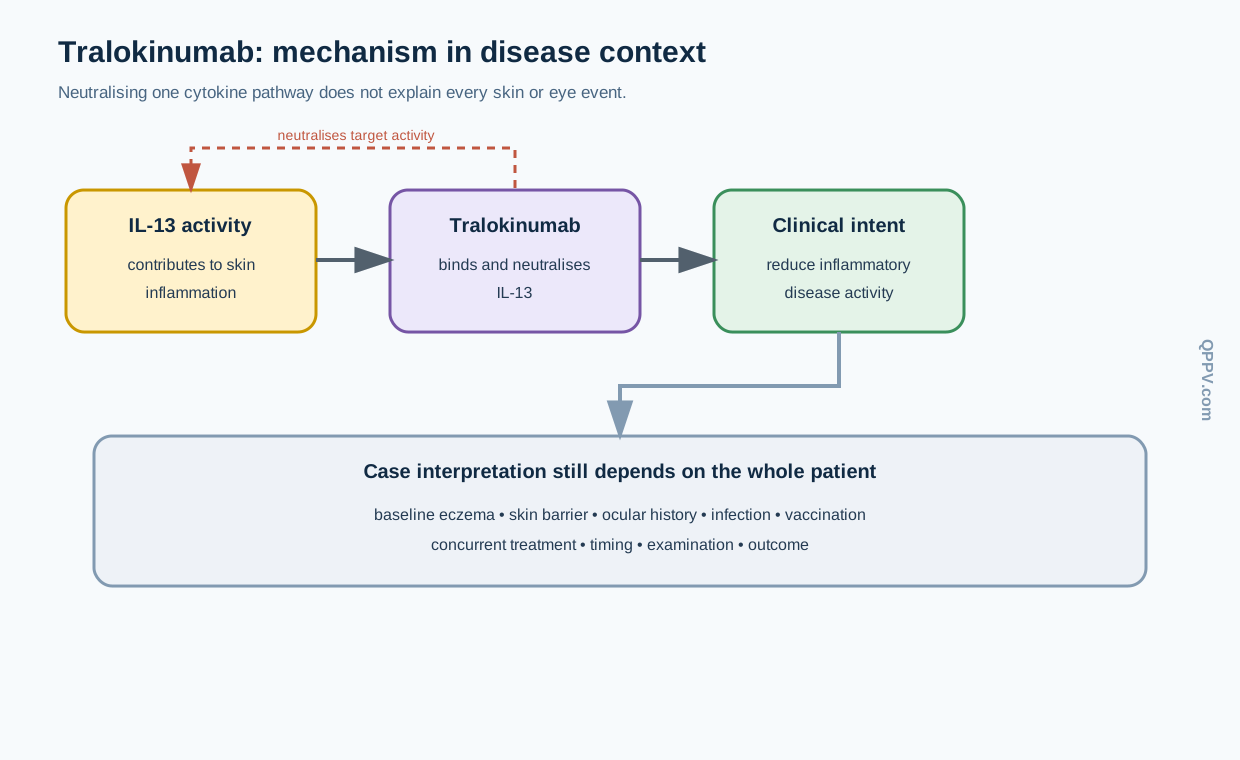
Figure 1. Tralokinumab neutralises IL-13 within one disease pathway. The clinical outcome still depends on skin-barrier status, baseline disease, treatment context and the event phenotype.
The product information identifies upper respiratory tract infections, injection-site reactions and ocular events including conjunctivitis; it also addresses persistent conjunctivitis, keratitis, helminth infection and vaccination.[2] These domains call for different follow-up. An ocular event needs a description of symptoms, examination and treatment; a suspected parasitic infection needs clinical and diagnostic detail; and an infection report should preserve site, microbiology where available, severity and outcome.
The product information states that the effect of IL-13 inhibition on the immune response to helminth infection is uncertain because patients with known helminth infection were excluded from clinical studies. It describes how pre-existing infection should be handled and when treatment interruption should be considered if an infection develops and does not respond to treatment.[2] This uncertainty should be represented as such; it should not be converted into an unsupported claim that tralokinumab causes helminth infection.
Regulatory Context and Current Product Information
The EMA product information is the statutory source for the EU conditions of use. It distinguishes between concurrent live or live-attenuated vaccination, for which clinical safety and efficacy have not been established, and non-live vaccination, for which immune responses were assessed in a clinical study.[2] That distinction should be retained in clinical case assessment. A vaccine administered during treatment is not automatically an interaction or adverse event; the vaccine type, timing and clinical outcome determine what can be concluded.
The current label also provides a specific pathway for conjunctivitis that does not resolve with standard treatment, including ophthalmological examination.[2] In practice, a PV system should capture whether symptoms predated treatment, whether they changed after treatment began, whether infection or another ocular diagnosis was considered, and what happened after assessment or treatment. The label’s advice and a company’s operational implementation should be kept conceptually separate: the former is regulatory product information; the latter is a recommended control designed to support reliable execution.
Safety Domains and Targeted Follow-up
A product-specific assessment should distinguish common skin and respiratory events from ocular inflammation, hypersensitivity, parasitic infection and vaccination questions. Clinical severity and the strength of evidence differ across these domains. A symptom such as “red eye” is not enough to decide whether the event is conjunctivitis, keratitis, infection, exacerbation of atopic disease or another ocular condition.
| Safety question | Follow-up information that can change interpretation |
|---|---|
| Ocular event | Symptom type, laterality, onset, pain or visual change, examination, diagnosis, treatment and outcome |
| Skin disease change | Baseline severity, lesion distribution, infection signs, treatment response, topical therapy and other systemic medicines |
| Respiratory or other infection | Site, onset, diagnostic evidence, microbiology where available, severity, treatment and outcome |
| Helminth infection | Travel or residence context where relevant, diagnostic basis, treatment response and relation to treatment interruption |
| Vaccination | Live or non-live vaccine type, date, immune response if assessed and any clinical event |
| Biological-product traceability | Exact product, presentation, route, dose, dates and batch where available |
This information should be collected when relevant and feasible, not imposed as a fixed questionnaire for every report. Follow-up is most useful when it answers a clinical question that could change the medical assessment or downstream signal interpretation.
Ocular events merit particular care because the underlying disease may affect the eyes and because symptoms range from mild irritation to corneal inflammation or infection. Review pre-existing atopic eye disease, contact-lens use where relevant, topical eye medicines, infection evidence, visual symptoms and ophthalmological findings. The current product information directs further ophthalmological assessment when conjunctivitis does not resolve with standard treatment; the case record should capture whether this occurred and the clinical outcome, without assuming that a missing note means the assessment was not performed.[2]
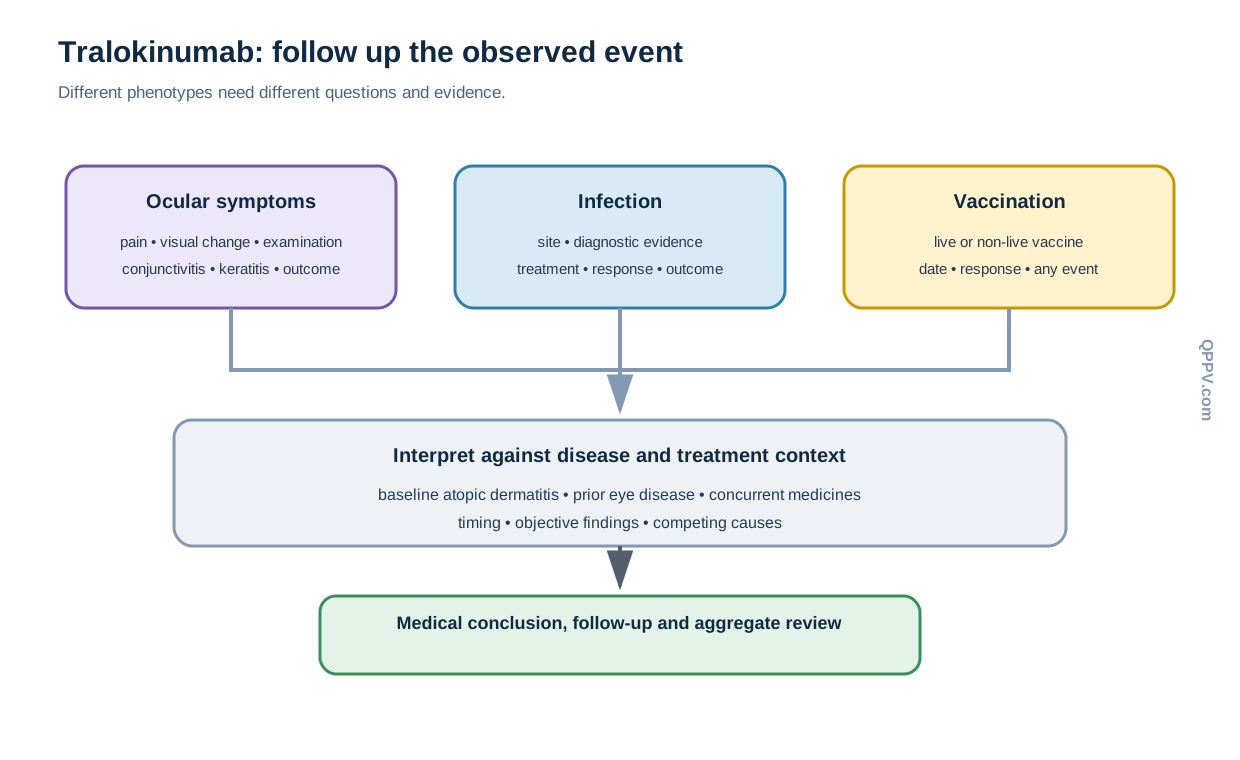
Figure 2. Ocular symptoms, infection and vaccination need separate case pathways. The investigation follows the observed phenotype and applicable product information.
Causality, Disease Activity and Co-treatment
Atopic dermatitis fluctuates. A worsening rash may reflect inadequate disease control, infection, adherence or administration problems, environmental triggers, a concomitant medicine or a treatment-related event. The assessment should compare the reported phenotype with baseline disease and the chronology of exposure. Improvement after treatment does not exclude a separate adverse reaction, and worsening disease alone does not establish that tralokinumab caused it.
For an infection report, document the suspected site and diagnostic basis, immune or medical comorbidity, prior infections, concurrent medicines and the action taken. A respiratory infection in a patient with atopic dermatitis should not automatically be attributed to immune suppression. Conversely, a plausible association should not be dismissed solely because infections also occur in the general population.
For a vaccination report, confirm whether the vaccine was live or non-live and whether the event relates to vaccine administration, underlying disease or treatment. The label’s distinction should guide the interpretation, while actual care should follow current local immunisation guidance. Avoid presenting uncertainty about live vaccine use as evidence that a harmful interaction has occurred.
Signal Detection and Benefit-Risk Review
Aggregate analysis should retain clinically relevant distinctions such as age group, baseline disease severity, prior ocular disease, treatment duration, concomitant topical corticosteroid use, infection type and vaccine context. Event terms should be grouped only when a medically coherent case definition supports it. Combining conjunctivitis, keratitis and nonspecific eye discomfort without clinical review may hide a meaningful difference or create a misleading signal.
Spontaneous reports can identify a hypothesis but do not, by themselves, establish incidence or causality. Review clinical-trial evidence, post-authorisation information, reporting trends, disease background and risk-minimisation measures. Where case numbers are small or diagnostic detail is limited, state the resulting uncertainty rather than implying precision that the data cannot support.[3,4]
Practical Pharmacovigilance Implementation
A workable tralokinumab PV process should preserve disease status and event-specific clinical evidence. At intake, capture the treatment indication, baseline disease activity, dose and administration timeline, prior or concurrent medicines, and any reported product or injection issue. For eye events, use follow-up questions that distinguish discomfort, discharge, photophobia, pain, visual change and physician-diagnosed inflammation. For infection, retain diagnostic information and response to treatment. For vaccination, record the vaccine type and date.
Recommended operational controls include an ocular-event follow-up aid, a referral pathway for persistent or severe symptoms, a method for reconciling safety reports with medical-information and quality contacts, and aggregate review that retains clinically meaningful subgroups. These are recommended controls unless a specific legal or regulatory requirement makes an element mandatory. Their effectiveness should be judged by the quality and timeliness of resulting case assessments, not just whether a form or procedure exists.
Potential Failure Modes
The following are illustrative failure modes, not published inspection findings:
- “Red eye” is coded without distinguishing conjunctivitis, keratitis, infection or a nonspecific symptom.
- The severity of atopic dermatitis before treatment is absent, making disease worsening difficult to interpret.
- Persistent ocular symptoms are recorded without documenting the clinical examination or outcome.
- Helminth risk is represented as an established adverse reaction despite the product information describing uncertainty.
- Live and non-live vaccination are treated as equivalent.
- Infection is attributed to tralokinumab without considering the site, microbiology, disease context or other medicines.
- An injection or presentation issue is not linked to the product-quality pathway when relevant.
- Aggregate analysis pools clinically different ocular events without a defined case group.
A useful corrective action closes the information-flow gap, assigns responsibility for review and establishes how similar cases will be checked. It should not create a more elaborate form if the existing process already captures the needed clinical evidence.
Inspection and Governance Perspective
An inspection could examine whether procedures reflect the current product information, whether staff can identify an event requiring clinical escalation, and whether case evidence supports the medical conclusion. Records may include follow-up correspondence, medical review, product and batch traceability, signal outputs, aggregate safety reports, risk-minimisation evaluation and change-control history for the relevant procedures.
Governance review should distinguish a known labelled risk from a new signal hypothesis and from a recommended process improvement. A procedure may appropriately set an internal target for review or escalation, but that target should not be represented as a statutory timeline unless the legal or regulatory source says so. Where safety evidence is incomplete, the limitation and its effect on the benefit-risk assessment should be recorded.
Practical QPPV Checklist
- Verify the current regional indication and product information for the exposure date.
- Record active substance, product, presentation, route, dose, dates and batch where available.
- Establish baseline atopic dermatitis severity, prior ocular history and relevant co-treatments.
- Describe ocular symptoms, examination, diagnosis, treatment and outcome; capture referral where appropriate.
- For infection, preserve site, diagnostic evidence, severity, treatment and clinical outcome.
- For suspected helminth infection, record diagnostic basis, relevant epidemiological context and response to treatment.
- For vaccination, distinguish live from non-live products and record timing.
- Review disease fluctuation and competing explanations before reaching a causality conclusion.
- Preserve meaningful clinical strata in aggregate analysis.
- Connect case review, risk-minimisation measures and governance decisions.
Key Takeaways
Tralokinumab neutralises IL-13, one pathway relevant to atopic dermatitis. Pharmacovigilance should use that mechanism to guide questions, not as a shortcut to attribution. Ocular events, infections, vaccination and disease activity require distinct case evidence, while the patient’s baseline skin and eye disease and concurrent treatment remain part of the causal assessment.
The practical standard is a traceable narrative that connects exposure, phenotype, evidence, alternatives and outcome. That makes individual reports more useful and aggregate review less likely to confuse clinically different events.
References
- European Medicines Agency: tralokinumab EPAR.
- European Medicines Agency: current tralokinumab product information.
- European Medicines Agency: Good pharmacovigilance practices.
- ICH E2C(R2): Periodic benefit-risk evaluation report guideline.
Regulatory Note
This article is an educational pharmacovigilance reference. It does not replace current regulator-approved product information, applicable legislation, local immunisation guidance or clinical judgment. Indications, warnings and vaccination recommendations may differ across jurisdictions and can change over time. Consult product information applicable to the actual exposure.