Trastuzumab Deruxtecan: Classification, History, Mechanism of Action, Safety and Pharmacovigilance
Trastuzumab deruxtecan is a HER2-directed antibody-drug conjugate (ADC). An ADC is not simply an antibody plus chemotherapy administered at the same time. The antibody, linker and cytotoxic payload are covalently assembled into one medicinal product, and each component influences where the medicine travels, how it is processed and which adverse events emerge.
The antibody component is derived from trastuzumab and binds the extracellular domain of HER2. A cleavable tetrapeptide-based linker connects the antibody to deruxtecan (DXd), a potent topoisomerase-I inhibitor. The product has a high drug-to-antibody ratio, approximately eight payload molecules per antibody. After HER2 binding and internalisation, lysosomal processing releases DXd inside the cell. Because released DXd can cross cell membranes, it can also kill neighbouring tumour cells—the bystander effect—which helps explain activity in tumours where HER2 expression is heterogeneous or lower than in conventional HER2-positive disease.
This architecture creates a pharmacovigilance problem very different from unconjugated trastuzumab. Cardiac surveillance remains relevant because the antibody still targets HER2, but interstitial lung disease (ILD)/pneumonitis, neutropenia and gastrointestinal toxicity reflect the whole conjugate and payload exposure. The product must therefore be assessed as an ADC in its own right.
- Trastuzumab Deruxtecan: Classification, History, Mechanism of Action, Safety and Pharmacovigilance
- Multidimensional classification
- HER2 biology and why expression level matters
- Mechanism of action
- Development and regulatory evolution
- Safety architecture of a HER2-directed ADC
- Why ILD causality is difficult
- Biomarker and tumour-context effects on PV
- Dose and regimen context
- Special populations and treatment history
- Pharmacovigilance case assessment
- Signal detection and aggregate review
- Periodic benefit-risk evaluation
- Risk management and operational controls
- Potential failure modes
- Inspection and governance perspective
- Practical checklist
- Key Takeaways
- References
- Regulatory Note
Multidimensional classification
| Classification axis | Trastuzumab deruxtecan classification | Scientific or PV significance |
|---|---|---|
| Molecular modality | Antibody-drug conjugate | Antibody, linker and payload jointly determine pharmacology |
| Antibody target | HER2 (ERBB2 protein) | Enables tumour-directed binding and internalisation |
| Antibody component | Trastuzumab-derived humanised IgG1 | Retains HER2-binding biology but is not interchangeable with trastuzumab |
| Linker | Enzyme-cleavable tetrapeptide-based linker | Permits intracellular payload release after processing |
| Payload | DXd topoisomerase-I inhibitor | Produces DNA damage after intracellular release |
| Drug-to-antibody ratio | Approximately 8 | High payload loading is a defining structural feature |
| Bystander capability | Membrane-permeable released payload | Can affect neighbouring cells after payload release |
| Current EU tumour settings | HER2-positive, HER2-low/ultralow breast cancer; HER2-mutant NSCLC; HER2-positive gastric/GEJ cancer; selected HER2-positive solid tumours | Biomarker definition and tumour type must accompany every safety/efficacy interpretation |
| Defining PV risk | ILD/pneumonitis | Requires early recognition and grade-dependent management |
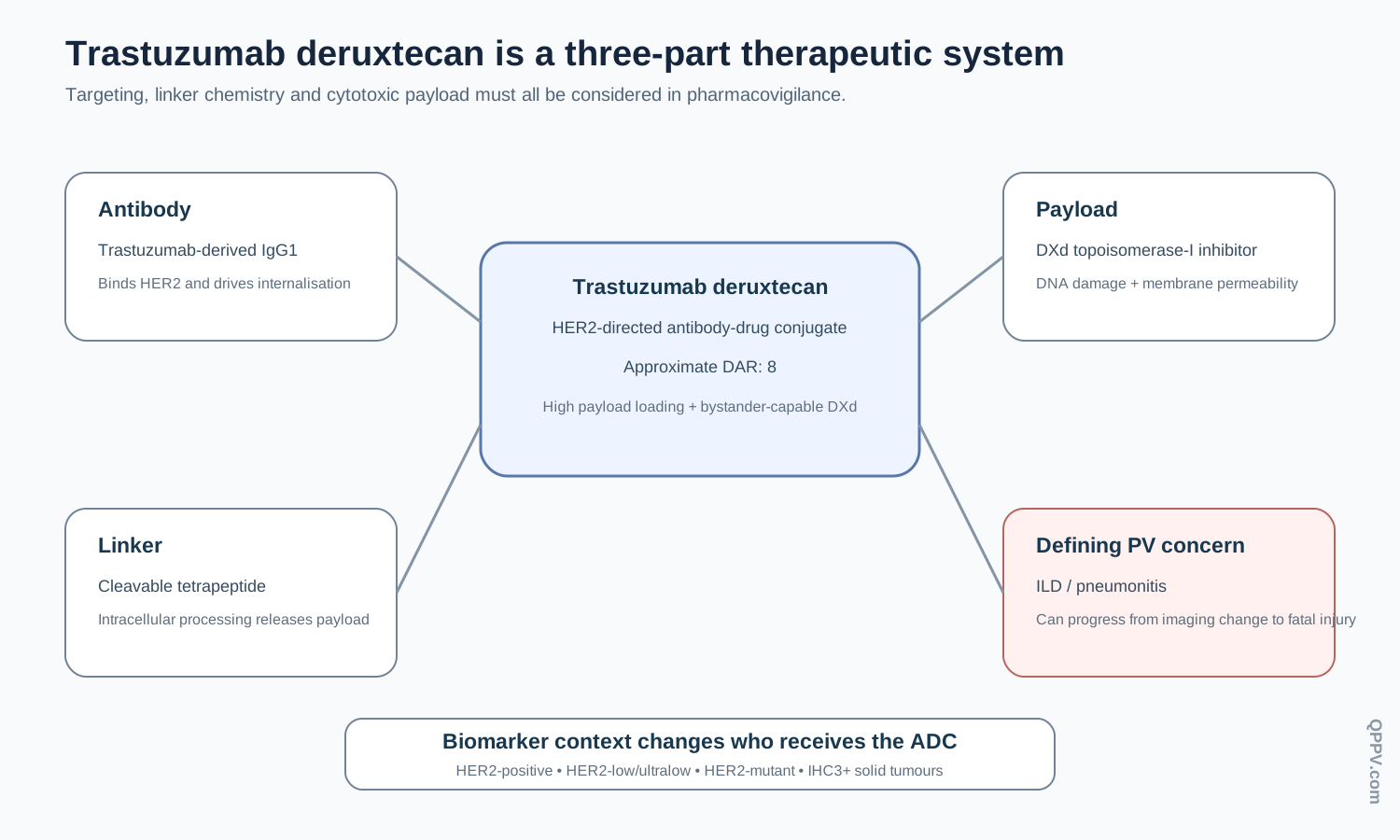
Figure 1. Trastuzumab deruxtecan must be classified simultaneously by HER2 targeting, ADC architecture, cleavable linker, DXd payload and biomarker-defined tumour context.
HER2 biology and why expression level matters
HER2 is a receptor tyrosine kinase encoded by ERBB2. In some tumours, ERBB2 amplification produces high HER2 surface expression and strong growth signalling. Trastuzumab established the principle that HER2 overexpression can be both a disease driver and a therapeutic target.
ADCs change this relationship. For an unconjugated antibody, clinical activity depends largely on receptor signalling effects and immune mechanisms after target binding. For trastuzumab deruxtecan, HER2 also acts as a delivery address for a cytotoxic payload. A tumour cell does not need to be equally dependent on HER2 signalling for every part of the ADC effect; it must express sufficient target to permit binding and internalisation, while the released payload can damage DNA and potentially reach neighbouring cells.
This is why HER2-positive, HER2-low and HER2-ultralow categories are not merely semantic refinements. They describe different amounts of target available for payload delivery. Likewise, a HER2-activating mutation in NSCLC is a different biological situation from HER2 protein overexpression in breast cancer. Pharmacovigilance should therefore capture the biomarker definition used for treatment, not only the generic term “HER2-positive”.
Mechanism of action
The mechanism can be understood as a sequence:
- the antibody binds HER2 on the tumour-cell surface;
- the antibody-HER2 complex is internalised;
- intracellular lysosomal enzymes cleave the linker;
- DXd is released inside the cell;
- DXd inhibits topoisomerase I, producing DNA damage during replication;
- sufficiently injured tumour cells die;
- membrane-permeable DXd can diffuse locally and contribute to bystander killing.
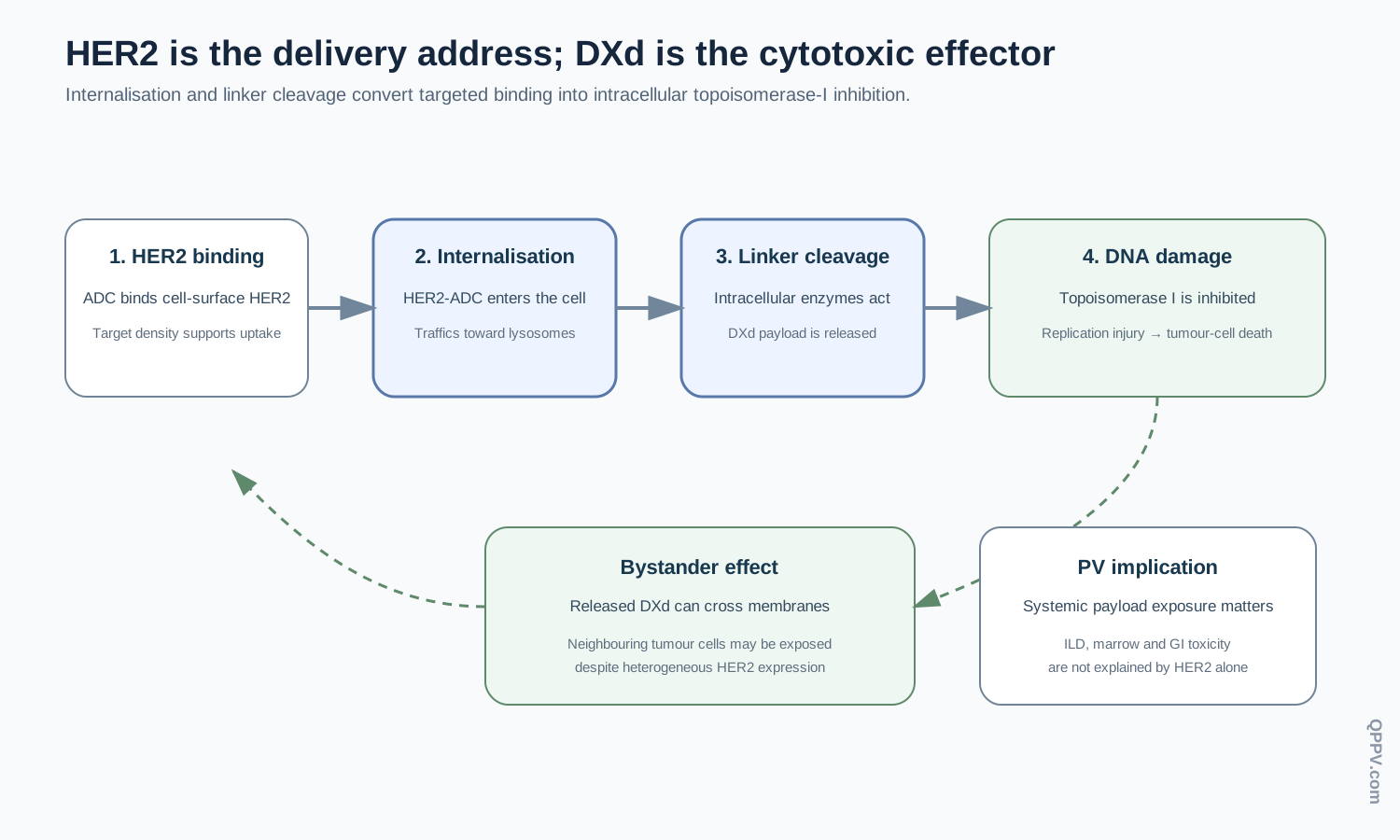
Figure 2. HER2 binding functions as a delivery step. Internalisation and linker cleavage release a topoisomerase-I inhibitor, while membrane permeability permits a local bystander effect.
Development and regulatory evolution
The medicine entered clinical development as a next-generation HER2 ADC after earlier HER2-directed therapies had established both the target and the therapeutic value of conjugated antibodies. Initial authorisations focused on previously treated HER2-positive breast cancer, but evidence subsequently expanded the clinically relevant HER2 spectrum.
Current EU product information, updated in July 2026, includes unresectable or metastatic HER2-positive breast cancer after prior anti-HER2 treatment; defined HER2-low and HER2-ultralow breast-cancer settings; advanced NSCLC with activating HER2 mutations after platinum-based therapy with or without immunotherapy; HER2-positive advanced gastric or gastro-oesophageal-junction adenocarcinoma after a trastuzumab-based regimen; and selected previously treated HER2-positive IHC3+ unresectable or metastatic solid tumours without satisfactory alternatives.
The expansion from one breast-cancer subgroup into multiple biomarker-defined diseases changes pharmacovigilance denominators and differentials. Dyspnoea in metastatic lung cancer, for example, has a different baseline differential diagnosis from dyspnoea in breast cancer. The molecular risk of treatment-related ILD remains important in both, but causality assessment cannot ignore tumour location, prior thoracic radiation, infection and pre-existing pulmonary disease.
Safety architecture of a HER2-directed ADC
The adverse-effect profile is best understood by separating three overlapping domains: target-related effects, cytotoxic-payload effects and product-specific ADC effects. This prevents both over-attribution to HER2 biology and under-recognition of toxicity that would not be expected from unconjugated trastuzumab.
Interstitial lung disease and pneumonitis
ILD/pneumonitis is the defining product-specific pharmacovigilance concern. The clinical spectrum ranges from asymptomatic radiographic changes to fatal respiratory failure. Symptoms can include cough, dyspnoea and fever, but these are nonspecific in patients with advanced cancer. High-quality case assessment therefore depends on imaging, onset, severity grade, oxygen requirement, infectious work-up, prior thoracic radiation, pre-existing lung disease, tumour progression and treatment response after drug interruption or corticosteroids.
Current product information uses active surveillance and grade-dependent treatment rules. The operational lesson for pharmacovigilance is that a broad term such as “pneumonia” or “shortness of breath” may conceal the event of greatest regulatory interest. Follow-up should establish whether ILD/pneumonitis was considered, whether imaging was performed and what final diagnosis was reached.
Haematological toxicity
Neutropenia is common and can be severe. Anaemia and thrombocytopenia can also occur. These events are biologically consistent with systemic exposure to a topoisomerase-I inhibitor payload, but causality remains confounded by prior chemotherapy, marrow involvement, infection and combination regimens.
For neutropenia, useful evidence includes absolute neutrophil counts before and after treatment, nadir, fever, infection, growth-factor use, dose delay/reduction and recovery. Febrile neutropenia should be preserved as a clinically distinct syndrome rather than represented only by separate terms for fever and neutrophil decrease.
Cardiac effects
HER2 signalling is physiologically relevant in cardiac tissue, so left-ventricular dysfunction remains part of the safety framework inherited from HER2-directed therapy. A decrease in left-ventricular ejection fraction (LVEF) should be interpreted with baseline LVEF, previous anthracycline or HER2-directed therapy, cardiovascular history, symptoms, imaging chronology and management.
Cardiac surveillance illustrates why the antibody component still matters even when the most distinctive product risk arises elsewhere.
Gastrointestinal toxicity and nutritional consequences
Nausea and vomiting are frequent and can be clinically important. Repeated symptoms can produce dehydration, weight loss, electrolyte disturbances and treatment interruption. Aggregate analysis should therefore consider severity and treatment consequences rather than treating nausea as uniformly minor.
Why ILD causality is difficult
Patients receiving trastuzumab deruxtecan often have several independent reasons to develop pulmonary abnormalities: lung metastases, lymphangitic spread, infection, pulmonary embolism, prior radiation, other anticancer medicines and pre-existing interstitial disease. The diagnosis of drug-related ILD is therefore a pattern-recognition and exclusion problem, not a single-test diagnosis.
A practical reconstruction should establish:
- the date and dose of the most recent administrations;
- baseline respiratory symptoms and imaging;
- new symptoms and oxygenation;
- CT pattern and anatomical distribution;
- infectious testing and antimicrobial treatment;
- tumour status;
- prior radiation and other pneumotoxic medicines;
- corticosteroid treatment and response;
- whether treatment was interrupted or permanently discontinued;
- the final multidisciplinary diagnosis where available.
Biomarker and tumour-context effects on PV
HER2-positive disease
High HER2 expression increases target availability but does not make every adverse event target-mediated. In heavily pretreated patients, cumulative cardiotoxic and marrow-toxic exposures may be substantial.
HER2-low and HER2-ultralow breast cancer
These categories expand treatment into populations that historically would not have been considered strongly HER2-driven. Product identity and biomarker documentation are therefore important for analyses of effectiveness, off-label use and medication selection. A report stating simply “HER2-negative breast cancer” is no longer sufficiently precise if the medicine was prescribed on the basis of HER2-low or ultralow expression.
HER2-mutant NSCLC
In lung cancer, respiratory symptoms and imaging abnormalities are common because of the underlying disease. ILD signal assessment must therefore preserve the tumour context. Pooling all dyspnoea cases across tumour types without diagnostic phenotype can obscure both the drug-related signal and disease-related confounding.
Gastric and other solid tumours
Different tumour types bring different prior therapies, nutritional status, marrow reserve and organ-function profiles. As the ADC expands across tumour-agnostic or biomarker-defined settings, aggregate safety should be stratified by tumour type where exposure permits.
Dose and regimen context
The approved dose can differ by tumour setting. Safety analyses should therefore retain dose, dosing interval, dose reductions and combination partners. A case attributed to “trastuzumab deruxtecan exposure” without the administered regimen may be inadequate for comparing toxicity across indications.
Combination use is particularly important because an event may reflect the ADC, the partner medicine or their interaction. Pharmacovigilance should preserve the complete regimen and the start/stop chronology of each component rather than assigning causality from product class alone.
Special populations and treatment history
Prior HER2-directed treatment
Patients may have received trastuzumab, pertuzumab, trastuzumab emtansine or other HER2-directed medicines. Prior exposure affects cardiac history, disease resistance and cumulative toxicity. The exact sequence is therefore valuable follow-up information.
Pregnancy
The HER2-targeting antibody and cytotoxic payload create a biologically plausible embryo-fetal risk. Pregnancy reports require gestational timing, dosing dates, co-exposures, maternal cancer status and fetal/neonatal outcome. Because advanced cancer itself and alternative therapy carry major risks, pregnancy assessment should not reduce the clinical situation to temporal exposure alone.
Treatment after ILD
Whether treatment was permanently stopped, withheld or restarted is a critical outcome variable. Re-exposure after pulmonary toxicity should be assessed against the applicable regional product information and the recorded event grade; pharmacovigilance should not infer appropriateness without that context.
Pharmacovigilance case assessment
A useful case reconstruction follows the ADC from patient selection → administered regimen → event phenotype → competing causes → management → outcome. For trastuzumab deruxtecan, that sequence is especially important because both biomarker interpretation and serious toxicity can be clinically complex.
Event-specific follow-up priorities
| Event or issue | High-value follow-up information |
|---|---|
| ILD/pneumonitis | Symptoms, oxygenation, CT findings, grade, infection work-up, prior lung disease/radiation, tumour status, corticosteroids, interruption/discontinuation, outcome |
| Neutropenia/febrile neutropenia | Serial ANC, fever, cultures/infection, prior chemotherapy, growth-factor use, dose modification and recovery |
| LVEF decrease/heart failure | Baseline and event LVEF, symptoms, cardiac history, prior anthracycline/HER2 therapy, cardiology assessment and outcome |
| Severe nausea/vomiting | Grade, antiemetic prophylaxis, hydration, weight/electrolytes, hospitalisation and dose modification |
| Treatment failure | Tumour type, HER2 category or mutation, test method, prior therapy, administered dose, imaging and progression date |
| Pregnancy exposure | Gestational timing, dose dates, co-exposures, maternal disease course and fetal/neonatal outcome |
Signal detection and aggregate review
ILD/pneumonitis requires a dedicated medically adjudicated case series. Retrieval should be broad enough to capture interstitial lung disease, pneumonitis, organising pneumonia and compatible respiratory terms, but final analysis should preserve radiological and clinical phenotype. Counting preferred terms without diagnostic review risks both false positives from infection or tumour progression and false negatives hidden under nonspecific respiratory diagnoses.
Haematological events should be analysed alongside dose intensity, tumour type and concomitant therapy. Cardiac events should retain prior HER2 and anthracycline exposure. As indications expand, tumour context becomes an increasingly important stratification variable.
Periodic benefit-risk evaluation
Periodic evaluation should integrate tumour response and duration of benefit with ILD/pneumonitis, fatal pulmonary outcomes, neutropenia, cardiac dysfunction, gastrointestinal toxicity, infusion reactions, pregnancy data, medication errors and biomarker-related use. Exposure should be stratified by tumour type, dose and regimen where possible.
The benefit side also evolves. Expansion into HER2-low, HER2-ultralow, HER2-mutant and tumour-agnostic settings means that the treated population is no longer biologically uniform. Benefit-risk conclusions therefore need to follow the authorised biomarker-defined populations rather than treating “HER2 cancer” as one category.
Risk management and operational controls
Current regional product information and risk-minimisation materials govern pulmonary monitoring, dose modification and treatment interruption. Recommended PV controls include rapid pulmonary follow-up, explicit capture of CT and event grade, biomarker documentation, dose/regimen verification and medical review of serious respiratory cases.
These controls operationalise the label and safety system; they should not be represented as additional legal obligations unless specifically required by the jurisdiction.
Potential failure modes
The following are illustrative scenarios, not published inspection findings:
- Progressive dyspnoea is coded as pneumonia without obtaining the CT findings that led the treating team to diagnose drug-related ILD.
- A fatal pulmonary case is included in a broad respiratory analysis without distinguishing infection, tumour progression and pneumonitis.
- A case records “HER2-negative breast cancer” but omits that treatment was based on HER2-low expression.
- Severe neutropenia is attributed to the ADC without documenting concomitant chemotherapy or marrow involvement.
- LVEF decline is analysed without the patient’s prior anthracycline and trastuzumab exposure.
- Cases from different ADC doses and tumour settings are pooled without regimen stratification.
- The medicine is described as equivalent to trastuzumab because the antibody component is trastuzumab-derived.
Inspection and governance perspective
An inspector could examine whether ILD cases are identified promptly, medically reviewed and followed through final diagnosis and outcome; whether biomarker and tumour context are retained; whether the organisation can distinguish antibody, payload and regimen-related risks; and whether expanding indications are incorporated into signal and aggregate-reporting procedures.
The central effectiveness test is whether the safety system can recognise a pulmonary syndrome early enough to support action while still maintaining diagnostic specificity. A technically complete ICSR that lacks imaging, grade or pulmonary differential diagnosis may be insufficient for meaningful risk evaluation.
Practical checklist
For a trastuzumab deruxtecan case or aggregate analysis, confirm:
- tumour type and disease stage;
- HER2 category, mutation and test method where relevant;
- exact dose, interval and combination regimen;
- prior HER2-directed and pulmonary-toxic treatment;
- baseline lung disease and thoracic radiation;
- CT/imaging and infectious work-up for respiratory events;
- event grade and corticosteroid treatment for ILD/pneumonitis;
- serial blood counts for haematological toxicity;
- baseline and follow-up LVEF for cardiac cases;
- dose interruption, reduction or discontinuation;
- exact product and batch.
Key Takeaways
Trastuzumab deruxtecan is a HER2-directed ADC, not an interchangeable form of trastuzumab. Its antibody, cleavable linker, high payload loading and membrane-permeable topoisomerase-I inhibitor jointly determine its therapeutic and safety profile.
Its defining pharmacovigilance concern is interstitial lung disease/pneumonitis, which can be fatal and must be differentiated from infection, cancer progression and other pulmonary disease. Biomarker definition, tumour type, dose and prior therapy are essential context for both safety and effectiveness assessment.
References
- European Medicines Agency. Enhertu (trastuzumab deruxtecan): EPAR and current product information. Product information updated 20 July 2026. https://www.ema.europa.eu/en/medicines/human/EPAR/enhertu
- European Medicines Agency. Enhertu product information. Current EU indications and safety information, including ILD/pneumonitis and haematological toxicity. https://www.ema.europa.eu/en/documents/product-information/enhertu-epar-product-information_en.pdf
- Cortés J, Kim S-B, Chung W-P, et al. Trastuzumab deruxtecan versus trastuzumab emtansine for breast cancer. N Engl J Med. 2022;386:1143-1154. doi:10.1056/NEJMoa2115022.
- Modi S, Jacot W, Yamashita T, et al. Trastuzumab deruxtecan in previously treated HER2-low advanced breast cancer. N Engl J Med. 2022;387:9-20. doi:10.1056/NEJMoa2203690.
- U.S. Food and Drug Administration. 2026 approval notifications for fam-trastuzumab deruxtecan-nxki in HER2-positive early-stage breast cancer. 15 May 2026. https://www.fda.gov/drugs/resources-information-approved-drugs/fda-approves-two-separate-indications-fam-trastuzumab-deruxtecan-nxki-her2-positive-early-stage
Regulatory Note
Trastuzumab deruxtecan indications, HER2-testing definitions, dose regimens and combination use differ across jurisdictions and are evolving rapidly. This article explains the scientific and pharmacovigilance framework and does not replace current regional product information or oncology guidance. Regulatory information was checked against EMA and FDA sources current in September 2026.