Trastuzumab Emtansine: Classification, History, Mechanism of Action, Safety and Pharmacovigilance
- Trastuzumab Emtansine: Classification, History, Mechanism of Action, Safety and Pharmacovigilance
- Multidimensional classification
- From HER2 targeting to intracellular payload delivery
- Development logic
- Clinical use and treatment context
- Safety profile through mechanism
- Embryo-fetal risk
- ADC-specific attribution model
- Pharmacovigilance case assessment
- Signal detection and aggregate review
- Risk management and operational controls
- Illustrative failure modes
- Inspection and governance perspective
- Key Takeaways
- References
- Regulatory Note
Trastuzumab emtansine is an antibody-drug conjugate (ADC) designed to deliver a cytotoxic microtubule inhibitor preferentially to HER2-expressing tumour cells. It uses trastuzumab as the targeting antibody, a stable thioether linker, and DM1 as the cytotoxic payload. The resulting medicine is not simply “trastuzumab plus chemotherapy.” Conjugation changes distribution, intracellular processing, exposure to free and conjugated species, and the pattern of organ toxicity.
That distinction is central to pharmacovigilance. Cardiac dysfunction may reflect HER2-pathway biology shared with unconjugated trastuzumab, whereas thrombocytopenia, hepatotoxicity and peripheral neuropathy are strongly connected to the payload-containing ADC architecture. A high-quality safety assessment therefore needs to determine which component of the conjugate plausibly explains the event and whether treatment context or prior therapy offers a competing explanation.
Multidimensional classification
| Classification axis | Trastuzumab emtansine classification | PV significance |
|---|---|---|
| Molecular platform | Antibody-drug conjugate | Safety depends on antibody, linker, payload and intracellular processing |
| Targeting antibody | Trastuzumab-derived anti-HER2 IgG1 | Retains HER2 recognition and some trastuzumab-associated pharmacology |
| Target | HER2/ERBB2 | Tumour HER2 expression determines biological targeting |
| Linker | Stable non-cleavable thioether linker | Payload release depends largely on lysosomal degradation of the conjugate |
| Cytotoxic payload | DM1, a maytansinoid microtubule inhibitor | Explains important cytotoxic toxicities including thrombocytopenia and neuropathy |
| Therapeutic class | HER2-directed antineoplastic ADC | Requires distinction from unconjugated HER2 antibodies and other HER2 ADCs |
| Product category | Biological medicinal product with conjugated small-molecule payload | Exact product attribution matters; active-substance shorthand can obscure ADC identity |
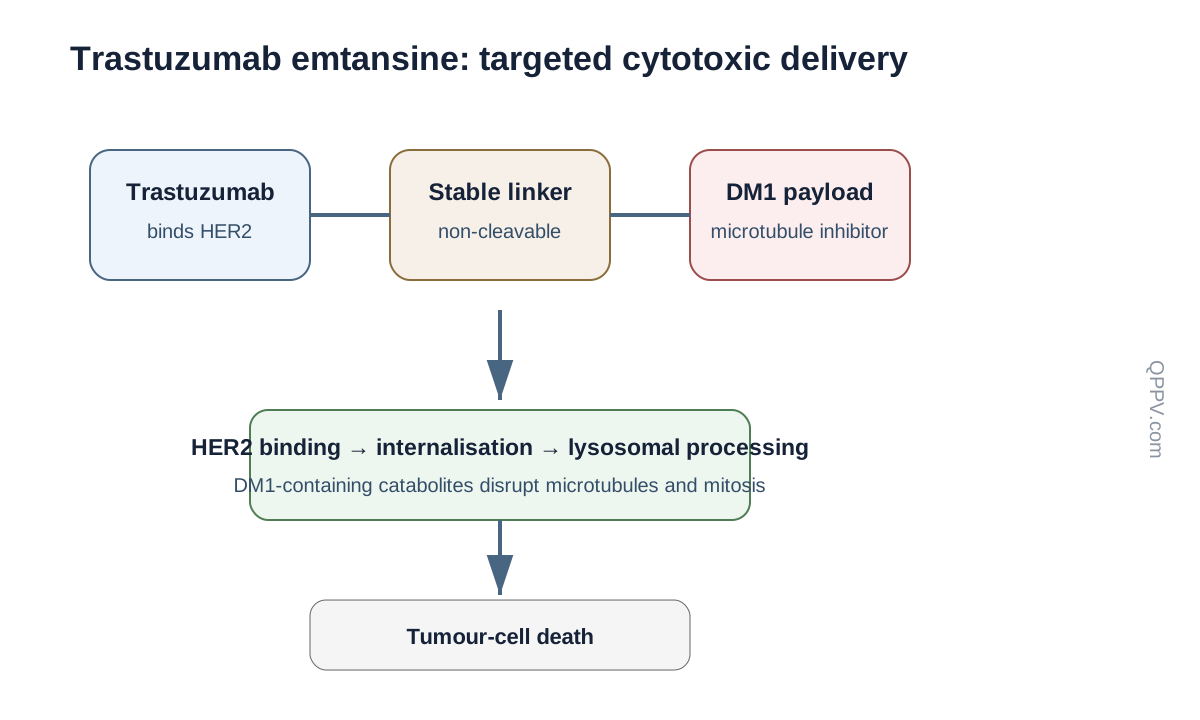
Figure 1. Trastuzumab emtansine combines HER2-directed targeting with a non-cleavable linker and the DM1 microtubule-inhibitory payload. Each component contributes to efficacy and safety.
From HER2 targeting to intracellular payload delivery
HER2 is a cell-surface receptor overexpressed or amplified in a subset of breast cancers. Trastuzumab binds extracellular subdomain IV of HER2. In trastuzumab emtansine, that antibody binding provides the first step of a multi-stage pharmacological process rather than the whole mechanism.
After binding HER2, the antibody-receptor complex can be internalised. Intracellular trafficking directs the conjugate toward lysosomal processing, where degradation of the antibody releases lysine-linked DM1-containing catabolites. These metabolites interfere with microtubule function, impair mitosis and can lead to cell death.
The non-cleavable linker is important because it reduces premature systemic release of highly membrane-permeable free payload. This limits, but does not eliminate, off-target exposure. Catabolism, linker stability, deconjugation, target-independent uptake and host handling all influence the final exposure profile.
Why this is not equivalent to trastuzumab
Trastuzumab itself can inhibit HER2 signalling and recruit immune effector mechanisms. Trastuzumab emtansine retains aspects of those functions, but the ADC adds a second therapeutic operation: intracellular delivery of DM1. The new operation introduces new toxicity mechanisms. It is therefore unsafe to infer expected adverse reactions from the trastuzumab label alone.
Development logic
The ADC strategy addressed a central oncology problem: conventional cytotoxic drugs expose both tumour and normal tissues because distribution is governed primarily by pharmacokinetics rather than tumour-selective recognition. Coupling a potent cytotoxic agent to an antibody creates a targeting layer before payload action. The design goal is not perfect tumour exclusivity but a more favourable distribution of cytotoxic activity.
Trastuzumab emtansine was developed for HER2-positive breast cancer after HER2 targeting had already been validated clinically. This sequence is scientifically important: the ADC did not need to establish HER2 as a target from first principles. Instead, it tested whether an established HER2-binding antibody could be converted into a delivery vehicle for a cytotoxic payload while retaining a manageable benefit-risk profile.
Clinical use and treatment context
In the European Union, trastuzumab emtansine is authorised for selected adults with HER2-positive breast cancer in both early and advanced disease settings. Its role differs between patients with residual invasive disease after neoadjuvant HER2-directed treatment and patients with unresectable locally advanced or metastatic disease previously exposed to trastuzumab and a taxane. These settings differ in prognosis, prior therapy, treatment intent and tolerance for persistent toxicity.
The pharmacovigilance reviewer should therefore preserve the disease stage and prior treatment history. A thrombocytopenia case after extensive metastatic therapy has a different background from thrombocytopenia during post-neoadjuvant treatment. Similarly, cardiac dysfunction cannot be interpreted without prior anthracycline and HER2-directed exposure.
Safety profile through mechanism
Hepatotoxicity
Hepatic toxicity ranges from asymptomatic transaminase elevation to clinically important liver injury. Nodular regenerative hyperplasia has also been associated with treatment and is mechanistically distinct from simple transient enzyme elevation. Case assessment should therefore capture not only ALT and AST but bilirubin, alkaline phosphatase, imaging, portal-hypertension features, hepatic comorbidity and alternative hepatotoxic exposures.
An isolated laboratory abnormality should not automatically be coded as severe drug-induced liver injury. Conversely, repeated modest abnormalities can matter if accompanied by evolving synthetic dysfunction or structural liver disease.
Thrombocytopenia and haemorrhage
Thrombocytopenia is one of the characteristic payload-associated toxicities of trastuzumab emtansine. DM1-containing catabolites and effects on megakaryocyte biology are biologically relevant explanations. Platelet nadir, recovery pattern, bleeding phenotype, anticoagulant or antiplatelet use, baseline marrow reserve and concomitant therapy all influence clinical interpretation.
Bleeding can occur with or without severe thrombocytopenia. A haemorrhage case should therefore not be reduced to platelet count alone. Anatomical site, severity, platelet trajectory, coagulation status and interacting medicines are high-value follow-up variables.
Cardiac dysfunction
Because the targeting antibody is trastuzumab-derived and HER2 signalling contributes to cardiomyocyte stress responses, left-ventricular dysfunction remains an important safety domain. Attribution may be complicated by prior anthracycline exposure, previous trastuzumab or pertuzumab, hypertension, age and baseline cardiac disease.
Interstitial lung disease and pneumonitis
Drug-related pneumonitis can present with cough, dyspnoea, fever, hypoxia and imaging abnormalities that overlap with infection, pulmonary metastases, radiation injury and cardiac failure. High-value follow-up includes CT pattern, microbiology, oxygen requirement, corticosteroid treatment, radiation history and timing relative to each treatment.
Peripheral neuropathy
DM1 disrupts microtubules, making peripheral neuropathy biologically plausible as a payload-associated toxicity. Assessment should distinguish sensory from motor features, grade functional impairment, record prior taxane neuropathy and examine whether symptoms worsened, stabilised or improved after treatment modification.
Infusion and hypersensitivity reactions
Acute administration reactions remain relevant because the medicine contains a monoclonal-antibody component. Chronology from infusion start, phenotype, vital signs, interventions and rechallenge are required to distinguish cytokine-like infusion symptoms from immediate hypersensitivity.
Embryo-fetal risk
HER2-directed therapies can cause fetal harm, and the presence of a cytotoxic payload reinforces the need for careful pregnancy-exposure assessment. Safety follow-up should reconstruct conception timing, dose dates, gestational age, co-exposures, fetal monitoring and pregnancy/neonatal outcome. Product-information requirements for contraception and pregnancy management must be checked in the applicable jurisdiction.
ADC-specific attribution model
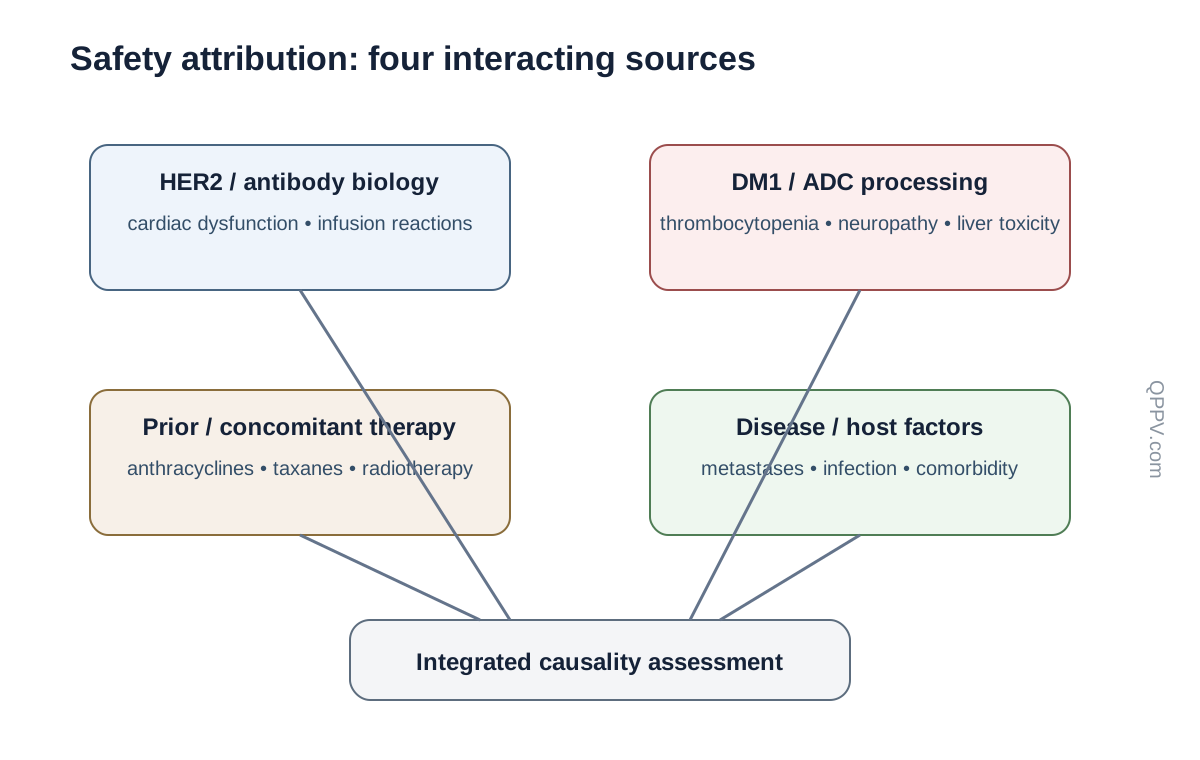
Figure 2. Safety assessment should distinguish target/antibody-related effects, payload-related effects, treatment-history confounding and disease-related causes rather than treating every event as a generic trastuzumab reaction.
A useful medical-review model asks four questions in sequence:
- Could the event arise from HER2-pathway or antibody biology? Cardiac dysfunction and infusion reactions are examples.
- Could DM1 or intracellular ADC processing plausibly explain it? Thrombocytopenia and neuropathy are examples.
- Could prior or concomitant anticancer therapy explain the event? Prior taxanes, anthracyclines, radiotherapy and marrow-suppressive therapy matter.
- Could the underlying cancer or another disease process be responsible? Metastatic disease, infection, hepatic metastases and coagulopathy may mimic drug toxicity.
The purpose is not to force each event into one box. Multiple mechanisms can contribute simultaneously.
Pharmacovigilance case assessment
The most useful unit of assessment is the complete ADC exposure context rather than the active-substance name alone. Reviewers should establish HER2 status, disease stage, prior HER2-directed therapy, prior taxane and anthracycline exposure, current dose and schedule, recent laboratory results, concomitant medicines and event chronology.
| Event | High-value follow-up |
|---|---|
| Hepatic injury | Baseline/serial ALT, AST, ALP, bilirubin, INR, imaging, hepatic metastases, alcohol/metabolic risk, co-medications, portal-hypertension features |
| Thrombocytopenia/bleeding | Platelet trend and nadir, bleeding site/severity, anticoagulants/antiplatelets, marrow status, transfusion, recovery |
| Cardiac dysfunction | Baseline/serial LVEF, symptoms, prior anthracycline/HER2 therapy, cardiac history, treatment and recovery |
| Pneumonitis/ILD | CT pattern, microbiology, oxygen requirement, radiotherapy, competing pulmonary disease, corticosteroid response |
| Peripheral neuropathy | Baseline neuropathy, prior taxane exposure, sensory/motor phenotype, functional impairment, reversibility |
| Infusion reaction | Onset from infusion start, phenotype, vital signs, interruption, treatment, recurrence on rechallenge |
| Lack of efficacy | HER2 test, disease site, prior lines, dose intensity, interruptions, imaging chronology |
Signal detection and aggregate review
Aggregate safety review should stratify by disease setting and prior therapy. Post-neoadjuvant early breast cancer differs from heavily pretreated metastatic disease in baseline marrow reserve, competing mortality, treatment intent and duration of follow-up. A signal for thrombocytopenia, cardiac dysfunction or pneumonitis can be obscured if those populations are pooled without context.
Known risks can still generate new questions. A change in latency, severity, reversibility, risk factors or outcome may represent a changed safety pattern even when the event term is already labelled.
Risk management and operational controls
Current regional product information governs laboratory monitoring, dose modification, treatment interruption, pregnancy precautions and management of serious toxicity. Recommended PV operations include targeted follow-up for hepatic injury, serious haemorrhage, thrombocytopenia, cardiac dysfunction and pneumonitis; structured capture of prior HER2 and taxane exposure; and explicit identification of the medicine as an ADC rather than unconjugated trastuzumab.
Medication-error controls are also relevant because several HER2-targeted products share the word “trastuzumab.” Trastuzumab emtansine must not be collapsed with trastuzumab, trastuzumab deruxtecan or fixed-dose HER2 combinations in product dictionaries or case narratives.
Illustrative failure modes
The following are hypothetical operational examples, not published inspection findings:
- A thrombocytopenia case is medically reviewed as a generic trastuzumab effect without recognising the DM1-containing ADC.
- A liver case records transaminases but omits bilirubin, INR and hepatic metastases, preventing meaningful DILI assessment.
- A neuropathy case is attributed entirely to the ADC although severe taxane neuropathy pre-dated treatment.
- A product is entered simply as “trastuzumab,” losing the distinction between unconjugated antibody and ADC.
- Early-disease and metastatic cases are pooled in aggregate review without considering major differences in prior treatment and baseline risk.
Inspection and governance perspective
An inspector would be expected to test whether the pharmacovigilance system can preserve ADC identity and connect mechanism to case quality. Evidence may include medicinal-product dictionaries, coding conventions, targeted follow-up forms, signal analyses, periodic-report methodology and reconciliation of serious hepatic, cardiac, pulmonary and bleeding events.
Effectiveness is demonstrated when those controls change the quality of real cases—for example, when an apparent “trastuzumab” report is resolved to the correct ADC and when hepatic cases routinely contain the data required to distinguish transient enzyme elevation from clinically important liver injury.
Key Takeaways
Trastuzumab emtansine is a HER2-directed ADC, not an interchangeable form of trastuzumab. The trastuzumab-derived antibody provides HER2 targeting, the non-cleavable linker governs intracellular payload release, and DM1 supplies microtubule-inhibitory cytotoxicity.
Its PV profile therefore spans HER2-associated cardiac effects, ADC/payload-associated thrombocytopenia and neuropathy, hepatotoxicity, haemorrhage, pneumonitis, infusion reactions and reproductive risk. Product identity, prior treatment, disease setting and component-level mechanism are essential to credible causality assessment.
References
- European Medicines Agency. Trastuzumab emtansine (Kadcyla): EPAR and current product information. EPAR page updated 16 June 2026. https://www.ema.europa.eu/en/medicines/human/EPAR/kadcyla
- Verma S, Miles D, Gianni L, et al. Trastuzumab emtansine for HER2-positive advanced breast cancer. N Engl J Med. 2012;367:1783-1791. doi:10.1056/NEJMoa1209124.
- von Minckwitz G, Huang CS, Mano MS, et al. Trastuzumab emtansine for residual invasive HER2-positive breast cancer. N Engl J Med. 2019;380:617-628. doi:10.1056/NEJMoa1814017.
- Lewis Phillips GD, Li G, Dugger DL, et al. Targeting HER2-positive breast cancer with trastuzumab-DM1. Cancer Res. 2008;68:9280-9290. doi:10.1158/0008-5472.CAN-08-1776.
Regulatory Note
Authorised indications, dose-modification thresholds, laboratory monitoring and risk-minimisation instructions vary by jurisdiction and may change. Regulatory statements in this article were checked against current EMA information available in September 2026. Operational recommendations are pharmacovigilance practice unless explicitly identified as regulatory requirements.