Ublituximab: Mechanism, Clinical Safety and Pharmacovigilance
Ublituximab is an intravenous monoclonal antibody that depletes CD20-expressing B cells. In relapsing multiple sclerosis (RMS), this reduces a population of immune cells involved in inflammatory activity in the central nervous system. The same depletion that supports disease control can affect infection defence and vaccine responses. Infusion reactions may occur during or after administration, and new neurological symptoms require careful separation of relapse from infection or another treatment-associated process.
The pharmacovigilance question is not simply whether an event followed an infusion. It is which exposure occurred, when symptoms began, how B-cell depletion and co-treatment shape the clinical context, and whether the event fits an infusion reaction, infection, progressive multifocal leukoencephalopathy (PML), or underlying MS.
- Ublituximab: Mechanism, Clinical Safety and Pharmacovigilance
- Clinical Role and EU Authorisation
- Classification and Molecular Design
- Mechanism and Pharmacovigilance Meaning
- Exposure Reconstruction and Treatment Phase
- Infusion-Related Reactions
- Infections, Immune Status and PML
- Individual Case Assessment and PV Practice
- Practical PV Checklist
- Key Takeaways
- References
- Regulatory Note
Clinical Role and EU Authorisation
The EU indication covers adults with active RMS, defined by clinical relapse and/or imaging evidence of active inflammation. The European Commission granted the marketing authorisation on 31 May 2023. Ublituximab is given by intravenous infusion and should be initiated under the supervision of a clinician experienced in neurological disease and the management of serious infusion-related reactions.[1,2]
The authorised population matters in case evaluation. Record the indication, disease activity before treatment, prior disease-modifying therapies, previous anti-CD20 exposure, concomitant immunosuppressants and the timing of the most recent infusion. A new neurological deficit during treatment is important, but its occurrence alone establishes neither treatment failure nor drug causality.
Classification and Molecular Design
Ublituximab is a chimeric monoclonal antibody directed against CD20, a surface antigen expressed on pre-B cells and mature and memory B cells. CD20 is not expressed on lymphoid stem cells or plasma cells. Binding to CD20 induces lysis of target B cells through antibody-mediated and complement-mediated effector mechanisms.[2]
This is a cell-depleting strategy rather than a general blockade of all immune function. Its effect on B-cell populations helps explain both therapeutic activity and some safety concerns, but cannot identify the cause of an individual infection or neurological event. Pharmacovigilance should preserve evidence and competing explanations instead of inferring causality from mechanism alone.
Mechanism and Pharmacovigilance Meaning
Activated B cells can contribute to inflammatory signalling and immune-cell interactions that accompany MS activity. Ublituximab binds CD20-positive cells and reduces their numbers. The intended result is reduced inflammatory activity and fewer relapses; the biologically plausible trade-off is reduced capacity to respond to some infections and altered responses to immunisation.
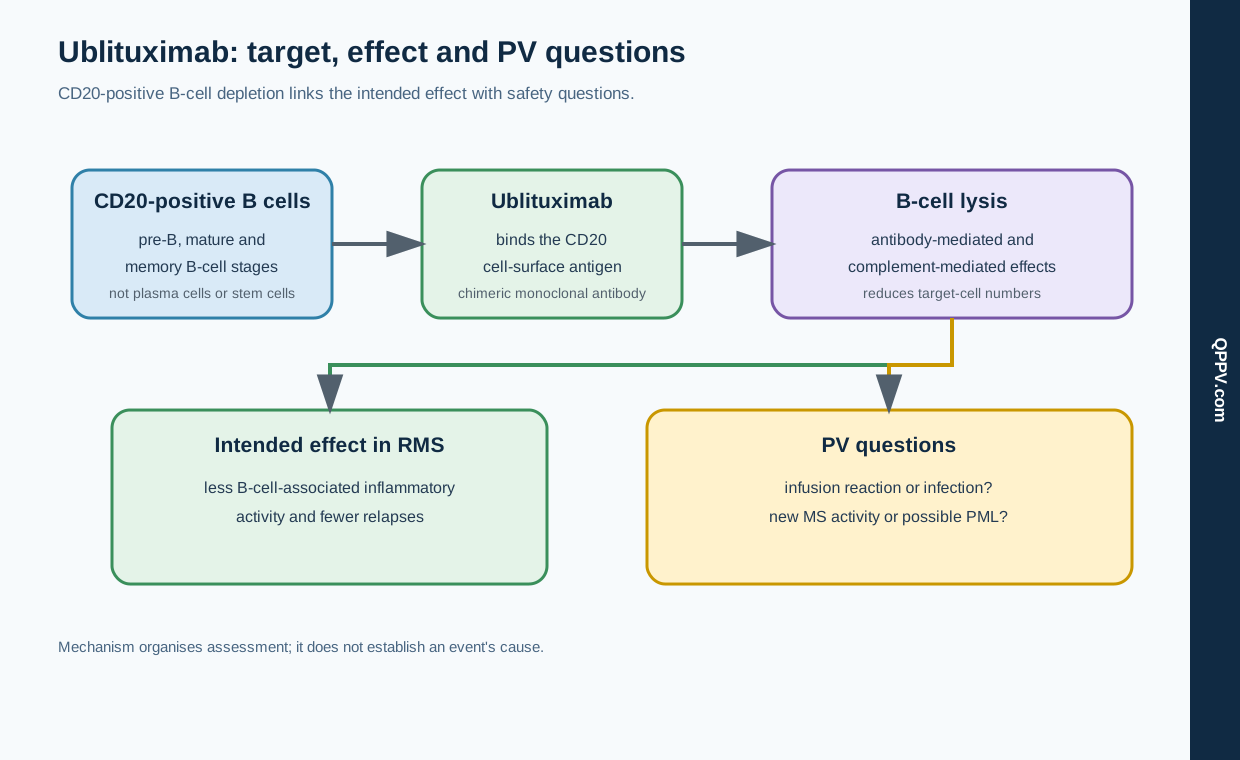
Figure 1. Ublituximab binds CD20-positive B cells and promotes their depletion. The diagram separates the intended reduction in inflammatory MS activity from safety questions created by B-cell depletion.
The mechanism organises clinical questions but does not replace assessment. Fever shortly after infusion may fit an infusion-related reaction; fever later with respiratory or urinary symptoms may indicate infection. Progressive cognitive, visual, motor or coordination changes can arise from MS or other causes and require assessment for PML as well as relapse. Exposure dates, symptom pattern, examination, imaging and diagnostic tests help distinguish these possibilities.
Exposure Reconstruction and Treatment Phase
The authorised regimen begins with a 150 mg intravenous infusion, followed two weeks later by 450 mg. Subsequent 450 mg infusions are given every 24 weeks. Premedication is used to reduce infusion-related reactions. The first two infusions require post-infusion observation; the product information advises that reactions can occur up to 24 hours after infusion.[2]
Record planned and actual infusion dates, dose, infusion duration, interruption or rate reduction, premedication, batch number and symptom-onset interval. Capture prior disease-modifying therapy, washout, corticosteroids for relapse, vaccination timing and co-medications that could contribute to immunosuppression or infection risk.
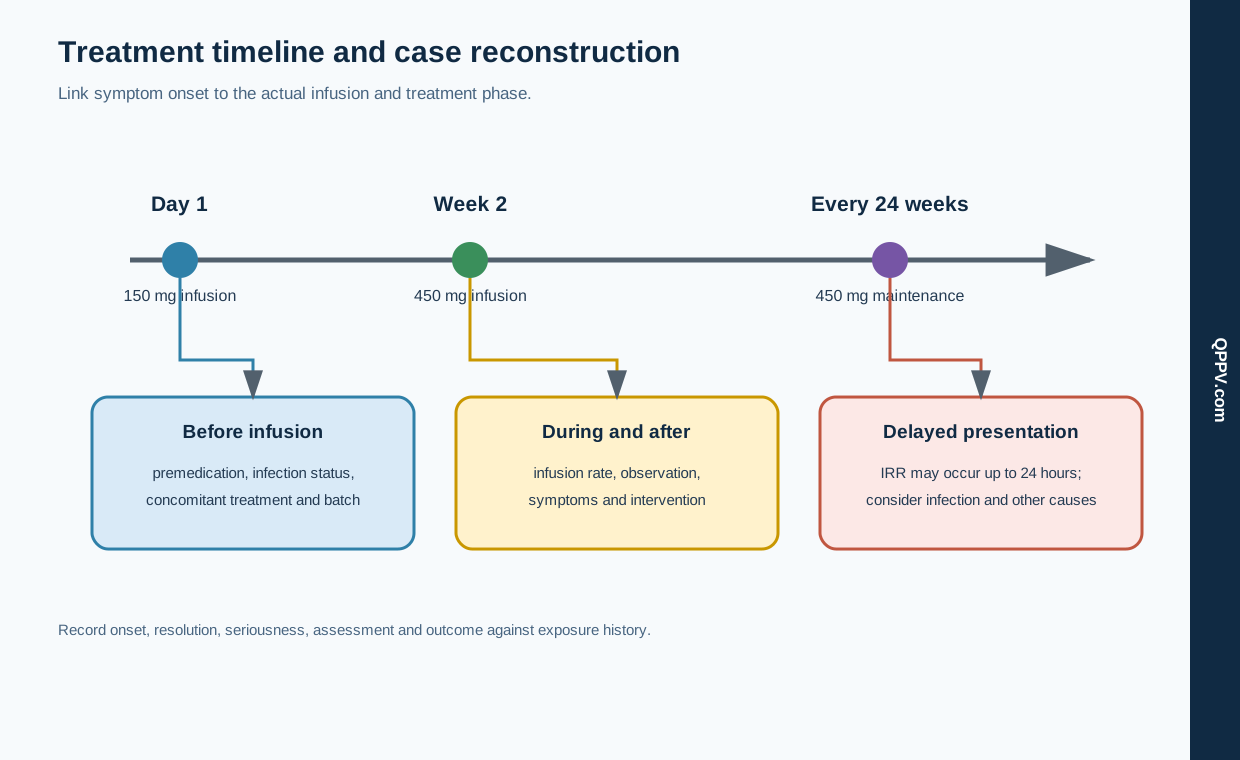
Figure 2. A dose timeline makes the initial two-week interval, 24-week maintenance interval and possible delayed reaction window visible for case reconstruction.
Infusion-Related Reactions
Infusion-related reactions (IRRs) are among the most frequently reported adverse reactions in the product information. They can include fever, chills, headache, nausea, rash, throat irritation, flushing, dizziness, shortness of breath or changes in blood pressure. The product information reports IRRs in 45.3% and infections in 55.8% of the safety population described there. These trial-derived frequencies are not an individual probability and do not prove that every infection was caused by treatment.[2]
For an acute event, record start and stop times, infusion rate, vital signs, symptoms, severity, treatment, response to interruption or restarting, and recurrence. Distinguish an IRR from anaphylaxis, hypersensitivity, infection or coincidental illness. An event beginning after infusion has ended can remain temporally compatible with the labelled delayed window.
Infections, Immune Status and PML
Ublituximab should be delayed during an active infection until it resolves. Before treatment, the product information directs attention to hepatitis B status and vaccination history. Live-attenuated or live vaccines are not recommended during treatment or until B-cell repletion. Infection history, screening results, vaccination dates and prior immunosuppressive treatment are therefore part of the exposure record.[2]
PML is a rare, potentially severe JC-virus-associated brain infection that can resemble MS progression or relapse. The product information warns clinicians to consider it when new or worsening neurological symptoms occur. Preserve symptom evolution, neurological examination, MRI, cerebrospinal-fluid or virological investigations when performed, and the clinician's differential diagnosis. An entry of “MS worsening” without detail is not enough to classify the event.
Do not infer that all infections share the same risk process. A mild upper respiratory infection, severe opportunistic infection and suspected PML differ in clinical seriousness, mechanism and signal value. Relevant context includes prior infections, comorbidity, immunosuppressive co-treatment and whether treatment was withheld.
Individual Case Assessment and PV Practice
Confirm the patient, suspect medicine, event and reporter, then reconstruct the disease-modifying treatment sequence: ublituximab dose and batch, previous and subsequent therapies, infusion dates, concomitant medicines, vaccination, infection history, symptom onset and resolution. Seek follow-up when it could change seriousness, diagnosis, outcome or causality.
Illustrative case: neurological symptoms after treatment
A patient receiving ublituximab develops new unilateral weakness several months after an infusion. Possible explanations include MS activity, infection, PML or another neurological disorder. The case record should not choose among these without evidence. Preserve symptom onset and evolution, imaging, infection testing, cerebrospinal-fluid results if obtained, prior disease activity and the treating neurologist's assessment. Update the report if the diagnosis changes.
For infection reports, capture the pathogen if identified, site, severity, admission, antimicrobial treatment, immune status, source of information and outcome. When multiple medicines are involved, identify which products were given, in what order and for which event.
Practical PV Checklist
- Confirm the active RMS indication, dose, infusion date, treatment phase and batch.
- Record premedication, infusion rate, observation, interruption and symptom onset.
- Reconstruct prior and concomitant disease-modifying or immunosuppressive treatment.
- Capture hepatitis B screening, infection status, immunoglobulin data and vaccination timing when available.
- For new neurological symptoms, preserve the differential diagnosis and evidence relevant to relapse, infection and PML.
- Seek follow-up on seriousness, outcome, rechallenge or withholding, and final diagnosis.
Key Takeaways
Ublituximab depletes CD20-positive B cells, connecting its intended effect in active RMS with infection and vaccine-response considerations. IRRs and infections are prominent labelled risks, while PML belongs in the differential for new or worsening neurological symptoms. Good pharmacovigilance depends on precise infusion timing, treatment history, diagnosis, batch traceability and follow-up—not mechanism-based assumptions alone.
References
- European Medicines Agency. Briumvi: EPAR overview.
- European Medicines Agency. Briumvi: current product information.
- European Medicines Agency. Good pharmacovigilance practices, Module VI.
- International Council for Harmonisation. E2C(R2), Periodic Benefit-Risk Evaluation Report.
Regulatory Note
This article explains pharmacovigilance concepts using EU product information available at the time of writing. Current authorised product information and applicable national reporting requirements take precedence. Operational recommendations are practice considerations and do not replace clinical judgement or regulatory requirements.