Ustekinumab is a human monoclonal antibody directed against the p40 protein subunit shared by interleukin-12 (IL-12) and interleukin-23 (IL-23). Its clinical uses span immune-mediated diseases in the skin, joints and gastrointestinal tract because these cytokines participate in related inflammatory pathways across several organs. Biosimilar ustekinumab products reproduce this biological mechanism while being authorised through a comparability pathway rather than by repeating the complete originator development programme.
This article focuses on the Amgen ustekinumab biosimilar marketed as Wezlana in the United States and Wezenla in the European Union. The names are similar but the regulatory frameworks are not identical. In the United States, Wezlana is FDA-approved as a biosimilar to and interchangeable with Stelara. In the EU, Wezenla is authorised as a biosimilar; EU law does not create the same centralised FDA-style interchangeability designation, and substitution policy remains a national matter.
The core pharmacovigilance lesson is therefore dual: biosimilarity supports expectation of no clinically meaningful differences from the reference product, while product-level traceability remains essential whenever a safety event, switch, batch issue, immunogenicity concern or medication error is investigated.
Table of Contents
- Product identity and classification
- Molecular classification
- Biosimilar and interchangeable are regulatory terms
- Development and regulatory history
- IL-12 and IL-23 biology
- The shared p40 subunit
- Why one target spans several diseases
- How ustekinumab works
- Biosimilarity: what must be shown
- Analytical similarity comes first
- Clinical comparison confirms residual uncertainty
- Interchangeability and switching
- Clinical positioning
- Safety profile and mechanism-informed interpretation
- Infections
- Hypersensitivity and injection-related events
- Malignancy, immune modulation and causality
- Neurological and other uncommon events
- Product pharmacovigilance
- Traceability
- Switch-related reports
- Medication errors and presentation differences
- Aggregate and signal interpretation
- Practical assessment framework
- Key Takeaways
- References
- Regulatory Note
Product identity and classification
Molecular classification
Ustekinumab is a fully human IgG1κ monoclonal antibody. The biosimilar active substance has the same intended molecular target and mechanism as reference ustekinumab.
| Dimension | Classification | Why it matters |
|---|---|---|
| Modality | Monoclonal antibody biological | Establishes immunogenicity and biological traceability considerations |
| Target | IL-12/IL-23 shared p40 subunit | Explains simultaneous modulation of two cytokine pathways |
| Functional class | Cytokine-neutralising immunomodulator | Distinguishes ligand neutralisation from receptor blockade |
| Product status | Biosimilar to reference ustekinumab | Defines the regulatory evidence pathway |
| US status | FDA-designated interchangeable biosimilar | Adds a specific statutory switching determination in the US |
| Therapeutic areas | Psoriasis, psoriatic arthritis and inflammatory bowel disease | Creates disease-specific background risks and dosing contexts |
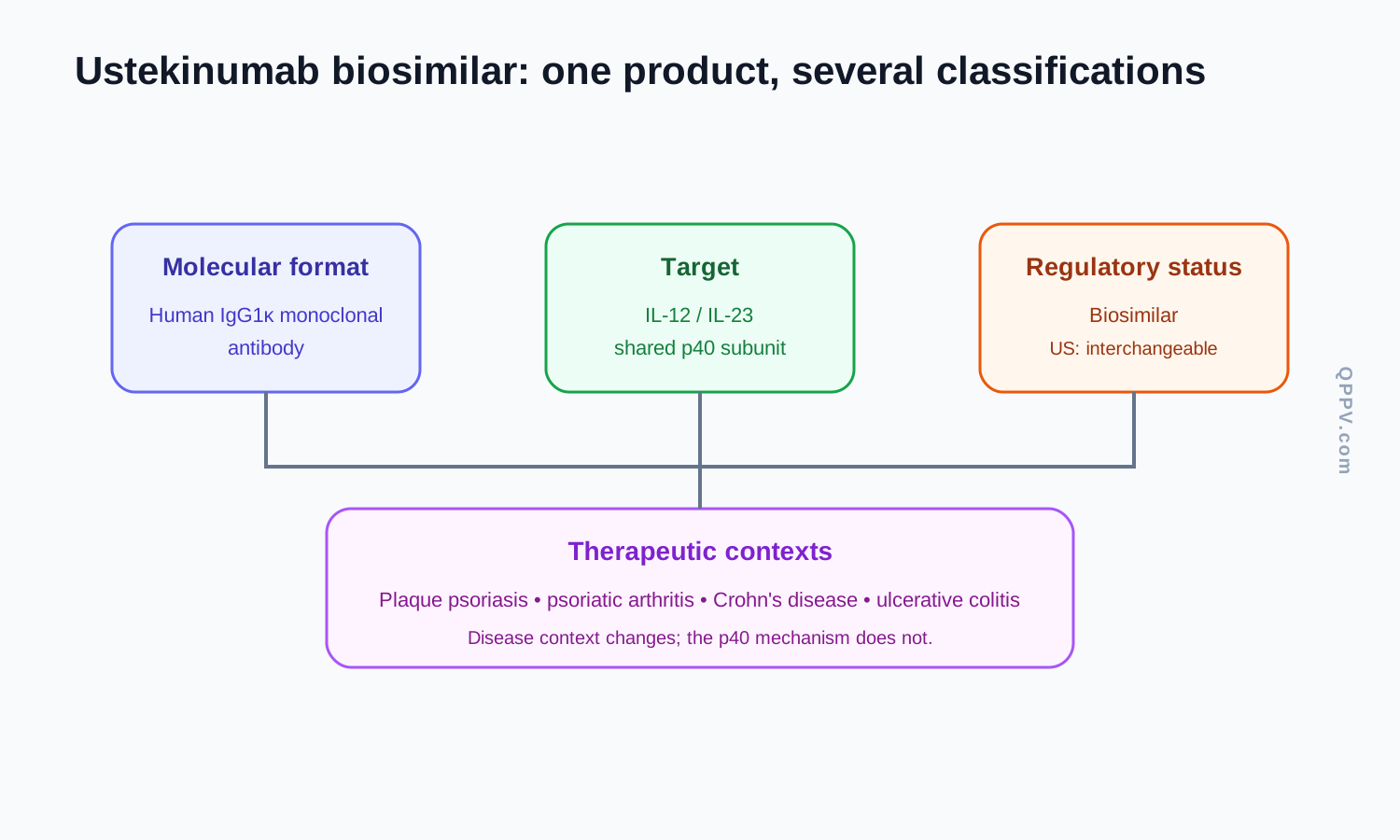
Figure 1. Ustekinumab biosimilars can be classified simultaneously by molecular format, IL-12/23 target, therapeutic use and regulatory status. “Biosimilar” and “interchangeable” describe regulatory conclusions, not different pharmacological mechanisms.
Biosimilar and interchangeable are regulatory terms
A biosimilar is not a generic copy in the small-molecule sense. Biological products are large, structurally complex molecules produced in living systems. Manufacturing variation is therefore controlled within predefined ranges rather than eliminated entirely. The biosimilar development question is whether the proposed product is highly similar to the reference product and has no clinically meaningful differences in safety, purity and potency.
The FDA term interchangeable adds a further statutory determination. Wezlana was approved in October 2023 as a biosimilar to and interchangeable with Stelara. Interchangeability does not mean that a pharmacist must substitute the product in every situation; actual substitution depends on applicable US state law and prescribing circumstances.
In the EU, Wezenla is authorised as a biosimilar. EMA assesses biosimilarity, while decisions on interchangeability and pharmacy-level substitution are handled within national healthcare frameworks. The same word should therefore not be transferred uncritically between jurisdictions.
Development and regulatory history
Reference ustekinumab established the p40 pathway as an effective therapeutic target across plaque psoriasis, psoriatic arthritis, Crohn's disease and ulcerative colitis. Once patents and exclusivities approached expiry, biosimilar programmes could use the established reference-product knowledge base and concentrate development on demonstrating similarity.
Amgen's programme used comparative structural, physicochemical and functional data, pharmacokinetic comparison, immunogenicity assessment and clinical evidence to address residual uncertainty. FDA approved Wezlana (ustekinumab-auub) on 31 October 2023 as the first interchangeable ustekinumab biosimilar in the United States. The current 2026 US label includes adult plaque psoriasis, psoriatic arthritis, Crohn's disease and ulcerative colitis, together with paediatric plaque psoriasis and psoriatic arthritis from age 6 years.
In the EU, Wezenla received central marketing authorisation as a biosimilar to Stelara. Its product information was updated in 2026, including expansion into paediatric Crohn's disease for eligible patients weighing at least 40 kg. This illustrates an important biosimilar principle: the precise authorised indication set can change over time and can differ between jurisdictions even when the active substance and reference-product relationship are the same.
IL-12 and IL-23 biology
The shared p40 subunit
IL-12 and IL-23 are related heterodimeric cytokines. Each contains two protein subunits. IL-12 is composed of p35 and p40; IL-23 is composed of p19 and p40. Ustekinumab binds p40, the component shared by both cytokines.
That shared architecture makes p40 a molecular junction. Blocking p40 prevents IL-12 from interacting with its receptor and also prevents IL-23 from interacting with its receptor. The drug therefore modulates two related inflammatory pathways with one antibody target.
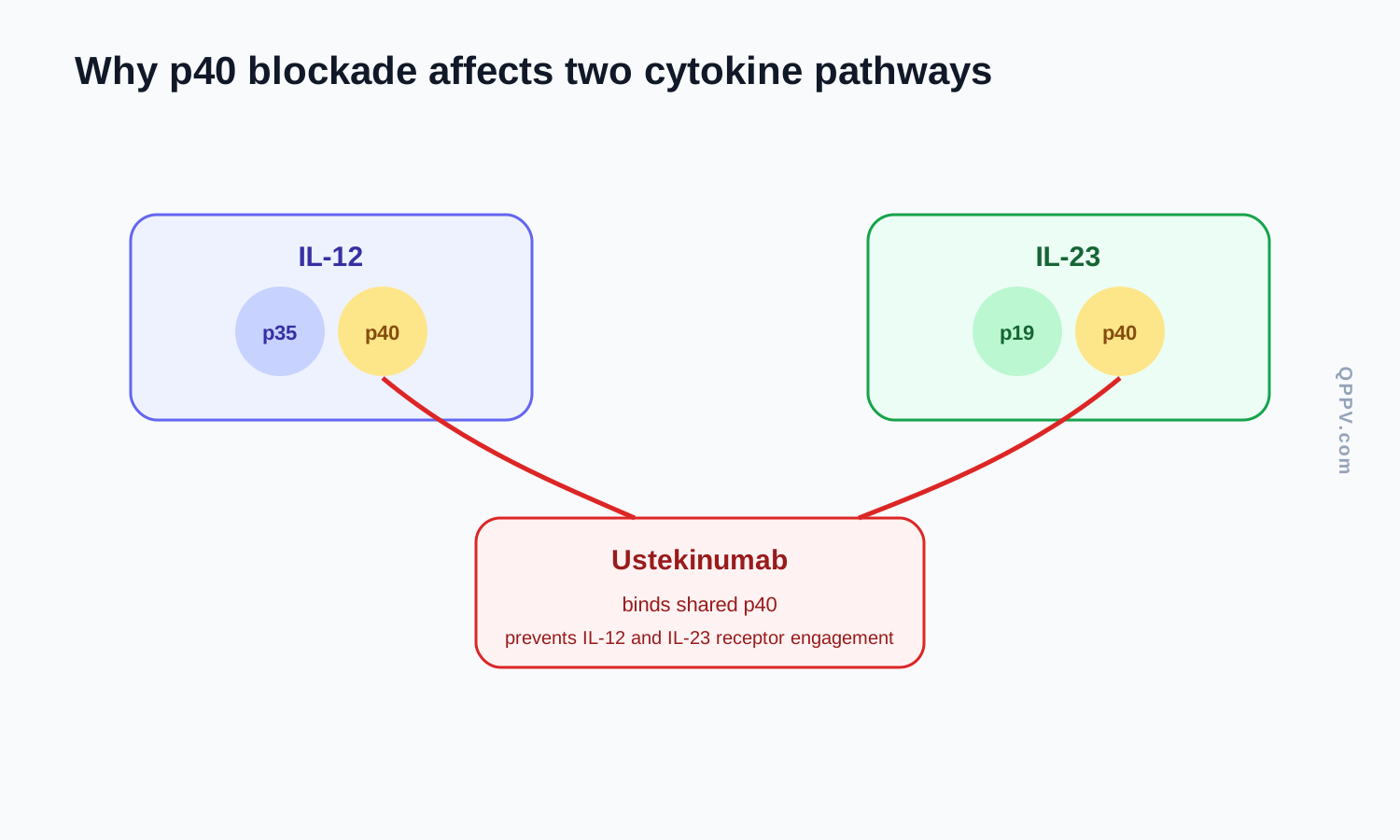
Figure 2. IL-12 and IL-23 are distinct cytokines that share the p40 subunit. Ustekinumab binds p40 and prevents receptor engagement by either cytokine. The figure separates the shared structural target from the different downstream immune pathways.
Why one target spans several diseases
IL-23 is central to maintenance and expansion of pathogenic type 17 immune responses, including production of inflammatory mediators such as IL-17. IL-12 contributes to type 1 immune responses and interferon-gamma production. These pathways participate in different proportions across psoriasis, psoriatic arthritis and inflammatory bowel disease.
The same target can therefore be clinically useful across several diseases without implying that the diseases are identical. Psoriasis is dominated by cutaneous inflammatory architecture, psoriatic arthritis adds synovial and entheseal disease, while Crohn's disease and ulcerative colitis involve intestinal mucosal inflammation. The target is shared; the disease context is not.
How ustekinumab works
Ustekinumab binds the p40 subunit of IL-12 and IL-23 and prevents these cytokines from engaging the IL-12Rβ1 receptor chain on immune cells. Downstream signalling and inflammatory-cell activation are consequently reduced.
The mechanism is immunomodulatory rather than broadly cytotoxic. It does not directly deplete T cells or B cells and does not neutralise every inflammatory cytokine. This distinction matters when interpreting infection, malignancy or inflammatory events: mechanism can inform plausibility, but it cannot by itself establish causation for a reported event.
Biosimilarity: what must be shown
Analytical similarity comes first
A biosimilar programme begins with extensive comparison of the proposed product and the reference medicine. Structure, glycosylation, charge variants, aggregation, binding characteristics and functional activity are examined using orthogonal analytical methods. For ustekinumab, functional comparison must show that the biosimilar binds the shared p40 subunit and inhibits the relevant IL-12- and IL-23-mediated activities in a manner consistent with reference ustekinumab.
This analytical foundation is the most sensitive part of the comparison. Clinical trials are comparatively blunt tools for detecting subtle structural differences, so biosimilar development is deliberately weighted toward high-resolution analytical evidence.
Clinical comparison confirms residual uncertainty
Comparative pharmacokinetic and, where needed, clinical studies then address uncertainties that remain after the analytical programme. Immunogenicity is particularly important because small differences in product attributes, impurities, container closure or administration could theoretically influence anti-drug antibody formation.
The goal is not to re-prove that ustekinumab works in every indication. Once high similarity and absence of clinically meaningful differences are established, regulators may extrapolate to additional reference-product indications when the total evidence and mechanism support doing so.
This is sometimes misunderstood as an evidentiary shortcut. It is better understood as a different scientific question. The reference product already established efficacy and safety; the biosimilar programme asks whether the new product is sufficiently similar that those conclusions can be scientifically bridged.
Interchangeability and switching
Switching between a reference biological and a biosimilar can occur for clinical, formulary, procurement or access reasons. The safety assessment of a switch should distinguish three concepts:
- pharmacological effect — whether the patient remains exposed to therapeutically equivalent ustekinumab activity;
- immunogenicity — whether switching is temporally associated with clinically relevant anti-drug antibody development or altered exposure;
- process effects — whether a change in device, presentation, training, storage or administration contributes to an event.
In the United States, FDA's interchangeable designation for Wezlana supports substitution under the applicable legal framework. It does not remove the need to know which product a patient actually received. In pharmacovigilance, a report of “ustekinumab” after a pharmacy substitution is incomplete until the brand, nonproprietary suffix where relevant, batch and switch timing are clarified.
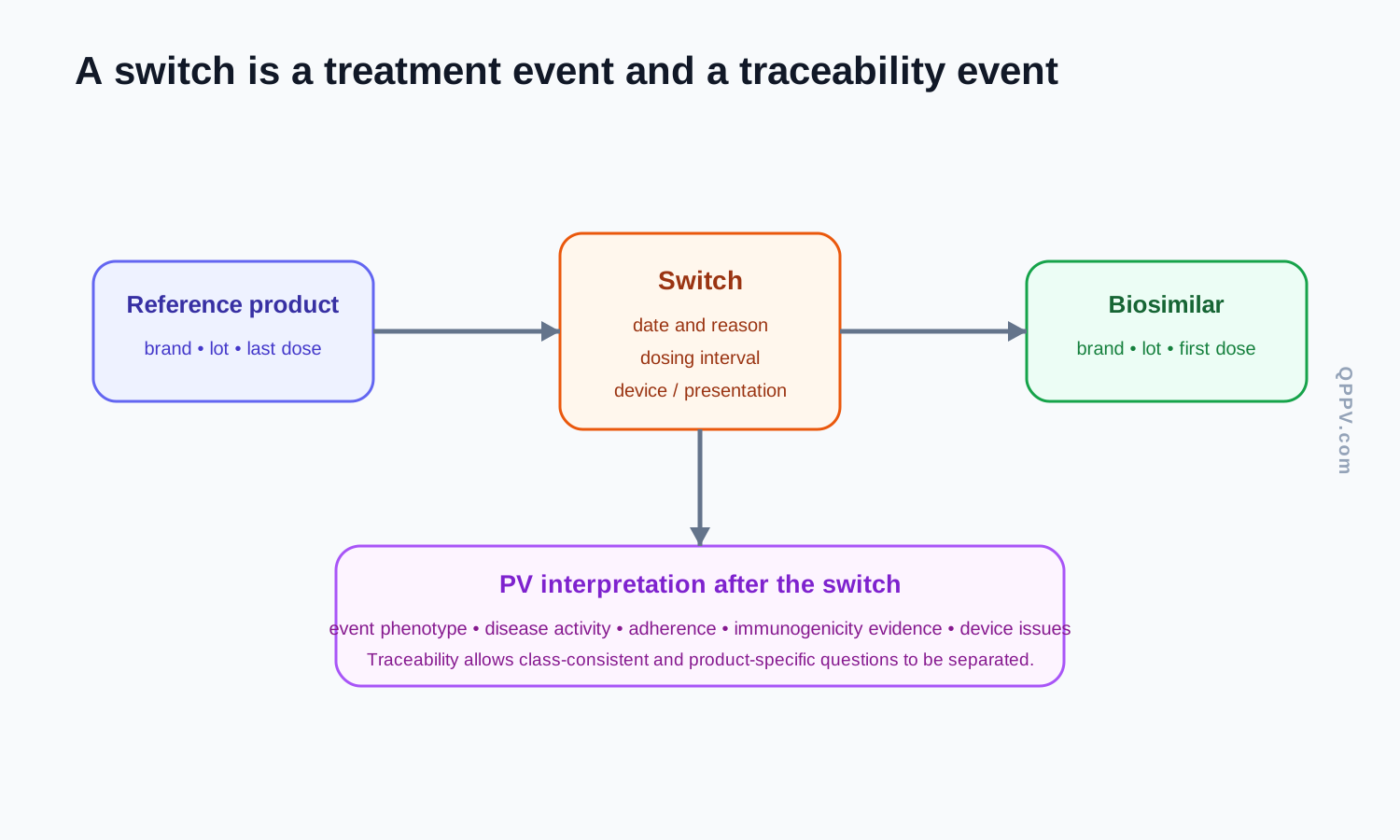
Figure 3. A switch can be pharmacologically uneventful while still creating pharmacovigilance information needs. Product identity, batch, timing and presentation must remain traceable before and after the switch.
Clinical positioning
Ustekinumab therapy is used across chronic immune-mediated diseases. The route and treatment architecture differ by indication. Plaque psoriasis and psoriatic arthritis use subcutaneous treatment; inflammatory bowel disease includes an intravenous induction phase followed by subcutaneous maintenance.
This creates a medication-safety issue that is more important for a biosimilar portfolio than a single-presentation product. A 130 mg intravenous vial for Crohn's disease or ulcerative colitis is not interchangeable at the administration level with a subcutaneous prefilled syringe simply because both contain ustekinumab. Product selection, strength, route and indication must all be correct.
Treatment context also determines what constitutes lack of effect. In psoriasis, increasing skin lesions or failure to achieve skin clearance may dominate. In psoriatic arthritis, joint symptoms and function matter. In inflammatory bowel disease, diarrhoea, bleeding, abdominal pain, endoscopic activity, inflammatory markers and corticosteroid use may be relevant. A generic “drug ineffective” report loses clinically useful information.
Safety profile and mechanism-informed interpretation
The expected safety profile of an authorised ustekinumab biosimilar should be consistent with the reference product. Pharmacovigilance should nevertheless remain product-specific because rare events, quality issues and switch-related patterns may emerge only after broad use.
Infections
IL-12 and IL-23 participate in host defence. Serious infections can occur during ustekinumab treatment, and active clinically important infection is a relevant treatment consideration in product information. Case assessment should identify the infection site, organism where known, severity, concomitant immunosuppressants, corticosteroid exposure, comorbidities and treatment chronology.
A common upper respiratory infection in an immunomodulated population and an opportunistic infection raise different questions. Aggregate analysis should preserve this clinical granularity rather than grouping all infections as one mechanistic signal.
Hypersensitivity and injection-related events
Serious hypersensitivity reactions are uncommon but clinically important. Reports should capture onset relative to dose, phenotype, treatment, prior doses and subsequent exposure. Local injection-site reactions should be separated from systemic hypersensitivity.
After a product switch, device or administration differences may be especially relevant. Pain, incomplete injection or leakage can arise from technique or device handling without indicating altered ustekinumab pharmacology.
Malignancy, immune modulation and causality
Long-term immunomodulation creates a theoretical and observed background context for malignancy assessment. However, patients with chronic inflammatory diseases may already have altered malignancy risk and may have received other immunosuppressants. A malignancy reported after ustekinumab therefore requires latency, tumour type, prior therapies, smoking, ultraviolet exposure and disease history rather than simple temporal attribution.
Neurological and other uncommon events
Rare neurological syndromes, including posterior reversible encephalopathy syndrome in the wider ustekinumab experience, illustrate why uncommon serious events need syndrome-level clinical documentation. Headache alone should not be coded or interpreted as a complex neurological syndrome without the necessary clinical and imaging evidence.
Product pharmacovigilance
Traceability
Traceability is the defining operational discipline in biosimilar pharmacovigilance. A valid safety report may begin with the active substance name, but follow-up should identify the actual product whenever possible. Useful fields include brand name, manufacturer, US four-letter suffix where applicable, batch/lot, strength, presentation, route, indication, dose date and whether the patient recently switched products.
This does not imply that a biosimilar is inherently less predictable. It reflects the opposite principle: if several highly similar products share the same active substance, product identity must be preserved so any true product-specific pattern can be detected rather than diluted across the class.
Switch-related reports
A report that symptoms began “after switching from Stelara to Wezlana” should not automatically be classified as a biosimilar-specific adverse reaction. The assessor should reconstruct:
- disease control before the switch;
- timing of the final reference-product dose and first biosimilar dose;
- whether the dosing interval changed;
- whether route or device changed;
- adherence and storage;
- objective markers of disease activity;
- anti-drug antibody or drug-level data if clinically obtained;
- subsequent response after continued biosimilar treatment or another switch.
Nocebo effects, natural disease fluctuation, delayed dosing and administration problems can coexist with true pharmacological events. PV should document rather than presume the explanation.
Medication errors and presentation differences
Ustekinumab products exist in intravenous and subcutaneous presentations and multiple strengths. Errors may involve wrong route, wrong strength, incorrect weight-based induction calculation, incomplete injection, storage excursions or confusion between reference and biosimilar packaging.
A biosimilar switch may introduce a new device or packaging configuration even when the active-substance exposure is intended to remain clinically equivalent. Device complaints should therefore be captured as product-quality or administration information as appropriate, not automatically converted into systemic adverse reactions.
Aggregate and signal interpretation
Aggregate review should separate class-level and product-level questions. A known ustekinumab-associated safety topic reproduced at an expected pattern across a biosimilar population supports consistency with the reference profile. A disproportionate cluster associated with one batch, device, site or switch process requires product-specific investigation.
Useful stratifications include product brand, batch, treatment-naive versus switched patient, indication, route, age group, concomitant immunosuppression and time since switch. The objective is to remain scientifically open to product-specific signals without treating ordinary variation as evidence of biosimilar inferiority.
Practical assessment framework
- Identify the exact ustekinumab product. Record brand, suffix where relevant and batch if available.
- Confirm jurisdiction and indication. Approved uses and interchangeability terminology differ between the US and EU.
- Reconstruct recent switching. Establish what changed and when.
- Verify route and presentation. Intravenous induction and subcutaneous maintenance create distinct error modes.
- Define the event clinically. Infection, hypersensitivity, disease worsening and device failure require different follow-up.
- Assess concomitant immunosuppression and background disease. These strongly affect causality.
- Consider immunogenicity only with appropriate evidence. A temporal switch alone does not establish anti-drug antibodies.
- Preserve product-quality links. Batch and device information matter for clusters.
- Ask whether the case is class-consistent or product-specific. That distinction drives aggregate interpretation.
Illustrative scenario: disease worsening after non-medical switch
A patient with stable plaque psoriasis switches from reference ustekinumab to Wezlana because of formulary policy. Six weeks later, plaques begin to recur. The first biosimilar dose was administered three weeks late because of an insurance transition.
The temporal relationship to switching is real, but the delayed dose provides a strong alternative explanation. A good PV assessment records both facts rather than labelling the case simply as “biosimilar failure”. If symptoms persist despite restoration of the correct schedule, additional clinical follow-up becomes more informative.
Illustrative scenario: suspected injection failure
A patient reports that a new prefilled syringe leaked during self-injection and later experiences worsening arthritis. The assessor should separate a possible device/administration failure from pharmacological lack of effect. The amount delivered, device condition, lot number, training, storage and subsequent disease course are all relevant.
Key Takeaways
- Ustekinumab neutralises the shared p40 subunit of IL-12 and IL-23.
- Wezlana is FDA-approved as a biosimilar to and interchangeable with Stelara; Wezenla is the corresponding EU biosimilar product, where interchangeability policy is not defined by an FDA-style central designation.
- Biosimilar development relies primarily on high-resolution analytical and functional comparison, supported by PK, immunogenicity and clinical evidence.
- Extrapolation of indications follows from the totality of similarity evidence and established reference-product mechanism; it is not simply an assumption that all diseases are the same.
- Product traceability remains essential even when products are expected to have no clinically meaningful differences.
- Switch reports require reconstruction of timing, dosing, route, device, disease activity and alternative explanations.
- Class-level safety expectations and product-specific signal detection must coexist in the PV system.
References
- U.S. Food and Drug Administration. WEZLANA (ustekinumab-auub) Prescribing Information. Current 2026 label. https://www.accessdata.fda.gov/drugsatfda_docs/label/2026/761285s006lbl761331s006lbl.pdf
- U.S. Food and Drug Administration. FDA Approves Interchangeable Biosimilar for Multiple Inflammatory Diseases. 31 October 2023. https://www.fda.gov/news-events/press-announcements/fda-approves-interchangeable-biosimilar-multiple-inflammatory-diseases
- U.S. Food and Drug Administration. Purple Book: Wezlana, BLA 761331. https://purplebooksearch.fda.gov/
- European Medicines Agency. Wezenla (ustekinumab) EPAR and current product information. Product information updated 1 July 2026. https://www.ema.europa.eu/en/medicines/human/EPAR/wezenla
- European Medicines Agency. Guideline on similar biological medicinal products. CHMP/437/04 Rev 1.
- European Medicines Agency. Guideline on similar biological medicinal products containing biotechnology-derived proteins as active substance: non-clinical and clinical issues.
- Feagan BG, Sandborn WJ, Gasink C, et al. Ustekinumab as induction and maintenance therapy for Crohn's disease. N Engl J Med. 2016;375:1946-1960.
Regulatory Note
This article is an educational pharmacovigilance reference and does not replace current product information, national substitution rules, payer policies or clinical judgement. “Interchangeable” is used in its specific US statutory sense when referring to FDA-designated interchangeability. EU biosimilarity should not be described using US legal terminology unless the jurisdictional distinction is explicit. Product indications, presentations and national switching rules may change; verify current jurisdiction-specific information for patient care and PV decisions.