Ustekinumab: Classification, History, Mechanism of Action, Safety and Pharmacovigilance
- Ustekinumab: Classification, History, Mechanism of Action, Safety and Pharmacovigilance
- Multidimensional classification
- Why p40 is a shared target
- From cytokine biology to organ-level disease
- Development and regulatory history
- Clinical use and treatment-phase context
- Major safety domains
- Paediatric use
- Biosimilars, switching and product identity
- Pharmacovigilance case assessment
- Signal detection and aggregate review
- Periodic benefit-risk evaluation
- Risk management and operational controls
- Potential failure modes
- Inspection and governance perspective
- Practical checklist
- Key Takeaways
- References
- Regulatory Note
Ustekinumab is a fully human monoclonal antibody directed against the p40 protein subunit shared by interleukin-12 (IL-12) and interleukin-23 (IL-23). That shared subunit is the central concept needed to understand the molecule. IL-12 and IL-23 are different cytokines, but both contain p40. Binding p40 therefore interferes with signalling from both cytokines rather than selectively blocking IL-23 alone.
This molecular distinction matters clinically. Later IL-23 inhibitors such as guselkumab target p19, a subunit unique to IL-23. Ustekinumab instead sits one step higher in the cytokine classification because its p40 target links two pathways. That difference helps explain both its historical development and why its indication map should not be assumed to match newer selective IL-23 agents.
The existing QPPV.com article on ustekinumab biosimilars, interchangeability and IL-12/23 pharmacovigilance addresses comparability, switching and product-identity questions. This parent article focuses on the reference molecule itself: development history, target biology, indication evolution, clinical safety and product-level pharmacovigilance.
Multidimensional classification
| Classification axis | Ustekinumab classification | Scientific or PV significance |
|---|---|---|
| Molecular class | Fully human IgG1 kappa monoclonal antibody | Systemic therapeutic biological with long exposure intervals |
| Target | Shared p40 subunit of IL-12 and IL-23 | One antibody modulates two cytokine pathways |
| Functional class | Interleukin inhibitor | Reduces IL-12/23 receptor signalling rather than depleting immune cells |
| Therapeutic domains | Dermatology, rheumatology and gastroenterology | Baseline risks and clinical endpoints differ across organ systems |
| Major disease settings | Plaque psoriasis, psoriatic arthritis, Crohn disease and ulcerative colitis | Indication breadth expanded substantially after initial psoriasis approval |
| Administration | Subcutaneous for psoriasis/PsA; intravenous induction followed by subcutaneous maintenance in IBD | Route and treatment phase are essential exposure variables |
| PV-critical domains | Infection, hypersensitivity, malignancy surveillance, neurological events, immunogenicity, medication-use errors and loss of response | Requires long-term, indication-stratified review |
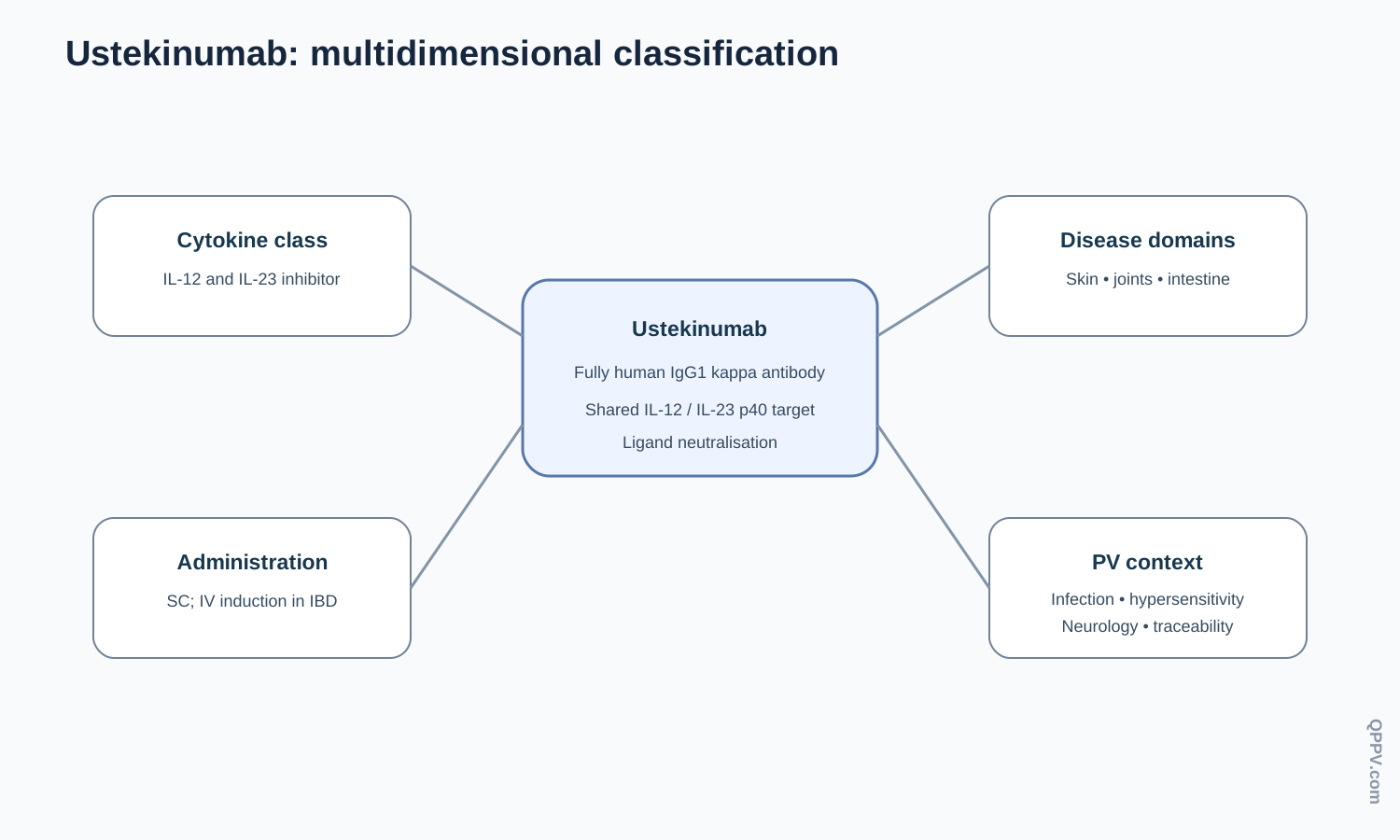
Figure 1. Ustekinumab is best classified by its shared p40 target. That target places the molecule at the intersection of IL-12 and IL-23 biology and supports a multi-organ indication map spanning skin, joints and intestine.
Why p40 is a shared target
IL-12 and IL-23 are heterodimeric cytokines. IL-12 is formed from p35 and p40 subunits, whereas IL-23 is formed from p19 and p40. The shared p40 component creates a common molecular point at which both pathways can be interrupted.
Ustekinumab binds free p40 and prevents IL-12 and IL-23 from engaging IL-12Rbeta1 on immune cells. It does not primarily kill cells bearing cytokine receptors. The pharmacological effect is therefore ligand neutralisation, not receptor-cell depletion.
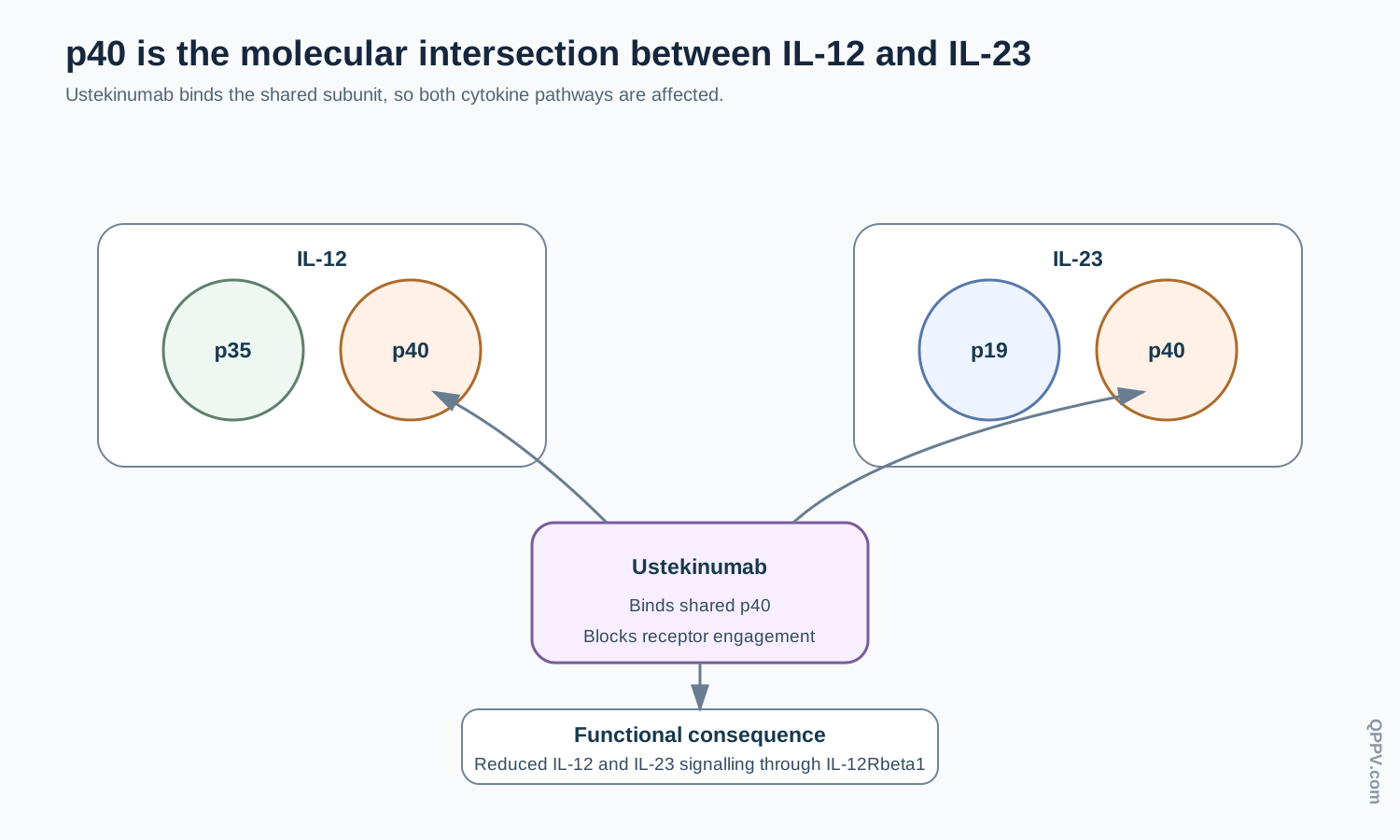
Figure 2. IL-12 contains p35 plus p40, while IL-23 contains p19 plus p40. Ustekinumab binds the shared p40 subunit and prevents productive IL-12/IL-23 signalling through IL-12Rbeta1.
From cytokine biology to organ-level disease
Psoriasis
The original development programme established the importance of IL-12/23-pathway modulation in plaque psoriasis. Skin response can be understood through reduced inflammatory signalling within the dendritic-cell and T-cell networks that sustain psoriatic plaques.
Psoriatic arthritis
Psoriatic arthritis adds joint and entheseal inflammation to the same broader immune network. The clinical endpoint is no longer simply skin clearance; articular symptoms, function, structural progression and concomitant skin disease all become relevant.
Crohn disease and ulcerative colitis
Inflammatory bowel disease extended the molecule into a different organ system and introduced a different route sequence: intravenous induction followed by subcutaneous maintenance. Objective bowel-disease activity, corticosteroid exposure, infection risk, surgery history and nutritional status therefore become part of product safety interpretation.
Development and regulatory history
The European Union authorised ustekinumab in January 2009 for plaque psoriasis. The indication set later expanded to psoriatic arthritis, Crohn disease and ulcerative colitis, with paediatric extensions added over time. Current EU product information was updated in August 2026.
The United States likewise expanded use across dermatologic, rheumatologic and gastrointestinal indications. In 2026 FDA approved additional paediatric inflammatory-bowel-disease uses: Crohn disease in patients aged 2 years and older in April and ulcerative colitis in patients aged 2 years and older in August.
This history matters for pharmacovigilance because the exposed population has progressively broadened. Safety evidence now spans adults and children, skin and joint disease, IBD induction and maintenance, biologic-naive and biologic-exposed patients, and a long post-authorisation period. Aggregate analyses should therefore preserve era, indication and age rather than treating all ustekinumab exposure as clinically homogeneous.
Clinical use and treatment-phase context
Ustekinumab exposure is not described adequately by the active substance name alone. In psoriasis and psoriatic arthritis, treatment is subcutaneous from the start. In Crohn disease and ulcerative colitis, treatment begins with intravenous induction and then moves to subcutaneous maintenance. A reaction during the induction infusion therefore belongs to a different administration context from a delayed event after months of maintenance therapy.
In inflammatory bowel disease, symptom worsening can reflect active inflammation, infection, structural complications, poor adherence or true loss of treatment effect. Pharmacovigilance assessment should therefore integrate clinical symptoms with objective disease measures when available.
Major safety domains
Infection
Ustekinumab modifies cytokine pathways involved in immune function. Infection cases should be medically characterised by site, organism, severity, hospitalization, concomitant corticosteroids or other immunosuppressants, age and disease activity. The baseline risk differs substantially between an otherwise stable psoriasis patient and a patient with active Crohn disease receiving corticosteroids after previous biological treatment.
Serious or unusual infections warrant targeted review. A temporal association alone is not sufficient to distinguish product contribution from the underlying disease and co-treatment.
Tuberculosis and pre-treatment assessment
Current product information includes precautions regarding active infection and tuberculosis evaluation. Reports should distinguish latent TB from active disease and retain baseline screening, exposure history, prophylactic treatment, imaging and microbiological evidence.
Hypersensitivity and administration reactions
Immediate systemic hypersensitivity can occur with biological medicines, while subcutaneous products may also cause local administration reactions. For IBD, intravenous induction adds an infusion-specific context. Timing, clinical phenotype, treatment and recurrence are essential for distinguishing anaphylaxis, nonspecific infusion reaction and local injection reaction.
Malignancy surveillance
Long-term immunomodulation requires continued malignancy surveillance, but attribution is difficult because psoriasis, inflammatory bowel disease, age, smoking and previous immunosuppressants may independently influence cancer risk. Cases should preserve tumour type, latency, prior treatment and cumulative exposure. Aggregate spontaneous reports cannot establish comparative incidence without appropriate exposure denominators and background rates.
Posterior reversible encephalopathy syndrome and neurological assessment
Posterior reversible encephalopathy syndrome has been reported with ustekinumab and requires syndrome-level assessment rather than symptom-level coding. Headache, seizure, confusion or visual symptoms have many possible causes. A clinically meaningful case should capture blood pressure, neuroimaging, neurological findings, treatment interruption and outcome.
Rare neurological events illustrate why pharmacovigilance should resist collapsing all central-nervous-system symptoms into one broad signal category.
Immunogenicity
Anti-drug antibodies can develop and may be associated with altered exposure or reduced effectiveness in some patients. Immunogenicity should be interpreted with dose interval, indication, concomitant therapy and objective disease activity. Antibody positivity alone is not an adverse reaction.
Loss of response
Loss of response is especially important in chronic inflammatory disease because it may drive corticosteroid rescue, hospitalisation, surgery or switching. A useful report distinguishes primary non-response from secondary loss of response and includes adherence, interval, objective inflammatory markers, endoscopy or imaging where relevant and immunogenicity data if obtained clinically.
Paediatric use
The paediatric indication landscape expanded substantially in 2026 in the United States. Paediatric cases require accurate age, weight, indication, route, induction versus maintenance phase and caregiver-administration information. Growth, nutrition and vaccination context may matter in chronic inflammatory bowel disease.
Medication errors can arise if adult and paediatric presentations, weight-based induction or maintenance regimens are confused. These are preventable product-use problems and should be analysed separately from intrinsic drug toxicity.
Biosimilars, switching and product identity
Ustekinumab now exists in a complex biosimilar environment. The scientific and regulatory questions created by biosimilarity, interchangeability, switching and traceability are covered in the dedicated QPPV.com biosimilar article and should not be duplicated here.
For the parent molecule article, the key operational point is that active substance and exact product identity are not the same data field. Case processing should preserve the specific product and batch where available, especially when assessing immunogenicity, switching, device complaints or clusters. Molecule-level aggregate review and product-level traceability are complementary, not competing, requirements.
Pharmacovigilance case assessment
Ustekinumab cases should be reconstructed around indication, age, route/treatment phase, concomitant immunosuppression and exact product identity. This is especially important now that exposure spans multiple organ systems, paediatric populations and several ustekinumab products.
Event-specific follow-up priorities
| Event or issue | High-value follow-up information |
|---|---|
| Serious infection | Site, organism, severity, hospitalization, corticosteroids/co-therapy, disease activity, outcome |
| Tuberculosis | Baseline screening, latent/active diagnosis, exposure, prophylaxis, microbiology/imaging |
| Hypersensitivity | IV induction vs SC maintenance, latency, phenotype, treatment, recurrence, product/presentation |
| Neurological syndrome | Symptoms, blood pressure, MRI/CT, seizure data, specialist diagnosis, outcome |
| Malignancy | Tumour type, latency, prior immunosuppressants/phototherapy, age, indication, cumulative exposure |
| Loss of response | Primary vs secondary failure, adherence, interval, objective disease activity, drug/antibody levels if available |
| Paediatric medication error | Age, weight, indication, induction/maintenance phase, presentation, actual dose, clinical consequence |
| Product-switch issue | Exact reference/biosimilar products, switch date, batch where available, device, event chronology |
Signal detection and aggregate review
Aggregate analyses should remain stratifiable by indication because event backgrounds differ across psoriasis, psoriatic arthritis, Crohn disease and ulcerative colitis. Age and treatment phase also matter. Infection reporting during intravenous induction for active IBD is not directly comparable with long-term subcutaneous psoriasis maintenance.
Molecule-level analyses can appropriately combine evidence when the biological question concerns ustekinumab itself, but product-specific analyses are still needed for quality defects, device problems, immunogenicity clusters or events temporally associated with switching.
Periodic benefit-risk evaluation
Periodic review should integrate sustained disease control with serious infection, hypersensitivity, malignancy observations, neurological events, immunogenicity, loss of response and medication-use issues. For IBD, reduction in corticosteroid exposure, avoidance of hospitalisation and maintenance of remission are clinically important components of benefit, not merely secondary efficacy details.
The long duration of post-authorisation experience is informative but does not eliminate the need for continuing surveillance as use expands into younger populations and new product presentations.
Risk management and operational controls
Current product information governs infection precautions, tuberculosis assessment, vaccination, administration and management of hypersensitivity or neurological events. Recommended operational practice includes indication- and age-specific case review, explicit route/treatment-phase fields, reliable exact-product capture and targeted follow-up for serious infections and suspected posterior reversible encephalopathy syndrome.
For IBD, case forms should make it possible to reconstruct induction and maintenance chronology. For paediatric use, weight and caregiver administration are particularly important when assessing medication error.
Potential failure modes
The following are illustrative scenarios, not published inspection findings:
- All ustekinumab infections are pooled without distinguishing corticosteroid-treated active IBD from stable psoriasis.
- An event after IV induction is analysed as though it occurred during routine SC maintenance.
- Headache alone is coded as posterior reversible encephalopathy syndrome without imaging or neurological diagnosis.
- Secondary loss of response is assessed without adherence, objective disease activity or interval history.
- A paediatric dose error is reviewed without age and weight.
- Active-substance-level coding replaces exact product identity after a biosimilar switch, preventing traceability.
Inspection and governance perspective
An inspector assessing ustekinumab pharmacovigilance could examine whether the organisation can stratify data by indication, age and route; whether serious infection and neurological events receive adequate medical follow-up; whether paediatric medication errors are reconstructable; and whether exact product/batch identity survives switching and downstream data processing.
The effectiveness question is whether a mature, multi-indication molecule is governed as a coherent pharmacological entity without becoming an undifferentiated exposure pool.
Practical checklist
For an ustekinumab case or aggregate analysis, confirm:
- indication and objective disease activity;
- age and weight where relevant;
- IV induction versus SC maintenance;
- dose interval and administration chronology;
- concomitant corticosteroids and other immunosuppressants;
- infection organism/site and baseline TB status when relevant;
- objective neurological findings for suspected serious CNS events;
- primary versus secondary treatment failure;
- exact product, presentation and batch where available;
- switch history for biosimilar-related reports;
- device and caregiver-administration details for medication errors.
Key Takeaways
Ustekinumab binds the p40 subunit shared by IL-12 and IL-23. That single structural fact explains why the molecule is not a selective IL-23 p19 inhibitor and provides the conceptual bridge between its immune mechanism and its broad indication history.
Its pharmacovigilance has evolved with the product: from adult psoriasis into rheumatology, inflammatory bowel disease, paediatric use and a biosimilar-rich environment. High-quality surveillance therefore requires both continuity at the molecule level and granularity at the level of indication, age, route, treatment phase and exact biological product.
References
- European Medicines Agency. Ustekinumab (Stelara): EPAR and current product information. Product information updated 18 August 2026. https://www.ema.europa.eu/en/medicines/human/EPAR/stelara
- European Medicines Agency. Stelara product information: pharmacodynamic properties and mechanism of action. https://www.ema.europa.eu/en/documents/product-information/stelara-epar-product-information_en.pdf
- Sandborn WJ, Feagan BG, Rutgeerts P, et al. Ustekinumab as induction and maintenance therapy for Crohn's disease. N Engl J Med. 2016;375:1946-1960. doi:10.1056/NEJMoa1602773.
- Sands BE, Sandborn WJ, Panaccione R, et al. Ustekinumab as induction and maintenance therapy for ulcerative colitis. N Engl J Med. 2019;381:1201-1214. doi:10.1056/NEJMoa1900750.
- Afif W, Arasaradnam RP, Abreu MT, et al. Efficacy and safety of ustekinumab for ulcerative colitis through 4 years: final results of the UNIFI long-term maintenance study. Am J Gastroenterol. 2024;119:910-921. doi:10.14309/ajg.0000000000002621.
- U.S. Food and Drug Administration. FDA Approves Stelara for Pediatric Ulcerative Colitis. 28 August 2026. https://www.fda.gov/drugs/news-events-human-drugs/fda-approves-stelara-pediatric-ulcerative-colitis
Regulatory Note
Authorised indications, paediatric ages, routes, dosing intervals, presentations and product-specific interchangeability status differ by jurisdiction and can change. This parent article addresses molecule-level science and pharmacovigilance; biosimilar and interchangeability questions are treated separately. Regulatory information was checked against EMA and FDA material current in September 2026.