Vilobelimab: Selective C5a Neutralisation in COVID-19-Associated ARDS
Vilobelimab is an anti-inflammatory monoclonal antibody authorised in the EU for a narrowly defined intensive-care population. It neutralises complement fragment C5a rather than inhibiting C5 cleavage as a whole. This molecular distinction matters because C5a-driven inflammatory activity and C5b-mediated terminal complement function are not identical. Pharmacovigilance must also account for the severe disease, invasive ventilation and multiple concurrent treatments in the authorised setting.
Complement target and mechanism
Complement is a network of soluble and cell-associated proteins involved in innate defence and inflammation. Cleavage of complement component C5 generates C5a, a potent inflammatory mediator, and C5b, which initiates assembly of the terminal membrane attack complex. Vilobelimab is a monoclonal antibody that binds free C5a and inhibits its biological activity.
This differs from antibodies or medicines that bind C5 and prevent its cleavage. Selective C5a neutralisation is intended to reduce C5a-mediated inflammatory activity while leaving C5b generation and terminal complement assembly comparatively intact. This is a molecular description of the intended intervention; actual clinical effects must be evaluated from clinical evidence and product information.
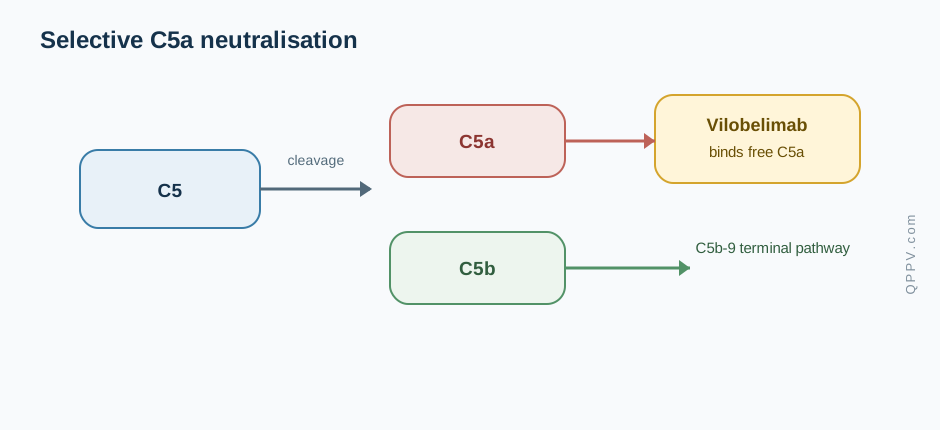
Figure 1. C5 cleavage produces C5a and C5b. Vilobelimab neutralises free C5a; it is not represented as blocking C5 cleavage or C5b formation.
Authorised population and timing
The EU indication covers adults with SARS-CoV-2-induced acute respiratory distress syndrome (ARDS) who are receiving systemic corticosteroids as standard care and invasive mechanical ventilation, with or without extracorporeal membrane oxygenation (ECMO). The product is administered by intravenous infusion, with the first dose given within 48 hours after initiation of invasive mechanical ventilation and subsequent doses on the schedule specified in the current SmPC.
The timing condition is clinically central. The treated group is critically ill, and lung injury, infection, organ failure, thrombosis, secondary infection and death may occur as part of disease progression or intensive-care treatment. A case narrative that omits time from intubation to first infusion or fails to distinguish ECMO status may be difficult to interpret.
The medicine received EU marketing authorisation under exceptional circumstances. EMA explains that comprehensive data could not be provided under normal conditions, and additional evidence and review arrangements apply. This regulatory route should be described accurately: it is an authorisation, with acknowledged evidence limitations and continuing obligations, not an emergency use authorisation.
Clinical evidence and uncertainty
The main EU assessment included a study in mechanically ventilated adults with COVID-19. The observed 28-day mortality was numerically lower in the vilobelimab group than in the placebo group, but the difference reported in the EMA overview was not statistically significant. EMA considered additional analyses and supportive information in concluding that there was a reasonable possibility of benefit for the narrowly defined population.
That evidence should not be simplified into a claim that vilobelimab definitively reduces mortality. The distinction between numerical difference, statistical uncertainty and the regulatory conclusion is essential. Pharmacovigilance reviews should not reinterpret trial findings beyond the assessment or present subgroup analyses as established effects without evidence.
Safety and intensive-care confounding
The EU product information identifies infections among common adverse reactions, including pneumonia, herpes simplex infection, bronchopulmonary aspergillosis and sepsis. In an ICU population, such events have substantial competing explanations: severe viral disease, invasive devices, prolonged hospitalisation, corticosteroid exposure, organ support and other immunomodulatory treatments. Their occurrence still requires appropriate reporting and assessment; clinical complexity is not a reason to dismiss a suspected reaction.
The product’s mechanism may prompt questions about host defence because C5a has inflammatory and immune functions. A hypothesis about infection susceptibility is not itself proof of a product-specific causal effect. Review the clinical evidence, timing, microbiology, baseline infection status, concomitant therapies and current product information. Keep established label risks separate from mechanistic speculation.
Infusion timing and treatment completion should be reconstructed precisely. For patients who deteriorate rapidly, an event may begin before the first dose or before a subsequent scheduled dose. Record the sequence of SARS-CoV-2 illness, ICU admission, intubation, ECMO, corticosteroids, vilobelimab, antimicrobials and other immunomodulators. For fatal outcomes, document the clinical course and the medically assessed cause of death without assuming that temporal proximity identifies causality.
Case assessment and aggregate evaluation
A focused case assessment should capture:
- onset and progression of COVID-19 and ARDS;
- date and time of invasive ventilation and first infusion;
- each subsequent dose and any interruption;
- ECMO status and other organ support;
- corticosteroids, antimicrobials, anticoagulants and other immunomodulators;
- microbiology and diagnostic evidence for infection;
- organ dysfunction, serious events and outcome;
- investigator or treating-clinician assessment, where available.
Aggregate review should separate events present before treatment from treatment-emergent events and account for severity and duration of critical illness. Comparisons across cases or treatment groups require caution because severity, treatment timing and supportive care may differ. Spontaneous reports do not provide incidence estimates or counterfactual outcomes.
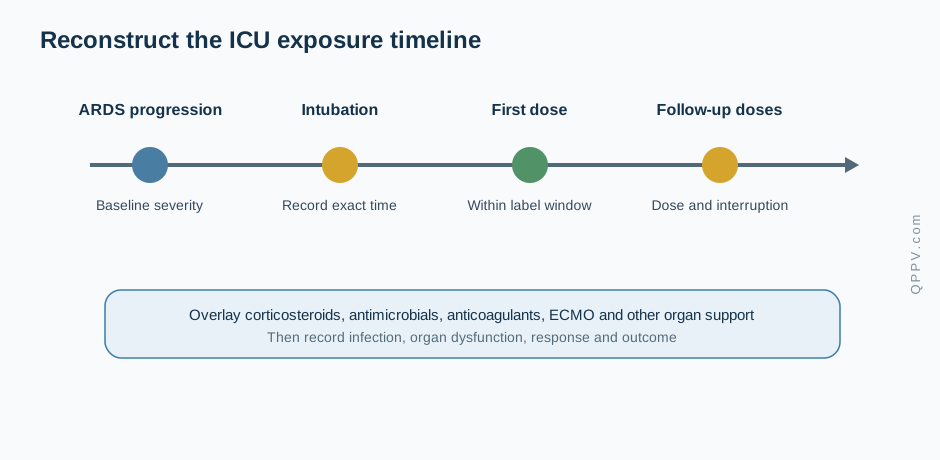
Figure 2. The clinical timeline anchors the first vilobelimab dose to invasive ventilation and places co-interventions and outcomes in sequence. It is a case-reconstruction aid, not a substitute for the authorised dosing instructions.
Quality systems and governance
Case-processing procedures should support rapid collection of ventilation and infusion timing, ICU status, relevant co-treatments, infection evidence and fatal-outcome details. Follow-up should be clinically targeted: request information that can change seriousness, diagnosis, exposure reconstruction, causality or the benefit-risk assessment. Information may be unavailable in critically ill patients; the record should distinguish unavailable data from negative findings.
At aggregate level, the organisation should review whether patterns differ by timing, baseline severity, ECMO, infection phenotype or treatment exposure when data support such analyses. Any potential signal should be evaluated with appropriate clinical and statistical methods, while respecting the small and selected evidence base. The rationale for conclusions and remaining uncertainty should be documented.
An inspection could examine whether the safety system can identify patients who met the authorised clinical context, establish whether reported events began before or after dosing, and use information from clinical, medical-information and quality channels consistently. A potential failure mode is attributing every infection or death to the antibody—or, in the opposite direction, dismissing every event as inevitable because patients were critically ill. Neither approach demonstrates balanced pharmacovigilance.
Key takeaways
- Vilobelimab neutralises C5a; it does not represent complete C5 blockade.
- The EU indication is limited to SARS-CoV-2-induced ARDS in adults receiving corticosteroids and invasive ventilation, with or without ECMO.
- First-dose timing relative to intubation is essential for exposure assessment.
- The main-study mortality difference was not statistically significant; preserve the uncertainty underlying the EU regulatory conclusion.
- ICU infections and deaths require careful assessment of baseline disease and co-interventions, not automatic attribution or dismissal.
References
- European Medicines Agency. Gohibic: European Public Assessment Report.
- European Medicines Agency. Gohibic: current EU product information.
- European Medicines Agency. CHMP meeting highlights, 11–14 November 2024: Gohibic recommendation.
- European Medicines Agency. Good pharmacovigilance practices.
- European Medicines Agency. Gohibic assessment and exceptional-circumstances documents, available through the EPAR assessment history.
Regulatory Note
This article reflects the EU authorisation reviewed on 24 September 2026. Consult the current SmPC for the authorised population, dose schedule, warnings and monitoring. The article distinguishes EMA’s regulatory conclusion from the limitations of the clinical evidence; suggested case-review controls are operational recommendations, not additional legal requirements.