Vunakizumab: Classification, Mechanism, Evidence and Pharmacovigilance
Vunakizumab is a recombinant humanised IgG1 monoclonal antibody that binds interleukin-17A (IL-17A). China’s NMPA authorised it in February 2025 for adults with moderate-to-severe plaque psoriasis who are candidates for systemic treatment or phototherapy. [1]
Vunakizumab shares its target and psoriasis indication with other anti-IL-17A antibodies, including xeligekimab, covered separately in this series. Shared target biology does not make the molecules biosimilars or establish identical dose regimens, labels, evidence or safety profiles.
Classification and pathway
IL-17A is a pro-inflammatory cytokine involved in immune signalling in skin. It can stimulate keratinocytes and other cells to produce mediators that sustain inflammation. The NMPA describes vunakizumab as binding IL-17A and blocking its interaction with IL-17 receptor A (IL-17RA). [1]
Psoriasis is a multifactorial inflammatory disease. IL-17A is an important therapeutic pathway, but it is not the sole cause of disease and does not explain every individual response.
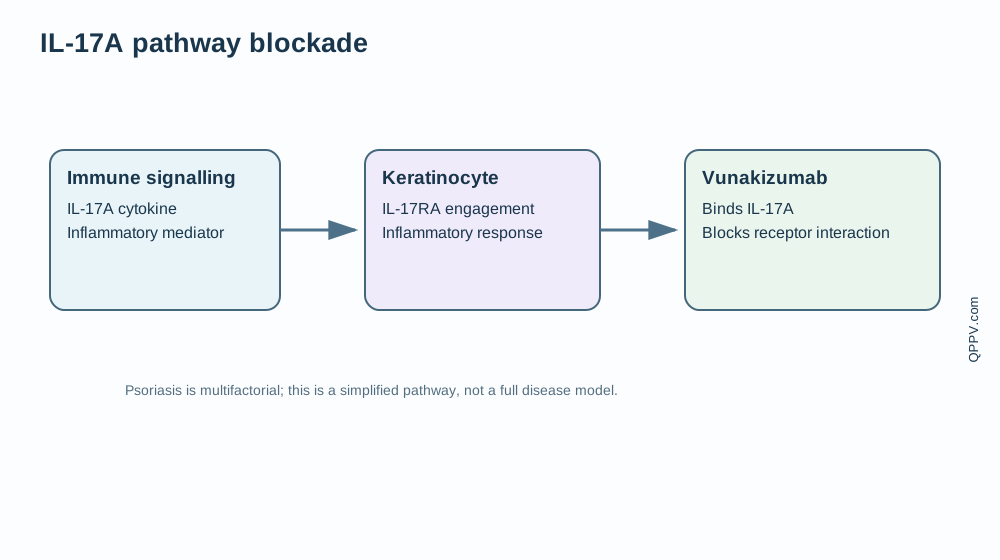
Figure 1. Simplified IL-17A pathway in psoriasis; other disease mechanisms and immune pathways are not shown.
Regulatory scope
The NMPA indication is limited to adults with moderate-to-severe plaque psoriasis when systemic therapy or phototherapy is appropriate. It should not be extrapolated to psoriatic arthritis, other psoriasis subtypes, children or jurisdictions without an applicable authorisation. [1]
The approval notice does not provide the full dose schedule, contraindications or complete safety profile. Use the current local prescribing information rather than reconstructing these details from another anti-IL-17A product.
Clinical evidence
A randomised, double-blind, placebo-controlled phase 3 trial evaluated vunakizumab in moderate-to-severe chronic plaque psoriasis (NCT04839016). The publication reports clinical responses at week 12 and follow-up through week 52. These findings support efficacy in the studied adult psoriasis population and should be interpreted against its eligibility criteria, endpoints, dose regimen and follow-up. [2]
A separate phase 2 dose-ranging study enrolled 187 participants and followed treatment through week 36. It contributes to dose and response characterisation but does not replace phase 3 evidence or current product information. [3] Neither study establishes efficacy in conditions outside the studied and authorised plaque psoriasis population.
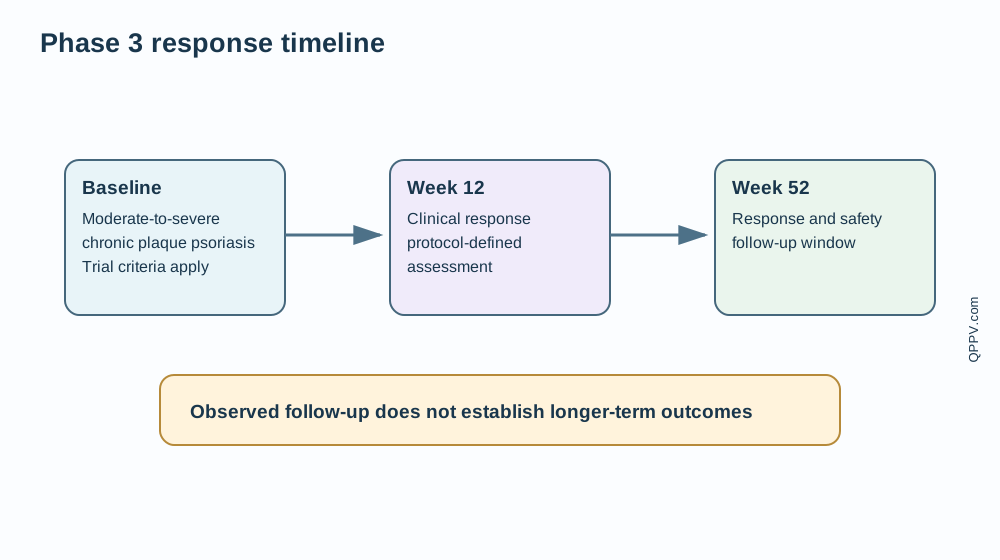
Figure 2. The phase 3 publication reports response assessment at week 12 and follow-up through week 52; this does not establish outcomes beyond observed follow-up.
Safety interpretation
The phase 3 report describes tolerability in its study population, but finite sample size and duration may not identify rare or delayed events. Do not infer absence of risk from a lack of a prominent trial signal. For full warnings and frequencies, use current local product information. [1,2]
IL-17 pathway pharmacology supports class-informed clinical questions about infection, mucocutaneous candidiasis and new or worsening inflammatory bowel disease. These considerations should not be presented as confirmed vunakizumab-specific warnings or assigned another product’s event rates without supporting data.
Case assessment
For suspected infection, document site, diagnostic evidence, severity, treatment and resolution. For candidiasis, capture anatomical site and antifungal management. For gastrointestinal symptoms, retain baseline history, onset, frequency, testing and alternative causes. For suspected lack of effect, include baseline and follow-up disease measures, adherence, interruptions and prior biologic exposure.
Pharmacovigilance operations
A useful case narrative includes psoriasis severity, prior systemic treatment, infection and bowel history, dose dates, concomitant medicines, event chronology, work-up, treatment and outcome. Distinguish treatment-emergent events from underlying disease and from class-level hypotheses.
At aggregate review, assess infections, candidiasis, gastrointestinal inflammation, hypersensitivity, injection events and lack-of-effect reports against product-specific exposure and trial context. Do not pool all IL-17 inhibitors into one denominator or treat another molecule’s report as a vunakizumab case. Stratify by latency, dose, indication, prior treatment and outcome.
Inspection perspective
The safety file should show the source for each frequency or warning, whether information is product-specific or class-informed, how follow-up was obtained and how alternative causes were assessed. If new label or trial evidence appears, document its impact on case handling, aggregate review and risk communication.
Key takeaways
- Vunakizumab is a humanised IgG1 antibody that blocks IL-17A binding to IL-17RA.
- China’s NMPA indication is adult moderate-to-severe plaque psoriasis eligible for systemic therapy or phototherapy.
- Phase 3 evidence includes follow-up through week 52 in the studied population.
- Distinguish product-specific findings from class-informed monitoring considerations.
- Document prior treatment, infection and bowel history, event work-up and outcome.
References
- China National Medical Products Administration. Vunakizumab Injection Approved for Marketing by China NMPA. 19 February 2025. https://english.nmpa.gov.cn/2025-02/19/c_1073596.htm
- Yan K, et al. Efficacy and safety of vunakizumab in moderate-to-severe chronic plaque psoriasis: a randomised, double-blind, placebo-controlled phase 3 trial. J Am Acad Dermatol. 2025;92(1):92–99. PMID: 39332633. https://pubmed.ncbi.nlm.nih.gov/39332633/
- Zhang C, et al. A multicenter, randomised, double-blinded, placebo-controlled dose-ranging study of vunakizumab in plaque psoriasis. PMID: 35026342. https://pubmed.ncbi.nlm.nih.gov/35026342/
- ClinicalTrials.gov. Vunakizumab phase 3 study, NCT04839016. https://clinicaltrials.gov/study/NCT04839016
Regulatory Note
Regulatory status and evidence were checked on 25 September 2026. The described indication is the China NMPA scope in the cited notice. Do not infer other approvals or indications. Use current local product information for clinical and reporting decisions.