Xeligekimab: Classification, Mechanism, Clinical Evidence and Pharmacovigilance
Xeligekimab is a recombinant, fully human IgG4 monoclonal antibody that selectively binds interleukin-17A (IL-17A). By limiting IL-17A interaction with its receptor, it reduces a cytokine signal involved in inflammatory activation of keratinocytes and other tissue responses. It is an unconjugated cytokine-neutralising antibody; it does not target the IL-17 receptor itself.
China’s NMPA announced marketing approval for adults with moderate-to-severe plaque psoriasis requiring systemic treatment or phototherapy. This article states that China-specific status and does not imply FDA or EU authorisation. [1]
Classification and mechanism
IL-17A is produced by several immune-cell populations and signals through receptor complexes on responsive cells. In skin, IL-17A can induce chemokines and inflammatory mediators that recruit and activate leukocytes and contribute to epidermal changes. Xeligekimab binds IL-17A, reducing its capacity to engage IL-17RA-containing receptor complexes. It does not eliminate every source of inflammation or replace the skin barrier’s other regulatory pathways.
The mechanism provides a coherent therapeutic rationale for plaque psoriasis, where the IL-23/Th17/IL-17 axis is an important disease pathway. However, mechanistic plausibility is not proof of an effect in every immune-mediated condition. Indications should be restricted to those supported by product authorisation and clinical evidence.
Pathway effects and safety interpretation
Because IL-17 contributes to mucosal and epithelial host defence, infection events—particularly mucocutaneous candidiasis—are a relevant class-level consideration for IL-17 pathway inhibitors. This statement is a pharmacological class consideration, not a claim that the NMPA notice establishes a specific xeligekimab warning. Product-specific safety frequencies and management instructions should be taken from the current local product information.
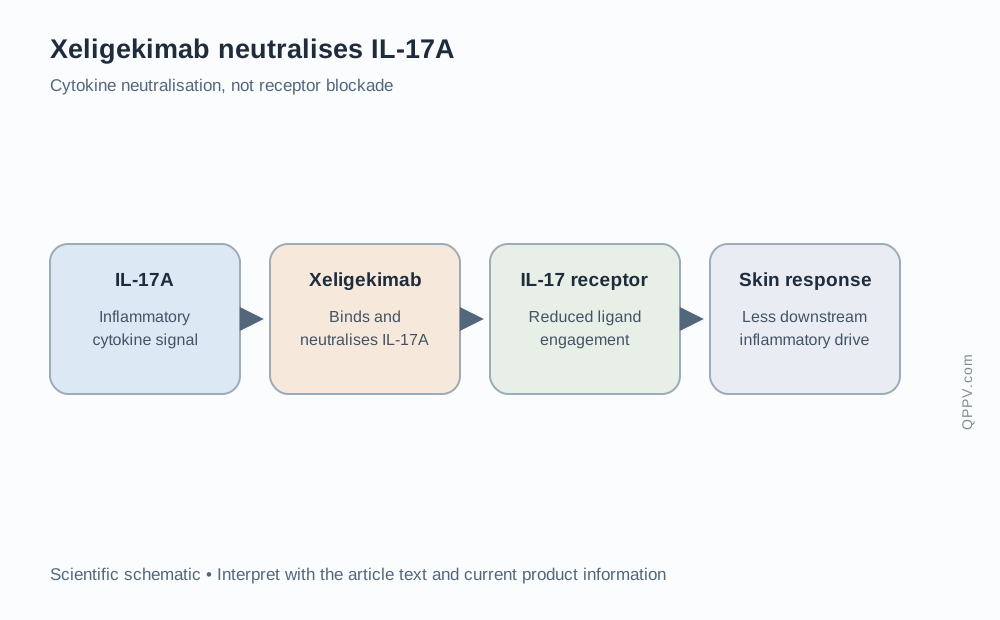
Figure 1. Simplified IL-17A neutralisation pathway. The diagram distinguishes cytokine binding by xeligekimab from direct receptor blockade.
Clinical evidence and regulatory status
The NMPA notice describes xeligekimab as a fully human anti-IL-17A IgG4 antibody and specifies the adult plaque-psoriasis population for which it was authorised. The current Chinese product information, rather than a foreign label or another IL-17 inhibitor’s monograph, governs exact eligibility and use. [1]
A multicentre, randomised, double-blind, placebo-controlled phase 3 study evaluated xeligekimab in Chinese participants with moderate-to-severe plaque psoriasis. At week 12, PASI 75, PASI 90 and PASI 100 responses were achieved by 90.7%, 74.4% and 30.2%, respectively, in the xeligekimab group. The article’s interpretation is bounded by the trial population, comparator, treatment regimen and study duration; it is not a head-to-head comparison with other biologics. [2]
A phase 2 study and longer-term follow-up add context but should be assessed for dose, sample size, attrition, rescue treatment and endpoint timing. A response at week 12 does not establish durability after discontinuation or safety in populations not represented in the trials.
Safety and pharmacovigilance
For individual reports, document disease phenotype and severity, prior phototherapy and systemic agents, psoriasis-associated conditions, concomitant immunomodulators, dose timing and response. Infection reports should include site, organism where known, severity, treatment and recurrence. Record candidiasis or other mucosal infection specifically rather than coding only a generic infection if clinical detail is available. New or worsening inflammatory bowel symptoms warrant clinical evaluation and careful documentation because this is a relevant pathway-class consideration; it should not be prematurely attributed to xeligekimab.
For lack of efficacy, retain the assessment tool, baseline and follow-up scores, body sites, adherence, treatment duration and any dose changes. Record a suspected hypersensitivity event with timing, clinical features, intervention and outcome. Current product information should determine whether a particular event requires dose interruption or discontinuation.
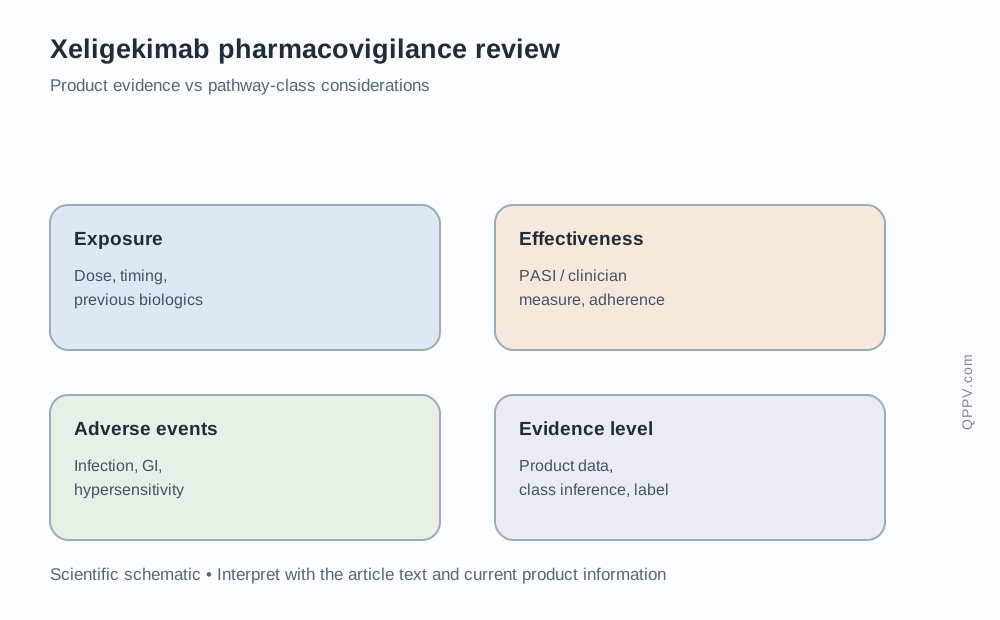
Figure 2. Case-review structure linking exposure and psoriasis response with adverse-event context. Class considerations are not a substitute for the product label.
Pharmacovigilance in practice
Case quality and differential diagnosis
A useful report distinguishes treatment-emergent events from manifestations of psoriasis or associated disease. For a rash, note whether it is the target plaque disease, a new eruption, infection or hypersensitivity. For infection, document baseline susceptibility, concurrent immunosuppression and microbiological evidence. For gastrointestinal symptoms, include onset, prior inflammatory bowel disease, investigations and clinical course. These details improve causality assessment without assuming a pathway-class warning is product-specific.
Effectiveness cases can reveal diagnostic, access, adherence or administration issues. Capture prior treatment failure, concomitant topical therapy, injection details and objective response. An apparent relapse after missed doses may not represent pharmacologic failure; conversely, persistent disease despite correct use merits evaluation and reporting under applicable rules.
Aggregate monitoring
Aggregate review should consider infections, hypersensitivity, gastrointestinal inflammatory events, immunogenicity, treatment persistence and effectiveness, using exposure-adjusted context where data allow. Do not combine small uncontrolled cohorts with spontaneous reports to produce a comparative rate. Track source, denominator, follow-up period and event definition.
The safety team should monitor NMPA label revisions and safety communications and maintain translation/version control for local product information. Where safety literature describes a class effect, clearly distinguish the evidence for xeligekimab from evidence for other IL-17 inhibitors. Regulatory action should follow the relevant national framework and the totality of evidence.
Key takeaways
- Xeligekimab neutralises IL-17A; it does not bind IL-17 receptors.
- The described approval is China NMPA authorisation for eligible adults with moderate-to-severe plaque psoriasis.
- Phase 3 results show substantial short-term PASI responses in the studied Chinese population, not comparative superiority.
- Infection and inflammatory bowel disease are relevant pathway-class considerations; verify product-specific warnings locally.
- Record disease phenotype, prior therapy, exposure, clinical response and detailed event features.
References
- National Medical Products Administration of China. Xeligekimab injection approved for marketing. https://english.nmpa.gov.cn/2025-02/19/c_1073575.htm
- A multicentre randomised double-blind placebo-controlled phase 3 study of xeligekimab (GR1501) in moderate-to-severe plaque psoriasis. Br J Dermatol. PMID: 38366639. https://pubmed.ncbi.nlm.nih.gov/38366639/
- Investigation of the efficacy and safety of xeligekimab (GR1501) in moderate-to-severe plaque psoriasis: phase 2 trial. PMID: 40517362. https://pubmed.ncbi.nlm.nih.gov/40517362/
- National Medical Products Administration of China. Drugs and regulatory information. https://english.nmpa.gov.cn/
Regulatory Note
Regulatory information was checked on 25 September 2026. The described indication is the China NMPA scope reported in the cited notice. It should not be interpreted as an FDA or EU authorisation or as a substitute for current local product information.