Zanidatamab: Mechanism, Clinical Safety and Pharmacovigilance
Zanidatamab is a HER2-directed antibody for a narrowly defined biliary-tract cancer population. Its two-epitope design differs from a single-epitope antibody. In pharmacovigilance, preserve tumour site, HER2 immunohistochemistry result, prior systemic therapy, infusion chronology and cardiac status.
The EU authorisation is conditional and biomarker-specific. A report that says only “HER2-positive cancer” may be inadequate to determine whether treatment matched the authorised population.
1. Classification and authorised use
1.1 Biparatopic design
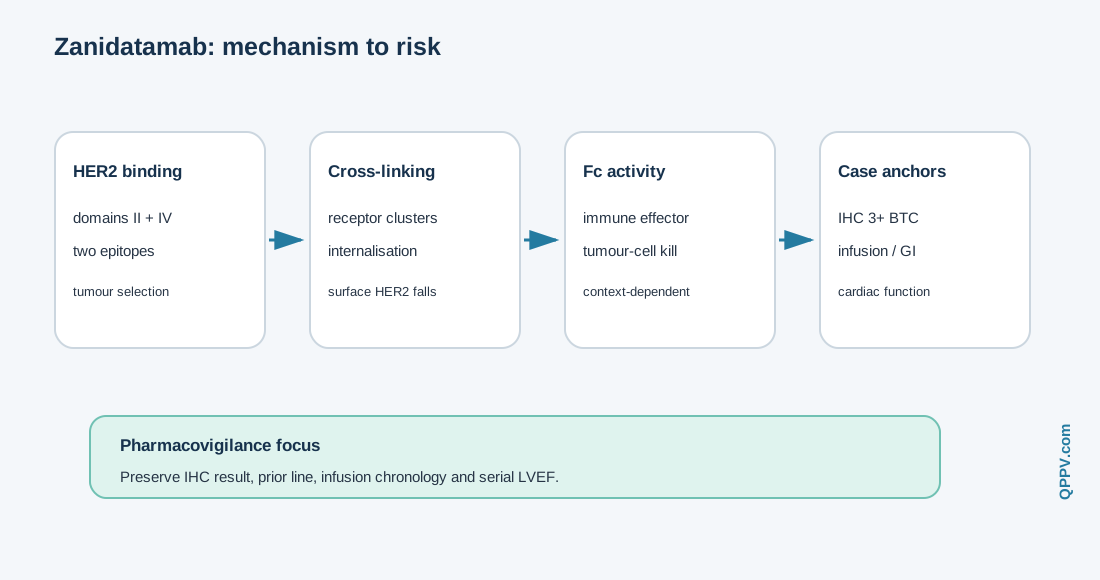
Zanidatamab is a humanised IgG1 antibody that binds two extracellular domains of HER2, commonly identified as domains II and IV. Simultaneous binding can cross-link receptors, promote clustering and internalisation, reduce cell-surface HER2 and support Fc-mediated immune effector activity.[1,2]
Mechanistic similarity does not make HER2-directed products interchangeable for attribution. Preserve the exact active substance, dose, schedule and prior or concomitant HER2 therapy.
1.2 EU indication and evidence
The indication is monotherapy for adults with unresectable locally advanced or metastatic biliary tract cancer that is HER2-positive by IHC 3+ and has received at least one prior systemic therapy. EU conditional authorisation was issued on 27 June 2025. EMA’s assessment notes the small, non-comparative study and observed responses in a population with limited options.[1]
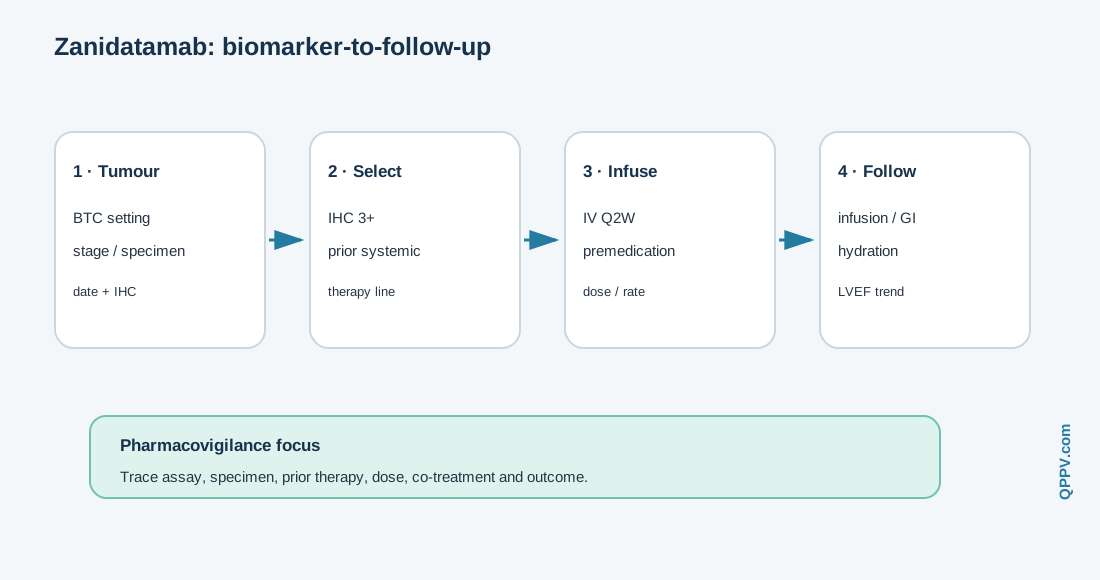
Record tumour site, stage, IHC assay and score, specimen date, prior regimens, treatment line and reason earlier therapy stopped. Do not assume IHC 2+ with amplification meets the IHC3+ indication.
1.3 Administration
Zanidatamab is infused intravenously every two weeks. Premedication is used to reduce infusion-related reactions. Check the current product information for dose, infusion duration, premedication and dose modification.[2] Record start and stop times, rate, interruption, symptoms, rescue treatment and tolerance.
2. Mechanism and risk pathway
2.1 HER2 signalling and immune activity
HER2 is a receptor tyrosine kinase that contributes to cell proliferation and survival. Zanidatamab’s two-epitope engagement increases receptor cross-linking and internalisation while enabling immune-mediated tumour-cell killing. Cardiac monitoring remains important because HER2 biology also has physiologic roles in cardiac function.
2.2 Labelled adverse reactions
Common reactions include diarrhoea, infusion-related reactions, fatigue, anaemia and rash. The EMA overview identifies diarrhoea and fatigue among the most frequent serious reactions. Left ventricular dysfunction is a recognised clinical concern; use the product information’s LVEF monitoring and management instructions.[1,2]
A measured LVEF decline is not automatically causal. Consider baseline cardiac disease, previous anthracyclines, other cardiotoxic therapy, ischaemia, infection and measurement variability.
3. Clinical assessment
3.1 Diarrhoea
Record baseline bowel function, stools above baseline, duration, abdominal pain, fever, oral intake, hydration, electrolytes and concurrent medicines. Severe diarrhoea may require fluid replacement, dose interruption or other intervention. In biliary tract cancer, also assess obstruction, cholangitis, infection and recent antibiotics.
3.2 Infusion reactions
Reconstruct symptoms against infusion start, rate changes, pause, restart and completion. Record fever, chills, flushing, dyspnoea, hypotension, oxygen saturation, premedication and rescue medicines. Distinguish infusion reaction from anaphylaxis, sepsis, tumour-related symptoms or delayed immune events.
3.3 Cardiac function
Document cardiac history, baseline LVEF, prior anthracyclines and other cardiotoxic therapies. Follow the product information’s monitoring schedule and interruption criteria. Preserve actual values, measurement method, trend, symptoms and cardiology assessment.
4. Case reconstruction
4.1 Biomarker and treatment context
Capture IHC3+ evidence, tumour site, stage, assay, specimen date, previous systemic therapy, dose, infusion details, cycle, concomitant medicines, event onset, seriousness and outcome. For cardiac events, include serial LVEF, ECG and biomarkers when measured, heart-failure symptoms and specialist findings.
4.2 Worked example
An adult with metastatic cholangiocarcinoma and tumour IHC3+ develops watery diarrhoea after the second infusion. Record dates, stool frequency above baseline, duration, hydration, electrolytes, renal function, medication review, infection work-up and intervention. Hospitalisation for dehydration can make the case serious even when diarrhoea is a labelled event.
Another patient has an asymptomatic LVEF fall on scheduled imaging. Capture baseline and follow-up values, method, timing, concurrent cardiac exposures and clinical interpretation. Do not convert a numerical change into symptomatic heart failure without evidence.
5. Risk management and benefit-risk review
5.1 Population and administration safeguards
Keep the IHC3+ result and prior systemic line traceable to the safety record. Record the infusion lot, dose, rate, premedication and setting. An administration error, omitted premedication or reaction managed with a pause should be captured even if no serious outcome follows.
5.2 Seriousness and expectedness
Seriousness is based on outcome and regulatory criteria, not event frequency. Expectedness is checked against the current EU reference safety information applicable to the product and report date. Conditional authorisation does not change individual case-processing rules.
5.3 Aggregate review
Define the question and case definition before counting: for example, serious diarrhoea, infusion reactions or LVEF decline. Stratify by baseline cardiac status, prior cardiotoxic exposure, tumour burden, dose, prior treatment and concomitant medicines. The pivotal evidence was generated in a selected biomarker-positive population without a randomised comparator; incorporate confirmatory and longer-term evidence as it becomes available.[1]
Spontaneous reports can raise a hypothesis but cannot alone quantify incidence or establish comparative safety.
Key points: retain the IHC3+ result; distinguish infusion chronology from delayed events; monitor diarrhoea and cardiac function using the current label; keep evidence limitations visible.
References
[1] EMA, EPAR: zanidatamab.
[2] EMA, EU product information for zanidatamab.
[3] EMA, Good pharmacovigilance practices.
[4] EMA, ICH E2D(R1): Post-approval safety data management.
[5] ICH, E2C(R2): Periodic benefit-risk evaluation report.
Regulatory Note
Educational summary of EU regulatory information accessed 20 September 2026. It does not replace the current product information, clinical judgement, applicable national reporting requirements or local procedures. Confirm the label version in force for the exposure being assessed.