Zenocutuzumab: Classification, Mechanism, Evidence and Pharmacovigilance
Zenocutuzumab is a bispecific antibody designed to interfere with neuregulin 1 (NRG1)-driven signalling through the HER2/HER3 receptor pair. In the United States, zenocutuzumab-zbco first received accelerated approval in December 2024 for previously treated, advanced NRG1 fusion-positive non-small-cell lung cancer (NSCLC) and pancreatic adenocarcinoma. A separate FDA approval followed on 8 May 2026 for previously treated, advanced NRG1 fusion-positive cholangiocarcinoma. These indications share a molecular driver but have separate tumour-specific evidence populations and regulatory histories. [1,2]
NRG1 fusion biology and bispecific design
NRG1 can activate HER3, which then forms signalling complexes with HER2. Certain NRG1 gene fusions create persistent ligand-driven signalling that can support tumour growth. Zenocutuzumab uses a bispecific antibody architecture that engages HER2 and HER3 and interferes with NRG1-dependent receptor activation. [3]
The therapeutic logic is biomarker-driven rather than tissue-agnostic in the regulatory sense. A common molecular mechanism does not make response rates or evidence maturity interchangeable across NSCLC, pancreatic cancer and cholangiocarcinoma. Tumour type, prior therapy, NRG1 fusion status and the method used to identify the fusion remain essential parts of both effectiveness and safety interpretation.
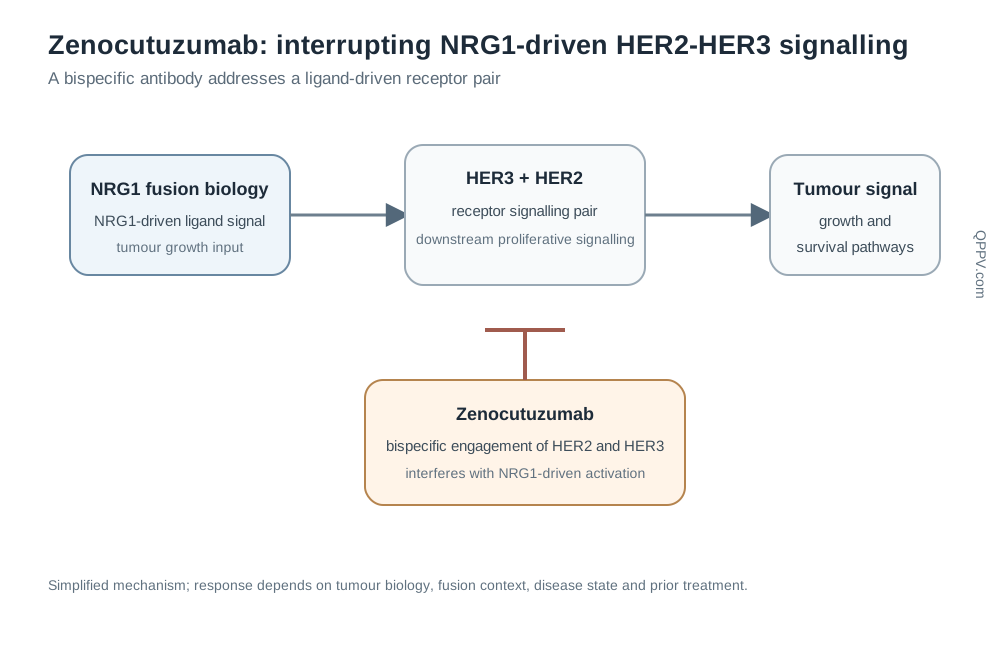
Figure 1. Simplified mechanism. Zenocutuzumab engages HER2 and HER3 to interfere with NRG1-driven receptor signalling; the diagram does not represent every downstream pathway.
U.S. regulatory history
On 4 December 2024, FDA granted accelerated approval for adults with advanced, unresectable or metastatic NRG1 fusion-positive NSCLC or pancreatic adenocarcinoma whose disease had progressed on or after prior systemic therapy. The approval was based on response rate and response duration in the multicohort eNRGy study. As of 1 October 2026, FDA continues to list these two indications among ongoing oncology accelerated approvals with postmarketing requirements intended to verify clinical benefit. [1,4]
On 8 May 2026, FDA separately approved zenocutuzumab for adults with advanced, unresectable or metastatic NRG1 fusion-positive cholangiocarcinoma with progression on or after prior systemic therapy. The regulatory communication does not describe this cholangiocarcinoma action as accelerated approval. It should therefore be presented as a separate 2026 approval rather than folded into the earlier accelerated-approval history. [2]
The recommended dose stated in the FDA approval communications is 750 mg by intravenous infusion every two weeks until disease progression or unacceptable toxicity. [1,2]
eNRGy evidence by tumour cohort
The eNRGy programme is an open-label, multicohort study of advanced NRG1 fusion-positive solid tumours. For the 2024 accelerated approvals, FDA evaluated 64 adults with NSCLC and 30 with pancreatic adenocarcinoma after progression following standard treatment. Confirmed overall response rate was 33% in NSCLC (95% CI 22–46), with median response duration 7.4 months, and 40% in pancreatic adenocarcinoma (95% CI 23–59), with observed response durations ranging from 3.7 to 16.6 months. [1]
A peer-reviewed analysis across NRG1 fusion-positive cancers likewise demonstrated responses in multiple tumour types, while reinforcing that efficacy estimates differ by cohort. [3]
For the 2026 cholangiocarcinoma approval, 22 patients were enrolled and 19 were evaluable for efficacy. FDA reported a confirmed response rate of 36.8% (95% CI 16.3–61.6), with response durations ranging from 2.8 to 12.9 months. A subsequent peer-reviewed report provides additional detail on this small cohort. [2,5]
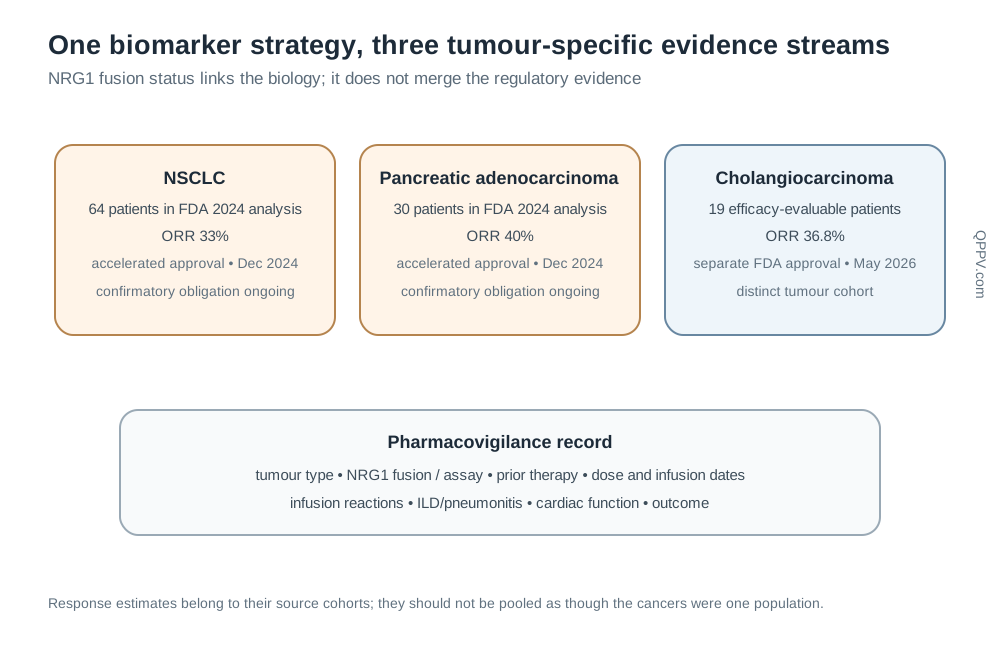
Figure 2. NSCLC, pancreatic adenocarcinoma and cholangiocarcinoma share NRG1 fusion selection but retain distinct evidence and regulatory status.
Safety profile
FDA’s 2026 communication identifies warnings and precautions for infusion-related reactions including hypersensitivity and anaphylactic reactions, interstitial lung disease (ILD)/pneumonitis, left-ventricular dysfunction and embryo-fetal toxicity. Common adverse reactions include diarrhoea, musculoskeletal pain, fatigue, nausea, infusion-related reactions, dyspnoea, rash, constipation, vomiting, abdominal pain and oedema. [2]
The 2024 approval communication also reports laboratory abnormalities including increased gamma-glutamyl transferase, decreased haemoglobin, decreased sodium and decreased platelets in the pooled safety population. [1] These findings need interpretation in the context of advanced cancer and previous systemic treatment.
Infusion reactions
For an acute infusion event, capture infusion number, start and stop times, onset of symptoms, vital signs, respiratory or cutaneous features, treatment, whether the infusion was interrupted, and the outcome of any later administration. A reaction should not be reduced to “allergy” without preserving its phenotype.
ILD or pneumonitis
New cough, dyspnoea, hypoxia or imaging abnormalities require assessment for infection, tumour progression, pulmonary embolism, prior radiation injury and drug-related pneumonitis. Obtain imaging descriptions, microbiology where relevant, oxygen requirement, corticosteroid treatment, interruption and outcome. The diagnosis should reflect clinical evidence rather than the mere presence of respiratory symptoms.
Cardiac dysfunction
For suspected left-ventricular dysfunction, record baseline cardiac history, prior cardiotoxic therapies, serial left-ventricular ejection fraction or equivalent assessment, symptoms, biomarkers where available and management. A decline in function in a heavily treated oncology patient may have multiple contributors; the pharmacovigilance conclusion should make that uncertainty explicit.
Biomarker and exposure traceability
Zenocutuzumab pharmacovigilance begins before the adverse event: the treatment record should preserve the tumour type, NRG1 fusion result, assay method where available, disease stage and prior therapy. This is especially important because three U.S. indications share a molecular biomarker but do not share identical regulatory pathways.
A report describing “NRG1-positive cancer” without the tumour type is incomplete for aggregate review. It prevents correct assignment of indication, obscures whether the case contributes to an accelerated-approval population, and weakens interpretation of both effectiveness and safety.
Aggregate review and governance
Safety analyses should stratify clinically important events by tumour type when numbers permit, because baseline pulmonary, hepatic, cardiac and gastrointestinal risks differ across advanced cancers. Serious ILD/pneumonitis, severe infusion reactions and cardiac dysfunction warrant case-level medical review rather than reliance on coded-term frequency alone.
Effectiveness reports also require regulatory context. For NSCLC and pancreatic adenocarcinoma, the accelerated approvals remain associated with confirmatory obligations as of the review date. [4] A postmarketing report of progression is clinically relevant but is not itself evidence that the accelerated approval has failed; aggregate benefit-risk assessment depends on the totality of response durability, confirmatory evidence and safety data.
Practical checklist
- Confirm tumour type, stage, NRG1 fusion and prior systemic therapy.
- Record zenocutuzumab dose, infusion dates and concomitant anticancer treatment.
- For infusion reactions, reconstruct onset relative to administration and management.
- For respiratory events, obtain imaging, infection evaluation and competing diagnoses.
- For cardiac events, capture baseline and serial cardiac function and prior cardiotoxic exposure.
- Keep the 2024 accelerated indications distinct from the 2026 cholangiocarcinoma approval.
- Use current U.S. prescribing information for monitoring, interruption and reproductive precautions.
Key takeaways
- Zenocutuzumab is a HER2/HER3 bispecific antibody used in selected NRG1 fusion-positive cancers.
- A shared molecular driver does not make tumour-specific evidence interchangeable.
- NSCLC and pancreatic adenocarcinoma received accelerated approval in 2024 and remain listed with confirmatory obligations as of 1 October 2026.
- Cholangiocarcinoma received a separate FDA approval in May 2026.
- Infusion reactions, ILD/pneumonitis and left-ventricular dysfunction are important product-specific safety domains.
References
- U.S. Food and Drug Administration. FDA grants accelerated approval to zenocutuzumab-zbco for non-small cell lung cancer and pancreatic adenocarcinoma. 4 December 2024. https://www.fda.gov/drugs/resources-information-approved-drugs/fda-grants-accelerated-approval-zenocutuzumab-zbco-non-small-cell-lung-cancer-and-pancreatic
- U.S. Food and Drug Administration. FDA approves zenocutuzumab-zbco for advanced, unresectable or metastatic cholangiocarcinoma. 8 May 2026. https://www.fda.gov/drugs/resources-information-approved-drugs/fda-approves-zenocutuzumab-zbco-advanced-unresectable-or-metastatic-cholangiocarcinoma
- Schram AM, et al. Efficacy of Zenocutuzumab in NRG1 Fusion-Positive Cancer. N Engl J Med. 2025;392:566-576. PMID: 39908431. https://pubmed.ncbi.nlm.nih.gov/39908431/
- U.S. Food and Drug Administration. Ongoing Cancer Accelerated Approvals. Current listing accessed 1 October 2026. https://www.fda.gov/drugs/resources-information-approved-drugs/ongoing-cancer-accelerated-approvals
- Cleary JM, et al. Efficacy and Tolerability of Zenocutuzumab in Advanced NRG1 Fusion-Positive Cholangiocarcinoma: Results From the eNRGy Phase II Trial. J Clin Oncol. 2026. PMID: 42385125. https://pubmed.ncbi.nlm.nih.gov/42385125/
Regulatory Note
Regulatory status was checked on 1 October 2026. The 2024 NSCLC and pancreatic adenocarcinoma indications are accelerated approvals with ongoing postmarketing requirements on FDA’s current listing; the May 2026 cholangiocarcinoma indication is a separate approval. Regulatory status, indication wording and safety information may change. This article is educational and does not replace current prescribing information.