Zilganersen: From GFAP Antisense Discovery to the First Approved Treatment for Alexander Disease
Zilganersen is a glial fibrillary acidic protein (GFAP)-directed antisense oligonucleotide administered intrathecally for the treatment of Alexander disease. The U.S. Food and Drug Administration (FDA) approved it as Zanvastro in September 2026 for pediatric and adult patients. The approval is significant because Alexander disease is a rare, progressive astrocytopathy for which treatment had previously been supportive rather than directed at the molecular cause.
The pharmacovigilance interest in zilganersen extends beyond the fact that it is a newly approved medicine. Its development illustrates how a genetically defined disease can move from pathological observation to target validation, antisense intervention and clinical biomarker evidence. It also illustrates the limits of early evidence in an ultra-rare disorder: the treated population is small, phenotypic expression is heterogeneous, and long-term safety experience remains limited. The current U.S. label therefore combines evidence from the controlled trial with explicit warnings, administration precautions and postmarketing studies intended to address questions that could not be resolved at approval.
This article follows the product from the scientific foundations of Alexander disease through the antisense programme, clinical development, regulatory history and current safety framework. It distinguishes published scientific evidence from sponsor-reported development history and distinguishes the current U.S. regulatory position from the still-developing pathway in other jurisdictions.
- Zilganersen: From GFAP Antisense Discovery to the First Approved Treatment for Alexander Disease
- Alexander Disease and the Therapeutic Rationale
- From GFAP Biology to Antisense Suppression
- Product Classification and Administration
- The Development Programme Begins
- Clinical Development and the Evidence for Benefit
- Regulatory and Business Lifecycle
- What the Current U.S. Approval Establishes
- Current Safety Profile
- Immunogenicity
- Administration-Related Safety
- Postmarketing Pharmacovigilance and the Questions That Remain
- A Practical Pharmacovigilance Data Model
- Signal Detection in an Ultra-Rare Disease
- Distinguishing Product Risk From Alexander Disease
- Special Populations and Evidence Gaps
- Long-Term Follow-Up
- Risk Management in Practice
- QPPV and Safety-System Considerations
- Inspection Perspective
- Common Failure Modes
- Current Pharmacovigilance Priorities
- The EU and Global Regulatory Outlook
- Practical Pharmacovigilance Checklist
- Key Takeaways
- References
- Regulatory Note
Alexander Disease and the Therapeutic Rationale
Alexander disease is a rare genetic disorder of astrocytes associated with pathogenic variants in the GFAP gene. Its clinical expression varies substantially with age of onset. Early-onset disease can include developmental impairment, seizures, macrocephaly and progressive motor dysfunction, whereas later-onset disease may be dominated by bulbar dysfunction, ataxia, autonomic abnormalities and brainstem or cervical-spinal-cord involvement. This heterogeneity matters because a clinical trial must distinguish treatment effects from different underlying trajectories.
The pathological hallmark is the accumulation of Rosenthal fibres within astrocytes. GFAP is an intermediate-filament protein normally expressed in astrocytes, and genetic and experimental work established that increased or abnormal GFAP can be pathogenic. In 2001, studies identified GFAP mutations in patients with Alexander disease and provided strong evidence that the disorder was a primary genetic disease of astrocytes. Earlier transgenic work had shown that GFAP overexpression could itself produce Rosenthal-fibre pathology, supporting the idea that excessive or abnormal GFAP contributes directly to disease biology.[1,2]
The therapeutic rationale for reducing GFAP therefore differs from a conventional replacement strategy. Alexander disease is generally associated with heterozygous pathogenic variants that act through a toxic gain-of-function mechanism rather than simple loss of GFAP. A therapy that reduces the production of GFAP has the potential to address a disease-driving process without needing to correct every pathogenic variant individually.
This distinction also creates an important pharmacovigilance question. GFAP is a normal astrocytic protein. Suppression is therefore a pharmacological intervention in normal biology as well as an attempt to reduce a pathological excess. The safety programme must consequently consider both target-related effects and adverse effects associated with intrathecal delivery.
From GFAP Biology to Antisense Suppression
The scientific path to zilganersen was built on experimental work rather than beginning with the clinical molecule itself. Investigators at the University of Wisconsin-Madison Waisman Center and Ionis Pharmaceuticals reported in 2018 that antisense oligonucleotides directed against Gfap could substantially reduce GFAP RNA and protein in cellular and mouse models of Alexander disease. In mutant mice with established pathology, treatment was associated with reduction of Rosenthal-fibre pathology and downstream markers of cellular stress. GFAP in cerebrospinal fluid was also reduced, providing an early rationale for considering GFAP as both a therapeutic target and a pharmacodynamic biomarker.[3]
Follow-up work in a rat model extended the preclinical evidence. Antisense treatment reduced GFAP pathology and was associated with improvement in white-matter abnormalities and motor impairment in the model. Such findings do not establish clinical efficacy in humans, but they strengthened the translational chain between the molecular target and clinically relevant phenotypes.[4]
The resulting programme used Ionis antisense technology to develop ION373, subsequently named zilganersen. The strategy was to use an antisense oligonucleotide that binds GFAP pre-mRNA and promotes its degradation. The FDA prescribing information describes the mechanism as degradation of GFAP pre-mRNA followed by reduced GFAP protein synthesis.[5]
The development programme is therefore best understood as a sequence:
| Development layer | Scientific question | Relevance to pharmacovigilance |
|---|---|---|
| Disease genetics | Does pathogenic GFAP variation explain disease biology? | Establishes a genetically defined target population |
| Pathology | Does excess or abnormal GFAP contribute to astrocyte injury? | Provides biological plausibility for target suppression |
| Preclinical antisense studies | Can GFAP be reduced without unacceptable toxicity? | Identifies target-related and delivery-related risks before human exposure |
| Biomarker development | Does reduced GFAP provide evidence of target engagement? | Supports pharmacodynamic interpretation but is not itself a clinical outcome |
| Clinical development | Does target suppression translate into preserved or improved function? | Determines benefit-risk evidence |
| Post-approval surveillance | Are rare, delayed or population-specific risks emerging? | Tests the durability and generalisability of the approval evidence |
The sequence is important for safety assessment. A mechanistically compelling target does not make every adverse event mechanistically attributable to target suppression. Likewise, reduction of a biomarker does not establish that the intervention will modify every clinical phenotype of Alexander disease.
Product Classification and Administration
Zilganersen is a chemically modified antisense oligonucleotide rather than a gene-replacement or gene-editing therapy. It is administered directly into cerebrospinal fluid by lumbar puncture. The current U.S. recommended dose is 50 mg intrathecally every three months after dilution with the supplied artificial cerebrospinal-fluid diluent.[5]
The route creates a second layer of safety considerations beyond the molecular target. Each dose requires a lumbar puncture and therefore introduces procedure-related risks, while repeated intrathecal exposure can produce local or inflammatory findings in cerebrospinal fluid. The product is preservative-free and requires controlled preparation and administration. The label specifies age-dependent final injection volumes and administration by, or under the direction of, healthcare professionals experienced in lumbar puncture.[5]
This combination—central administration, repeated exposure and a molecular target expressed in normal astrocytes—makes the product particularly dependent on longitudinal clinical and laboratory information. A useful safety record should connect each administration to symptoms, neurological findings, cerebrospinal-fluid results where obtained, concomitant medications and subsequent clinical outcomes.
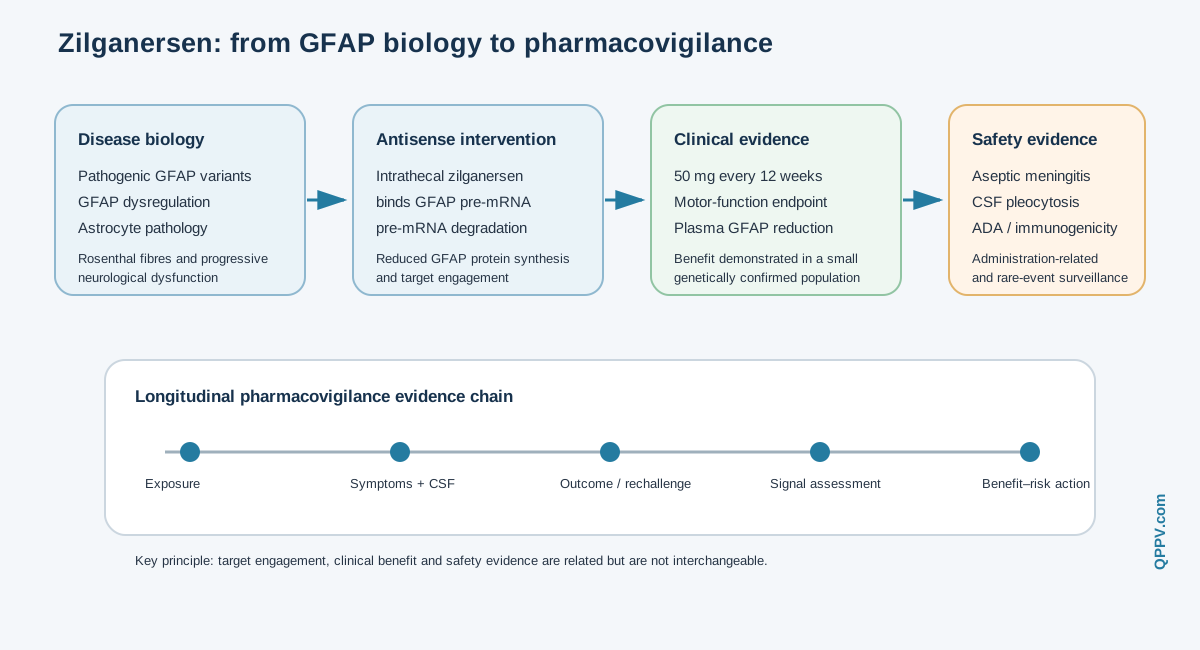
Figure 1. The therapeutic and pharmacovigilance chain for zilganersen. Target engagement, clinical benefit and safety findings are related but are not interchangeable evidence.
The Development Programme Begins
Ionis reported European orphan designation for ION373 in 2020 and U.S. orphan designation in 2020. The U.S. programme also received Rare Pediatric Disease designation, and the drug subsequently received Fast Track and Breakthrough Therapy designations during development. These designations facilitated regulatory development but should not be interpreted as evidence of efficacy or safety.[6,7,13]
The pivotal clinical study, ION373-CS1 (NCT04849741), was designed as a phase 1–3, randomized, controlled, double-blind study with intrathecal dosing. The programme was unusual in moving rapidly toward a pivotal design because the disease is extremely rare and the unmet need was substantial. Participants were followed through a double-blind period and then open-label treatment and long-term follow-up, creating an unusually important longitudinal component for a product intended for chronic administration.[8]
The early development question was therefore not simply whether patients could tolerate an antisense oligonucleotide. It was whether repeated suppression of GFAP could be delivered safely into the central nervous system and whether the resulting biological effect could be associated with preservation of motor function in a disease with a heterogeneous natural history.
Clinical Development and the Evidence for Benefit
The pivotal programme enrolled patients with genetically confirmed Alexander disease and incorporated both pediatric and adult participants. The current FDA label describes a main study of 49 patients aged 2 to 65 years, with an additional open-label substudy in four patients younger than two years. Participants in the main study were randomized 2:1 within dose cohorts to receive zilganersen or control during the 60-week double-blind period. The recommended 50 mg dose was given every 12 weeks.[5]
The primary efficacy analysis focused on a clinically meaningful functional measure rather than relying solely on a molecular biomarker. In the prespecified primary stratum, gait speed was measured with the 10-meter walk test. At Week 61, the FDA label reports a mean percentage change in gait speed of −2.1% with zilganersen 50 mg compared with −35.4% with control. The adjusted least-squares mean difference was 33.3% (95% confidence interval 1.44–65.25; p=0.041).[5]
The published AAN 2026 report similarly described a statistically significant difference in the primary endpoint and a reduction in plasma GFAP. It also reported directional benefit across several patient- and clinician-reported measures, while emphasising the small study population.[9] These results support a treatment effect on motor function in the studied population, but they do not establish the same magnitude of benefit for every clinical phenotype, age group or stage of Alexander disease.
The distinction between target engagement and clinical benefit is particularly important in this product. At Week 61, plasma GFAP was 33.6% lower in the 50 mg group than in controls on the geometric-mean-ratio analysis. This supports biological activity of the treatment. It should not be treated as an interchangeable endpoint for motor function or as proof that a particular degree of plasma GFAP reduction predicts an individual patient's clinical outcome.[5]
The trial's open-label and long-term periods are also important to pharmacovigilance. Once all participants receive active treatment, subsequent observations can provide valuable information about longer-term safety and durability but are less informative for comparative efficacy than the randomized period. This distinction should remain visible when post-approval evidence is interpreted.
Regulatory and Business Lifecycle
The product's regulatory history is concise but illustrates the different roles of designation, review and approval.
| Date | Event | Significance for the product lifecycle |
|---|---|---|
| 2018 | Preclinical antisense suppression work published by the University of Wisconsin-Madison and Ionis | Established the experimental rationale for reducing GFAP |
| 2020 | EMA orphan designation for ION373 reported by Ionis | Recognised the rare-disease development context in Europe |
| 2020 | FDA orphan designation and Rare Pediatric Disease designation | Supported U.S. rare-disease development |
| 2021 | Pivotal ION373-CS1 clinical programme initiated | Established the controlled clinical evidence programme |
| July 2024 | Pivotal trial enrollment completed | Main randomized evidence set became available for analysis |
| September 2025 | Initial pivotal results announced by Ionis | Reported statistically significant stabilization of gait speed at 50 mg |
| March 2026 | FDA accepted the NDA for Priority Review | U.S. regulatory review formally initiated |
| April 2026 | Detailed pivotal results presented at AAN | Added information across motor, patient-reported and biomarker domains |
| June 2026 | Ionis licensed ex-U.S. development and commercialisation rights to Recordati | Created a separate international commercial and regulatory partner while Ionis retained U.S. responsibility |
| 3 September 2026 | FDA approved Zanvastro (zilganersen) | First FDA-approved treatment for Alexander disease |
| September 2026 | FDA issued postmarketing requirements for carcinogenicity and embryo-fetal development | Demonstrated that important residual risks remained unresolved at approval |
Ionis has described the programme as originating from its collaboration with the research community around Alexander disease and its antisense platform. The 2018 scientific publication is particularly important because it documents direct participation by both University of Wisconsin researchers and Ionis scientists. The record supports describing the scientific origin as a research-to-industry programme rather than attributing invention to a single individual or institution.[3]
The commercial structure changed shortly before approval. In June 2026, Ionis announced an agreement granting Recordati exclusive rights to develop and commercialize zilganersen outside the United States, while Ionis retained U.S. commercial responsibility and continued to lead global development. Ionis stated that Recordati would handle regulatory filings and commercialization outside the United States and that submissions in Europe and Japan were expected in 2027.[10]
This arrangement is directly relevant to future pharmacovigilance governance. Where development, marketing and local regulatory responsibilities are distributed across companies and jurisdictions, the safety system must preserve clear ownership of case processing, signal evaluation, regulatory reporting, risk-management activities and safety-data exchange. The licensing transaction itself does not determine those obligations; the applicable authorisation, contractual agreements and local legal framework do.
What the Current U.S. Approval Establishes
FDA approved Zanvastro on 3 September 2026 for the treatment of Alexander disease in pediatric and adult patients. The approved dosage is 50 mg intrathecally every three months.[5,11]
The approval establishes an authorized treatment population, but it does not eliminate uncertainty. The controlled efficacy population was small, the disease is heterogeneous, and some populations were supported by limited data or extrapolation. The label states that use in patients younger than two years is supported by evidence in older children, pharmacokinetic modelling and safety data in four treated patients.[5]
The current label also provides limited information for older adults. Patients aged 65 years and above were not studied. Moderate or severe renal impairment, end-stage renal disease and moderate or severe hepatic impairment were also not studied. These gaps are relevant to post-approval safety surveillance because absence of evidence in a subgroup should not be converted into evidence of absence of risk.[5]
The U.S. approval therefore creates a new phase of evidence generation. The central pharmacovigilance task is to determine whether the benefit-risk profile observed in the controlled programme remains appropriate as treatment reaches a broader and more heterogeneous population.
Current Safety Profile
The principal labeled warning is aseptic meningitis. The FDA label reports cases during both double-blind and open-label treatment. One patient experienced a serious aseptic-meningitis reaction that recurred after later exposure and required dose interruption and intravenous dexamethasone before subsequent administration. Continued exposure was associated with increases in CSF white blood cells and protein despite corticosteroid pretreatment, although the patient remained asymptomatic and did not discontinue treatment.[5]
This finding has a distinctive pharmacovigilance implication. The safety signal is not limited to a single clinical syndrome diagnosed as meningitis. CSF pleocytosis and increased CSF protein may be laboratory manifestations that precede or accompany symptoms. Consequently, a case review should preserve both the clinical syndrome and the laboratory trajectory rather than coding only the most prominent symptom.
During the double-blind period, pleocytosis occurred in 7 of 24 patients (29%) receiving 50 mg compared with 3 of 17 controls (18%). Six additional treated patients developed increased CSF white-cell counts during the open-label extension. These figures come from a small clinical programme and should be interpreted as trial observations rather than population incidence estimates.[5]
The most common adverse reactions occurring at least 10 percentage points more often with 50 mg than control were vomiting, back pain, cough, headache, post-lumbar-puncture syndrome, arthralgia, oropharyngeal pain and dysphagia. The trial population and exposure duration remain important context when comparing these events with later spontaneous reports.[5]
Immunogenicity
The current label reports treatment-emergent anti-drug antibodies in 9 of 32 evaluated treated patients (28.1%); two were transient and seven persistent. In the available dataset, antibody-positive and antibody-negative patients did not show an apparent difference in safety, efficacy or pharmacokinetics. The FDA nevertheless states that the available data are too limited for definitive conclusions.[5]
This is a useful example of how immunogenicity should be handled in pharmacovigilance writing. Detection of an anti-drug antibody is not itself an adverse event, and the presence of an antibody does not establish loss of efficacy or immune-mediated toxicity. The clinically relevant question is whether antibody development correlates with a change in exposure, treatment response or adverse-event phenotype. In the current dataset that relationship has not been established.
One patient with markedly elevated antibody titres had CSF white-cell and protein increases with symptoms suggestive of aseptic meningitis, but similar findings were not observed in the other antibody-positive patients. The label therefore records the observation without establishing a causal relationship between the antibody and meningitis.[5]
Administration-Related Safety
Because zilganersen is administered intrathecally, administration itself forms part of the product's safety profile. The current label requires dilution with the supplied artificial cerebrospinal fluid and administration by lumbar puncture. The final injection volume depends on age: 10 mL for patients younger than two years, 15 mL for those aged two through seven years, and 20 mL for patients aged eight years and older.[5]
The prepared dose must be administered within four hours at room temperature or within 24 hours when refrigerated, and the product must not be frozen or exposed to heat. These requirements are primarily product-quality and administration controls, but deviations can become pharmacovigilance-relevant when they are associated with a suspected adverse event or product complaint.
For case processing, the administration record should therefore be sufficiently detailed to distinguish disease-related neurological deterioration from procedure-related events, medication reactions and potential preparation or administration errors.
Postmarketing Pharmacovigilance and the Questions That Remain
Approval begins rather than ends the safety evidence programme for zilganersen. The clinical database remains small because Alexander disease is ultra-rare, and some populations have very limited direct exposure. In addition, the product is intended for repeated administration over years. The post-approval safety system must therefore be capable of detecting events that are delayed, uncommon, age-specific or difficult to distinguish from the underlying disease.
The current FDA approval letter provides an unusually explicit example. FDA determined that spontaneous postmarketing reports alone would not be sufficient to identify or adequately assess several serious potential risks and required additional studies under section 505(o) of the Federal Food, Drug, and Cosmetic Act.[12]
The required studies include a six-month carcinogenicity study in Tg.rasH2 mice, a two-year carcinogenicity study in rats and an embryo-fetal development study in rabbits. The submitted timetable places the final reports for the two carcinogenicity studies in 2029 and 2032 respectively.[12]
These requirements should not be described as evidence that zilganersen causes cancer or reproductive toxicity. They are evidence that FDA considered the available pre- and post-approval information insufficient to resolve those potential risks through spontaneous reporting and existing surveillance systems. The distinction is fundamental: a postmarketing requirement identifies an evidence gap requiring active study; it does not establish the existence of the suspected harm.
The FDA approval letter also reminds the applicant that it must comply with applicable adverse-event and periodic reporting requirements. These legal reporting obligations remain separate from the scientific questions addressed by the additional studies.[12]
A Practical Pharmacovigilance Data Model
For a repeated intrathecal medicine used in a genetically defined rare disease, the value of a safety case depends heavily on longitudinal context. The following data elements should be considered together when operational systems are designed. They represent recommended operational practice and should not be mistaken for a universal legal minimum.
| Data domain | Useful information | Why it matters |
|---|---|---|
| Patient identity | Age, sex, disease phenotype, relevant medical history | Supports subgroup assessment and duplicate control |
| Genetic status | GFAP variant and relevant diagnostic evidence | Confirms disease context and supports phenotype interpretation |
| Disease trajectory | Age at onset, baseline motor function, bulbar/autonomic features, MRI findings where relevant | Helps distinguish treatment-emergent effects from natural progression |
| Exposure | Dose, date, route, injection volume, treatment cycle | Establishes temporal relationship and cumulative exposure |
| Administration | Lumbar-puncture details, procedural difficulties, sedation, preparation deviations | Separates drug effects from procedure-related events |
| Laboratory monitoring | CSF cell count/protein where clinically obtained, plasma GFAP, other relevant laboratory results | Supports assessment of inflammatory and pharmacodynamic patterns |
| Concomitant treatment | Corticosteroids, analgesics, antimicrobials and other relevant therapies | Supports confounding and interaction assessment |
| Outcome | Recovery, persistence, recurrence on re-exposure, hospitalization, disability or death | Supports seriousness and causality assessment |
| Follow-up | Subsequent doses, recurrent events, dose interruption and rechallenge | Particularly important for recurrent inflammatory reactions |
A longitudinal record is especially valuable when a suspected aseptic-meningitis case recurs after subsequent dosing. The sequence of exposure, symptom onset, CSF findings, treatment, resolution and rechallenge can provide substantially more information than a single coded event.
Signal Detection in an Ultra-Rare Disease
Signal detection for zilganersen will have a different statistical context from signal detection for a widely used medicine. The absolute number of treated patients is small, and background rates for some neurological symptoms may be poorly defined. A simple disproportionality signal may therefore be unstable or difficult to interpret.
The appropriate approach is to combine quantitative screening with clinical review and denominator-aware evidence. A signal assessment may need to integrate spontaneous reports, clinical-trial safety data, postmarketing study data, exposure estimates, literature, medical information contacts, product complaints and data from long-term follow-up.
For each emerging safety topic, the reviewer should ask four separate questions:
- Is the event occurring? This requires case identification and data-quality assessment.
- Is it more frequent than expected? This requires a suitable denominator or meaningful comparator.
- Is there a plausible relationship to zilganersen? This requires chronology, dechallenge/rechallenge information where available, competing causes and biological plausibility.
- Does the evidence change benefit-risk management? This requires clinical severity, preventability, treatment alternatives, exposure and the effectiveness of existing controls.
These questions prevent the common error of treating a cluster of reports as equivalent to a confirmed signal.
Distinguishing Product Risk From Alexander Disease
Alexander disease itself can produce progressive motor deterioration, bulbar dysfunction, autonomic abnormalities, seizures and other neurological symptoms. A newly reported symptom after treatment is therefore not automatically treatment-related.
The baseline disease phenotype should be documented before treatment wherever possible. Changes should then be interpreted against the patient's established trajectory. For example, worsening gait in a patient with progressive disease requires a different assessment from new fever, headache and CSF pleocytosis temporally associated with an intrathecal dose.
The same principle applies to serious outcomes. Hospitalisation, aspiration, dysphagia, respiratory events or functional decline may reflect disease progression, treatment effects, intercurrent infection or combinations of these factors. The case narrative should preserve the clinical reasoning rather than forcing a premature causal classification.
Special Populations and Evidence Gaps
The approval includes pediatric and adult patients, but the evidence is not evenly distributed across all ages. The main randomized study included participants aged two to 65 years, while four children younger than two years received open-label treatment. The label supports use below two years using a combination of evidence from older children, pharmacokinetic modelling and those limited clinical safety data.[5]
At the other end of the age range, patients aged 65 years and older were not studied. Moderate or severe renal impairment, end-stage renal disease and moderate or severe hepatic impairment were also not studied. Pregnancy and lactation have limited human data.[5]
These gaps should be treated as surveillance priorities rather than assumptions of safety or harm. A pharmacovigilance programme should preserve age, developmental stage, organ function, pregnancy exposure and disease phenotype so that rare subgroup-specific patterns can be evaluated as exposure increases.
Long-Term Follow-Up
The clinical programme includes a long-term extension and post-treatment follow-up. This is important because repeated intrathecal dosing over years creates questions that cannot be answered from the initial 60-week randomized period alone.
Long-term questions include:
- whether clinical benefit remains stable with repeated dosing;
- whether biomarker changes continue to correlate with functional outcomes;
- whether recurrent CSF inflammatory findings become more common with cumulative exposure;
- whether immunogenicity changes over time;
- whether rare neurological or systemic adverse events emerge after prolonged exposure;
- whether treatment effects differ between early- and later-onset phenotypes;
- and whether the safety profile changes as treatment expands beyond trial centres.
Long-term follow-up should not be treated as a passive extension of the pivotal trial. It should be designed to preserve exposure history and clinically meaningful outcomes so that delayed patterns can be distinguished from the underlying disease trajectory.
Risk Management in Practice
The current U.S. label places particular emphasis on recognition and management of aseptic meningitis. Patients and caregivers are instructed to contact healthcare professionals if symptoms consistent with meningitis develop.[5]
For a pharmacovigilance organisation, the operational implications extend beyond the wording of the label. Training should ensure that relevant clinical contacts can recognise symptoms, that reports are transferred promptly into the safety system, and that CSF findings and treatment interruptions are not lost during case processing.
A practical case pathway is:
exposure → symptom recognition → clinical assessment → CSF/laboratory evidence where clinically indicated → treatment decision → outcome → subsequent exposure → recurrence or absence of recurrence → safety assessment
The value of this sequence is that it preserves evidence that may later be needed for signal evaluation. A case containing only the term “meningitis” cannot answer the same questions as a case documenting onset after dosing, CSF findings, alternative diagnoses, treatment, resolution and subsequent rechallenge.
QPPV and Safety-System Considerations
For jurisdictions in which the product becomes authorised, the relevant pharmacovigilance system should be designed around the authorised product, local legal requirements and the responsibilities established between Ionis, Recordati and any other parties involved in development, marketing or safety-data exchange.
Several governance controls are particularly important.
First, the safety database should maintain consistent product identification across the investigational name ION373, the active substance zilganersen and the marketed product name where applicable. This is essential for historical case retrieval after the transition from clinical development to commercial use.
Second, contracts and safety-data exchange arrangements should define how cases originating from different commercial or development parties are transferred, reconciled and followed up. The 2026 Recordati transaction makes this especially relevant outside the United States.[10]
Third, signal governance should integrate spontaneous cases with clinical-trial and long-term follow-up information. For an ultra-rare product, each individual case can contain disproportionate informational value, but that does not remove the need for structured aggregate assessment.
Fourth, the QPPV and relevant safety governance bodies should maintain visibility of unresolved evidence gaps. The existence of FDA-required carcinogenicity and embryo-fetal development studies is a concrete example of how a safety system must track active evidence generation alongside routine case processing.[12]
Inspection Perspective
An inspection of a zilganersen pharmacovigilance system could reasonably examine whether the organisation can demonstrate a complete chain from the first safety information to the regulatory conclusion. The following are illustrative inspection questions, not reported inspection findings.
Case handling - Can the organisation demonstrate how a report involving intrathecal administration was identified, triaged and processed? - Are administration date, dose, route and relevant procedural information retained? - Are CSF findings and clinically relevant laboratory trends preserved?
Signal management - How are aseptic meningitis and CSF pleocytosis monitored? - How are cases separated from the background manifestations of Alexander disease? - Are clinical-trial and postmarketing data assessed together when appropriate?
Governance - Who owns safety-data exchange between the parties involved in global development and commercialization? - How are disagreements about causality, seriousness or signal significance resolved? - Can the QPPV demonstrate oversight of important emerging risks?
Evidence generation - Are postmarketing commitments tracked to completion? - Can the organisation demonstrate how findings from required studies are incorporated into benefit-risk assessment? - Are changes to the product label or risk-management strategy linked to the evidence that triggered them?
The underlying inspection principle is evidence. A documented procedure is weaker evidence than a traceable record showing that the procedure operated effectively in a real case.
Common Failure Modes
Potential failure modes include treating CSF pleocytosis as an isolated laboratory abnormality without assessing its clinical context; losing the relationship between repeated doses and recurrent inflammatory events; failing to capture GFAP genotype information; and coding disease progression as an adverse drug reaction without documenting the competing explanation.
Another failure is to treat anti-drug antibodies as automatically causal. The current label does not establish that relationship. A robust assessment instead asks whether antibody status changes exposure, efficacy or the phenotype of an adverse event.
A further governance risk arises when safety information crosses organisational boundaries. If the U.S. and ex-U.S. development or commercial organisations use different identifiers, databases or reporting processes, reconciliation failures can lead to duplicate cases, delayed follow-up or incomplete signal assessment. The control is not simply a contract; it is demonstrable operational reconciliation.
Finally, a safety system can become overly dependent on spontaneous reports. For an ultra-rare disease, the absence of reports may reflect limited exposure rather than absence of risk. FDA's decision to require active postmarketing studies illustrates the broader principle: where spontaneous surveillance cannot answer an important question, additional evidence generation may be necessary.[12]
Current Pharmacovigilance Priorities
The immediate post-approval safety programme for zilganersen should remain focused on the risks and uncertainties that are most consequential to patients and most difficult to resolve from routine spontaneous reporting.
Aseptic meningitis and related CSF inflammatory findings are the clearest established clinical safety concern in the current U.S. label. Continued case ascertainment should preserve symptoms, CSF findings, timing relative to administration, treatment, recovery and recurrence. The purpose is not simply to count meningitis reports but to determine whether the observed phenotype changes with cumulative exposure or differs across patient groups.
Immunogenicity is a second longitudinal question. The initial database showed treatment-emergent anti-drug antibodies in a subset of treated patients, without an apparent effect on pharmacokinetics, efficacy or safety, but the dataset was too small for definitive conclusions. Continued exposure may clarify whether persistent antibodies remain clinically neutral or whether specific high-titre patterns associate with inflammatory findings or altered response.[5]
Long-term neurological safety is another priority. Because Alexander disease itself progresses and because GFAP is physiologically important to astrocytes, surveillance should retain enough clinical detail to identify patterns that are not apparent from routine adverse-event coding. This includes changes in motor function, bulbar function, cognition where relevant, autonomic symptoms and other neurological domains.
The active postmarketing studies create additional evidence streams. Their findings should be integrated with routine pharmacovigilance rather than treated as a separate research exercise. A carcinogenicity study, for example, answers a different question from spontaneous case review, while an embryo-fetal development study addresses a nonclinical evidence gap that cannot be resolved from routine clinical exposure alone.
The EU and Global Regulatory Outlook
As of the September 2026 U.S. approval, zilganersen had not received an EU marketing authorisation. Ionis announced in June 2026 that Recordati had obtained exclusive rights outside the United States and that the companies expected regulatory submissions in Europe and Japan in 2027.[10]
This distinction matters for EU pharmacovigilance professionals. A U.S. approval does not create an EU marketing authorisation, and U.S. labeling cannot simply be treated as an EU reference safety information document. If and when an EU application is submitted and authorised, the applicable EU product information, risk-management plan, pharmacovigilance system and regulatory commitments will determine the European operating requirements.
The future EU safety framework will also need to account for the product's orphan-disease setting and small exposed population. A conventional high-volume signal-detection approach may have limited statistical power. Clinical review, case-series evaluation, literature surveillance, long-term follow-up and careful exposure denominators will remain important.
The international licensing structure further reinforces the need for precise safety-data exchange arrangements. The commercial roles of Ionis and Recordati may differ by geography, but the pharmacovigilance system must remain coherent across jurisdictions. Safety information identified in one region can become relevant to the benefit-risk assessment in another.
Practical Pharmacovigilance Checklist
For a zilganersen safety system, an experienced PV professional should be able to answer the following:
- Is the case linked to the correct active substance and product identifiers?
- Is Alexander disease genetically confirmed, and is the GFAP variant documented where available?
- Is the patient's disease phenotype and baseline trajectory described sufficiently to assess competing explanations?
- Are dose, administration date, route and relevant lumbar-puncture details available?
- Is the timing of symptoms relative to each dose clear?
- For suspected aseptic meningitis, are symptoms, CSF findings, investigations, treatment and outcome captured?
- Is recurrence after subsequent dosing documented?
- Are anti-drug antibody results linked to the clinical event when available?
- Are relevant concomitant corticosteroids and other treatments recorded?
- Are pediatric age and developmental stage preserved?
- Can the organisation identify reports involving patients outside the pivotal trial population?
- Are serious and unexpected reports assessed under the applicable reporting framework?
- Are cases reconciled across development, commercial, partner and vendor systems?
- Are signals assessed using both spontaneous and non-spontaneous evidence?
- Are postmarketing commitments tracked and incorporated into aggregate benefit-risk assessment?
- Can the QPPV demonstrate oversight of the major unresolved safety questions?
Key Takeaways
Zilganersen represents a clear example of a pharmacovigilance programme in which the product's scientific mechanism, clinical evidence and safety system are tightly connected.
The therapeutic concept originated from the observation that pathogenic GFAP biology drives Alexander disease and that excessive or abnormal GFAP contributes to astrocytic pathology. Preclinical antisense studies then demonstrated that GFAP suppression could modify disease-associated pathology in experimental models. The clinical programme translated that concept into repeated intrathecal treatment and demonstrated a statistically significant difference in gait-speed change in the prespecified primary analysis.
The September 2026 FDA approval establishes zilganersen as the first approved treatment for Alexander disease, but the approval database remains relatively small. The most clearly defined labeled risk is aseptic meningitis, accompanied by CSF inflammatory findings. Treatment-emergent anti-drug antibodies have also been observed, although current evidence does not establish a clinically important effect on pharmacokinetics, efficacy or safety.
The next phase of pharmacovigilance will therefore be less about discovering whether the product has any safety profile and more about defining the profile across longer exposure, broader populations and rare outcomes. FDA's required carcinogenicity and embryo-fetal development studies demonstrate that important questions remain unresolved and that routine spontaneous reporting is not sufficient for every risk.
For QPPV and safety-system governance, the central requirement is longitudinal traceability: exposure, clinical phenotype, administration, laboratory evidence, outcome, subsequent dosing and organisational ownership must remain connected. That structure is what allows an individual case to become useful evidence for signal evaluation and benefit-risk management.
References
- Johnson AB. Alexander disease: a review and the gene. Int J Dev Neurosci. 2002;20(3-5):391-394. doi:10.1016/S0736-5748(02)00045-X. PubMed PMID: 12175878. https://pubmed.ncbi.nlm.nih.gov/12175878/
- Brenner M, Johnson AB, Boespflug-Tanguy O, et al. Mutations in GFAP, encoding glial fibrillary acidic protein, are associated with Alexander disease. Nat Genet. 2001;27:117-120. doi:10.1038/83679. PubMed PMID: 11138011. https://pubmed.ncbi.nlm.nih.gov/11138011/
- Hagemann TL, Powers B, Mazur C, et al. Antisense suppression of glial fibrillary acidic protein as a treatment for Alexander disease. Ann Neurol. 2018;83(1):27-39. doi:10.1002/ana.25118. https://pubmed.ncbi.nlm.nih.gov/29226998/
- Hagemann TL, Powers B, Lin NH, et al. Antisense therapy in a rat model of Alexander disease reverses GFAP pathology, white matter deficits, and motor impairment. Sci Transl Med. 2021;13(620):eabg4711. doi:10.1126/scitranslmed.abg4711. https://pubmed.ncbi.nlm.nih.gov/34788075/
- U.S. Food and Drug Administration. ZANVASTRO (zilganersen) prescribing information. Initial U.S. approval 2026; revised September 2026. NDA 220210. https://www.accessdata.fda.gov/drugsatfda_docs/label/2026/220210Orig1s000lbl.pdf
- U.S. FDA. Zilganersen orphan-drug designation and approval record. https://www.accessdata.fda.gov/scripts/opdlisting/oopd/detailedIndex.cfm?cfgridkey=765520
- Ionis Pharmaceuticals. Zilganersen granted U.S. FDA Fast Track designation for people living with Alexander disease. 1 October 2024. https://ir.ionis.com/news-releases/news-release-details/zilganersen-granted-us-fda-fast-track-designation-people-living
- Ionis Pharmaceuticals. Ionis receives U.S. FDA Breakthrough Therapy designation for zilganersen for Alexander disease. 2 December 2025. https://ir.ionis.com/news-releases/news-release-details/ionis-receives-us-fda-breakthrough-therapy-designation
- ClinicalTrials.gov. NCT04849741: A Study to Evaluate the Safety and Efficacy of Zilganersen (ION373) in Patients With Alexander Disease. https://clinicaltrials.gov/study/NCT04849741
- Waldman A, Lynch D, Tonduti D, et al. Efficacy and Safety of Zilganersen, an Investigational RNA-targeted Antisense Therapy, in People Living with Alexander Disease: Results from a Pivotal Study. Neurology. 2026;106(11 Supplement 1):941. doi:10.1212/WNL.0000000000213207.
- Ionis Pharmaceuticals. Ionis announces license agreement with Recordati for zilganersen in Alexander disease in all countries outside the U.S. 25 June 2026. https://ir.ionis.com/news-releases/news-release-details/ionis-announces-license-agreement-recordati-zilganersen
- U.S. FDA. FDA Approves First Drug to Treat Alexander Disease. 3 September 2026. https://www.fda.gov/news-events/press-announcements/fda-approves-first-drug-treat-alexander-disease
- U.S. FDA. Zanvastro approval letter, NDA 220210. September 2026. https://www.accessdata.fda.gov/drugsatfda_docs/appletter/2026/220210Orig1s000ltr.pdf
Regulatory Note
This article describes the regulatory position and prescribing information available at the time of writing, with particular reliance on the September 2026 U.S. FDA approval and prescribing information. FDA requirements described here apply to the U.S. regulatory framework and should not be interpreted as EU pharmacovigilance obligations. Zilganersen did not have an EU marketing authorisation at the time of writing. Where future European authorisation occurs, European requirements should be assessed from the applicable Union legislation, product information, risk-management plan, pharmacovigilance system documentation and current EMA guidance.
The distinction between regulatory requirement, scientific evidence and recommended operational practice is intentional. The operational controls suggested in this article are practical considerations for an effective pharmacovigilance system and are not presented as additional statutory requirements.