Zolbetuximab: Mechanism, Clinical Safety and Pharmacovigilance
Zolbetuximab is used with chemotherapy in a biomarker-defined group of adults with advanced gastric or gastro-oesophageal junction adenocarcinoma. The target is claudin 18.2 (CLDN18.2), a tight-junction protein whose accessibility changes in tumour tissue. Eligibility therefore depends on both HER2 status and a validated assessment of CLDN18.2 expression. The treatment also creates a distinctive safety and attribution problem: severe nausea and vomiting are prominent, particularly early in treatment, while the regimen contains cytotoxic medicines that can produce overlapping adverse effects.
A useful safety report must therefore connect four records: tumour-test method and result, the zolbetuximab dose and infusion, the chemotherapy backbone and cycle, and the timing and management of each symptom.
- Zolbetuximab: Mechanism, Clinical Safety and Pharmacovigilance
- Clinical Role and EU Authorisation
- Classification, Molecular Design and History
- Mechanism and Pharmacovigilance Meaning
- Regimen, Infusion and Treatment Phase
- Nausea, Vomiting and Infusion-Related Events
- Combination Therapy and Attribution
- Case Assessment and Signal-Relevant Information
- Practical PV Checklist
- Key Takeaways
- References
- Regulatory Note
Clinical Role and EU Authorisation
Zolbetuximab received an EU marketing authorisation on 19 September 2024. The current indication is first-line treatment with fluoropyrimidine- and platinum-containing chemotherapy for adults with locally advanced unresectable or metastatic, HER2-negative gastric or gastro-oesophageal junction adenocarcinoma whose tumours are CLDN18.2-positive.[1,2]
The product information defines CLDN18.2-positive status as moderate-to-strong membranous staining in at least 75% of tumour cells, assessed with a CE-marked in-vitro diagnostic with the relevant intended purpose or, when unavailable, another validated test. The assay and result are part of the patient-selection evidence, not a descriptive detail to omit from a safety case.[2]
Classification, Molecular Design and History
Zolbetuximab is a chimeric mouse-human IgG1 monoclonal antibody directed against CLDN18.2. The target is normally associated with tight junctions in gastric epithelium. In tumour cells, CLDN18.2 can become accessible to antibody binding. This creates a tumour-associated target for immune effector activity, but does not make the target expression a guarantee of response in every patient.[2]
The EU assessment established a biomarker-selected treatment setting rather than a general indication for all gastric cancer. In the pivotal studies, zolbetuximab was added to fluoropyrimidine/platinum chemotherapy, and the product information reports safety in the context of that combination. Consequently, the observed events in routine use must be interpreted against the patient's disease, chemotherapy, supportive medicines and nutritional state.
Mechanism and Pharmacovigilance Meaning
After binding accessible CLDN18.2, zolbetuximab can promote antibody-dependent cellular cytotoxicity and complement-dependent cytotoxicity. These immune-effector mechanisms target CLDN18.2-positive tumour cells. The pharmacovigilance interpretation must still distinguish the antibody's known tolerability pattern from toxicities due to the chemotherapy partner, cancer burden, infection or organ impairment.
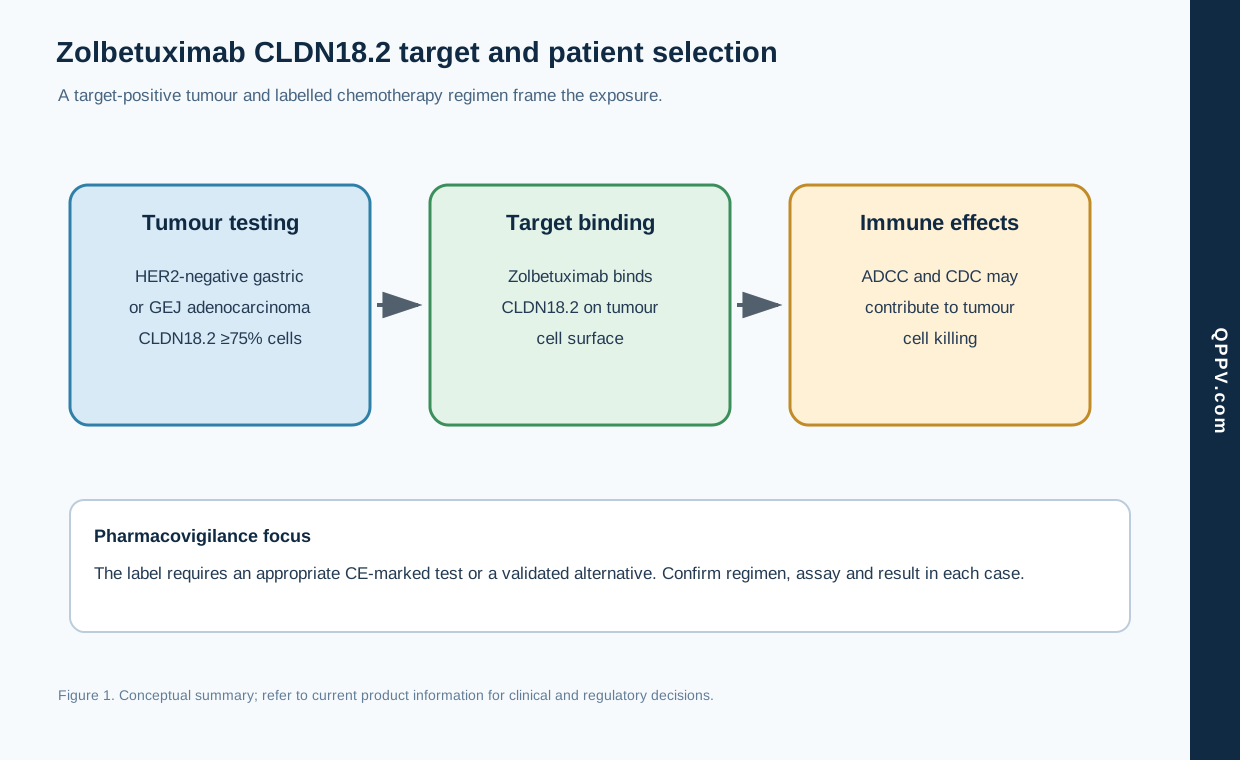
Figure 1. The EU treatment pathway links HER2-negative disease and validated CLDN18.2-positive testing to zolbetuximab plus chemotherapy; the antibody then engages immune effector mechanisms against accessible target-positive cells.
The most characteristic labelled safety issue is gastrointestinal intolerance, especially nausea and vomiting. Because these symptoms can occur with cancer and chemotherapy too, event onset relative to the first and subsequent infusions, antiemetic use, infusion interruption and chemotherapy administration is central to assessment. A report that records only “vomiting on treatment” loses the information needed to understand whether symptoms clustered after the antibody infusion, the cytotoxic drugs, or both.[2]
Regimen, Infusion and Treatment Phase
The product information describes a body-surface-area-based loading dose on cycle 1, day 1, followed by one of two maintenance schedules: 600 mg/m² every three weeks or 400 mg/m² every two weeks. Zolbetuximab is infused intravenously over at least two hours and, when given on the same day as chemotherapy, is administered first. The infusion begins slowly and may be increased as tolerated.[2]
Before each infusion, antiemetic premedication is recommended. If nausea or vomiting is present before dosing, the product information requires resolution to grade 1 or lower before the first infusion. Patients are monitored during and after infusion for hypersensitivity; the label specifies at least two hours of post-infusion monitoring, or longer when clinically indicated. These details make the exact cycle, infusion sequence, preventive medicines and rate changes necessary for event reconstruction.[2]
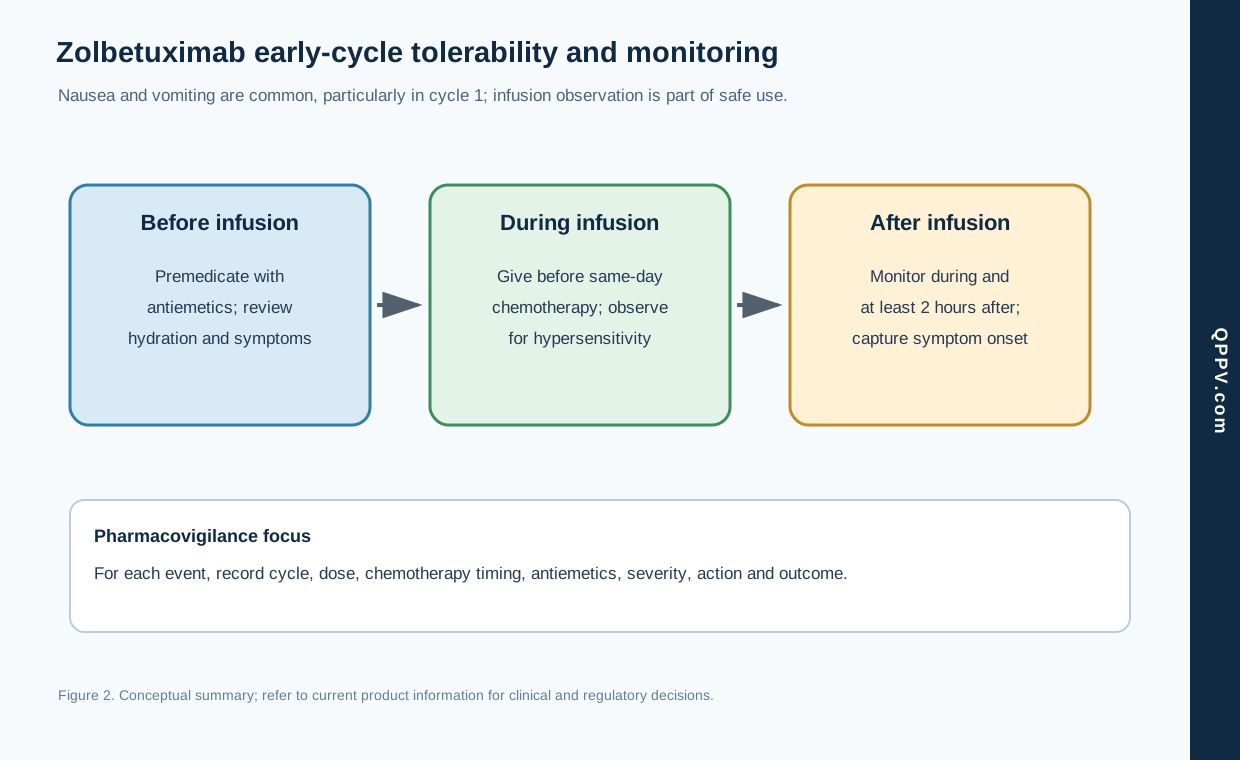
Figure 2. Case assessment follows the treatment cycle: document tumour selection and regimen, then align gastrointestinal or hypersensitivity symptoms with antibody infusion, chemotherapy and supportive care.
Nausea, Vomiting and Infusion-Related Events
In the integrated safety analysis described in the current product information, nausea and vomiting were reported in 77.2% and 66.9% of patients receiving zolbetuximab with fluoropyrimidine/platinum chemotherapy. They occurred more often during the first cycle and decreased in incidence during later cycles. The label describes nausea, vomiting, appetite loss, neutropenia, weight loss, fever and hypoalbuminaemia among common adverse reactions; hypersensitivity, anaphylaxis and infusion-related reactions are less frequent but require prompt recognition.[2]
These frequencies describe the studied combination population; they do not isolate the antibody's contribution from chemotherapy or disease. For each case, capture the event's start relative to zolbetuximab and chemotherapy, grade and duration, antiemetic regimen, hydration, infusion interruption or rate reduction, laboratory findings, dose delay and outcome. Record whether vomiting caused admission, dehydration, electrolyte disturbance, interruption of the regimen or permanent discontinuation.
Infusion-related reactions may include nausea or vomiting alongside abdominal pain, salivary hypersecretion, fever, chills, chest discomfort, cough or hypertension. A sudden cluster during infusion should be assessed as a possible reaction, even when gastrointestinal symptoms are also a predictable treatment burden. Hypersensitivity with wheeze, urticaria, throat tightness or voice change raises a different clinical concern and should not be collapsed into a generic nausea report.[2]
Combination Therapy and Attribution
The chemotherapy backbone can contribute to nausea, vomiting, neutropenia and other events. Cancer-related gastric obstruction, poor intake, infection, prior chemotherapy and declining organ function can add further explanations. Pharmacovigilance should preserve separate exposure records for zolbetuximab and each cytotoxic medicine rather than assigning all events to the regimen as one undifferentiated treatment.
When an event causes dose interruption, document which medicine was paused, the reason, the response to supportive treatment and whether the other medicines continued. The label recommends managing zolbetuximab through infusion interruption, rate reduction or discontinuation according to reaction severity; it does not recommend dose reduction. This distinction matters when coding and evaluating recurrence across cycles.[2]
Case Assessment and Signal-Relevant Information
A complete case should include the tumour type and stage, HER2 result, CLDN18.2 assay and result, chemotherapy regimen, zolbetuximab dose and batch, infusion order and rate, antiemetic and corticosteroid premedication, symptom onset, laboratory results, treatment changes and outcome. Reporters may not know the exact assay or staining threshold; record what is available and request the pathology or laboratory result when it could clarify eligibility or case context.
Illustrative case: vomiting during the first cycle
A patient develops repeated vomiting during the first cycle after receiving zolbetuximab followed by chemotherapy. Both treatments and the underlying tumour are relevant. The assessment should preserve whether symptoms started during the antibody infusion or after chemotherapy, the antiemetics already given, severity, hydration and electrolyte findings, treatment interruption, subsequent rechallenge and recurrence. If the source report attributes the event to only one medicine, preserve that attribution as the reporter's view while recording the known combination context.
Practical PV Checklist
- Confirm indication, HER2 status, CLDN18.2 test method/result and treatment line.
- Record chemotherapy partners, cycle, administration order, zolbetuximab dose and batch.
- Capture premedication, infusion rate, observation time and exact symptom onset.
- For nausea or vomiting, record grade, duration, hydration, laboratory effects, dose interruption and supportive treatment.
- For suspected hypersensitivity, document signs, timing, management and outcome separately from expected gastrointestinal toxicity.
- Distinguish labelled facts from reporter attribution and unresolved uncertainty.
Key Takeaways
Zolbetuximab is a biomarker-selected antibody used with chemotherapy, not a stand-alone treatment for unselected gastric cancer. CLDN18.2 testing and HER2 status define the relevant population. Nausea and vomiting are frequent and often begin early; attribution depends on cycle-level timing, infusion sequence, chemotherapy and supportive care. Accurate batch, dose, test and regimen data make the report interpretable.
References
- European Medicines Agency. Vyloy: EPAR overview.
- European Medicines Agency. Vyloy: current product information.
- European Medicines Agency. Good pharmacovigilance practices, Module VI.
- International Council for Harmonisation. E2C(R2), Periodic Benefit-Risk Evaluation Report.
Regulatory Note
This article reflects the EU product information available at the time of writing. The current authorised product information and applicable national requirements take precedence. Clinical decisions remain the responsibility of the treating team.