Duloxetine: Discovery, Development, Safety and Pharmacovigilance
Duloxetine illustrates a therapeutic and pharmacovigilance problem that is easy to underestimate: the same molecule is prescribed for mood disorders, anxiety and several forms of persistent pain, yet its observed benefits, dose–response relationships, baseline risks and tolerability differ by population. A patient with diabetic neuropathy who develops dizziness and falls, a young adult who develops suicidal thoughts during treatment initiation, and a patient with severe symptoms after abrupt cessation may all be exposed to duloxetine; their cases demand different clinical and safety interpretations. The active substance is the international nonproprietary name duloxetine. This article follows that substance across its principal formulations and indications rather than treating a brand as a new molecule [1–4].
Duloxetine is a serotonin–noradrenaline reuptake inhibitor (SNRI). The US reference product Cymbalta is a delayed-release oral capsule; the EU reference product Cymbalta is described as a gastro-resistant capsule. Their release design is intended to protect the active substance in gastric acid. This pharmaceutical property matters to medication-error review: crushing or opening a product whose label requires swallowing it whole is not a harmless change in administration [1,2]. The separate EU product Yentreve also contains duloxetine but has a stress-urinary-incontinence indication and its own product information [3]. Neither an indication authorised for one product nor a safety frequency from one trial population should silently be transferred to another.
This article compares the US Cymbalta prescribing information revised July 2025 (Eli Lilly, delayed-release 20/30/60-mg capsules; DailyMed SPL version 90, effective 21 July 2025) with the EU Cymbalta EMA product-information record last updated 9 July 2024 (30/60-mg gastro-resistant capsules) [1,2]. The complete US sections were reviewed. The EMA product-information PDF was identified but could not be retrieved during this review; EU statements below are therefore limited to the EMA's accessible public assessment and authorisation record. In particular, this article does not assert that an individual event is present or absent from EU SmPC section 4.8 without verification. The distinction is deliberate: a public assessment summary is not a substitute for the SmPC adverse-reaction table.
- Duloxetine: Discovery, Development, Safety and Pharmacovigilance
- Origins: from monoamine research to a multi-indication medicine
- Pharmacology: one molecule, several clinical effects
- Clinical evidence: why indication boundaries matter
- Safety across the treatment lifecycle
- Common tolerability and the initiation period
- Suicidality, activation and psychiatric confounding
- Liver injury and alcohol-related risk
- Serotonin syndrome and interacting medicines
- Blood pressure, sodium, skin and urinary effects
- Discontinuation is a safety phase, not merely the end of treatment
- Pregnancy, postpartum bleeding and breastfeeding
- Product quality and formulation-specific reports
- Regulatory listedness: what the documents actually support
- From an individual case to a defensible PV assessment
- Key takeaways
- References
- Regulatory Note
Origins: from monoamine research to a multi-indication medicine
The research hypothesis
The development of duloxetine arose from efforts at Eli Lilly to produce antidepressant activity by inhibiting both the serotonin transporter (SERT) and the noradrenaline transporter (NET). This followed the clinical emergence of selective serotonin reuptake inhibition, including Lilly's fluoxetine programme. Duloxetine's development candidate was known as LY248686. Its pharmacological proposition was not simply to make a stronger antidepressant: serotonin and noradrenaline also participate in descending modulation of nociceptive transmission. A centrally acting reuptake inhibitor could therefore be tested for depressive symptoms and for selected chronic pain syndromes. These are plausible mechanistic links, not proof that any particular patient's pain has a monoamine deficiency [1,2,5].
Early clinical development tested whether this dual mechanism translated into outcomes that mattered to patients. Investigators evaluated changes in depression rating scales, remission, adverse-event discontinuations and physical pain symptoms. A nine-week placebo-controlled trial reported by Detke and colleagues in 2002 enrolled 267 adults with major depression. Duloxetine 60 mg daily outperformed placebo on its primary depression scale, while adverse-event discontinuation was higher with duloxetine (12.5%) than placebo (4.3%). The trial was an efficacy demonstration under controlled conditions, not evidence that the drug would outperform every active antidepressant or remain tolerable indefinitely [5]. A separate eight-week trial compared duloxetine, fluoxetine and placebo; the presence of an active comparator did not automatically establish superiority to fluoxetine [6].
Authorisation and the development of additional uses
The FDA initially approved Cymbalta for major depressive disorder in August 2004. US development then extended to diabetic peripheral neuropathic pain, generalised anxiety disorder, fibromyalgia and chronic musculoskeletal pain. The FDA's November 2010 decision for chronic musculoskeletal pain drew on osteoarthritis and chronic low-back-pain trials, adding an option beyond the original psychiatric indications [4,7]. These milestones are indications of successful product development, not a single uniform efficacy claim across pain disorders.
The European Commission authorised Cymbalta on 17 December 2004; the EMA currently lists major depression, diabetic peripheral neuropathic pain and generalised anxiety disorder in adults for that product. The separate Yentreve authorisation, dated 11 August 2004, concerns moderate-to-severe stress urinary incontinence in women [2,3]. In this use, modulation of spinal pathways is intended to increase urethral sphincter activity during exertion. A report of urinary retention under duloxetine cannot be interpreted without recognising both the intended physiological effect in one indication and the possibility of unwanted urinary outflow difficulty in another [1,3].
The molecule's commercial lifecycle subsequently included generic delayed-release formulations. For example, EMA records the EU authorisation of generic Duloxetine Mylan, now Duloxetine Viatris, in June 2015 on a bioequivalence basis [8]. Generic approval is not a second discovery programme; it also does not imply that every brand has identical excipients, presentation or permitted administration instructions. The available evidence supports Lilly as the originating commercial developer and these authorisation milestones, but does not support an invented inventor attribution, acquisition valuation or global ingredient-revenue rank. The B036 queue derives from a US outpatient prescribing proxy, not a worldwide sales or safety ranking.
Pharmacology: one molecule, several clinical effects
Transporter inhibition and descending pain control
SERT and NET normally clear serotonin and noradrenaline from synaptic spaces. Duloxetine inhibits their reuptake, increasing neurotransmitter availability at relevant synapses. The consequences depend on the circuits involved: limbic and cortical networks are relevant to mood and anxiety, whereas descending brainstem–spinal pathways can reduce transmission of some persistent pain signals. The analgesic action should not be described as a peripheral anti-inflammatory or opioid effect. Duloxetine does not reverse nerve damage in diabetic neuropathy; improvement in pain intensity and function is a symptomatic outcome [1,2,9].
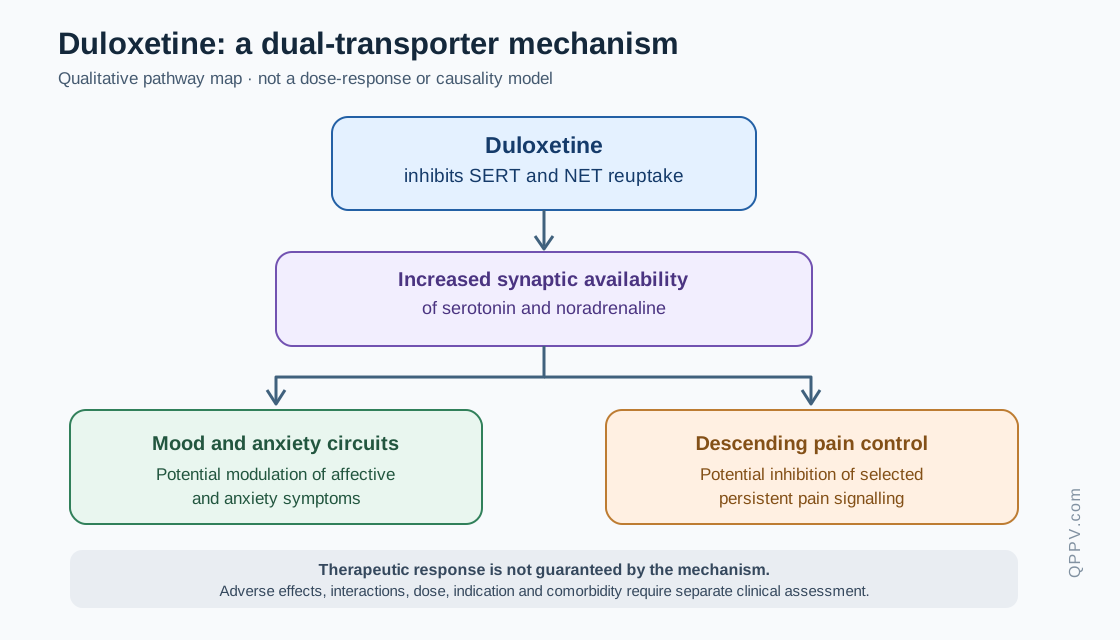
Figure 1. Two connected consequences of SERT/NET inhibition: therapeutic modulation of mood/anxiety and descending pain signalling, alongside exposure-related adverse effects. The diagram depicts a pharmacological relationship, not a patient-specific causal proof or quantitative risk model.
Exposure and interactions
The US label describes oral delayed-release administration and extensive hepatic metabolism through CYP1A2 and CYP2D6. Duloxetine also inhibits CYP2D6, so an interaction can run in both directions: another drug may change duloxetine exposure, and duloxetine may change exposure to a CYP2D6 substrate [1]. Fluvoxamine, a potent CYP1A2 inhibitor, increased duloxetine exposure about sixfold in a small pharmacokinetic study in the US label; paroxetine, a CYP2D6 inhibitor, increased exposure by about 60% in another study. These are study-specific estimates, not universal multipliers for every patient [1].
The clinical question is not simply whether two names appear on an interaction list. It is whether a change in exposure plausibly preceded a change in blood pressure, agitation, sedation, nausea or another outcome, and whether renal or hepatic impairment, age, smoking status, adherence or another co-medication alters that interpretation. Strong CYP1A2 inhibitors are particularly important; the US label advises avoiding potent CYP1A2 inhibition, while the EMA public assessment identifies fluvoxamine, ciprofloxacin and enoxacin as incompatible with EU Cymbalta [1,2]. An independent medication reconciliation should also check serotonergic co-therapy, anticoagulants/NSAIDs and CYP2D6 substrates.
Hepatic disease and severe renal impairment constrain use. The US label advises avoiding duloxetine in chronic liver disease/cirrhosis and in severe renal impairment (GFR below 30 mL/min); the EMA public assessment also describes restrictions for severe renal and specified hepatic disease [1,2]. These are product- and jurisdiction-specific label instructions, not a claim that all reduced kidney function is equivalent. The practical PV record should preserve the estimated renal function, relevant liver investigations and the actual product used, rather than recording only “renal patient” or “liver disease”.
Clinical evidence: why indication boundaries matter
Major depressive disorder
In depression, the pivotal question was whether duloxetine could improve depressive symptoms more than placebo and whether that benefit persisted in people who responded. Early trials used established clinician-rated depression scales and remission definitions. In one 2002 nine-week study, the estimated probability of response was 65% with duloxetine 60 mg daily versus 42% with placebo, and remission 43% versus 28%; adverse-event withdrawal was more frequent with active treatment [5]. Those percentages are trial-specific, not the probability of benefit for an unselected patient today.
The EMA's review describes eight principal depression studies involving 2,544 participants and explicitly notes that the results varied: four of the studies showed greater efficacy than placebo. Its summary also reports relapse-prevention evidence among responders [2]. This matters because selective reporting of a favourable trial would conceal the inconsistency that regulators considered in the totality of evidence. A maintenance study in people already responding to treatment answers a different question from initial response in treatment-naïve patients. It is not evidence that every patient should continue indefinitely.
Comparative antidepressant selection also depends on prior response, comorbidity, interactions, sexual adverse effects, discontinuation burden and patient preferences. Dual-transporter inhibition is a mechanistic classification, not proof of superiority over selective serotonin reuptake inhibitors or other SNRIs. Likewise, improvement in pain ratings in a depression trial does not establish efficacy for every chronic pain diagnosis. Pain may change through mood, descending inhibition, expectations or several interacting mechanisms; clinical trial design determines what can be inferred.
Generalised anxiety disorder
The generalised-anxiety programme tested acute symptom reduction and relapse prevention. In a 10-week randomised flexible-dose study, 327 adults were assigned duloxetine 60–120 mg daily or placebo. The primary Hamilton Anxiety Scale outcome favoured duloxetine, while adverse-event discontinuation was also more frequent [10]. The EMA describes five GAD studies involving 2,337 patients, including a relapse-prevention study in initial responders [2]. The practical lesson is that anxiety efficacy and early tolerability are both relevant: nausea, insomnia, agitation or dizziness in the first weeks may undermine adherence before a therapeutic response can be assessed.
The US label includes paediatric GAD from age seven, whereas the assessed EU Cymbalta authorisation is for adults [1,2]. This is a genuine indication/population distinction. It should not be collapsed into a statement that duloxetine is universally approved for children, nor should evidence from paediatric GAD be used to imply paediatric major-depression approval. The US label explicitly does not approve paediatric major depressive disorder [1].
Diabetic peripheral neuropathic pain
The neuropathic-pain studies are especially instructive because many patients had pain without major depression. Raskin and colleagues randomised 348 patients with diabetic peripheral neuropathic pain to duloxetine 60 mg once daily, 60 mg twice daily or placebo for 12 weeks. Both active groups improved the average 24-hour pain score more than placebo. The 60-mg twice-daily group had a greater adverse-event discontinuation rate (12.1%) than placebo (2.6%), without establishing superior efficacy over the once-daily dose [9]. A separate 2006 randomised study likewise found improved pain scores and no meaningful difference in pain efficacy between those two regimens [11].
This distinction has a direct safety consequence. If an individual remains symptomatic, doubling the dose should not be described as automatically doubling analgesia; higher exposure can increase adverse effects. Conversely, an adverse event reported during neuropathy treatment may reflect diabetes-related autonomic dysfunction, renal impairment, neuropathy, concomitant antihypertensives or duloxetine. Baseline symptoms and a timeline are needed before assigning causality.
The endpoints were patient-reported pain scales and related function measures, not regeneration of peripheral nerves. The short controlled phases do not settle long-term neuropathy progression or safety in frailer, highly comorbid populations. Regulatory authorisation establishes an acceptable benefit–risk balance for defined conditions, not certainty about all long-term outcomes.
Fibromyalgia and chronic musculoskeletal pain
A 12-week randomised fibromyalgia study enrolled 207 participants, many with concurrent depression, and reported improvement in several fibromyalgia and pain measures with duloxetine 60 mg twice daily; interpretation was limited by subgroup size, particularly the small male subgroup [12]. Subsequent evidence informed the US fibromyalgia indication. The US label includes fibromyalgia in adults and paediatric patients aged 13 years and older, but EU Cymbalta's assessed indication list does not include fibromyalgia [1,2]. A clinician must therefore distinguish the US approval from EU authorisation rather than assuming worldwide harmonisation.
The 2010 US chronic-musculoskeletal-pain approval followed studies in chronic low back pain and osteoarthritis [7]. A later meta-analysis of nine randomised trials found a mean advantage over placebo of approximately 0.67 points on a 0–10 average-pain scale, with higher treatment-emergent adverse events and discontinuation for adverse events [13]. That is a modest mean benefit, not evidence that no individual can respond well. It supports a time-limited, goal-oriented trial of therapy with reassessment of pain interference, functioning and adverse effects rather than a reflexive assumption of permanent benefit.
An overview of systematic reviews published in The BMJ in 2023 found moderate-certainty support for SNRIs, predominantly duloxetine, in several pain conditions but no high-certainty evidence for antidepressants across the 26 pain conditions evaluated [14]. This provides context for the difference between a product's authorised indication, the average effect in trials and a particular patient's worthwhile benefit.
Stress urinary incontinence: the separate EU product
The EU-authorised Yentreve programme should not be omitted from the molecule's history. The EMA describes four main placebo-controlled studies in 1,913 women with stress urinary incontinence, generally over 12 weeks. The average reduction in incontinence episode frequency was larger with duloxetine than placebo; the EMA reports a 52% versus 33% reduction from baseline [3]. This evidence relates to Yentreve, not an additional Cymbalta indication. It also illustrates a benefit–risk trade-off in a non-life-threatening condition where nausea, withdrawal or other systemic effects may be particularly influential in treatment choice.
The same monoaminergic physiology that may enhance sphincter activity can contribute to urinary hesitation or retention in other users. Product names, indications and treatment goals therefore belong in a case narrative. A regulatory signal assessment that combines stress-incontinence and depression populations without stratification can misinterpret the background frequency of urinary symptoms.
Evidence map: what each study can and cannot establish
| Evidence setting | Principal outcome | Boundary for interpretation |
|---|---|---|
| Acute depression and GAD trials | Change in validated symptom scales | Placebo-controlled efficacy is not comparative superiority to every active treatment |
| Responder-enriched continuation studies | Time to relapse after initial response | Does not estimate initial response in all patients |
| Diabetic neuropathy trials | Short-term pain severity and interference | Does not demonstrate reversal of neuropathy or indefinite safety |
| Fibromyalgia and musculoskeletal trials | Pain, function and patient global assessments | Average benefit can be modest; tolerability may limit use |
| EU Yentreve trials | Incontinence episodes and quality of life | Separate authorisation, population and benefit–risk context |
| Spontaneous postmarketing reports | Detection of previously unrecognised patterns | No reliable exposed denominator or causal proof from counts alone |
These boundaries should be preserved in summaries for clinicians, risk-management plans and periodic benefit–risk evaluations. A safety review that quotes a favourable pain outcome without reporting discontinuations, or combines unlike indications into one crude incidence estimate, can mislead even when every number quoted is technically correct.
Safety across the treatment lifecycle
Common tolerability and the initiation period
Duloxetine's most frequent problems often arise early, when patients are deciding whether to continue. In the US Cymbalta pooled adult placebo-controlled population, section 6.1 reports nausea in 23% of duloxetine recipients versus 8% of placebo recipients, dry mouth 13% versus 5%, somnolence 10% versus 3%, constipation 9% versus 4%, decreased appetite 7% versus 2%, and increased sweating 6% versus 1% [1]. These are proportions in the specified pooled trial dataset, not universal population incidence estimates. The underlying indications and baseline symptom burden differed.
An early report of dizziness may indicate a transient adverse effect, but falls deserve their own evaluation. Orthostatic hypotension and syncope are recognised warnings, particularly relevant when other medicines lower blood pressure or when dehydration, frailty or autonomic neuropathy coexist. A useful case history records posture, blood pressure where available, the timing of dose escalation and the presence of injuries. Simply coding “dizziness” may lose the more consequential outcome of a fall [1].
Nausea and insomnia may reduce adherence; a missed-dose pattern can then generate discontinuation symptoms that appear to be treatment failure or new disease. The timing of each dose and each symptom matters. Gradual titration may improve tolerability in some patients, but no particular titration schedule should be invented as a universal requirement: the product's current label and the prescriber's clinical judgement govern dosing.
Suicidality, activation and psychiatric confounding
The US label carries a boxed warning for increased suicidal thoughts and behaviours with antidepressants in children, adolescents and young adults in short-term studies. This is an antidepressant-class warning, not a claim that every suicide-related event in a duloxetine-treated person was caused by the drug [1]. Depression itself carries risk, and early symptom fluctuation, agitation, mixed states, substance use and psychosocial crises complicate causal interpretation.
A robust case assessment records age, diagnosis, prior suicidal behaviour, treatment start or dose changes, concomitant psychotropics, clinical deterioration, precipitating events, dechallenge, intervention and outcome. Suicidal ideation, an attempt and a completed suicide are not interchangeable terms. Emerging mania or hypomania also requires assessment of bipolar history and other causes. Such events warrant prompt clinical response independently of whether regulatory causality has been established.
Liver injury and alcohol-related risk
Hepatotoxicity is among duloxetine's most consequential labelled risks. The US prescribing information describes hepatic failure, sometimes fatal, and directs discontinuation if jaundice or clinically significant liver dysfunction develops, unless another cause is established. It advises avoiding use in patients with substantial alcohol use or chronic liver disease [1]. This warning should not be converted into a claim that all mild aminotransferase elevations represent severe drug-induced liver injury.
When evaluating a suspected hepatic event, establish baseline liver disease, alcohol exposure, viral hepatitis and other hepatotoxic medicines. Record latency, peak ALT/AST, alkaline phosphatase, bilirubin, INR, symptoms, imaging and the clinical course after cessation. A biochemical pattern can be described, but R-value classification alone does not establish causality. If a case involves a serious outcome, distinguish drug-induced injury from progression of underlying disease, biliary obstruction and other plausible causes. Rechallenge is not an ethical requirement for confirmation.
Serotonin syndrome and interacting medicines
Excess serotonergic activity may produce a syndrome involving mental-status changes, autonomic instability and neuromuscular abnormalities. Concomitant serotonergic medicines increase concern, but the US label also warns that serotonin syndrome can occur with duloxetine alone [1]. The presence of tremor or sweating by itself is not diagnostic; assess the constellation, onset, dose changes, interactions and alternative conditions. Severe symptoms require urgent clinical management.
Important co-exposures include other serotonergic antidepressants, tramadol, linezolid and certain migraine therapies, depending on the actual combination and current label. Monoamine oxidase inhibitor restrictions are particularly important. In contrast, an isolated medication-list alert without exposure overlap or compatible chronology is a risk flag rather than proof of a clinical syndrome. Record the precise agents, start/stop dates and doses.
Duloxetine's effect on platelet serotonin handling can also contribute to bleeding risk, especially with NSAIDs, aspirin, antiplatelet drugs or anticoagulants. The mechanism is different from direct anticoagulant action. A gastrointestinal bleed under combined treatment requires a chronology, ulcer history, relevant laboratory findings and co-medication review. Avoid attributing an observed bleed to a single drug solely because both carry a warning [1].
Blood pressure, sodium, skin and urinary effects
Noradrenergic effects can increase blood pressure, while orthostatic reactions can occur in other circumstances. Blood pressure should be assessed before treatment and periodically according to the US label. Hyponatraemia, sometimes associated with inappropriate antidiuretic hormone secretion, is an important possibility when an older patient presents with confusion, falls or seizures. Record serum sodium, fluid status, diuretic exposure and alternative causes [1].
Severe skin reactions, including Stevens–Johnson syndrome, are addressed in US warnings. A blistering eruption with mucosal involvement is clinically different from a mild rash and should not be compressed into an undifferentiated “skin reaction” category. Urinary hesitation or retention may be particularly relevant to the molecule's sphincter effects. Angle-closure glaucoma, seizure risk and sexual dysfunction also appear in the US safety sections; clinical evaluation must be tailored to the presentation [1].
Discontinuation is a safety phase, not merely the end of treatment
Abrupt cessation can produce dizziness, sensory disturbances, insomnia, nausea, anxiety, irritability and other symptoms. The US label contains a dedicated discontinuation-syndrome warning, and the EMA advises gradual dose reduction when stopping Cymbalta [1,2]. Symptoms can resemble recurrence of depression or anxiety, a new neurological condition or an adverse effect of a replacement medicine. Their onset relative to missed doses, the nature of symptoms and the course after a supervised dose adjustment are therefore diagnostically useful.
A PV system should not exclude events because they began after the last dose. Exposure discontinuation is part of the medicine-use lifecycle. Conversely, not every symptom after cessation is necessarily withdrawal. Document the taper, adherence, formulation, missed doses and clinical reasoning. The patient may need a clinician-guided individualised plan; this article does not prescribe a universal taper schedule.
Pregnancy, postpartum bleeding and breastfeeding
Pregnancy assessment requires more than a binary “safe/unsafe” label. A large US Medicaid cohort study published in 2020 found no convincing major increase in overall congenital malformations after adjustment (relative risk 1.11; 95% CI 0.93–1.33), while reporting an association with postpartum haemorrhage (relative risk 1.53; 95% CI 1.08–2.18) and a possible small increase in cardiac malformations [15]. Observational estimates remain vulnerable to residual confounding, exposure misclassification and differences in underlying illness. They do not demonstrate that duloxetine caused an outcome in an individual pregnancy.
Clinical assessment must balance untreated maternal illness, other treatment options, timing of exposure and maternal and neonatal outcomes. The US label's pregnancy and lactation sections should be checked for current counselling and neonatal considerations [1]. When documenting an exposed pregnancy, preserve trimester-specific dates, dosage, co-medication, indication, prenatal findings, delivery circumstances, neonatal adaptation and follow-up. Postpartum haemorrhage is a maternal outcome; it should not be mislabelled as a congenital malformation.
Product quality and formulation-specific reports
The release characteristics of duloxetine capsules are central to product-use investigations. For US Cymbalta, the label instructs swallowing delayed-release capsules whole rather than chewing, crushing or opening them [1]. A report of unexpected effect after altered administration is therefore not equivalent to a reaction during labelled use. Capture whether the capsule was opened, the product manufacturer, strength, batch, storage and whether a different formulation was substituted.
Generic approval rests on quality and bioequivalence requirements, not a promise that every individual's subjective experience will be identical. Suspected lack of effect following a switch deserves a structured chronology and assessment of adherence, disease fluctuation, dosing and other changes. Product-quality complaints, confirmed defects and clinical adverse reactions should be linked when appropriate but not conflated. An unverified online recall report should never be treated as evidence of a specific affected batch; use regulator-issued lot identifiers and dates before describing a quality action.
Regulatory listedness: what the documents actually support
Assessed products, documents and dates
This section is a public-label comparison, not a company-core listedness or case-expectedness decision. The US source is Eli Lilly Cymbalta delayed-release capsules 20, 30 and 60 mg, DailyMed SPL version 90, revised July 2025 (effective 21 July 2025), assessed 31 October 2026. Its adverse-reaction evidence comes principally from sections 6.1 (clinical trials) and 6.2 (postmarketing); important serious risks are also described in sections 5 and the boxed warning [1].
The EU source is Cymbalta 30/60-mg gastro-resistant capsules, EMA product-information record last updated 9 July 2024, assessed 31 October 2026. The accessible EMA public assessment describes authorised indications, common adverse effects and principal restrictions [2]. Although EMA links a full SmPC, the PDF could not be independently opened for this review. Thus the EU column below is deliberately a verified EMA-overview description, not a definitive section-4.8 listedness judgement. This limitation must be resolved before using this article to decide whether an individual reaction is listed in the EU SmPC. Yentreve has its own separate EU authorisation and is not substituted for Cymbalta [3].
| Question | US Cymbalta: July 2025 USPI | EU Cymbalta: EMA record, July 2024 |
|---|---|---|
| Indication/population scope | Adult MDD, GAD (including children aged 7+), adult diabetic neuropathic pain, fibromyalgia (including age 13+), adult chronic musculoskeletal pain [1] | Adult major depression, GAD and diabetic neuropathic pain [2]; EU overview does not list fibromyalgia or chronic musculoskeletal pain for this product |
| Common adverse reactions | Section 6.1 trial tables explicitly list nausea, dry mouth, somnolence, constipation, decreased appetite, hyperhidrosis and other events with trial-specific frequencies [1] | EMA overview names nausea, headache, dry mouth, somnolence and dizziness as common effects [2]; section 4.8 not independently verified |
| Suicidality | Boxed warning and section 5.1; do not call a warning automatically a trial-table incidence [1] | EMA overview discusses suicidal thoughts/behaviour and clinical vigilance [2]; exact SmPC wording/frequency not independently verified |
| Liver, kidney and blood pressure | Sections 5 and 8 discuss serious liver injury, renal restriction and blood-pressure monitoring [1] | EMA overview identifies hepatic/severe renal restrictions and uncontrolled-hypertension restriction [2]; detailed SmPC wording not independently verified |
| Interactions | US sections 5 and 7 describe MAOI restrictions, CYP1A2/2D6 interactions, serotonergic combinations and bleeding risks [1] | EMA overview specifically identifies MAOIs, fluvoxamine, ciprofloxacin and enoxacin as incompatible [2]; complete SmPC interaction text not independently verified |
| Discontinuation | US section 5.7 describes discontinuation syndrome [1] | EMA overview instructs gradual dose reduction [2]; no claim here about the exact EU adverse-reaction listing |
| Stress urinary incontinence | Not a US Cymbalta indication in the assessed USPI [1] | Separate EU Yentreve product, not a Cymbalta indication [3] |
Listed versus warned versus not assessable
For the assessed US Cymbalta label, nausea, dry mouth, somnolence, constipation, decreased appetite and hyperhidrosis are listed in section 6.1 with denominators and frequencies defined by the trial programme [1]. Acute pancreatitis, anaphylactic reaction, angioneurotic oedema, cutaneous vasculitis and tinnitus upon discontinuation appear in the US section 6.2 postmarketing list; spontaneous reports do not establish incidence or individual causality [1]. Hepatotoxicity, suicidality, serotonin syndrome, bleeding, severe skin reactions and discontinuation syndrome are prominent warnings or precautions; some may also be represented elsewhere in adverse-reaction sections. Their presence in section 5 alone should not be described as a measured section-6 incidence.
For EU Cymbalta, the accessible EMA overview supports that nausea, headache, dry mouth, somnolence and dizziness are recognised adverse effects [2]. It does not permit a definitive conclusion that any other specific reaction is “unlisted in the EU SmPC.” Nor can the absence of an indication from this EMA overview be used to infer a contraindication in every other European product. The correct next step for case-specific EU listedness is to retrieve the current authorised SmPC for the exact product and check section 4.8, section 4.4 and the applicable reference safety information.
A difference between a US warning and an EU summary may reflect document structure, product scope or evidence presentation. Without full current documents and variation history, attributing the difference to a regulator's disagreement or to a biological population difference would be speculation. A marketed-product label is not automatically the reference safety information for an investigational trial; nor is public label listedness identical to seriousness, causality, expectedness under the applicable reporting rules or signal status.
From an individual case to a defensible PV assessment
Establish the clinical question before selecting a code
Consider an illustrative, not real, report: an older person taking duloxetine for neuropathic pain develops dizziness and a fall after starting a diuretic, and reports missing several duloxetine doses. The initial narrative supports at least three competing mechanisms—orthostatic hypotension, hyponatraemia and discontinuation symptoms—plus baseline diabetic neuropathy. The PV assessor should obtain the actual drug and formulation, dose and timing, blood-pressure measurements, sodium, renal function, fall injury, treatment changes, dechallenge and outcome. A coded event list alone would not preserve this reasoning.
A second illustrative report involves elevated liver enzymes after several weeks of treatment in a person with heavy alcohol intake. Seriousness, pattern and competing causes need separate evaluation. The US label's warning increases prior concern but does not eliminate other explanations. The assessor should seek actual laboratory values, bilirubin, INR, clinical symptoms, alcohol chronology, co-medications and follow-up. A report of jaundice is not interchangeable with a transient isolated ALT rise.
Signal detection and follow-up
Spontaneous reports are useful for identifying unusual or unexpected patterns, particularly rare serious outcomes and product-use errors. They are not an exposed cohort. Raw reporting counts cannot yield a true incidence rate, and disproportionality is a signal-detection method rather than a causality verdict. An aggregate review should stratify by indication, age, sex when relevant, formulation, exposure timing, interacting drugs and the availability of a denominator. The US pooled trials, EU product summaries and postmarketing spontaneous reports should not be combined as if they measured the same population [1,2].
For a potential discontinuation signal, useful follow-up includes missed doses, taper schedule, symptom latency, the distinction between relapse and new sensory symptoms, and resolution. For a suspected interaction signal, document both drugs and whether the overlap was pharmacologically plausible. For pregnancy, capture gestational timing and maternal as well as neonatal outcomes. These details improve signal evaluation more than collecting an isolated MedDRA preferred term without context.
Governance and risk minimisation
An operational PV system should connect case processing, medical review, literature surveillance, aggregate evaluation, product-quality investigation and label governance. Where a pattern becomes credible, a documented benefit–risk assessment should explain the evidence, uncertainty, alternatives and any proportionate action. Possible actions include targeted follow-up questions, changes to patient counselling, interaction alerts, revised labelling or additional study. Such options are good practice examples, not automatic regulatory mandates triggered by a single case.
For EU products, the marketing authorisation holder's applicable legal and GVP obligations govern reporting and signal management; this article does not invent a duloxetine-specific reporting deadline. Records should distinguish the underlying regulatory obligation from the team's recommended follow-up or clinical risk-reduction action. A change-control trail should identify the version of the reference label used and why a conclusion changed after new evidence.
Key takeaways
Duloxetine's benefit–risk balance is indication- and patient-specific. Controlled studies support selected depression, anxiety and pain uses, but average pain benefits may be modest and adverse-event discontinuation is material. The pharmacology that supports analgesia also creates interaction, autonomic and withdrawal concerns. Product, formulation, jurisdiction and dated label matter as much as the INN. A careful PV assessment preserves chronology, competing causes, exposure changes and source-document limitations rather than treating a label warning or a spontaneous report as proof of causality.
References
- Eli Lilly and Company. Cymbalta (duloxetine hydrochloride) delayed-release capsules, US Prescribing Information, revised July 2025; DailyMed SPL version 90, effective 21 July 2025. Sections 1, 2, 5, 6, 7, 8, 12 and 14. DailyMed official label.
- European Medicines Agency. Cymbalta, EPAR and product-information record, EU authorisation 17 December 2004; linked product information last updated 9 July 2024. EMA product page. Full SmPC PDF was identified but could not be opened for this assessment.
- European Medicines Agency. Yentreve, EPAR for duloxetine in female stress urinary incontinence; EU authorisation 11 August 2004. EMA product page.
- Eli Lilly and Company. FDA approves Lilly's Cymbalta for the treatment of depression, company announcement, 4 August 2004. Original announcement.
- Detke MJ, et al. Duloxetine 60 mg once daily dosing versus placebo in the acute treatment of major depression. J Psychiatr Res (2002). DOI: 10.1016/S0022-3956(02)00060-2. PubMed.
- Goldstein DJ, et al. Duloxetine in the treatment of major depressive disorder: a double-blind clinical trial. J Clin Psychiatry (2002). DOI: 10.4088/JCP.v63n0309. PubMed.
- US Food and Drug Administration. FDA clears Cymbalta to treat chronic musculoskeletal pain, 4 November 2010. FDA announcement distributed via PR Newswire.
- European Medicines Agency. Duloxetine Viatris (formerly Duloxetine Mylan), generic EPAR; authorised 19 June 2015; product information last updated 7 May 2026. EMA product page.
- Raskin J, et al. A double-blind randomised multicentre trial comparing duloxetine with placebo in diabetic peripheral neuropathic pain. Pain Med (2005). DOI: 10.1111/j.1526-4637.2005.00061.x. PubMed.
- Rynn M, et al. Efficacy and safety of duloxetine in generalised anxiety disorder: a flexible-dose placebo-controlled trial. Depress Anxiety (2008). DOI: 10.1002/da.20271. PubMed.
- Wernicke JF, et al. A randomised controlled trial of duloxetine in diabetic peripheral neuropathic pain. Neurology (2006). DOI: 10.1212/01.wnl.0000240225.04000.1a. PubMed.
- Arnold LM, et al. A double-blind multicentre trial of duloxetine in fibromyalgia with or without major depression. Arthritis Rheum (2004). DOI: 10.1002/art.20485. Original article.
- Efficacy and safety of duloxetine in osteoarthritis or chronic low back pain: systematic review and meta-analysis. (2020). PubMed.
- Efficacy, safety and tolerability of antidepressants for pain in adults: overview of systematic reviews. BMJ (2023);380:e072415. Original article.
- Huybrechts KF, et al. Maternal and fetal outcomes following exposure to duloxetine in pregnancy: cohort study. BMJ (2020);368:m237. Original article.
Regulatory Note
This is a professional educational synthesis assessed 31 October 2026, not individual prescribing advice, a pharmacovigilance reporting determination or a marketing authorisation holder's approved reference safety information. The US Cymbalta label was reviewed directly; the EU Cymbalta public EPAR was reviewed, but the full EU SmPC PDF could not be retrieved, so no definitive EU section-4.8 listedness conclusion is made. Recheck the current exact product, formulation, jurisdiction, label revision and designated reference safety information before a case-specific expectedness or regulatory decision. Observational associations, controlled trial adverse-event proportions, spontaneous reports and illustrative scenarios have different evidentiary meanings.