Methylphenidate: Discovery, Development, Safety and Pharmacovigilance
Methylphenidate is a central nervous system stimulant used principally for attention-deficit/hyperactivity disorder (ADHD). It is also a useful lesson in the difference between an active substance and a medicinal product. The molecule has been prescribed for decades, but immediate-release tablets, osmotic extended-release tablets and food-dependent modified-release capsules deliver different concentration–time patterns. A report of insomnia, appetite loss, agitation, hypertension or apparent loss of effect cannot be interpreted reliably until the actual product, administration conditions and timing are established [1–3].
This article follows the international nonproprietary name methylphenidate, not a single brand. Its primary regulatory comparison deliberately identifies three different products: US Ritalin immediate-release tablets (label revised February 2025), US Concerta osmotic extended-release tablets (September 2025 label), and French EU Medikinet 30-mg modified-release capsules (SmPC updated 13 March 2026). The last is a national EU-authorised SmPC, not an EMA centralised product assessment. A difference between those documents may reflect formulation, indication, evidence presentation or jurisdiction; it does not establish a biological difference between populations [1–3].
The central pharmacovigilance challenge is to separate expected dose-related sympathomimetic effects, rare serious clinical syndromes, developmental and psychiatric confounding, product-use errors and deliberate nonmedical use. Each has different follow-up needs. The historical US outpatient prescribing-volume queue identifies methylphenidate as B035, but that ranking is a prescribing proxy rather than a safety ranking, and this article does not allocate combination-product use or revenue to the ingredient.
- Methylphenidate: Discovery, Development, Safety and Pharmacovigilance
- Discovery and the first clinical decades
- Pharmacology: why efficacy and adverse effects share a pathway
- Regulatory identity before evaluating a case
- Clinical development: what the trials establish
- Evolution of formulations, approvals and risk communication
- Safety profile: common effects, serious syndromes and confounding
- Product-specific listedness: United States and France, 31 October 2026
- Special populations, interactions and changing evidence
- Practical pharmacovigilance: from report to corrective action
- Key takeaways
- References
- Regulatory Note
Discovery and the first clinical decades
From medicinal chemistry to Ritalin
Methylphenidate emerged from the work of chemist Leandro Panizzon at Ciba in the 1940s. Historical accounts place its synthesis in 1944 and describe subsequent work to refine and develop a centrally active stimulant. The familiar account linking the brand name Ritalin to Panizzon's wife is part of published historical narratives; it should not be confused with primary clinical evidence about efficacy or safety. The US Ritalin label records initial US approval in 1955, long before today's expectations for randomised trials, systematic adverse-event collection and formal risk-management plans [1,4].
Early clinical interest was not confined to the modern ADHD diagnosis. Stimulants were explored for fatigue, alertness and behavioural symptoms under terminology and diagnostic criteria that have since changed. The history is important for interpreting old papers: a child described as having a hyperkinetic disorder in a mid-century report is not automatically equivalent to a patient enrolled under a contemporary ADHD case definition. Similarly, early treatment experience does not prove long-term functional benefit merely because the medicine remained in use [4,5].
Ciba's product later became associated with the Novartis group, while methylphenidate also became a multisource active substance. Its commercial story is therefore not a single uninterrupted brand history. Subsequent products combined the same core pharmacology with release engineering, different marketing authorisation holders and local indications. In the United States, Concerta received its initial approval in 2000, adding an osmotic extended-release system designed for once-daily use; its current label remains distinct from that of immediate-release Ritalin [1,2]. These developments changed when and how patients experienced the medicine without changing the INN.
Why release technology became clinically important
An immediate-release dose can produce a relatively rapid rise and decline in exposure, requiring carefully timed administration when longer daily coverage is needed. A modified-release product attempts to spread delivery across the day, but the technology matters: osmotic tablets, multiparticulate capsules and other systems are not interchangeable simply because the carton says methylphenidate. Release characteristics influence symptom coverage, insomnia, appetite suppression, rebound symptoms and opportunities for medication error [1–3].
The French Medikinet 30-mg capsule SmPC specifically instructs administration during or after food because fasting can accelerate absorption and compromise sustained delivery. It also warns against gastric-acid suppression with H2-receptor antagonists, proton-pump inhibitors or antacids because of possible accelerated release. By contrast, the US Concerta label permits dosing with or without food and requires swallowing the tablet whole without crushing or chewing. These are product-specific instructions, not competing universal rules for methylphenidate [2,3].
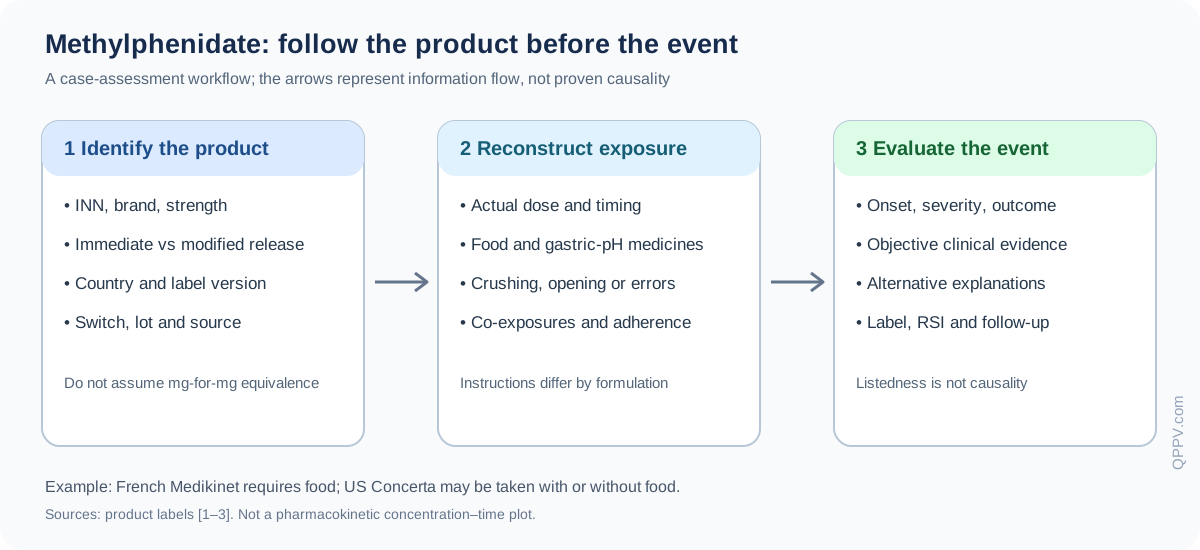
Figure 1. The arrows show the order of case assessment, not evidence of drug causation. Product instructions differ; the diagram is not a pharmacokinetic curve [1–3].
A pharmacy substitution, hospital formulary switch or family-administered dose therefore needs more than a nominal milligram comparison. Record brand, strength, salt, formulation, dose timing, meal timing and whether a tablet or capsule was altered. For a suspected adverse reaction, retain the original product identification and lot where possible; a later generic substitution should be documented as a separate exposure interval. A patient may have the same daily total dose but a substantially different peak or late-day exposure after a formulation change [1–3].
Pharmacology: why efficacy and adverse effects share a pathway
Transporter inhibition rather than an amfetamine synonym
Methylphenidate inhibits neuronal dopamine and noradrenaline transporters, increasing extracellular catecholamine availability. This is not the same molecular mechanism as amfetamine-induced transporter-mediated monoamine release. Both classes can improve ADHD symptoms, but they should not be described as pharmacologically identical, and one product's safety frequency cannot be copied into another's label [1–3,7]. The related dexamfetamine lifecycle article explains the contrasting active-substance and prodrug distinctions.
The marketed racemic methylphenidate mixture contains d- and l-threo forms; the d-isomer contributes more of the central pharmacological activity. Enantiomer composition, release technology and exposure are separate variables. Methylphenidate is substantially metabolised by ester hydrolysis to ritalinic acid; it is not primarily a CYP3A4 substrate. A simplistic expectation of large CYP-mediated interactions based on other psychostimulants would therefore be misleading [1–3]. Nevertheless, pharmacodynamic interactions—especially with monoamine oxidase inhibitors, antihypertensives and some centrally acting medicines—remain important.
A therapeutic response is not proof of harmless stimulation
Increased dopamine and noradrenaline signalling can improve attention and inhibitory control while also increasing pulse and blood pressure, reducing appetite, disrupting sleep or aggravating anxiety in susceptible individuals. The intended and unwanted effects are not separate mechanisms in isolated compartments. Dose, formulation, developmental stage, coexisting illness and other medicines affect which effects predominate. A good symptom response does not rule out a clinically important adverse reaction [1–3].
At the same time, not every symptom appearing during treatment is caused by methylphenidate. ADHD itself, anxiety, sleep deprivation, puberty, intercurrent illness and environmental stressors can produce restlessness, irritability and poor sleep. A sound assessment records pre-treatment symptoms and asks whether the event began or changed after initiation, titration, formulation switching or a dosing error. A structured chronology is more informative than a binary label of “stimulant side effect.”
Regulatory identity before evaluating a case
A US Ritalin tablet, a US Concerta extended-release tablet and a French Medikinet capsule are three separate medicinal products with their own indications, doses, contraindications and safety presentations [1–3]. In the current US Concerta label the ADHD indication extends to adults up to age 65; the French Medikinet SmPC includes children from age six and adults, with a specialist-led comprehensive treatment context. Do not infer an identical age range, titration schedule or approval for narcolepsy from another methylphenidate label.
A useful source-of-truth record for each case contains the exact authorised product name, formulation, route, strength, country, label version, start and stop dates, actual dosing, co-exposures and the clinical indication. This is particularly important when the case crosses borders: “EU label” is not a substitute for the specific member state's SmPC, and a UK SmPC should not be presented as an EU document after Brexit.
The sections that follow distinguish the efficacy evidence that justified use from the risks that require monitoring. Neither clinical efficacy nor market longevity removes the need to assess emerging evidence or changes in labelling. [1–3]
Clinical development: what the trials establish
The MTA trial and the difference between symptoms and function
The Multimodal Treatment Study of Children with ADHD (MTA) remains a landmark because it compared treatment strategies rather than merely asking whether a stimulant can outperform placebo over a few weeks. In the 1999 report, 579 children aged approximately 7–10 years with combined-type ADHD were randomised to carefully managed medication, intensive behavioural treatment, combined treatment or routine community care for 14 months. Medication management and combined treatment improved core ADHD symptoms more than behavioural treatment alone or community care on several comparisons. The combined programme had advantages in selected broader domains, but it was not significantly superior to medication management on the direct comparisons of core ADHD symptoms [5].
This is not evidence that methylphenidate alone causes every observed benefit: the medication-management arm used a treatment algorithm and could involve different stimulant options, while the behavioural and combined arms included extensive clinical contact. The intervention compared packages of care, not a fixed molecule against placebo. It is equally incorrect to dismiss the trial because it was not a pure methylphenidate study; its value lies in showing how monitoring, titration and complementary care can change short-term outcomes.
The distinction becomes sharper in the eight-year MTA follow-up. By adolescence, the originally randomised treatment groups did not differ significantly on most measured symptoms or functional outcomes. The investigators concluded that the intensity or type of 14 months of childhood treatment did not predict functioning six to eight years later [14]. This follow-up does not show that medication is ineffective while a patient takes it: treatment exposure after randomisation varied substantially and the later comparisons were no longer a clean test of continuous drug assignment. It does show why a short-term symptom response must not be marketed as proven lifelong academic, social or occupational benefit.
Adult randomised evidence and its boundaries
Biederman and colleagues' six-week, double-blind study enrolled 141 adults with ADHD and compared once-daily osmotic-release methylphenidate with placebo. The reported responder definition combined a clinical global improvement rating with a substantial reduction in ADHD symptom score; response occurred in 66% of active-treatment participants versus 39% of placebo recipients. Blood pressure and pulse increased modestly on average in the active arm, illustrating why efficacy and cardiovascular monitoring should be considered together [6].
The study supports short-term symptom efficacy of the tested formulation in selected adults. It cannot, by itself, establish long-term prevention of accidents, substance-use disorders, unemployment or psychiatric admission. Six weeks also cannot reliably quantify very rare adverse reactions. Study eligibility, exclusions, dose titration and follow-up intensity must be considered before generalising the results to older adults, people with complex cardiovascular disease or patients taking several interacting psychotropic medicines.
The current US Concerta label describes its own clinical programme and placebo-controlled safety tables, including an adult pattern of decreased appetite, headache, dry mouth, nausea, insomnia, anxiety, dizziness, weight reduction, irritability and sweating. Its trial percentages should not be compared directly with rates in unrelated Ritalin or Medikinet trials because definitions, ascertainment and populations differ [2].
Evidence synthesis and negative or uncertain findings
The 2018 network meta-analysis by Cortese and colleagues assembled 133 double-blind randomised trials of ADHD medicines across children, adolescents and adults. At roughly 12 weeks, methylphenidate was more effective than placebo on clinician-rated core symptoms in both age groups. The authors regarded it as a reasonable short-term first pharmacological choice for children and adolescents, while the adult comparative pattern favoured amfetamines on their evidence framework. Importantly, the analysis did not find sufficient evidence for robust comparative conclusions at 26 or 52 weeks [7].
A later Cochrane review of methylphenidate in children and adolescents also found improvements in teacher-rated ADHD symptoms and some behaviour outcomes, but rated much of the evidence as very low certainty. Problems included trial design, short follow-up, incomplete reporting and difficulty maintaining blinding when participants experience recognisable stimulant effects. Non-serious adverse events such as sleep problems and decreased appetite were more frequent, while the evidence did not establish a clear effect on quality of life or serious adverse events [8]. “No statistically demonstrated increase in serious events” is not equivalent to “serious events do not occur,” particularly when trials are too short or small to detect them.
These apparently different assessments should be read together rather than selected to support a predetermined conclusion. Placebo-controlled studies consistently show symptomatic benefit for many patients. The exact magnitude, durability, effect on real-world functioning and comparative long-term harms remain less certain. Clinicians and PV reviewers should distinguish outcomes directly measured in randomised trials from later observational associations and individual patient reports.
What the trial record does not justify
The trial record does not support assuming that every child with attention difficulties needs a stimulant, that dose escalation is always preferable to changing strategy, or that apparent academic improvement proves an effect on long-term educational attainment. It also does not establish that a product with longer daily exposure is universally safer or more effective. A sustained-release profile may reduce school-day administration burden, but can move appetite suppression or insomnia into a different part of the day.
In a patient who reports no benefit, check the original diagnosis, functional target, adherence, administration with food when required, formulation, timing and competing problems such as insufficient sleep before treating the event as pharmacological resistance. Conversely, persistent tachycardia, weight loss or emergent mania should not be tolerated solely because the ADHD rating scale improved [1–3,5–8].
Evolution of formulations, approvals and risk communication
Formulation development as a safety variable
The shift from short-acting products to once-daily systems was commercially and clinically consequential. A child no longer necessarily needed to receive a midday dose at school, which could improve convenience and reduce some opportunities for missed or publicly administered medication. But a long-acting product introduces its own handling hazards: an osmotic tablet should not be crushed, and a modified-release capsule may have food and gastric-pH requirements. The same INN does not mean a dose-for-dose substitute [1–3].
For methylphenidate, formulation is also a major confounder in spontaneous safety reports. An event coded as “drug ineffective” after a pharmacy switch could reflect changed exposure, missed meals, administration error or different treatment expectations. An overdose report may involve several immediate-release doses, tampering with a controlled-release system or an unintended duplicate prescription. These mechanisms require distinct corrective actions. The original product and replacement product should remain traceable in the case record.
Safety changes after decades of use
In May 2023, FDA required more consistent prescription-stimulant labelling on abuse, misuse, addiction, overdose and the danger of sharing medication. This class-wide action did not mean every individual methylphenidate product had identical abuse potential in every route or circumstance; it standardised communication about an established category of serious harm [13]. The US Ritalin and Concerta labels now carry prominent boxed warnings addressing abuse, misuse and addiction [1,2].
On 30 June 2025, FDA announced expanded labelling for extended-release stimulants because children younger than six had higher drug exposure and more adverse effects, particularly weight loss, at the same dose than older children. The September 2025 Concerta label explicitly states that use is not recommended under age six. This is a formulation-class action; it should not be carelessly copied as a newly imposed identical statement in the February 2025 immediate-release Ritalin label [2,9].
A safety change can be scientifically meaningful without representing a new molecular mechanism. Regulators may act when new pharmacokinetic analyses identify a vulnerable population, when medication errors reveal an avoidable hazard, or when the consistency of warnings across related products is inadequate. For an effective PV system, the work does not end with updating a label: prescribers, pharmacists and caregivers must be able to identify the relevant formulation and act on its instructions.
Commercial and ownership context without fabricated market rankings
Ciba's early Ritalin franchise, subsequent Novartis-era products and the ALZA-developed osmotic-release Concerta illustrate successive commercial approaches to the same active substance. The later presence of multiple generic and proprietary formulations complicates attribution of a safety signal to a single manufacturer. Product ownership, supply chain, manufacturing changes and market availability should be verified against contemporaneous regulatory records before being asserted for a specific batch or territory [1–4].
Neither the B035 prescription ranking nor a brand's commercial prominence proves greater intrinsic risk. Prescription counts are not unique exposed patients, duration-adjusted person-time, or adverse-event incidence. A denominator appropriate to one country's outpatient dispensing may be especially misleading when products have different indications, age ranges, formulations and periods on the market. The following safety sections therefore keep clinical event interpretation separate from market-size narratives.
Safety profile: common effects, serious syndromes and confounding
Appetite, growth and sleep
Decreased appetite, weight loss, insomnia, headache and gastrointestinal discomfort are among the most recognisable methylphenidate reactions [1–3]. Their frequency and severity depend on the studied population and formulation; a percentage in an adult Concerta trial is not an incidence estimate for every methylphenidate product. A clinical assessment should record weight trajectory, height in growing children, nutritional intake, sleep schedule and the temporal relationship to dose changes. An adverse event may be clinically important even when it is listed and common.
The US Ritalin label discusses slower growth in continuously treated children and calls for height and weight monitoring [1]. The French Medikinet SmPC likewise emphasises growth, appetite and periodic reassessment during prolonged treatment [3]. Neither observation proves that every child will have a permanent adult-height deficit. Equally, the absence of obvious short-term weight loss does not exclude a developing nutritional problem. In children, serial measurements plotted against an appropriate growth trajectory are more useful than a single isolated number.
For sleep complaints, ask whether insomnia predates treatment, whether an afternoon dose was taken late, whether a long-acting product was switched, and whether rebound symptoms or comorbid anxiety contribute. An intervention may involve changing the schedule or formulation, but a PV report should first preserve the actual exposure and event chronology rather than retrospectively substituting the intended prescription for what the patient took.
Cardiovascular effects and rare outcomes
Methylphenidate can increase heart rate and blood pressure. The US labels advise assessment for serious cardiac disease and monitoring of pulse and blood pressure; the French SmPC has a broader list of cardiovascular contraindications and more detailed monitoring language [1–3]. Syncope, chest pain, exertional dyspnoea or new sustained palpitations warrant clinical evaluation. A suspected serious event should be recorded with objective investigations, pre-existing disease, family history and relevant co-medications.
Cardiovascular evidence needs careful calibration. A 2022 meta-analysis of 19 observational studies involving more than 3.9 million participants did not find a statistically significant overall association between ADHD medication use and cardiovascular events, but confidence intervals and subgroup limitations could not exclude clinically important risks [12]. A Swedish nested case-control analysis published in 2024, covering a cohort of 278,027 individuals with ADHD, associated longer cumulative ADHD-medication use with higher cardiovascular disease risk, especially hypertension and arterial disease [10]. These are not contradictory randomised trials: they address different exposure definitions, follow-up periods and biases. Neither result should be reported as a methylphenidate-specific causal incidence rate.
For individual cases, baseline hypertension, smoking, obesity, family history, other stimulants and duration of treatment can influence risk. A credible signal evaluation therefore needs stratification and sensitivity analyses, not just a count of spontaneous “tachycardia” reports. Fatal events demand special scrutiny of structural heart disease, nonmedical use, toxicology and other plausible causes without automatically dismissing or confirming drug contribution.
Psychiatric, neurological and vascular events
Stimulant exposure may precipitate or worsen psychotic or manic symptoms in susceptible patients, and may be associated with agitation, anxiety, mood changes, tics and seizures [1–3]. These events are difficult to assess because the treated population can have baseline psychiatric comorbidity and may receive antidepressants, antipsychotics or other neuroactive drugs. A robust case chronology documents prior psychosis or bipolar disorder, substance use, sleep loss, symptom onset, medication changes and outcome after intervention.
The US Ritalin label includes priapism, peripheral vasculopathy including Raynaud phenomenon, ocular pressure problems and motor or verbal tics among its warnings; section 6 separately lists many of these or related events in the product-specific and other-methylphenidate reaction categories [1]. These are not all equally frequent or equally well supported by controlled studies. A warning is a risk-management communication, not an estimate of probability.
The French Medikinet section 4.8 tabulates rare and very rare cardiovascular, cerebrovascular, psychiatric and haematological terms alongside frequent appetite and sleep effects. It explicitly notes uncertainty in poorly documented reports of neuroleptic malignant syndrome, often involving other medicines [3]. A PV reviewer should preserve that uncertainty. The presence of a term in a table is evidence of product-document listing, not proof that methylphenidate caused every reported case.
Misuse, dependence, overdose and medication errors
Methylphenidate is a controlled stimulant with recognised abuse and misuse potential. In the United States, Ritalin and Concerta are Schedule II products and have boxed warnings concerning abuse, misuse and addiction [1,2]. A patient taking extra prescribed tablets to compensate for inadequate symptom control, someone using another person's prescription and a person manipulating a controlled-release tablet for nonmedical administration are different clinical situations. Each can create overdose risk, but the preventive and regulatory responses differ.
FDA's 2023 communication emphasised assessing risk before prescribing, secure storage, not sharing medicines, proper disposal and continued monitoring for nonmedical use [13]. These steps are part of the US label's safety framework; they should not be represented as identical legal obligations under every European national system. Clinical reports should distinguish intentional overdose, accidental paediatric ingestion, diversion, prescribed dose escalation, dispensing error and product tampering.
An acute toxic presentation can include marked agitation, tachycardia, hypertension, hyperthermia, hallucinations or seizures. The immediate priority is clinical stabilisation and appropriate poison-centre or emergency care, not delaying treatment for a pharmacovigilance form. Afterwards, reconcile the actual dose and formulation, other substances, packaging, source of supply, treatment and outcome [1–3]. The suspected event may need both adverse-reaction and medication-error coding, depending on the applicable reporting framework.
Product-specific listedness: United States and France, 31 October 2026
Documents and scope
The comparison below is deliberately bounded to the US Ritalin immediate-release tablets (DailyMed version 3, revised February 2025), US Concerta extended-release tablets (FDA label with September 2025 changes) and French Medikinet 30-mg modified-release capsules (ANSM SmPC updated 13 March 2026). All were accessed for this review on 31 October 2026 [1–3]. This is a product-label comparison, not a claim that these are the only marketed methylphenidate presentations.
| Assessment | US Ritalin IR, February 2025 | US Concerta ER, September 2025 | French Medikinet MR, March 2026 |
|---|---|---|---|
| Commonly presented reactions | Section 6 includes decreased appetite, weight/growth effects, insomnia, anxiety, tachycardia, palpitations, headache and gastrointestinal symptoms | Sections 6.1–6.3 give trial-based tables; common adult events include decreased appetite, insomnia, headache, dry mouth, nausea, anxiety and weight reduction | Section 4.8 uses frequency bands; decreased appetite, insomnia, nervousness, headache, nausea and dry mouth appear among very common entries |
| Serious psychiatric/cardiovascular information | Section 5 warns about serious cardiac disease and new psychotic/manic symptoms; section 6 lists multiple psychiatric and cardiovascular reactions | Section 5 warns about serious cardiac and psychiatric events; section 6 includes trial and postmarketing categories | Sections 4.3–4.4 contain extensive psychiatric and cardiovascular exclusions/precautions; section 4.8 lists psychosis, mania, arrhythmias and other serious events with varying frequencies |
| Abuse and misuse | Boxed warning and sections 5, 9 | Boxed warning and sections 5, 9 | Section 4.4 addresses misuse/diversion; section 4.8 includes dependence and notes reports of abuse |
| Growth and age | Section 5.7 growth warning; age and indication per Ritalin label | September 2025 limitation of use: not recommended below age six because of higher exposure and adverse effects | Section 4.2 does not permit use below six; growth monitoring and periodic review described |
| Formulation-specific instructions | Immediate-release tablet regimen | Osmotic tablet swallowed whole; may be taken with or without food | Capsule taken during/after food; acid-suppressing drugs may accelerate release |
| Contraindication scope | Hypersensitivity and MAOI exposure within 14 days | Hypersensitivity and MAOI exposure within 14 days | Wider section 4.3 exclusions, including several psychiatric, cardiovascular, glaucoma, endocrine and gastric-acidity conditions |
What is and is not listed
For the assessed Ritalin label, insomnia, reduced appetite, psychosis, tachycardia, Raynaud phenomenon and abnormal liver function are among the section-6 reported adverse reactions; priapism appears in section 5 and is additionally identified under reactions reported with other methylphenidate products in section 6. These locations matter. Calling every section-5 warning a Ritalin-specific trial-observed adverse reaction would erase the label's own distinction [1].
For the assessed Concerta label, abdominal pain is prominent in paediatric placebo-controlled data, whereas decreased appetite, insomnia and anxiety appear in adult trial tables. The September 2025 under-six limitation is a labelled prescribing restriction based on exposure and tolerability, not an adverse-reaction frequency estimate [2,9]. For the French Medikinet SmPC, section 4.8 includes frequency categories and broad pooled methylphenidate experience; section 4.3 has contraindications not reproduced in the US Ritalin section 4. These are differences in the assessed documents. A reaction absent from one table cannot automatically be declared biologically absent, and a warning elsewhere cannot automatically be promoted into that table [1–3].
Listedness is not case expectedness. Public USPI/SmPC listing, company core safety information, reference safety information applicable to a specific trial or reporting context, case-level causality and jurisdictional reporting obligations are different questions. A company must identify the applicable product, territory, reference document, version and event term before deciding whether a particular case is expected under its governing framework. “Not seen in this public section” is not sufficient evidence of an unlisted reaction or a reportability decision.
Special populations, interactions and changing evidence
Pregnancy and breastfeeding: signal versus certainty
Pregnancy assessment is a particularly good example of why pharmacovigilance cannot rely on a single binary statement. In a large US–Nordic cohort analysis, Huybrechts and colleagues found no clear increase in major congenital malformations overall with first-trimester methylphenidate exposure. For cardiac malformations, the pooled adjusted relative risk was 1.28 (95% CI 1.00–1.64). The authors estimated an absolute difference of approximately three additional cardiac malformations per 1,000 exposed pregnancies against the study's baseline risk [11]. This is an observational association, not proof of teratogenic causation; confounding by maternal characteristics, indication and co-exposure remains possible.
The French Medikinet SmPC incorporates this potential small cardiac-malformation increase and says use during pregnancy is not recommended unless delaying treatment would create greater risk [3]. The US Ritalin label uses a different risk-summary formulation and refers to a pregnancy exposure registry [1]. A PV article should not force these into an artificial consensus or imply that one label invalidates the other. It should state exactly what each dated document says, describe the underlying study, and avoid extrapolating from maternal stimulant misuse to therapeutic methylphenidate exposure.
For a pregnancy report, record gestational age at each exposure, dose and formulation, maternal ADHD severity, comorbid illness, other medicines, prenatal screening, fetal outcomes and follow-up. Congenital anomalies require precise diagnosis and, where possible, independent clinical confirmation. Breastfeeding cases need infant age, feeding pattern, maternal dose, observed infant sleep or weight effects and relevant alternative explanations. Neither a lack of a reported event nor the presence of a case establishes safety or causation [1,3,11].
Co-medication and administration conditions
The US Ritalin label contraindicates concomitant monoamine oxidase inhibitors or their use within the preceding 14 days because of hypertensive-crisis risk. It also discusses reduced antihypertensive effectiveness, potential perioperative interactions with halogenated anaesthetics and extrapyramidal symptoms when methylphenidate and risperidone doses change [1]. The French Medikinet SmPC includes additional pharmacodynamic and formulation-specific precautions, including avoidance of acid-suppressing medicines because the capsule's release may accelerate [3].
An interaction case needs the sequence of both drugs, not merely their presence on a medication list. Record start, stop, dose and titration dates; physiological measurements; formulation and food timing; and whether the interaction is mechanistically plausible. In particular, a change from Concerta to Medikinet while starting a proton-pump inhibitor introduces more than one simultaneous variable. A reviewer who codes only “methylphenidate ineffective” may miss the modifiable administration problem.
For children younger than six, the FDA's June 2025 extended-release safety communication and September 2025 Concerta label highlight greater exposure and weight-loss risk [2,9]. Off-label prescribing is not the same as an approved indication, and the existence of an immediate-release product does not validate substitution without individual clinical assessment. For older adults or patients with significant cardiac disease, do not extrapolate directly from younger ADHD trials. The relevant local product information, specialist assessment and patient-specific benefit–risk remain decisive.
Practical pharmacovigilance: from report to corrective action
A structured case pathway
A suspected methylphenidate reaction should first be assessed for urgent clinical needs. A child with severe weight loss, an adult with chest pain, a patient with emergent psychosis or a person with suspected overdose requires clinical action independent of the later regulatory case classification. After the patient is safe, a high-quality case can be built around six questions:
- What was taken? Identify INN, brand, manufacturer where known, strength, release system, batch, country and source of supply. Preserve any original reporter wording and later reconciliation.
- How was it taken? Record intended and actual doses, timing, meals, swallowing or opening of the formulation, missed doses, extra doses and any evidence of manipulation or diversion.
- What happened and when? Capture onset, clinical course, objective measures, seriousness, treatment, dechallenge and any re-exposure. Use clinically specific terms rather than a generic “side effect.”
- What else could explain it? Consider baseline ADHD symptoms, psychiatric illness, sleep deprivation, other stimulants, alcohol or illicit drugs, cardiovascular disease and interacting medicines.
- What evidence supports or limits causality? Distinguish temporal association, dose-response, alternative causes, plausible mechanism and missing information. Avoid an unsupported “definite” designation.
- What is the next action? Determine follow-up, medically important assessment, applicable reporting timelines, label review, aggregate evaluation and any communication or process correction under the governing system.
These are recommended operational questions, not a substitute for the legal criteria or the organisation's validated safety procedures. An individual case may be valid for reporting despite uncertainty about causality; it need not wait for a signal investigation to conclude.
Illustrative case: insomnia after a formulation change
A 12-year-old previously stable on a morning immediate-release regimen begins a modified-release product and develops insomnia. The first report calls this “new methylphenidate toxicity.” Follow-up establishes that the new capsule was taken at variable times, sometimes without breakfast, and that a proton-pump inhibitor was started around the same time. If the capsule is the French Medikinet presentation assessed here, the food and gastric-pH instructions are directly relevant [3]. The correct record retains the insomnia event, documents both changes, confirms the exact product and asks about outcome after clinician-directed correction.
This is a hypothetical teaching example, not a published case or a recommendation to perform an unsupervised rechallenge. Its value is that a product-use problem may coexist with a genuinely listed adverse reaction. A process response could include pharmacist counselling, electronic prescribing differentiation and an audit of substitution instructions rather than only adding another warning about insomnia.
Illustrative case: cardiovascular signal or confounded event?
An adult reports palpitations and elevated blood pressure after methylphenidate titration. A complete case obtains baseline readings, serial measurements, actual dose, cardiac history, concurrent caffeine and sympathomimetics, and whether the product changed. One case may support a plausible pharmacological association but cannot estimate population risk. Repeated well-documented cases with a consistent onset and exposure pattern may justify targeted review of disproportionality, longitudinal clinical data, prescribing patterns and existing labels [1–3,10,12].
A signal team should test whether cases cluster by product, age, dose, formulation or co-medication, and examine duplicate reports and stimulated reporting after safety communications. Spontaneous-report disproportionality is a detection aid, not an incidence calculation or causal proof. Conversely, the absence of a disproportionate signal does not exclude rare serious events, particularly where under-reporting is substantial.
Governance, inspection evidence and effectiveness
For an organisation holding methylphenidate authorisations, traceability links the safety database, regulatory product catalogue, local labels, literature surveillance, signal decisions, risk-minimisation material and change control. Evidence should show that a relevant US or French label revision was identified, its impact assessed for the correct product, any required internal updates approved and implemented, and the effectiveness of important actions reviewed.
A practical governance dashboard may monitor the proportion of cases with a verified formulation, missing dose/meal timing for suspected release-related events, serious cardiovascular case follow-up completeness, growth-monitoring communication, duplicate case rate and time from a confirmed label change to completed local implementation. These are proposed quality indicators, not prescribed universal regulatory metrics.
The most dangerous failures are subtle: mapping all methylphenidate products to one undated reference label; treating an event in the “other products” section as a trial-derived Ritalin reaction; mistaking an FDA class communication for an EU legal requirement; counting all reports as new patients; and assuming a non-significant observational estimate proves no cardiovascular risk. A mature PV programme makes these limitations visible in its assessment and records the rationale for decisions.
Key takeaways
Methylphenidate has demonstrable short-term benefit for many patients with ADHD, but clinical trials do not establish identical outcomes for all formulations or durable improvement in every life domain. Formulation, age, food and interacting treatment can materially change exposure. Common appetite and sleep effects deserve longitudinal monitoring; psychiatric, cardiovascular, vascular, ocular and misuse-related harms require careful case assessment. The February 2025 US Ritalin, September 2025 US Concerta and March 2026 French Medikinet documents must be evaluated separately for adverse-reaction listedness, contraindications and product-use instructions [1–3,5–14].
References
- US National Library of Medicine. Ritalin (methylphenidate hydrochloride) tablets, DailyMed structured product label, version 3, revised February 2025. Sections 1, 4–9, 12. Official label. Accessed 31 October 2026.
- US Food and Drug Administration. Concerta (methylphenidate hydrochloride) extended-release tablets, prescribing information with September 2025 changes, NDA 021121. FDA label PDF. Accessed 31 October 2026.
- Agence nationale de sécurité du médicament et des produits de santé (ANSM). Medikinet 30 mg, gélule à libération modifiée, French Summary of Product Characteristics, updated 13 March 2026, sections 4.1–4.8. French public medicines database. Accessed 31 October 2026.
- Elia J. Attention Deficit/Hyperactivity Disorder: Pharmacotherapy. Psychiatry (Edgmont). 2005;2(1):27–35. Full text.
- MTA Cooperative Group. A 14-month randomized clinical trial of treatment strategies for attention-deficit/hyperactivity disorder. Arch Gen Psychiatry (1999). PubMed.
- Biederman J, et al. A randomized, placebo-controlled trial of OROS methylphenidate in adults with ADHD. Biol Psychiatry (2006). DOI: 10.1016/j.biopsych.2005.09.011. PubMed.
- Cortese S, et al. Comparative efficacy and tolerability of medications for ADHD in children, adolescents, and adults: systematic review and network meta-analysis. Lancet Psychiatry (2018). DOI: 10.1016/S2215-0366(18)30269-4. Article.
- Cochrane. Methylphenidate for children and adolescents with ADHD: updated systematic review and evidence summary. Cochrane evidence. Accessed 31 October 2026.
- US FDA. Expanded labelling about weight-loss risk in patients younger than six taking extended-release stimulants for ADHD. Drug Safety Communication, 30 June 2025. FDA communication.
- Zhang L, et al. Attention-deficit/hyperactivity disorder medications and long-term risk of cardiovascular diseases. JAMA Psychiatry (2024). DOI: 10.1001/jamapsychiatry.2023.4294. Article.
- Huybrechts KF, et al. Association between methylphenidate and amphetamine use in pregnancy and risk of congenital malformations. JAMA Psychiatry (2018). Full text.
- Zhang L, et al. Risk of cardiovascular diseases associated with medications used in ADHD: systematic review and meta-analysis. JAMA Network Open (2022). DOI: 10.1001/jamanetworkopen.2022.43597. Article.
- US FDA. Updating warnings to improve safe use of prescription stimulants used to treat ADHD and other conditions. Drug Safety Communication, 11 May 2023. FDA communication.
- Molina BSG, et al. The MTA at 8 years: prospective follow-up of children treated for combined-type ADHD. J Am Acad Child Adolesc Psychiatry (2009). DOI: 10.1097/CHI.0b013e31819c23d0. PubMed.
Regulatory Note
This article is an educational synthesis as of 31 October 2026, not prescribing advice or an organisation's approved reference safety information. It identifies specific dated US and French EU product documents; other brands, strengths, formulations and national authorisations may differ. Binding reporting obligations, local clinical protocols and case-specific expectedness must be assessed against the current applicable law, product authorisation and designated reference safety information. Study associations, spontaneous reports and hypothetical examples are not interchangeable forms of causal evidence.