Monoclonal Antibodies: Classification by Mechanism of Action and Pharmacovigilance
- Monoclonal Antibodies: Classification by Mechanism of Action and Pharmacovigilance
- Purpose and Scope
- The Mechanistic Landscape
- Why Mechanism Matters for Pharmacovigilance
- Relationship Between Target and Mechanism
- Scope of the Classification
- Ligand Neutralisation
- Receptor Modulation
- Cell-Directed Mechanisms
- Immune-Checkpoint Modulation
- Complement Modulation
- Targeted Delivery
- Bispecific and Multispecific Engagement
- Other Engineered Mechanisms
- Cross-Cutting Mechanisms
- Linking Mechanism to Safety
- On-Target and Off-Target Safety
- Mechanism, Exposure and Time
- Mechanism and Immunogenicity
- Mechanism and Individual Case Processing
- Mechanism and Signal Management
- Class Effects and Product-Specific Effects
- Manufacturing Changes and Mechanism
- Mechanism and Risk Management
- Inspection and Governance Considerations
- Using the Master Classification
- Key Takeaways
- Actionable Checklist
- References
- Regulatory Note
Purpose and Scope
Therapeutic monoclonal antibodies share an antibody-based molecular architecture, but they do not constitute a pharmacologically uniform class. Their therapeutic effects arise from interactions with different targets and biological systems, and the consequences of those interactions can differ substantially between products. A useful way to understand this diversity is therefore to classify monoclonal antibodies by mechanism of action (MoA): the biological process through which target engagement produces the intended therapeutic effect.
This article provides the mechanism-of-action map for the monoclonal-antibody series. It is complementary to the scientific classification article and to the overarching article on antibody biology, development and pharmacovigilance. The classification here does not replace those other dimensions. A single antibody can simultaneously be a fully human IgG1, bind a particular cytokine, neutralise a soluble ligand and depend partly on Fc-mediated effector function. Mechanism is being used as the organising dimension because it provides a direct bridge between molecular interaction, biological effect and safety reasoning.
The distinction between target and mechanism is fundamental. Two antibodies may recognise different targets but produce similar effects by inhibiting a common biological process. Conversely, two antibodies directed against the same target may produce different consequences because they bind different epitopes, alter receptor behaviour differently, or have different Fc properties. Mechanism therefore describes what target engagement does, rather than merely naming what the antibody binds.
The mechanism map also provides a practical route into the subsequent QPPV.com articles. Later articles will examine the major mechanistic classes in greater depth, followed where appropriate by target families and individual biological products. The purpose of this master article is to establish the scientific relationships so that those later articles form a coherent landscape rather than a collection of unrelated monographs.
The Mechanistic Landscape
The principal mechanisms can be represented at a high level as follows:
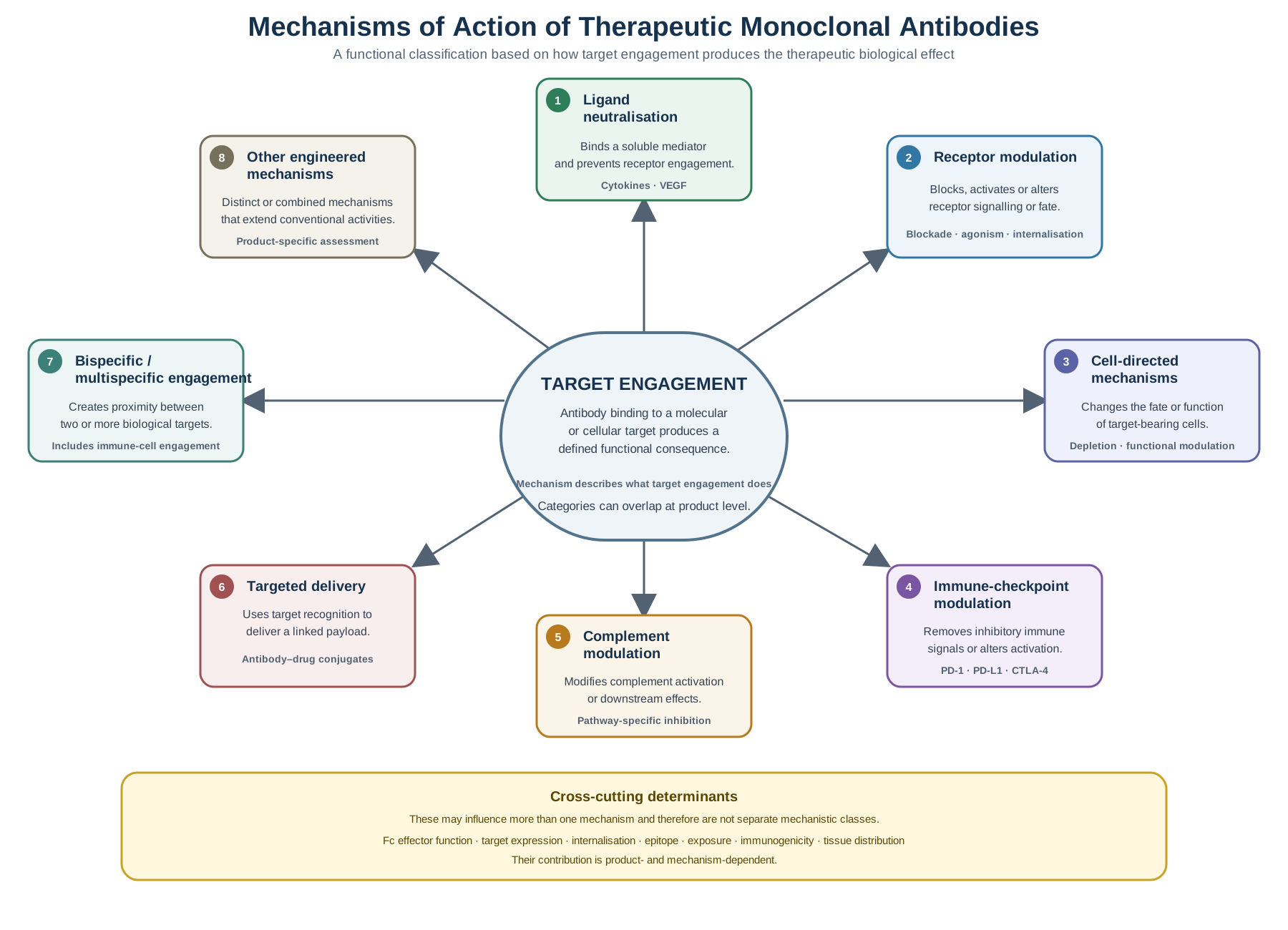
Figure 1. High-level classification of therapeutic monoclonal antibodies by mechanism of action. The categories are conceptual and are not mutually exclusive at the level of individual products; cross-cutting determinants such as Fc function, target expression and internalisation can contribute to more than one mechanism.
The major classes are ligand neutralisation, receptor modulation, cell-directed mechanisms, immune-checkpoint modulation, complement modulation, targeted delivery, bispecific or multispecific engagement, and other engineered mechanisms that do not fit cleanly within the principal groups. Some are large therapeutic categories, while others are smaller but scientifically distinctive. Their relative size should not be inferred from their position in the diagram.
A second principle is equally important: mechanistic classification operates at a different level from molecular-origin classification. Murine, chimeric, humanised and fully human antibodies describe sequence origin or engineering history. IgG subclasses describe molecular architecture. Anti-TNF, anti-CD20 or anti-VEGF describe target families. Ligand neutralisation, receptor blockade and cell depletion describe functional consequences of target engagement. These dimensions intersect rather than forming one linear hierarchy.
Why Mechanism Matters for Pharmacovigilance
Mechanism provides a structured way to formulate safety hypotheses. The intended therapeutic effect usually depends on modifying a biological pathway that also has physiological functions. The same pathway can therefore provide a route from therapeutic action to predictable or plausible adverse effects. This does not mean that every biologically plausible event is caused by the medicine; it means that mechanism provides scientifically relevant prior information against which clinical evidence can be evaluated.
A mechanism-informed safety assessment can be expressed as:
molecular characteristics → target engagement → mechanism → biological effect → physiological consequence → clinical outcome → pharmacovigilance evidence
The strength of this chain varies by product. Some mechanisms have direct and well-characterised biological consequences. Others depend on tissue distribution, target density, immune effector function, internalisation, exposure or patient-specific factors. Consequently, mechanism should guide evidence generation and interpretation without becoming a substitute for empirical safety evidence.
This approach is particularly useful when assessing whether an event may represent a class effect. A shared target or shared mechanism can support a hypothesis, but the conclusion requires consideration of product-specific differences in target engagement, structure, dose, route, exposure, indication and clinical population. EMA's biological-product guidance and immunogenicity guidance likewise emphasise product-specific scientific assessment rather than assuming that experience with related products is automatically transferable. [1–3]
Relationship Between Target and Mechanism
Target and mechanism should be kept conceptually separate throughout pharmacovigilance work. A target identifies the molecular or cellular entity with which the antibody interacts. Mechanism describes the functional consequence of that interaction.
For a soluble ligand, binding may prevent the ligand from reaching its receptor. For a cell-surface receptor, binding may prevent activation, induce receptor internalisation, alter signalling or, in some circumstances, activate the receptor. For a cell-surface antigen, antibody binding may recruit immune effector mechanisms and result in depletion of the target-bearing cell. For a bispecific antibody, the therapeutic effect may arise because the molecule brings two biological entities into proximity.
These distinctions matter because they change the expected pharmacology. They also change the safety questions that should be asked. The physiological role of the ligand, receptor, cell population or immune pathway provides the biological context, while the mechanism determines how that context is modified by treatment.
Scope of the Classification
The classes used in this article are intended to capture the principal therapeutic mechanisms of authorised and clinically relevant monoclonal-antibody medicines without pretending that every product fits a single box. Some products use more than one mechanism. Fc-dependent effector function, for example, may contribute to cell depletion while also influencing other aspects of antibody activity. Internalisation may be part of receptor downregulation or of targeted delivery. Bispecific antibodies may combine target blockade with immune-cell engagement.
For this reason, the master map should be read as a network of mechanisms, not as a rigid taxonomic tree. The later class articles will identify the dominant mechanism for the products under discussion and explicitly describe secondary or supporting mechanisms where they materially affect pharmacology or safety.
The following sections examine each major class in turn, beginning with ligand neutralisation and receptor modulation because these mechanisms account for many established therapeutic antibodies. The discussion then moves to cell-directed and immune-modulating mechanisms, followed by complement, targeted delivery, multispecific engagement and less common engineered mechanisms.
Ligand Neutralisation
Ligand-neutralising antibodies bind a soluble mediator and reduce or prevent its interaction with the receptor or receptors through which it normally exerts its biological effect. Cytokines, growth factors and other soluble signalling molecules can therefore become pharmacological targets without requiring the antibody to occupy the receptor itself. The distinction is useful because the antibody changes the availability or functional activity of the ligand, while the receptor remains physically present.
The biological chain is generally:
soluble ligand → antibody binding → reduced functional ligand → reduced receptor signalling → altered biological response
The clinical consequence depends on the physiological role of the ligand. Neutralisation of an inflammatory mediator may reduce pathological inflammation but may also alter host defence. Neutralisation of a growth factor can affect vascular, epithelial or tissue-repair processes. The pharmacovigilance implications therefore follow from the functions of the targeted pathway rather than from the antibody format alone.
Important examples include antibodies directed against tumour necrosis factor, vascular endothelial growth factor and other soluble mediators. Some products targeting cytokine pathways act against the ligand itself, whereas others act against a receptor; these should not be collapsed into one category merely because their clinical effects overlap.
For pharmacovigilance, ligand neutralisation creates a useful starting point for identifying mechanism-related risks, but the final assessment remains product-specific. Target affinity, dose, exposure, tissue distribution, indication, concomitant therapy and patient susceptibility can all modify the clinical expression of pathway inhibition.
Receptor Modulation
Receptor-modulating antibodies interact directly with a receptor or receptor-associated target and alter the signal that would otherwise pass through that system. The most familiar mechanism is receptor blockade, in which antibody binding prevents ligand activation or otherwise inhibits receptor signalling. Other antibodies can induce receptor internalisation or downregulation, while a smaller group acts as receptor agonists or otherwise promotes signalling.
Receptor blockade
A blocking antibody can inhibit a receptor by occupying the ligand-binding site, stabilising an inactive receptor conformation, sterically preventing productive interaction or otherwise interfering with receptor function. The pharmacological consequence is therefore determined by the relationship between receptor occupancy and downstream signalling.
The safety reasoning follows the same pathway. A receptor may be expressed in several tissues and may have physiological functions unrelated to the therapeutic indication. Blocking it can consequently produce effects outside the intended disease process. The magnitude of the effect depends on target expression, degree of blockade, tissue distribution and the importance of the pathway in the exposed patient.
Receptor internalisation and downregulation
Some antibodies cause the target receptor to be internalised or removed from the cell surface. In such circumstances, the therapeutic effect may persist beyond the immediate antibody–receptor binding event because the number or availability of functional receptors has changed. This mechanism should be distinguished from simple competitive blockade when it materially affects duration, reversibility or pharmacodynamics.
Receptor agonism
A smaller group of antibodies can activate a receptor or mimic a ligand sufficiently to produce a desired biological response. Agonist mechanisms introduce a different safety question from blockade: excessive, prolonged or ectopic activation may produce adverse effects even when the target itself is correctly identified and the pharmacological action is on-target.
Receptor modulation is therefore best treated as a mechanistic family containing blockade, downregulation/internalisation and agonism. The later receptor-specific articles should identify which of these mechanisms actually applies to each product rather than treating all receptor-targeting antibodies as pharmacologically equivalent.
Cell-Directed Mechanisms
Cell-directed antibodies bind antigens expressed on cells and alter the fate or function of those cells. In some products, the principal therapeutic objective is to eliminate target-bearing cells. In others, binding modifies cellular signalling without necessarily producing depletion. The distinction is important because the safety consequences of removing a cell population differ from those of merely changing its function.
Cell depletion
Cell-depleting antibodies can recruit immune effector mechanisms through the antibody Fc region. Depending on the product and target, mechanisms can include antibody-dependent cellular cytotoxicity, antibody-dependent cellular phagocytosis and complement-dependent cytotoxicity. The relative contribution of these pathways is product- and context-dependent.
The pharmacovigilance chain is therefore:
target antigen → antibody binding → effector recruitment → depletion of target-bearing cells → altered physiological function → clinical consequences
The consequences depend heavily on whether the target is restricted to pathological cells or is also expressed on normal cells. Depletion of a normal immune-cell population, for example, can alter host defence or immune surveillance. In oncology, depletion may be therapeutically intended against malignant cells while still affecting normal cells that share the antigen.
Functional modulation without depletion
A cell-surface antibody may also modify receptor signalling, adhesion, cellular activation or other functions without being primarily intended to eliminate the target cell. Such products should be classified according to their dominant pharmacological effect rather than simply because their target is cell-associated.
This distinction is important for pharmacovigilance because a safety signal associated with cellular depletion may be biologically interpreted differently from a signal caused by receptor modulation on the same cell type. Target expression, density and normal tissue distribution remain important contextual information.
Immune-Checkpoint Modulation
Immune-checkpoint antibodies are a specialised group of receptor- or ligand-modulating antibodies whose therapeutic objective is to alter inhibitory or stimulatory immune signalling. Their importance as a separate mechanistic family arises from the direction of the biological effect: rather than suppressing an immune pathway, checkpoint blockade can release an endogenous inhibitory constraint on immune activation.
The resulting mechanism can be represented as:
checkpoint interaction → antibody blockade → inhibitory signalling reduced → immune-cell activity increased → therapeutic immune response
The safety implications follow directly from this biology. Increased immune activity can produce inflammatory injury in normal tissues and can affect organs that were not the intended therapeutic target. The resulting adverse events are therefore evaluated in relation to immune activation, temporal exposure, clinical phenotype and alternative explanations rather than being treated simply as conventional receptor-blockade reactions.
This class illustrates why mechanism is more informative than target naming alone. PD-1, PD-L1 and CTLA-4 are distinct molecular targets, yet their therapeutic use can be understood within the broader concept of immune-checkpoint modulation. At the same time, their biological locations and downstream effects differ, so they should not automatically be assumed to have identical safety profiles.
Complement Modulation
Complement-targeting antibodies modify components or pathways of the complement system. Depending on the product, inhibition can reduce activation of a specific complement component or pathway and thereby alter downstream inflammatory or cytotoxic processes.
Complement modulation illustrates the importance of understanding a therapeutic pathway as part of host physiology. Complement contributes to innate immune defence and other biological processes, so sustained pathway inhibition can alter susceptibility to particular infections or other clinical outcomes. The relevant safety assessment depends on the specific complement component, degree of inhibition, duration of pharmacological effect and patient context.
The pharmacovigilance approach should therefore link reports to the precise product and exposure, while using complement biology to interpret plausibility and expected patterns. Vaccination history, infection history, breakthrough events and the persistence of pharmacological inhibition may all be relevant depending on the individual product and its authorised use.
Targeted Delivery
Some antibody medicines use target recognition primarily as a means of delivering another pharmacologically active component to a selected cell or tissue. Antibody–drug conjugates are the clearest example. In these products, the antibody, linker and payload form an integrated medicinal product, and safety cannot be inferred from the antibody component alone.
The mechanism generally involves target recognition followed by binding, internalisation or another form of localisation and subsequent release or action of the payload. The clinically relevant exposure can therefore depend on target expression, tissue distribution, internalisation, linker stability and the intrinsic toxicity of the payload.
This creates a distinctive pharmacovigilance framework. A suspected adverse reaction may reflect the target biology, the antibody component, the payload, the linker, the combined pharmacology or an interaction between these elements. Product-specific safety evaluation is therefore particularly important, and antibody–drug conjugates should not simply be grouped with conventional unconjugated monoclonal antibodies because they share an antigen-binding domain.
Bispecific and Multispecific Engagement
Bispecific and multispecific antibodies extend antibody pharmacology by allowing one molecule to engage two or more targets. In some products, the therapeutic effect results from simultaneously binding two components of a pathway. In others, the antibody physically brings two different cell types or biological systems into proximity, creating an interaction that is central to the therapeutic effect.
The latter mechanism can be represented as:
antibody binding site A + antibody binding site B → molecular bridging → functional interaction → therapeutic biological response
The safety implications depend on what is being brought together and how rapidly or intensely the resulting biological process occurs. Immune-cell engagement, for example, can produce rapid immune activation. Other bispecific designs may produce different risks according to the pathways and tissues involved.
Bispecificity therefore represents a mechanistic dimension as well as a molecular-architecture dimension. The same molecule can be classified as a bispecific antibody structurally and as an immune-cell engager, receptor modulator or dual-pathway inhibitor functionally. Both descriptions are needed to understand its pharmacovigilance profile.
Other Engineered Mechanisms
A small but growing group of antibody medicines uses mechanisms that do not fit comfortably into the principal categories. These can include specialised receptor clustering, engineered agonism, unusual trafficking effects or combinations of biological functions created by molecular engineering. The appropriate approach is to describe the actual causal chain rather than force the product into an inaccurate category.
This final category is deliberately open-ended. The purpose of the master classification is to remain useful as new antibody architectures and mechanisms enter clinical development and practice. New products should be mapped against the established mechanistic dimensions and added as distinct categories only when their biology warrants a genuine distinction.
Cross-Cutting Mechanisms
Several biological determinants cut across the principal mechanism classes and should not be treated as independent top-level classes. Fc-mediated effector function is one example. It can contribute to cell depletion or other immune effects but is not itself the therapeutic mechanism of every Fc-containing antibody. Internalisation can contribute to receptor downregulation or targeted delivery. Target expression and tissue distribution can determine where the mechanism is expressed clinically. Immunogenicity can modify exposure or pharmacological activity without being the intended mechanism.
The same product can therefore have a primary mechanism and several supporting determinants. A scientifically useful classification should preserve both levels rather than forcing a single label to carry all of the information.
Linking Mechanism to Safety
Mechanism of action is most useful to pharmacovigilance when it becomes a bridge between biological knowledge and clinical evidence. The mechanism establishes what the product is intended to change. The assessor then asks what physiological systems depend on that pathway, where the target is expressed, what happens at the observed level and duration of exposure, and whether the reported clinical event is consistent with that biological sequence.
This approach can be applied to both expected and unexpected events. For an expected mechanism-related event, the mechanism may provide a strong prior hypothesis that can be tested against the clinical evidence. For an unexpected event, mechanism can help determine whether further investigation is scientifically justified. In neither situation does mechanistic plausibility replace evidence from individual cases, aggregate data, clinical studies, epidemiology, literature or other sources.
On-Target and Off-Target Safety
A mechanism-related adverse effect may arise from the intended pharmacological action itself. This is commonly described as an on-target effect. The target may have physiological roles beyond the disease process, so modifying it can produce effects in normal tissues or systems. A safety event can therefore be pharmacologically predictable without being an error in target selection.
Other events may arise through cross-reactivity, unintended interactions or other off-target processes. These mechanisms require different evidence. Structural similarity, tissue expression, laboratory findings and non-clinical data can support hypotheses, but clinical evidence remains necessary to determine whether an observed event is associated with the medicinal product.
The distinction is particularly useful when comparing products. Two antibodies directed against different targets may share a clinical adverse event because their mechanisms converge on the same physiological process. Conversely, antibodies directed against the same target may differ because of epitope, affinity, Fc function, exposure or tissue distribution. A pharmacovigilance assessment should therefore avoid treating either target or mechanism as a sufficient substitute for product-specific evidence.
Mechanism, Exposure and Time
The temporal behaviour of a monoclonal antibody is part of the mechanism-informed safety assessment. Antibodies can have prolonged exposure and, depending on the target, their pharmacodynamic effects may persist after circulating concentrations decline. Cell depletion, receptor downregulation and durable pathway inhibition can therefore produce clinical effects over a different time course from the initial administration.
When assessing an individual case, the relevant questions include when treatment started, when the suspected event began, whether exposure was continuing, whether the biological effect would be expected to persist after discontinuation, and whether re-exposure occurred. These observations should be interpreted alongside the known pharmacology rather than using temporal association alone as evidence of causality.
Long-lived biological effects also matter for risk management. A risk-mitigation measure may need to account for the persistence of pharmacological activity rather than simply the time since the last dose. The exact implications are product-specific and should follow the authorised product information and established risk-management framework.
Mechanism and Immunogenicity
Immunogenicity is a cross-cutting property rather than a mechanism-of-action class. Anti-drug antibodies can have no apparent clinical consequence, or they can alter exposure, pharmacological activity or tolerability. The clinical relevance depends on the individual product, assay strategy, treatment context and patient factors.
The mechanistic framework helps explain why immunogenicity can matter differently between products. An anti-drug antibody that reduces exposure may have consequences for a neutralising antibody, a cell-depleting antibody or an immune engager that differ according to the relationship between concentration and biological effect. Similarly, an immune response associated with hypersensitivity may have a different clinical meaning from an antibody associated with loss of efficacy.
EMA's immunogenicity guidance recommends an integrated assessment that considers product-related, patient-related and treatment-related factors. For pharmacovigilance, the practical implication is that clinically relevant immunogenicity information should remain linked to the specific medicinal product and clinical context rather than being treated as a generic property of all monoclonal antibodies. [2,3]
Mechanism and Individual Case Processing
Individual case safety reports contain the clinical evidence from which mechanism-related hypotheses may later be evaluated. Accurate product identification is therefore essential. The report should preserve the medicinal product involved, indication, dose and route where available, treatment dates, event timing, relevant medical history, concomitant therapy and clinical course. Batch information may be particularly important when a product-quality concern is suspected.
Medical assessment should distinguish what is reported from what is inferred. The clinical diagnosis, symptoms, laboratory results and outcome belong to the case evidence. A proposed mechanism belongs to the assessment. The two should not be conflated in the case narrative or database representation.
A mechanism-informed assessment can nevertheless improve case quality. If a product is known to cause prolonged cell depletion, for example, information about blood counts, infection history and recovery may be more informative than a generic statement that the patient became unwell. If the product is an immune checkpoint inhibitor, the organ system affected, inflammatory phenotype and treatment course may be important to understanding a suspected immune-mediated event. These are examples of assessment logic, not additional regulatory reporting requirements unless specifically required by applicable rules or product-specific procedures.
Mechanism and Signal Management
Signals involving monoclonal antibodies can arise from a single unexpected case, a cluster of similar reports, disproportional reporting, literature, clinical studies, epidemiological analyses or other sources. Mechanism provides one component of the subsequent evaluation by helping determine whether a potential association is biologically coherent.
A useful signal-assessment sequence is:
- identify the exact medicinal product and exposure;
- define the clinical event or medical concept precisely;
- characterise the observed pattern and relevant alternatives;
- review known product-specific and class-related evidence;
- examine target biology and mechanism for plausibility;
- assess competing explanations and background risk;
- integrate non-clinical, clinical, literature, epidemiological and quality evidence as appropriate;
- determine whether the totality of evidence supports a new or changed safety concern;
- identify whether further action is required under the applicable pharmacovigilance framework.
Mechanistic plausibility should therefore appear in the evidence chain, not replace it. A biologically plausible signal may remain unconfirmed, while an association supported by strong clinical or epidemiological evidence may require action even when the precise molecular mechanism is incompletely understood.
Class Effects and Product-Specific Effects
Mechanistic classification is especially valuable when evaluating whether a safety finding may extend beyond one product. A common target or pathway can provide a reason to investigate related products. However, extension of a signal is a scientific conclusion that requires evidence.
Differences between antibodies can include epitope, affinity, valency, Fc activity, glycosylation, half-life, dose, route, formulation, indication and patient population. A signal associated with one product may therefore reflect a product-specific property rather than the entire mechanistic class. Conversely, a common biological pathway may support a class-level concern when evidence is consistent across appropriately related products.
The appropriate question is not simply whether two antibodies are "similar". It is whether the characteristic that could plausibly explain the safety event is shared, sufficiently expressed and clinically relevant in the products being compared.
Manufacturing Changes and Mechanism
Manufacturing changes can alter quality attributes that influence mechanism, such as binding properties, biological activity, aggregation or other characteristics. Regulatory comparability and quality assessment provide the principal framework for evaluating such changes. Pharmacovigilance can provide complementary post-change evidence if clinical patterns suggest a potential difference.
A temporal association between a manufacturing change and an adverse-event pattern does not establish causality. The appropriate assessment may require comparison of pre- and post-change exposure, product or batch information, quality investigations, clinical phenotype and alternative explanations. Where a potential quality issue is identified, pharmacovigilance, quality and regulatory functions should work together so that clinical and manufacturing evidence can be evaluated as a coherent product question.
Mechanism and Risk Management
Risk-management measures should be proportionate to the identified or potential risk and consistent with the applicable regulatory framework. Mechanistic understanding can inform the design of risk characterisation and monitoring, but the resulting measure must address an evidence-based safety concern rather than a theoretical possibility alone.
Mechanism may also help identify populations in whom a risk could be particularly relevant. For example, patients with pre-existing vulnerability in a physiological pathway may require particular consideration when that pathway is therapeutically modulated. Such considerations become clinically meaningful when supported by product-specific evidence and incorporated into the authorised risk-management framework.
Inspection and Governance Considerations
From an inspection perspective, the important question is whether mechanistic knowledge is integrated into the pharmacovigilance system in a controlled and scientifically defensible way. An effective system should be able to demonstrate how relevant product knowledge informs case evaluation, signal detection, risk assessment and communication without allowing mechanistic assumptions to substitute for evidence.
Potential inspection questions include whether the safety team can identify the relevant mechanism for an important product, whether product-specific differences from related antibodies are understood, whether significant mechanism-related information is reflected in signal evaluation, and whether changes in manufacturing or product quality can be connected to clinical safety information when appropriate.
These are illustrative inspection questions rather than claims about specific inspection findings. The evidence expected will depend on the organisation's procedures, the product, the applicable regulatory requirements and the safety issue under review.
Using the Master Classification
The master mechanism map is intended to be used as an entry point. A pharmacovigilance professional encountering an antibody should first identify its dominant mechanism, then examine the target family, supporting mechanisms and product-specific characteristics. This provides a structured route from general biological knowledge to the evidence relevant to the individual medicine.
The next articles in this series can therefore descend in a controlled sequence: major mechanism → target family → individual biological product. Where a mechanism is shared across many products, the class article will explain the biological and pharmacovigilance principles once, allowing later product articles to focus on what is distinctive rather than repeating the entire foundation.
Key Takeaways
- Mechanism of action describes how target engagement produces the therapeutic biological effect; it is distinct from target identity, antibody origin and molecular architecture.
- The principal mechanistic groups include ligand neutralisation, receptor modulation, cell-directed mechanisms, immune-checkpoint modulation, complement modulation, targeted delivery and bispecific or multispecific engagement.
- The classes overlap conceptually because a single antibody may use several biological processes to produce its effect.
- Mechanism is valuable for generating safety hypotheses and interpreting evidence, but biological plausibility does not establish causality or a class effect.
- Product-specific differences in structure, target interaction, Fc function, exposure, indication and manufacturing remain central to pharmacovigilance.
- Mechanistic classification provides the bridge from the master MAb landscape to subsequent target-family and individual-product articles.
Actionable Checklist
Before evaluating a significant safety issue involving a monoclonal antibody, confirm that the assessment has identified:
- the exact medicinal product and relevant exposure;
- the molecular target and dominant mechanism of action;
- important supporting mechanisms such as Fc effector function or internalisation;
- the physiological role and tissue distribution of the target or pathway;
- the expected pharmacodynamic time course;
- relevant patient, disease and concomitant-treatment factors;
- product-specific evidence and, where appropriate, evidence from related products;
- any relevant immunogenicity information;
- potential product-quality or manufacturing considerations;
- the distinction between biological plausibility and demonstrated clinical evidence.
References
- European Medicines Agency. Guideline on development, production, characterisation and specification for monoclonal antibodies and related products — Revision 1. EMA/CHMP/BWP/532517/2008. Effective 1 September 2016.
- European Medicines Agency. Immunogenicity assessment of monoclonal antibodies intended for in-vivo clinical use. EMA/CHMP/BMWP/86289/2010.
- European Medicines Agency. Guideline on immunogenicity assessment of therapeutic proteins — Revision 1. EMEA/CHMP/BMWP/14327/2006 Rev. 1. Effective 1 December 2017.
- European Medicines Agency. Guideline on good pharmacovigilance practices (GVP) — Product- or Population-Specific Considerations II: Biological medicinal products. EMA/579491/2012 Rev. 1.
- European Parliament and Council. Directive 2001/83/EC on the Community code relating to medicinal products for human use, as amended.
- International Council for Harmonisation. Q5E: Comparability of Biotechnological/Biological Products Subject to Changes in Their Manufacturing Process.
- International Council for Harmonisation. Q6B: Specifications: Test Procedures and Acceptance Criteria for Biotechnological/Biological Products.
Regulatory Note
This article is a scientific and pharmacovigilance teaching framework. The mechanism classifications are explanatory categories rather than legal classifications. Individual products must be assessed according to their authorised indication, product information, regulatory status and applicable pharmacovigilance requirements. Mechanistic reasoning is an aid to scientific assessment and does not replace the evidence, procedures or regulatory obligations applicable to the medicinal product.