Ligand-Neutralising Monoclonal Antibodies: Mechanism, Clinical Use and Pharmacovigilance
- Ligand-Neutralising Monoclonal Antibodies: Mechanism, Clinical Use and Pharmacovigilance
- Purpose and Scope
- Position Within the Monoclonal-Antibody Classification
- The Molecular Mechanism of Ligand Neutralisation
- From Target Engagement to Clinical Effect
- Ligand Biology Determines the Pharmacological Consequence
- Representative Ligand-Neutralising Antibodies
- Cytokine Neutralisation
- Growth-Factor Neutralisation and Vascular Biology
- Target Availability and Tissue Context
- Pharmacokinetics and Pharmacodynamics
- On-Target Safety and Physiological Reserve
- Immunogenicity and Its Relationship to Pharmacovigilance
- Pharmacovigilance Implications of the Mechanism
- Signal Detection and Signal Evaluation
- Practical Pharmacovigilance Implementation
- Inspection Perspective
- Common Analytical Failure Modes
- Key Takeaways
- References
- Regulatory Note
Purpose and Scope
Ligand neutralisation is one of the major mechanisms by which therapeutic monoclonal antibodies modify disease biology. In this mechanism, the antibody binds a soluble biological mediator and reduces its ability to interact with the receptor or receptors through which it normally produces a biological effect. The therapeutic target is therefore not simply a named molecule; it is a signalling system whose activity is being reduced by antibody-mediated sequestration or neutralisation.
This article develops the ligand-neutralisation class introduced in the QPPV.com monoclonal-antibody mechanism-of-action landscape. It focuses on the relationship between soluble ligand biology, antibody binding, pharmacological effect, clinical use and pharmacovigilance. It does not attempt to provide the complete history of individual products. Those histories will be developed separately where a product warrants a dedicated article.
The class includes antibodies directed against soluble cytokines, growth factors and other extracellular mediators. Examples include infliximab, which binds tumour necrosis factor-alpha (TNF-alpha), and secukinumab, which binds interleukin-17A (IL-17A). Bevacizumab provides another important example: it binds vascular endothelial growth factor (VEGF), thereby preventing VEGF from producing its vascular effects. These products illustrate why the same broad mechanism can produce very different pharmacovigilance questions depending on the physiological role of the ligand being neutralised.
Position Within the Monoclonal-Antibody Classification
Mechanism of action is one axis of monoclonal-antibody classification. It is distinct from antibody origin, molecular architecture, target family and therapeutic indication. A ligand-neutralising antibody may be murine, chimeric, humanised or fully human; it may belong to different immunoglobulin subclasses; and it may be used in oncology, inflammatory disease, ophthalmology or another therapeutic area. Those characteristics remain relevant, but they describe different dimensions of the product.
Ligand neutralisation should also be distinguished from receptor blockade. Both can reduce signalling through the same biological pathway, but they intervene at different points. A ligand-neutralising antibody binds the extracellular mediator itself, whereas a receptor-directed antibody binds the receptor and changes its availability or signalling behaviour. This distinction affects target distribution, pharmacodynamics, biomarker interpretation and the mechanisms by which normal physiology may be altered.
The classification is functional rather than absolute. A product may combine ligand neutralisation with other biological activities, and a single antibody's overall pharmacology may depend on affinity, epitope, ligand concentration, tissue distribution, Fc properties, exposure and immunogenicity. The dominant mechanism nevertheless provides a useful starting point for understanding the safety consequences of target engagement.
The Molecular Mechanism of Ligand Neutralisation
A soluble ligand normally participates in signalling by moving through the extracellular environment and interacting with one or more receptors. Receptor engagement initiates a downstream biological response that may involve changes in gene transcription, cellular activation, proliferation, differentiation, migration, vascular permeability or immune-cell behaviour.
A ligand-neutralising antibody interrupts this sequence before receptor signalling occurs. The antibody binds the ligand with sufficient affinity and under the relevant physiological conditions to reduce the fraction of ligand available for productive receptor engagement. The resulting pharmacological effect depends on the relationship between antibody concentration, ligand concentration, binding affinity, ligand production and clearance, and the biological response generated by receptor activation.
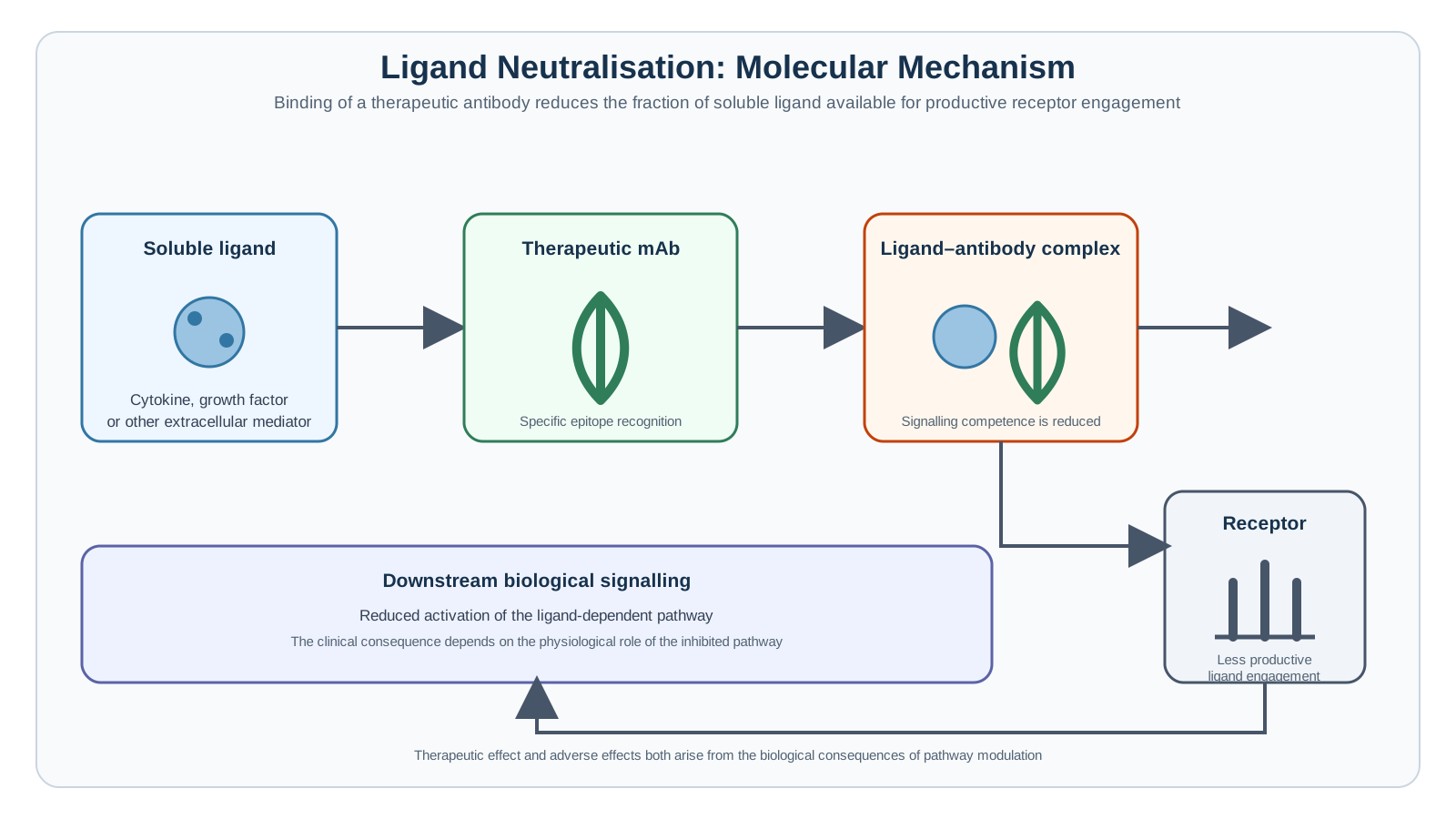
Figure 1. Ligand neutralisation at the molecular level. A therapeutic monoclonal antibody binds a soluble ligand and reduces the amount of ligand available to engage its receptor. The resulting reduction in downstream signalling is the pharmacological consequence of target engagement. The exact relationship depends on ligand biology, antibody exposure and the characteristics of the target pathway.
The important conceptual point is that the antibody does not necessarily eliminate the ligand from the body. It changes its biological availability. Depending on the product and assay, total ligand and free ligand can therefore behave differently after treatment. A ligand may remain measurable because it is present in antibody-bound complexes even when its ability to signal through the receptor has been substantially reduced.
From Target Engagement to Clinical Effect
The clinical effect of ligand neutralisation is mediated through the physiology of the ligand-receptor system. If the ligand is a principal driver of pathological inflammation, reducing its activity can suppress inflammatory signalling. If it promotes pathological angiogenesis or vascular permeability, neutralisation can reduce those processes. If it participates in normal host defence, however, the same pharmacological intervention can alter physiological protection against infection.
This produces a central pharmacovigilance principle: the safety implications of ligand neutralisation are primarily determined by the biology being inhibited, not by the word "neutralisation" itself. Two antibodies can share the mechanism while having substantially different safety profiles because their ligands have different physiological functions, tissue distributions and degrees of redundancy.
Ligand Biology Determines the Pharmacological Consequence
The term ligand covers a broad range of soluble mediators. Cytokines and chemokines participate in immune-cell communication; growth factors regulate proliferation, survival and vascular biology; and other soluble proteins can act as endocrine, paracrine or autocrine signals. Neutralising one of these molecules therefore produces an effect that depends on the normal physiological role of that particular ligand.
A useful distinction is between pathway inhibition and target elimination. The antibody usually does not remove the biological pathway itself. Instead, it reduces the amount of ligand that can participate in productive signalling. The pathway may therefore remain partially active, and the degree of inhibition may vary between tissues and over time.
The magnitude of pathway inhibition is influenced by ligand production rate, local concentration, receptor affinity, antibody affinity and concentration, and the kinetics of both ligand and antibody. High ligand production can require sustained or greater exposure to maintain neutralisation. Conversely, a ligand with a relatively restricted physiological role may be substantially inhibited without producing the same systemic consequences as inhibition of a broadly distributed mediator.
This distinction explains why mechanism alone cannot predict the complete safety profile. Mechanism supplies the biological hypothesis; target biology, pharmacology, clinical evidence and post-authorisation experience determine how strongly that hypothesis should influence the safety assessment.
Representative Ligand-Neutralising Antibodies
Several established products illustrate the breadth of the class.
| Product example | Principal soluble target | Therapeutic context | Mechanistic consequence |
|---|---|---|---|
| Infliximab | TNF-alpha | Inflammatory and immune-mediated diseases | Reduces TNF-alpha-mediated inflammatory signalling |
| Secukinumab | IL-17A | Psoriasis and related inflammatory diseases | Reduces IL-17A-dependent inflammatory signalling |
| Bevacizumab | VEGF | Oncology | Reduces VEGF-mediated angiogenic signalling |
These examples should not be interpreted as defining a single class safety profile. Infliximab and secukinumab both neutralise cytokines, but TNF-alpha and IL-17A have different distributions and physiological functions. Bevacizumab acts on a growth factor with a major role in vascular biology and therefore produces a different set of pharmacological and safety considerations.
The distinction is also visible when comparing ligand neutralisation with receptor blockade. Dupilumab, for example, acts by binding the IL-4 receptor alpha subunit and thereby blocking signalling mediated by IL-4 and IL-13; it is therefore a receptor-directed mechanism rather than direct neutralisation of either soluble cytokine. The clinical consequences may overlap at the pathway level, but the molecular intervention is different.
Cytokine Neutralisation
Cytokine-neutralising antibodies provide one of the clearest examples of mechanism-informed pharmacovigilance. Cytokines often have multiple effects across immune-cell populations and tissues, so suppressing one cytokine can modify both pathological and physiological immune responses.
Infliximab illustrates the principle. EMA describes infliximab as a monoclonal antibody directed against TNF-alpha and notes that TNF-alpha is involved in inflammation in the diseases for which infliximab is used. The pharmacological effect therefore follows directly from reducing the activity of a central inflammatory mediator. The safety assessment must then consider the physiological roles of TNF-alpha and the patient populations in which those effects are clinically relevant.
Secukinumab provides a different example. EMA describes secukinumab as an antibody that binds IL-17A and blocks its action. IL-17A is involved in inflammatory and immune processes relevant to psoriasis, psoriatic arthritis and axial spondyloarthritis. The mechanism therefore connects the intended reduction in pathological inflammation with the need to consider physiological host-defence functions of the pathway.
These examples demonstrate why a mechanistic class should not be converted into a generic list of adverse reactions. The pharmacovigilance value lies in understanding the biological pathway and then asking whether observed clinical evidence is consistent with the expected consequences of modifying that pathway.
Growth-Factor Neutralisation and Vascular Biology
Bevacizumab illustrates ligand neutralisation in a non-cytokine system. EMA describes bevacizumab as a monoclonal antibody that binds VEGF and prevents it from producing its biological effects. VEGF is involved in blood-vessel growth, so its inhibition reduces angiogenic signalling and contributes to the therapeutic effect in several cancers.
The same mechanism also explains why vascular safety considerations are central to the product's safety profile. The pharmacovigilance question is not simply whether bevacizumab "blocks VEGF"; it is how sustained VEGF inhibition affects normal vascular physiology in the treated population, at the relevant exposure and in the presence of disease and concomitant treatment.
A related example is aflibercept, although it is not a monoclonal antibody. It is an engineered fusion protein that binds VEGF-A and other ligands such as placental growth factor. Its inclusion is useful as a boundary example because it demonstrates that ligand neutralisation is a functional mechanism that extends beyond monoclonal antibodies. The QPPV.com monoclonal-antibody series should nevertheless keep the antibody class distinct from other biological formats when classifying products.
Target Availability and Tissue Context
Soluble ligands may be produced locally, circulate systemically, or do both. Consequently, the same nominal target may have different pharmacological importance in different tissues. An antibody administered systemically may influence a pathway in several compartments, while a locally administered product may produce predominantly local pharmacology with a different systemic exposure profile.
Target availability also changes over the disease course. Inflammation, tumour biology and tissue injury can alter ligand production, receptor expression and compensatory signalling. These changes can modify both treatment response and the relationship between exposure and biological effect.
For pharmacovigilance, this means that the indication is not merely a clinical label. It is part of the biological context in which the ligand is being neutralised. A safety signal observed in one population cannot automatically be assumed to have the same frequency, severity or clinical significance in another population with different disease biology, background risk and concomitant therapy.
Pharmacokinetics and Pharmacodynamics
For ligand-neutralising antibodies, pharmacokinetics and pharmacodynamics are closely connected. The concentration of antibody determines the capacity for ligand binding, but clinical effect depends on the relationship between antibody exposure and the biological availability of the ligand. This is why serum antibody concentration alone may not fully describe pharmacological activity.
A simplified exposure-response sequence is:
dose → antibody exposure → ligand binding → reduction in free ligand activity → pathway inhibition → clinical effect
Each step can be modified by product- and patient-specific factors. Antibody exposure depends on absorption where administration is not intravenous, distribution, catabolism, target-mediated processes and other determinants of monoclonal-antibody disposition. Ligand biology introduces a further variable because the rate of ligand production and the amount required to sustain signalling can change during disease.
Biomarkers can therefore be useful when available, but they must be interpreted carefully. A reduction in free ligand, a rise in total ligand caused by antibody-bound complexes, or a downstream pharmacodynamic marker can represent different biological states. Assay design and sample handling can materially affect interpretation, particularly when the therapeutic antibody interferes with measurement of the endogenous ligand.
The pharmacovigilance relevance is practical. If a clinical event appears related to excessive pathway inhibition, exposure information, dose, duration, pharmacodynamic markers and changes in disease activity can help determine whether the proposed mechanism is biologically plausible. Conversely, an event that occurs without meaningful target engagement may require a different explanation.
On-Target Safety and Physiological Reserve
The first mechanism-informed safety question is what normal physiological functions depend on the ligand. A ligand can contribute to host defence, tissue repair, vascular integrity, immune regulation or other processes in healthy individuals. Therapeutic inhibition is therefore an intentional perturbation of physiology, and adverse effects may occur when the degree or duration of inhibition exceeds the physiological reserve of the treated patient.
Physiological reserve is not uniform. Patients with chronic disease, advanced malignancy, immunosuppression, organ dysfunction or concurrent therapies may have less capacity to compensate for a change in the inhibited pathway. The same pharmacological effect may consequently have different clinical consequences across populations.
This is one reason why mechanism-informed safety reasoning should not be reduced to a deterministic rule such as "target X causes adverse event Y". The appropriate reasoning is conditional: inhibition of target X alters biological process Y; process Y has physiological role Z; therefore event A may be biologically plausible under circumstances in which inhibition of Z becomes clinically consequential. Clinical evidence is then required to determine whether the proposed association occurs in practice and with what magnitude.
Immunogenicity and Its Relationship to Pharmacovigilance
Monoclonal antibodies can induce unwanted immune responses. EMA's immunogenicity guidance for therapeutic proteins emphasises that immunogenicity is product- and patient-dependent and that its clinical significance should be evaluated through integrated consideration of immunological, pharmacokinetic, pharmacodynamic, efficacy and safety data. The specific monoclonal-antibody guideline similarly addresses anti-drug antibodies, neutralising antibodies, assay strategy and clinical consequences.
For ligand-neutralising antibodies, immunogenicity can affect pharmacovigilance through several routes. Anti-drug antibodies may increase clearance, reduce effective exposure, alter the pharmacodynamic effect or contribute to hypersensitivity and other immune-mediated reactions. Neutralising anti-drug antibodies can be particularly relevant when sustained ligand inhibition is required for therapeutic benefit.
The direction of causality must nevertheless be considered carefully. Loss of response may result from immunogenicity, disease progression, inadequate exposure, treatment interruption, incorrect administration or changes in disease biology. A pharmacovigilance assessment should therefore avoid treating the presence of anti-drug antibodies as proof that an adverse event or loss of efficacy is caused by immunogenicity.
Pharmacovigilance Implications of the Mechanism
The ligand-neutralisation mechanism supports several distinct pharmacovigilance questions.
| Pharmacovigilance question | Mechanistic basis | Evidence that can inform assessment |
|---|---|---|
| Is an adverse event biologically plausible? | Physiological function of the inhibited ligand | Target biology, non-clinical data, clinical evidence |
| Could excessive pathway inhibition explain the event? | Degree and duration of ligand suppression | Dose, exposure, pharmacodynamic markers, timing |
| Could immunogenicity alter exposure or effect? | Anti-drug antibodies may change disposition or activity | ADA/NAb data, PK, PD, efficacy and safety |
| Is this a class effect? | Shared target or pathway | Evidence across products plus product-specific differences |
| Is the event product-specific? | Structure, formulation, impurities, exposure or other properties | Product-specific clinical and quality evidence |
| Does the indication change interpretation? | Different background disease and physiological context | Indication-specific epidemiology and clinical data |
The distinction between class effect and product effect is particularly important for biological medicines. EMA's GVP guidance stresses product and batch traceability because biological products can exhibit variability over their lifecycle and because product-specific safety concerns need to be detectable. Mechanistic similarity therefore supports hypothesis generation but does not remove the need for product identification and product-specific evidence.
Signal Detection and Signal Evaluation
Mechanism should be used as a prior scientific framework, not as a substitute for signal detection methodology. A potential signal may arise from spontaneous reports, clinical trials, observational studies, literature, registries, exposure data or other sources. Once a signal is identified, the biological mechanism can help determine whether the association is plausible and what additional evidence should be sought.
For a suspected ligand-mediated event, useful questions include whether the timing is compatible with target engagement; whether the event is associated with dose or duration; whether the same biological pathway has been implicated in other products; whether there are relevant pharmacodynamic or biomarker findings; whether a competing explanation is stronger; and whether the event is concentrated in a population with particular physiological vulnerabilities.
The final assessment should distinguish biological plausibility from evidence of causality. A mechanistic explanation can strengthen a hypothesis, but it does not by itself establish that the medicinal product caused the reported event.
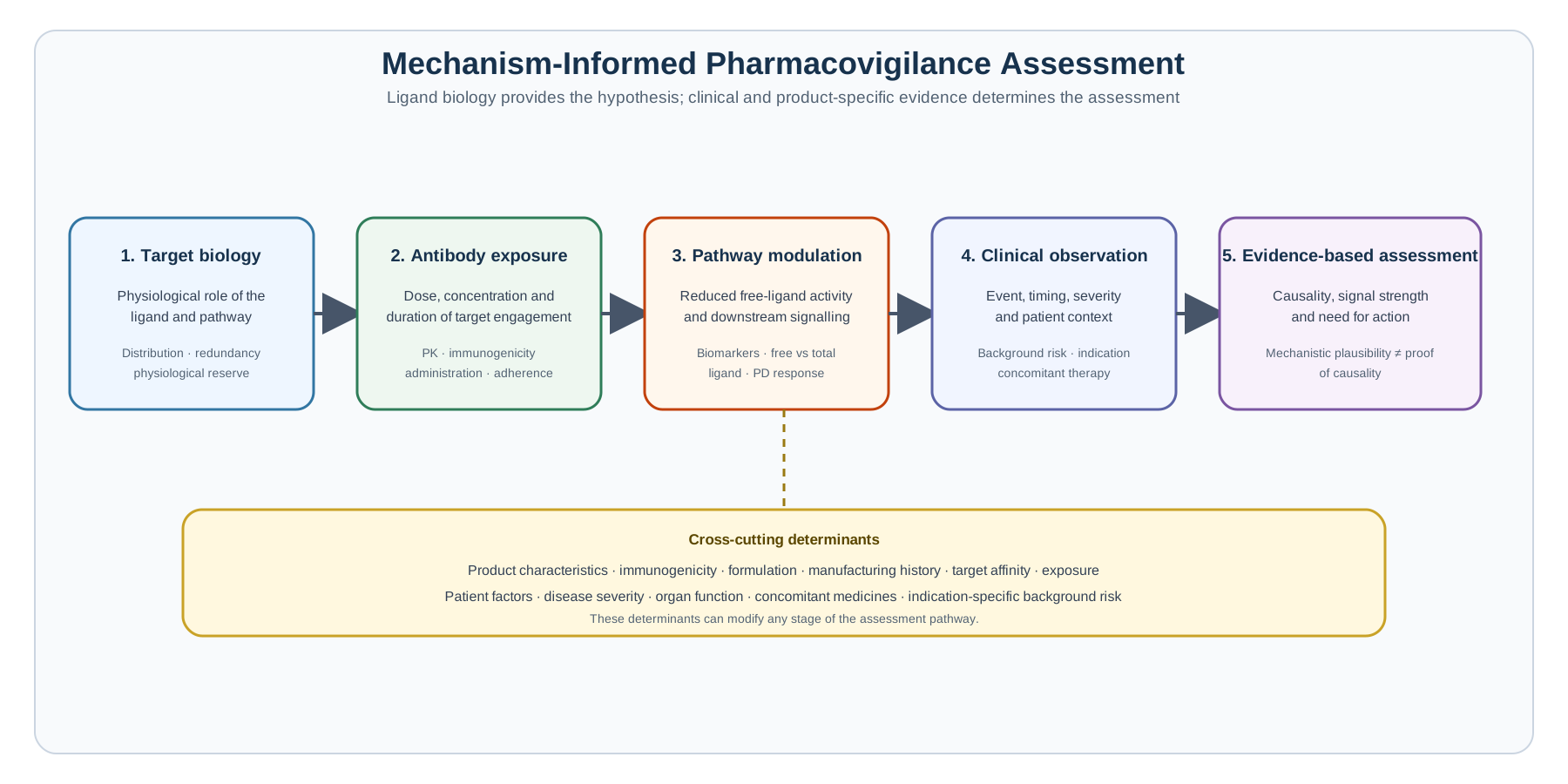
Figure 2. Mechanism-informed pharmacovigilance assessment for ligand-neutralising monoclonal antibodies. The pathway links target biology and antibody exposure to clinical observations while retaining product-specific, patient-specific and evidence-specific determinants. Mechanistic plausibility informs assessment but does not replace clinical evidence for causality.
Practical Pharmacovigilance Implementation
A mechanism-informed approach becomes useful when it is translated into concrete pharmacovigilance activities. The first requirement is to understand the target sufficiently to define the relevant biological risks. The safety specification should consider the physiological role of the ligand, tissues in which it is active, consequences of sustained inhibition, known compensatory pathways and important patient vulnerabilities.
The second requirement is product-specific evidence. The fact that two products neutralise the same ligand does not make their safety profiles interchangeable. Differences in molecular structure, formulation, manufacturing history, pharmacokinetics, immunogenicity, route, dose and clinical use can affect exposure and clinical risk. EMA's GVP guidance for biological medicinal products therefore places particular emphasis on product and batch traceability and on detection of product-specific safety concerns.
The third requirement is integration of evidence. A useful assessment connects spontaneous reports and other post-authorisation data with clinical-trial experience, observational evidence, literature, exposure information, immunogenicity, pharmacodynamic observations and relevant regulatory assessments. The objective is not to force all evidence into a mechanistic explanation but to determine whether the totality of evidence supports a meaningful safety conclusion.
Inspection Perspective
An inspector assessing a ligand-neutralising biological would be interested in whether the mechanism has actually informed the pharmacovigilance system rather than merely appearing in development documents. Evidence should show how the organisation identified important biological risks, how those risks were incorporated into the safety specification and risk-management system where appropriate, and how emerging evidence is evaluated against the existing understanding of the target pathway.
Typical inspection questions would include:
- Can the organisation explain the physiological role of the target ligand and the safety consequences of inhibiting it?
- Are important mechanistic risks reflected in the safety specification and relevant risk-management activities where justified?
- Can the organisation distinguish product-specific evidence from experience with other products targeting the same pathway?
- Are product name and batch information sufficiently captured to support evaluation of biological-product safety concerns?
- Can changes in exposure, immunogenicity or pharmacodynamic behaviour be connected to the safety assessment when relevant?
- When a signal is biologically plausible, is the plausibility being distinguished from evidence of causality?
- Are literature, spontaneous reports, clinical data and other evidence sources integrated appropriately?
These are inspection questions, not statements that a particular organisation has failed. The evidence expected should be proportional to the product, its risks and the applicable pharmacovigilance requirements.
Common Analytical Failure Modes
Several recurring reasoning errors can weaken pharmacovigilance assessment of ligand-neutralising antibodies.
Treating the mechanism as the safety conclusion. A plausible on-target effect is a hypothesis, not proof that a reported event is caused by the product. The assessment must consider timing, exposure, alternative explanations and clinical evidence.
Assuming a shared target creates an automatic class effect. Shared ligand neutralisation can support a class-level hypothesis, but differences between products and populations may be clinically important. Related-product experience should therefore be used as supportive evidence rather than as a substitute for product-specific evaluation.
Ignoring the indication. Background disease risk can be substantial and can mimic or modify the apparent safety profile of a pathway inhibitor. The same event may have different baseline incidence and clinical significance in different populations.
Interpreting total ligand concentration without understanding the assay. Antibody-bound ligand may remain measurable even when functional activity is reduced. Pharmacodynamic interpretation should therefore consider what the assay actually measures.
Treating immunogenicity as a binary explanation. The presence of anti-drug antibodies does not automatically establish that they caused loss of response or an adverse event. The relationship should be assessed using integrated immunogenicity, PK, PD, efficacy and safety evidence.
Losing product identity in aggregated biological data. If related biologicals share an INN or are used interchangeably, insufficient product and batch information can make product-specific signal evaluation difficult. Traceability is therefore part of the scientific quality of the pharmacovigilance system, not merely an administrative record-keeping exercise.
Key Takeaways
- Ligand neutralisation reduces biological activity by binding a soluble mediator and limiting productive receptor engagement.
- The physiological role of the ligand is the principal bridge between mechanism and potential on-target safety consequences.
- Cytokine-neutralising antibodies and growth-factor-neutralising antibodies illustrate the breadth of the mechanism and the importance of target-specific biology.
- Antibody exposure, ligand concentration, tissue context and pharmacodynamic response determine the degree and duration of pathway inhibition.
- Immunogenicity can modify exposure, pharmacodynamic activity and safety, but its clinical significance requires integrated assessment.
- Shared mechanisms or targets can support safety hypotheses across products but do not establish automatic class effects.
- Biological-product pharmacovigilance requires product-specific evidence and adequate traceability, including batch information where relevant.
- Mechanistic plausibility is valuable for signal evaluation, but causality depends on the totality of evidence.
References
-
European Medicines Agency. Guideline on good pharmacovigilance practices (GVP): Product- or population-specific considerations II: Biological medicinal products. EMA/168402/2014. Legal effective date 16 August 2016. https://www.ema.europa.eu/en/documents/scientific-guideline/guideline-good-pharmacovigilance-practices-gvp-product-or-population-specific-considerations-ii-biological-medicinal-products_en.pdf
-
European Medicines Agency. Guideline on immunogenicity assessment of therapeutic proteins — Revision 1. EMEA/CHMP/BMWP/14327/2006 Rev. 1. Legal effective date 1 December 2017. https://www.ema.europa.eu/en/documents/scientific-guideline/guideline-immunogenicity-assessment-therapeutic-proteins-revision-1_en.pdf
-
European Medicines Agency. Guideline on immunogenicity assessment of monoclonal antibodies intended for in-vivo clinical use. EMA/CHMP/BMWP/86289/2010. https://www.ema.europa.eu/en/immunogenicity-assessment-monoclonal-antibodies-intended-vivo-clinical-use-scientific-guideline
-
European Medicines Agency. Remicade — EPAR. Infliximab. https://www.ema.europa.eu/en/medicines/human/EPAR/remicade
-
European Medicines Agency. Cosentyx — EPAR. Secukinumab. https://www.ema.europa.eu/en/medicines/human/EPAR/cosentyx
-
European Medicines Agency. Avastin — EPAR. Bevacizumab. https://www.ema.europa.eu/en/medicines/human/EPAR/avastin
-
European Medicines Agency. Dupixent — EPAR. Dupilumab. https://www.ema.europa.eu/en/medicines/human/EPAR/dupixent
-
European Medicines Agency. Eylea — EPAR. Aflibercept. https://www.ema.europa.eu/en/medicines/human/EPAR/eylea
Regulatory Note
This article is a scientific and pharmacovigilance interpretation of the ligand-neutralisation mechanism. Statements describing biological mechanisms, safety hypotheses or analytical approaches are not themselves regulatory requirements unless explicitly identified as such. Mandatory pharmacovigilance obligations derive from applicable EU legislation, the conditions of the marketing authorisation and applicable GVP requirements. EMA scientific guidelines and product assessments provide regulatory and scientific guidance but should not be presented as universal legal mandates. Product-specific conclusions must be based on the current applicable product information, regulatory assessment and available evidence for the individual medicinal product.