Receptor-Directed Monoclonal Antibodies: Receptor Blockade, Modulation and Pharmacovigilance
- Receptor-Directed Monoclonal Antibodies: Receptor Blockade, Modulation and Pharmacovigilance
- Purpose and Scope
- Position Within the Monoclonal-Antibody Classification
- The Receptor as a Pharmacological Control Point
- Receptor Blockade
- Receptor Internalisation and Downregulation
- Receptor Activation
- Receptor Blockade Across Different Biological Systems
- Receptor Occupancy and Functional Inhibition
- Receptor Expression and Tissue Distribution
- Receptor Internalisation as a Pharmacological Mechanism
- Receptor Downregulation and Recovery
- Receptor Activation and Agonist Biology
- Representative Products and Mechanistic Distinctions
- Relationship With Immune-Checkpoint Antibodies
- Pharmacokinetics, Pharmacodynamics and Duration of Receptor Modulation
- On-Target Safety
- Receptor Blockade and Immune Function
- Receptor Modulation in Oncology
- Receptor Modulation in Immunology
- Immunogenicity and Receptor-Directed Antibodies
- Signal Detection and Signal Evaluation
- Class Effects and Product-Specific Effects
- Practical Pharmacovigilance Implementation
- Roles and Interfaces
- Evidence and Records
- Common Analytical Failure Modes
- Inspection Perspective
- Relationship With Risk Management
- Practical Assessment Framework
- Key Takeaways
- References
- Regulatory Note
Purpose and Scope
Receptor-directed monoclonal antibodies act by binding directly to a receptor or receptor-associated target and changing the signalling process that would otherwise occur through that system. This distinguishes them from ligand-neutralising antibodies, which bind the soluble mediator before it reaches its receptor. Although both mechanisms can inhibit the same biological pathway, they intervene at different points and can therefore produce different pharmacodynamic, distributional and safety consequences.
This article develops the receptor-modulation class introduced in the QPPV.com monoclonal-antibody mechanism-of-action landscape. It focuses on receptor blockade, receptor internalisation or downregulation, and receptor activation as related but distinct mechanisms. It also explains why receptor biology is central to pharmacovigilance and uses representative authorised products to illustrate the class without turning the article into individual product histories.
Receptor-directed antibodies occur across oncology, immunology and other therapeutic areas. Cetuximab, for example, binds epidermal growth factor receptor (EGFR) and prevents receptor-associated signalling. Dupilumab binds the interleukin-4 receptor alpha subunit and blocks signalling mediated by IL-4 and IL-13. Tocilizumab binds the IL-6 receptor and prevents IL-6 from attaching to its receptor. Trastuzumab binds HER2 and both interferes with HER2 signalling and contributes to immune-mediated tumour-cell killing. These examples demonstrate why "receptor-directed" is a mechanistic family rather than a single safety profile. [1–4]
Position Within the Monoclonal-Antibody Classification
Receptor modulation is one functional axis of monoclonal-antibody classification. It should be kept separate from antibody origin, molecular architecture, target family and indication. A receptor-directed antibody can be chimeric, humanised or fully human; it can be a conventional IgG or an engineered format; and it can be used in oncology or immune-mediated disease. Those properties describe different dimensions of the same product.
The target also does not fully define the mechanism. An antibody may bind a receptor and block ligand binding, alter receptor conformation, promote receptor internalisation, reduce receptor availability, or in some circumstances activate signalling. The same receptor can therefore support different pharmacological hypotheses depending on the epitope, binding mode, valency and molecular design.
The distinction is particularly important when interpreting safety. Receptor blockade reduces signalling that the receptor normally mediates, whereas receptor agonism increases or modifies signalling. Internalisation or downregulation can change receptor availability and produce effects that persist beyond the immediate binding event. Pharmacovigilance therefore needs to identify the actual functional consequence rather than treating all receptor-binding antibodies as equivalent.
The Receptor as a Pharmacological Control Point
A receptor is a biological control point through which extracellular information is converted into a cellular response. Depending on the receptor, ligand engagement may activate kinase cascades, transcriptional programmes, ion channels, second-messenger pathways, cell survival signals, differentiation programmes or immune-cell functions.
A receptor-directed antibody changes this process by binding the receptor itself. The resulting effect depends on the receptor's location, abundance, turnover, ligand concentration, signalling architecture and physiological role. Because receptors are often expressed in more than one tissue, therapeutic modulation can affect normal physiology outside the disease process for which the antibody is prescribed.
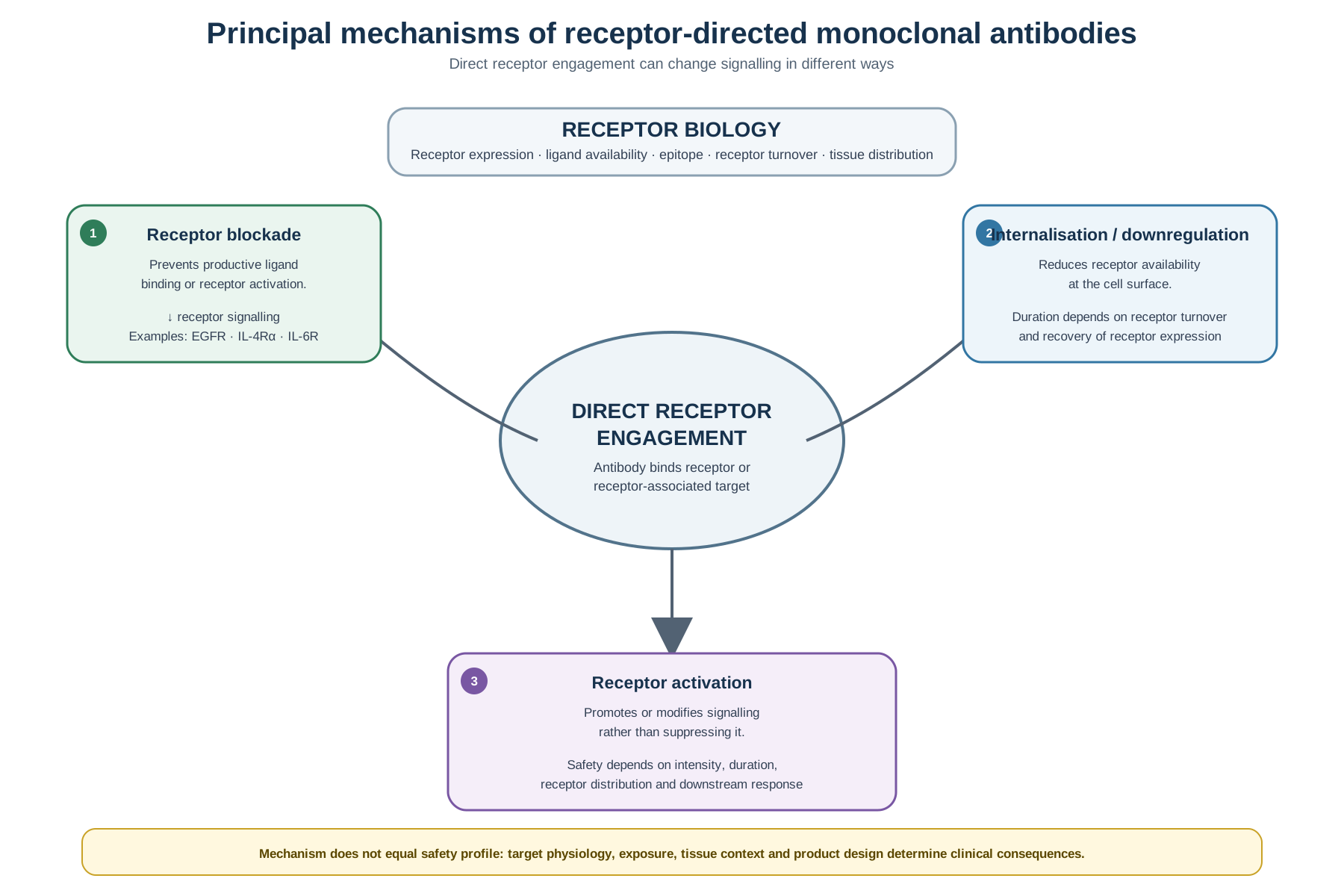
Figure 1. Principal mechanisms of receptor-directed monoclonal antibodies. Direct receptor engagement can produce blockade, receptor internalisation or downregulation, or activation. The functional consequence depends on the receptor, epitope, binding mode, valency and antibody design. The figure separates the mechanistic intervention from the downstream clinical context because receptor binding alone does not determine the safety profile.
The key pharmacovigilance question is therefore not simply whether the antibody binds a receptor. It is what happens to receptor function after binding, where that effect occurs, how long it persists, and which physiological processes depend on the receptor.
Receptor Blockade
Receptor blockade is the most familiar receptor-directed mechanism. A blocking antibody prevents a ligand from producing its effect through the receptor. This can occur by occupying or sterically hindering the ligand-binding site, stabilising a non-signalling receptor state, or otherwise preventing productive receptor activation.
The resulting biological chain can be expressed as:
antibody binding → reduced receptor activation → reduced intracellular signalling → altered cellular or tissue response → clinical effect
The degree of inhibition depends on receptor occupancy, antibody exposure, receptor turnover and the relationship between receptor activation and biological response. A receptor may need to be occupied extensively before a measurable clinical effect occurs, while another pathway may respond strongly to relatively modest changes in receptor signalling.
For pharmacovigilance, this creates a direct route from receptor physiology to on-target safety. If the receptor participates in host defence, vascular regulation, tissue repair, endocrine control or immune regulation, sustained blockade may produce effects in those systems. The event may therefore be pharmacologically predictable without being evidence of an off-target interaction.
Receptor Internalisation and Downregulation
Some receptor-directed antibodies alter receptor availability rather than simply competing with the ligand. Binding can promote internalisation of the receptor–antibody complex or reduce the amount of receptor expressed at the cell surface. The functional consequence is a reduction in the number of receptors available for signalling.
This distinction can be clinically important because receptor turnover determines how quickly the system recovers. If receptor replenishment is slow, pharmacodynamic effects may persist after the concentration of free antibody has declined. Conversely, rapid receptor recycling can limit the duration of functional inhibition.
Internalisation may also be a component of other antibody mechanisms. In antibody–drug conjugates, receptor-mediated internalisation can facilitate delivery of the payload. In receptor-modulating antibodies, however, the key question is whether the change in receptor availability itself contributes materially to the therapeutic effect.
Receptor Activation
A smaller and more specialised group of antibody designs can activate or enhance receptor signalling rather than blocking it. Agonist antibodies may mimic aspects of the natural ligand, stabilise an active receptor conformation or promote receptor clustering required for signalling.
The safety logic is consequently different from receptor blockade. Excessive, prolonged or poorly localised activation can produce adverse effects through the same pathway that creates the intended therapeutic benefit. Dose-response relationships, receptor density, tissue distribution and the duration of activation may therefore be particularly important.
Receptor agonism should not be inferred simply because an antibody binds a receptor. It requires evidence that receptor engagement produces the relevant activating biological response. Where agonism is being developed or used, the individual product article should describe the exact activation mechanism and the evidence supporting it.
Receptor Blockade Across Different Biological Systems
The biological meaning of receptor blockade depends on the receptor being inhibited. Receptors can regulate inflammatory signalling, tumour-cell proliferation, immune-cell activation, vascular biology and many other physiological processes. The same pharmacological description therefore encompasses products with very different clinical applications and safety questions.
Cetuximab illustrates blockade of a growth-signalling receptor. EMA describes cetuximab as a monoclonal antibody that attaches to EGFR and prevents signalling involved in cancer-cell growth. Its use therefore depends on the relationship between EGFR expression, tumour biology and downstream growth pathways. The product also demonstrates why target expression can become a clinical selection variable: its authorised use in colorectal cancer depends on molecular characteristics of the tumour, including RAS status. [1]
Dupilumab illustrates receptor blockade in an inflammatory pathway. EMA describes dupilumab as binding the IL-4 receptor alpha subunit and blocking the actions of IL-4 and IL-13. The antibody therefore acts at a common receptor component used by two cytokine pathways rather than binding either soluble cytokine directly. This distinction is mechanistically important because receptor expression, pathway redundancy and the functions of the two ligands all contribute to the clinical effect. [2]
Tocilizumab provides another receptor-directed example. EMA describes tocilizumab as attaching to the IL-6 receptor and preventing IL-6 from attaching to its receptor. Its authorised uses span several inflammatory conditions and cytokine-release syndrome, illustrating how the same receptor intervention can be applied in different disease contexts. The safety assessment must consequently consider both the mechanism and the population in which the receptor is being modulated. [3]
Receptor Occupancy and Functional Inhibition
Binding is not synonymous with complete functional inhibition. The pharmacodynamic effect depends on the fraction of functionally relevant receptors occupied, the affinity and kinetics of binding, receptor density, ligand concentration and the relationship between receptor activation and downstream response.
A useful conceptual sequence is:
antibody exposure → receptor occupancy → change in receptor activation → downstream pathway modulation → biological response
The relationship may be nonlinear. Some biological systems have substantial functional reserve, while others show a relatively direct relationship between receptor activation and response. Receptor expression can also vary between tissues, disease states and cell populations.
These characteristics matter for pharmacovigilance because an event can be biologically plausible without occurring uniformly across all treated patients. Exposure, disease severity, receptor expression and physiological reserve can alter the clinical expression of receptor blockade.
Receptor Expression and Tissue Distribution
A receptor-directed antibody is distributed according to the properties of the antibody and the tissues it can access, while the pharmacological effect depends on where the receptor is expressed. A receptor that is highly enriched in the pathological tissue may permit relatively selective therapeutic modulation. A receptor expressed widely in normal tissues creates a broader biological footprint.
Receptor expression may also change with disease. Tumour cells can alter receptor abundance during progression or treatment. Inflammatory processes can change receptor expression on immune or tissue cells. Consequently, the same nominal target can have different functional importance across indications and over time.
For pharmacovigilance, the relevant context is therefore not simply the target name but the combination of target distribution, disease biology, exposure and treatment duration. This is one reason why a safety observation in one indication should not automatically be assumed to have the same frequency or clinical significance in another.
Receptor Internalisation as a Pharmacological Mechanism
When antibody binding promotes receptor internalisation, the antibody can alter receptor availability at the cell surface. The effect may be reversible through receptor recycling or may persist until new receptor molecules are synthesised. The balance depends on the biology of the particular receptor and the molecular characteristics of the antibody.
Internalisation can produce several consequences. It can reduce the number of receptors available for ligand binding, change receptor trafficking, alter signalling duration, or facilitate intracellular delivery of an antibody-linked payload. These mechanisms should be distinguished when evaluating a product because they lead to different expectations about pharmacokinetics, pharmacodynamics and toxicity.
A receptor-directed antibody may therefore have both a direct and an indirect mechanism. Direct binding changes receptor behaviour; downstream internalisation can then amplify or prolong the functional effect. The pharmacovigilance assessment should identify the causal chain rather than describing all receptor-binding activity as simple blockade.
Receptor Downregulation and Recovery
Downregulation refers to a reduction in receptor availability or expression that persists beyond the initial binding event. It can arise from increased internalisation, altered trafficking, reduced recycling or other changes in receptor homeostasis.
The time course of recovery becomes important when the therapeutic effect is intended to be reversible. A clinical event that develops after treatment cessation may remain mechanistically plausible if receptor function or downstream biology is expected to recover slowly. Conversely, rapid receptor restoration may make a prolonged adverse effect less consistent with the proposed mechanism and increase the importance of alternative explanations.
These considerations should be integrated with product-specific pharmacokinetic and pharmacodynamic evidence. They should not be converted into generic assumptions about all receptor-directed antibodies.
Receptor Activation and Agonist Biology
Receptor agonism creates the inverse pharmacological problem. Instead of reducing signalling, the antibody is intended to increase or modify it. The biological consequence depends on whether activation is partial or full, transient or sustained, and restricted or distributed across tissues.
Agonist antibodies may also require receptor clustering or a particular spatial arrangement that differs from natural ligand activation. Molecular architecture and valency can therefore be mechanistically important. A multivalent antibody may have a biological effect that cannot be inferred from monovalent binding affinity alone.
From a pharmacovigilance perspective, the central safety question becomes whether the desired pathway activation remains within a physiologically tolerable range. Dose, exposure, receptor density, downstream biomarkers and the time course of activation may all contribute to assessment.
Because approved receptor agonist monoclonal antibodies are less numerous than receptor blockers, this part of the class should be approached carefully. The class framework recognises agonism as a mechanistic possibility without implying that every receptor-directed antibody has an agonist counterpart or that an investigational mechanism represents an authorised clinical use.
Representative Products and Mechanistic Distinctions
| Product | Receptor target | Principal receptor-directed action | Pharmacovigilance context |
|---|---|---|---|
| Cetuximab | EGFR | Blocks EGFR signalling | Target expression, tumour biology, pathway inhibition and treatment context |
| Dupilumab | IL-4 receptor alpha | Blocks IL-4/IL-13 signalling through the shared receptor component | Immune-pathway modulation, indication-specific context and host-defence biology |
| Tocilizumab | IL-6 receptor | Prevents IL-6 receptor signalling | Inflammatory-pathway modulation across several indications |
| Trastuzumab | HER2 | Interferes with HER2 signalling and contributes to immune-mediated tumour-cell effects | HER2 expression, cardiac biology, tumour context and Fc-dependent effects |
These examples illustrate why receptor-directed antibodies cannot be assigned a common safety profile merely because they bind cell-surface receptors. The receptor's physiological role, the antibody's binding behaviour and the downstream mechanism determine the relevant safety hypotheses. [1–4]
Relationship With Immune-Checkpoint Antibodies
Immune-checkpoint antibodies occupy an important boundary within receptor-directed mechanisms. PD-1, CTLA-4 and related targets are receptors or receptor-associated immune-regulatory systems, and blockade can increase immune activation rather than simply suppress a conventional signalling pathway.
For the QPPV.com classification, immune-checkpoint modulation is retained as a distinct mechanistic family because its pharmacovigilance implications are sufficiently distinctive. The broader receptor-modulation framework remains useful, however, because it explains the molecular intervention: antibody binding alters receptor-mediated signalling. The dedicated immune-checkpoint article can then focus on the consequences of releasing immune inhibitory pathways without repeating the general receptor biology.
This illustrates the multidimensional nature of the master classification. A product can belong to the receptor-directed mechanism family while also occupying a specialised immune-checkpoint subtype.
Pharmacokinetics, Pharmacodynamics and Duration of Receptor Modulation
For receptor-directed antibodies, pharmacokinetics and pharmacodynamics cannot always be treated as interchangeable concepts. Circulating antibody concentration describes exposure, while receptor occupancy and downstream signalling describe pharmacological activity. Receptor internalisation or downregulation can further separate plasma concentration from functional recovery.
A useful exposure-response sequence is:
dose → antibody exposure → receptor binding → occupancy or functional change → pathway modulation → clinical effect
The relationship is product-specific. Receptor density, antibody affinity, target-mediated disposition, receptor turnover and the degree of downstream amplification can all affect the exposure required for a given biological effect.
For pharmacovigilance, the time course matters because adverse effects may continue after the last dose if receptor modulation or downstream physiology persists. Conversely, an event that appears long after receptor function should have recovered may require stronger consideration of alternative explanations. These are mechanistic questions to be tested against product-specific PK and PD evidence, not generic rules.
On-Target Safety
The most direct mechanism-informed safety question is what normal physiological functions depend on the receptor. A receptor can be involved in immune regulation, epithelial maintenance, vascular function, endocrine signalling, cell growth or other processes outside the disease for which it is targeted.
On-target adverse effects can therefore occur even when the antibody is highly specific and there is no evidence of off-target binding. The risk arises because the intended pharmacological intervention changes normal biology. The clinical expression depends on the degree and duration of receptor modulation, tissue distribution, physiological reserve and patient susceptibility.
This distinction is useful in signal evaluation. If a suspected event is biologically compatible with the known physiological role of the receptor, the mechanism can strengthen the plausibility of the hypothesis. It cannot, however, establish causality. Timing, exposure, clinical phenotype, alternative explanations and the totality of available evidence remain necessary.
Receptor Blockade and Immune Function
Several receptor-directed antibodies alter immune signalling. Blocking an immune receptor can suppress a pathological inflammatory pathway, but the same receptor may contribute to host defence or immune homeostasis. The relevant safety questions therefore include infection susceptibility, changes in immune surveillance and effects on inflammatory responses.
The clinical context is particularly important. A patient with active infection, underlying immune dysfunction or concomitant immunomodulatory therapy may have a different risk profile from a patient without those factors. Similarly, the same receptor may be used therapeutically in different diseases in which background infection risk and concomitant treatment differ.
A receptor-directed safety assessment should therefore distinguish the expected pharmacological effect from the observed clinical outcome. The mechanism identifies the biological pathway that could connect treatment to the event; clinical and epidemiological evidence determine whether that connection is occurring at a clinically meaningful frequency or severity.
Receptor Modulation in Oncology
Receptor-directed antibodies are prominent in oncology because many cancers depend on abnormal receptor signalling. Cetuximab and trastuzumab illustrate two different receptor-directed approaches.
Cetuximab binds EGFR and prevents signalling involved in tumour-cell growth. The clinical context therefore includes receptor expression and tumour genotype, because the biological value of EGFR blockade depends on the characteristics of the tumour being treated. The pharmacovigilance assessment must distinguish target-related effects from effects of combination chemotherapy, underlying malignancy and other treatment factors. [1]
Trastuzumab binds HER2 and, according to EMA, both interferes with HER2 signals that promote tumour growth and activates immune cells that can kill tumour cells. It therefore demonstrates why a receptor-directed antibody can have more than one functional mechanism. The pharmacovigilance assessment must consider receptor signalling, Fc-dependent immune effects and the normal biological role of HER2 rather than treating the product as a simple receptor blocker. [4]
This also illustrates why mechanism can change during product development. A new antibody format or conjugate directed at the same receptor may use internalisation or payload delivery as a major component of its activity. The target remains the same, but the dominant safety questions can change because the mechanism has changed.
Receptor Modulation in Immunology
Dupilumab and tocilizumab illustrate receptor blockade in immune-mediated disease. Dupilumab blocks IL-4 and IL-13 signalling through IL-4 receptor alpha, while tocilizumab blocks IL-6 receptor signalling. Their clinical uses differ, and the physiological roles of the targeted pathways are not identical.
The pharmacovigilance implication is that receptor blockade should always be interpreted in the context of the complete signalling system. Blocking a shared receptor component can affect more than one ligand pathway. A receptor may also have soluble and membrane-associated forms, or may signal through multiple downstream pathways. The clinical consequence is therefore not necessarily predictable from the receptor's name alone.
When evaluating a suspected safety signal, it may be useful to ask whether the event is more consistent with the receptor's known physiology, the disease being treated, concomitant medicines, or an unrelated process. This prevents mechanism from becoming a circular explanation in which any adverse event is attributed to the target simply because a biological connection can be imagined.
Immunogenicity and Receptor-Directed Antibodies
Immunogenicity is a cross-cutting property of therapeutic antibodies rather than a receptor-specific mechanism. Anti-drug antibodies may alter exposure, reduce pharmacological activity, or contribute to immune-mediated reactions. EMA's current therapeutic-protein immunogenicity guideline emphasises integrated assessment of immunogenicity and its clinical significance, including product, patient and treatment-related factors. [5]
The consequence of immunogenicity depends on the mechanism. If sustained receptor blockade is required, reduced exposure may diminish receptor occupancy and lead to loss of pharmacological effect. If the antibody produces a durable receptor change, the relationship between anti-drug antibodies and clinical response may be more complex. In either case, the presence of anti-drug antibodies should not be treated as proof of clinical harm without evidence of functional or clinical consequence.
Assay interpretation also matters. Drug interference, timing of sample collection and the characteristics of the immunogenicity assay can affect the observed result. Pharmacovigilance assessment should therefore integrate immunogenicity data with exposure, pharmacodynamics, efficacy and safety rather than considering any single laboratory result in isolation.
Signal Detection and Signal Evaluation
Mechanism can support signal evaluation by providing a biologically informed hypothesis. A potential signal may emerge from individual case reports, disproportionality analysis, clinical trials, observational studies, literature, registries or other evidence sources. Once identified, the assessor can ask whether the observed event is compatible with receptor biology and whether the pattern is consistent with the known pharmacological time course.
A mechanism-informed evaluation should consider:
- the exact product, dose, route and indication;
- the receptor and the demonstrated mode of receptor modulation;
- expected receptor occupancy and duration of pharmacological effect;
- target expression and relevant physiological functions;
- timing of treatment and event onset;
- disease-related and treatment-related alternative explanations;
- evidence from clinical studies and post-authorisation experience;
- relevant immunogenicity, PK or PD findings;
- product-quality or manufacturing information when appropriate;
- evidence from related products, without assuming an automatic class effect.
The mechanism is therefore one part of an evidence chain. A plausible receptor-mediated pathway can justify further evaluation, but a regulatory or clinical conclusion should reflect the totality of evidence.
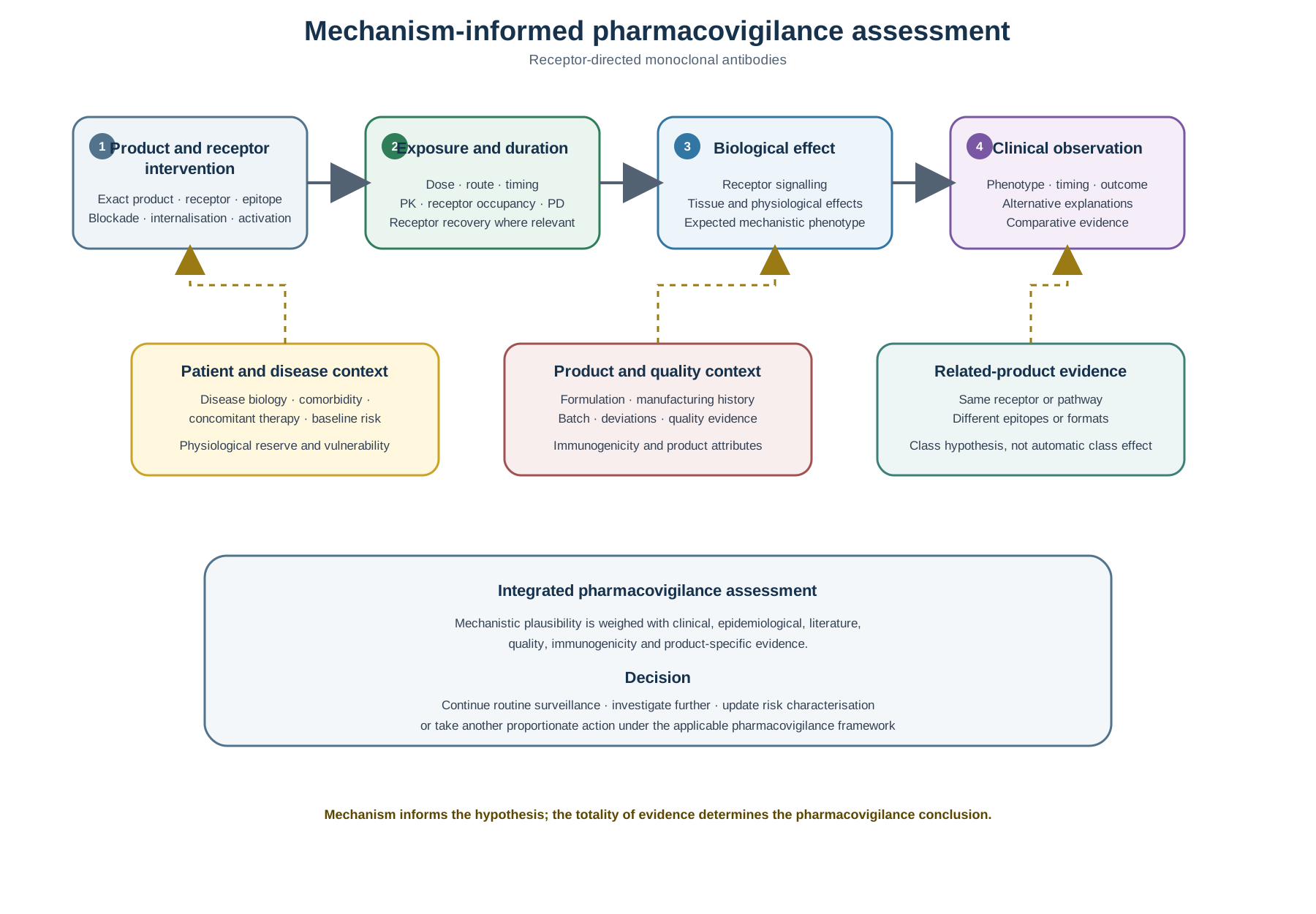
Figure 2. Mechanism-informed pharmacovigilance assessment for receptor-directed monoclonal antibodies. The assessment begins with the actual product and receptor intervention, then connects exposure and biological effect to the clinical observation while retaining disease, patient, product-quality and related-product evidence as separate contextual inputs. Mechanistic plausibility supports assessment but does not replace evidence of causality.
Class Effects and Product-Specific Effects
A receptor target can provide a useful basis for identifying related products, but shared target does not automatically mean shared safety profile. Products may differ in epitope, affinity, valency, Fc activity, formulation, exposure, tissue distribution, indication and combination therapy.
The correct question when considering a possible class effect is whether the characteristic capable of explaining the event is shared across the products and whether the relevant biological exposure is sufficiently similar. Evidence from another product can strengthen or weaken a mechanistic hypothesis, but it does not remove the need for product-specific assessment.
This distinction becomes particularly important when comparing conventional antibodies with engineered formats or antibody–drug conjugates directed at the same receptor. A shared target may coexist with a fundamentally different pharmacological mechanism.
Practical Pharmacovigilance Implementation
A mechanism-informed receptor assessment becomes operational when the organisation can connect receptor biology with the product-specific pharmacovigilance system. The first control is product knowledge: the target receptor, binding epitope where relevant, mode of receptor modulation, expected pharmacodynamic effect, duration and important physiological functions should be understood sufficiently to support safety assessment.
The second control is product-specific evidence. Experience with another antibody directed against the same receptor can inform hypothesis generation, but differences in molecular design, exposure, formulation, Fc function, indication and patient population may change the clinical expression of risk. Product and batch identity should therefore remain available when a product-specific hypothesis arises.
The third control is evidence integration. Individual cases, clinical studies, observational data, literature, immunogenicity, PK and PD findings, quality information and regulatory assessments should be brought together when they are relevant to the safety question. Mechanism should help organise this evidence rather than replace it.
Roles and Interfaces
Receptor-directed antibody safety assessment commonly requires coordinated input from several functions. Pharmacovigilance manages case processing, signal detection and aggregate assessment. Medical and clinical functions contribute disease and mechanism interpretation. Quality and manufacturing functions provide information on product quality, deviations and manufacturing changes. Regulatory functions maintain product information and regulatory history. Clinical development can provide exposure-response, immunogenicity and emerging safety evidence, while epidemiology can help quantify background and comparative risks.
The interfaces should be explicit enough that a potential receptor-mediated safety issue can be investigated without uncertainty about where relevant evidence is held. A quality concern affecting a receptor-binding attribute, for example, may require parallel quality and pharmacovigilance assessment rather than being treated exclusively as one function's problem.
Evidence and Records
Relevant evidence may include medicinal-product identity, dose, route, indication, administration dates, treatment history, target information, batch information, clinical phenotype, laboratory findings, immunogenicity results, exposure or pharmacodynamic information, literature evidence, signal assessments, quality investigations and regulatory decisions.
The objective is not to collect every data element for every report. Rather, records should preserve enough information to reconstruct exposure, clinical chronology, scientific reasoning and the evidence supporting a conclusion. For biological products, the ability to link product and batch information to clinical observations can be particularly important when a product-specific or manufacturing-related hypothesis emerges.
A reviewer should be able to distinguish reported clinical facts from mechanistic interpretation. The case record should describe what occurred; the assessment should explain why the event may or may not be compatible with receptor modulation and what evidence supports the conclusion.
Common Analytical Failure Modes
The following are illustrative process scenarios, not claims about specific inspection findings.
Treating receptor binding as proof of receptor blockade. Binding to a receptor does not establish the direction or magnitude of functional change. The demonstrated biological mechanism should be used.
Assuming the receptor name predicts the safety profile. The same receptor can have different roles across tissues and diseases. Target identity must be interpreted with tissue distribution and physiological function.
Ignoring receptor turnover. A receptor that is internalised or downregulated may produce a longer pharmacodynamic effect than circulating concentration alone suggests.
Assuming a class effect from a shared receptor. Products directed at the same receptor may differ in epitope, affinity, valency, Fc properties, exposure or downstream mechanism.
Using immunogenicity as a binary explanation. Anti-drug antibodies may affect exposure or activity, but their presence does not by itself demonstrate loss of efficacy or an adverse reaction.
Ignoring disease and treatment context. Underlying disease, tumour biology, concomitant treatment and background risk can influence both the occurrence and interpretation of a clinical event.
Failing to distinguish receptor blockade from payload delivery. An antibody–drug conjugate directed at a receptor may depend on internalisation and payload release, creating safety questions that cannot be explained by receptor blockade alone.
Treating mechanistic plausibility as causality. A coherent biological explanation is a hypothesis that must be tested against the clinical evidence.
Inspection Perspective
Illustrative inspection questions include:
- Can the organisation explain the receptor, its physiological role and the product's demonstrated mode of receptor modulation?
- Can the organisation distinguish receptor blockade from internalisation, downregulation, agonism or other mechanisms where relevant?
- Can the actual product and, when necessary, batch be identified from safety records?
- Can exposure, treatment timing and relevant prior biological exposure be reconstructed?
- Are receptor biology and pharmacodynamic duration considered when clinically significant safety hypotheses are assessed?
- Are immunogenicity findings interpreted with appropriate assay, timing, exposure and clinical context?
- Can the organisation distinguish product-specific evidence from experience with other antibodies against the same receptor?
- Are quality, manufacturing and pharmacovigilance interfaces defined when a product-quality hypothesis could affect receptor-mediated activity?
- Are safety assessments traceable to the evidence available at the time of decision-making?
These questions assess effectiveness rather than the existence of procedures alone. The expected evidence should remain proportionate to the product, the safety concern and applicable requirements.
Relationship With Risk Management
Risk-management activities should be based on identified or potential risks supported by evidence and should follow the applicable regulatory framework. Mechanistic knowledge can help explain why a risk is plausible and can inform the design of monitoring or additional evidence generation, but a theoretical receptor effect should not automatically become a formal risk-management measure.
Where a receptor-mediated risk is established or remains an important uncertainty, the relevant monitoring strategy should reflect the actual clinical phenotype and the population in which it occurs. Product information, routine pharmacovigilance and any additional pharmacovigilance activities should remain aligned with the current regulatory assessment.
Practical Assessment Framework
A concise mechanism-informed assessment can be structured around seven questions:
| Question | Purpose |
|---|---|
| What receptor is targeted? | Establish the biological control point. |
| What exactly happens after binding? | Distinguish blockade, activation, internalisation or other modulation. |
| Where is the receptor expressed? | Identify relevant physiological systems and tissues. |
| What is the pharmacodynamic time course? | Relate exposure and receptor effects to event timing. |
| What clinical event is being evaluated? | Define the phenotype precisely rather than reasoning from mechanism alone. |
| What evidence supports or contradicts the hypothesis? | Integrate case, clinical, epidemiological, literature, quality and product-specific evidence. |
| Does the conclusion change risk management? | Translate the totality of evidence into an appropriate pharmacovigilance decision. |
This framework is an operational aid, not an additional regulatory requirement.
Key Takeaways
- Receptor-directed monoclonal antibodies act directly on receptors or receptor-associated targets and can produce blockade, internalisation, downregulation or activation.
- Receptor binding alone does not define the mechanism; epitope, binding mode, valency, receptor biology and antibody design determine the functional consequence.
- Receptor expression and physiological function provide the bridge between target engagement and potential on-target safety effects.
- Pharmacodynamic duration may differ from plasma exposure when receptor internalisation, downregulation or durable downstream effects occur.
- Cetuximab, dupilumab, tocilizumab and trastuzumab illustrate distinct receptor-directed pharmacologies and demonstrate why the class does not have a single safety profile. [1–4]
- Immunogenicity is cross-cutting and requires integrated interpretation with exposure, pharmacodynamics, efficacy and safety.
- Shared receptor targets support hypothesis generation but do not establish automatic class effects.
- Mechanistic plausibility should inform, but never replace, product-specific clinical evidence and formal pharmacovigilance assessment.
- Accurate product identity, exposure reconstruction and appropriate quality interfaces remain essential for biological-product pharmacovigilance.
References
- European Medicines Agency. Erbitux — EPAR. Cetuximab. https://www.ema.europa.eu/en/medicines/human/EPAR/erbitux
- European Medicines Agency. Dupixent — EPAR. Dupilumab. https://www.ema.europa.eu/en/medicines/human/EPAR/dupixent
- European Medicines Agency. RoActemra — EPAR. Tocilizumab. https://www.ema.europa.eu/en/medicines/human/EPAR/roactemra
- European Medicines Agency. Herceptin — EPAR. Trastuzumab. https://www.ema.europa.eu/en/medicines/human/EPAR/herceptin
- European Medicines Agency. Guideline on immunogenicity assessment of therapeutic proteins — Revision 1. EMEA/CHMP/BMWP/14327/2006 Rev. 1. Legal effective date 1 December 2017. https://www.ema.europa.eu/en/documents/scientific-guideline/guideline-immunogenicity-assessment-therapeutic-proteins-revision-1_en.pdf
- European Medicines Agency. Guideline on immunogenicity assessment of monoclonal antibodies intended for in-vivo clinical use. EMA/CHMP/BMWP/86289/2010. https://www.ema.europa.eu/en/immunogenicity-assessment-monoclonal-antibodies-intended-vivo-clinical-use-scientific-guideline
- European Medicines Agency. Guideline on good pharmacovigilance practices (GVP): Product- or population-specific considerations II: Biological medicinal products. EMA/168402/2014. https://www.ema.europa.eu/en/documents/scientific-guideline/guideline-good-pharmacovigilance-practices-gvp-product-or-population-specific-considerations-ii-biological-medicinal-products_en.pdf
- European Parliament and Council. Directive 2001/83/EC on the Community code relating to medicinal products for human use, as amended.
- Regulation (EC) No 726/2004 of the European Parliament and of the Council, as amended.
Regulatory Note
This article is a scientific and pharmacovigilance interpretation of receptor-directed monoclonal-antibody mechanisms. The mechanistic categories are explanatory scientific groupings and are not legal classifications. Mandatory pharmacovigilance requirements arise from applicable EU legislation, marketing-authorisation conditions and applicable GVP requirements. EMA scientific guidelines and EPARs provide regulatory and scientific context and should not be presented as additional legal mandates.
The safety profile of an individual receptor-directed antibody must be established from its product-specific evidence, current product information, regulatory assessments and post-authorisation data. The class-level principles described here support scientific assessment but do not replace product-specific evaluation.